Economy

What shoplifters and DC grocers tell us about the state of elite America

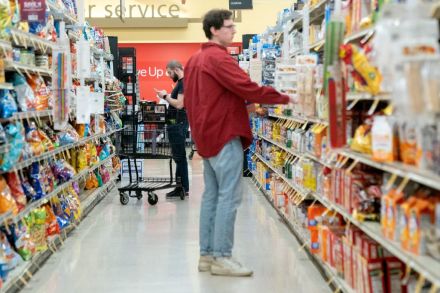
Grocery store Harris Teeter’s DC locations started implementing a receipt check at the door. Giant Foods recently banned duffel bags or those measuring more than 14 x 14 x 6 inches, which disqualifies most backpacks, in their stores. And Safeway instituted a glass barrier at self-checkout, requiring customers to scan their receipt before they can leave. Shoplifting has become a major issue across the country. Retailers lost almost $100 billion to theft in 2021. These numbers are more than just a slip-a-candy-bar-into-your-pocket kind of theft. Most grocery stores attribute their loss to organized shoplifting, or “boosting.” People will steal goods and then sell them for cheaper.

shoplifting

Life in a changing China

From our UK edition

39 min listen

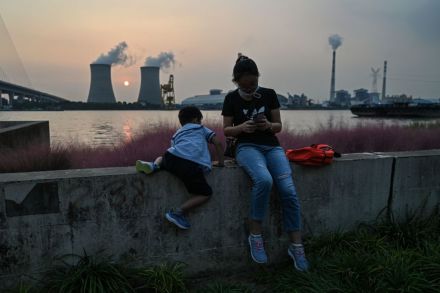
Since 1978, China has changed beyond recognition thanks to its economic boom. 800 million people have been lifted out of poverty as GDP per capita has grown eighty times. Some 60 per cent of the country now live in cities and towns, compared to just 18 per cent before. But you know all this. What’s less talked about is what that does to the people and families who live through these changes. What is it like to have such a different life to your parents before you, and your grandparents before then? How have people made the most of the boom, and what about those who’ve been left behind? A fascinating new book, Private Revolutions, tells the personal stories of four millennial women who were born as these changes took place.

The economy is as good as people think

Welcome to Thunderdome. One of the Biden White House’s biggest problems at the moment is that while they can point to all manner of aspects of the economy that are doing just fine — above all, the stock market — the lived experience of many key segments of the electorate is totally at odds with this analysis. Hammered by higher food, energy, healthcare and education costs, American households feel constrained by rates that keep them trapped in homes they no longer want to live in, with cars they no longer want to drive. Are people in gas lines and starving? No, of course not. But a line in a recent Wall Street Journal piece encapsulates the situation: “We used to take three vacations a year. Now we take one.

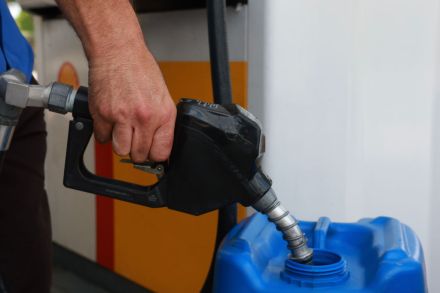
Will gas prices determine the election?

Ideally, responsible citizens would think big when deciding on a presidential candidate. But the election outcome may just be determined by one factor: gas prices.  In a CNN article this week, economist Mark Zandi asserted that gas prices were likely to determine election results. On Tuesday, Biden announced his release of a million barrels of reserve gasoline. Even with the many factors that affect oil prices, it may be possible to predict where prices will be come November and if that can tell us who will win the presidency. Zandi and his colleagues from Moody’s Analytics (Brendan Lacerda and Justin Begley) published a nineteen-page econometric analysis in January.

gas prices

The thirty-two-hour work week: another of Bernie’s bad ideas

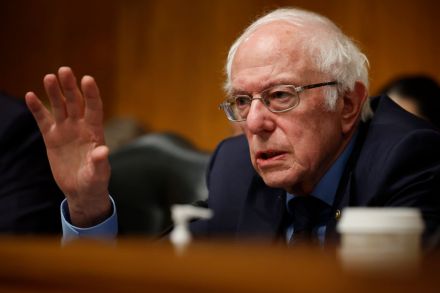
Bernie Sanders is the bottomless cup of bad ideas. He keeps refilling it. Take his latest venti, a law that says everybody gets to work thirty-two hours for forty hours pay. That’s a magical 25 percent pay increase. His next trick is to pull free steak dinners out of a hat. What do you think would actually happen if such Bernie’s law were passed, enforced and found constitutional? (None of those would actually happen, of course.) The immediate effects would be another 25 percent price increase for labor-intensive products, a huge burden on low-income consumers and an additional incentive to replace more expensive workers with machines and computers.

bernie sanders

Life on the margins: how China’s rural deprivation curbs its success

From our UK edition

41 min listen

Too often our stories about China are dictated by the urban experience, probably because journalists inside and outside of China are often based in the big cities; Beijing specifically. Those who live in the cities also tend to be more educated, more privileged, and so able to dominate the global attention more.  That’s why I’m particularly keen to hear about the lives of those who still live in the countryside, or at least are still considered ‘rural residents’ by the Chinese government. They make up a sizeable proportion of the population, and you’ll hear that in my first question to my guest today, we discuss just how big this group is. How do the poorest in China live today, considering the government has announced that there is no more extreme poverty?

Axios bravely points out Covid hurt Trump’s economy

Axios reporter Emily Peck isn’t afraid to state the obvious out loud and pass it off as inspired. In a hit piece published Thursday, “Why Trump supporters give him a pass on record-high unemployment,” Peck made the case that the economy suffered during Trump's last months in office due to coronavirus. Huh, who knew a global pandemic and lockdown could cause record unemployment?  “Trump's economic record is only good if you leave off what happened from March 2020 to the end of his administration,” Peck wrote, as if that were not exactly what any reasonable person would do. Prior to the pandemic, the unemployment rate fell to 3.5 percent, the poverty rate hit a sixty-year low, and the country saw the largest real household median income increase since 1967.

axios

My election advice for Starmer? Offer a new Citizen’s Charter

From our UK edition

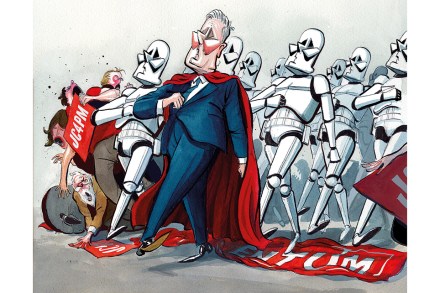
A giveaway Budget in March preceding a general election in May against an improving economic backdrop: that, we’re told, is Downing Street’s favoured scenario. But still the election is Keir Starmer’s to lose, so here’s my start-the-year advice to him. Don’t bang on about Rishi Sunak being too rich; don’t make immigration the issue, because you have no solutions; don’t pretend to admire Margaret Thatcher; but do channel John Major – to whom you bear much closer comparison – and offer a new Citizen’s Charter. What? Isn’t that 1991 exercise in footling managerialism, forever associated with the ‘cones hotline’, remembered as a laughable failure?

Javier Milei’s radical reforms could start to heal Argentina’s economy

From our UK edition

Argentina has spent most of its 200-year history in deficit; no other country currently owes the International Monetary Fund a greater sum of money. The new finance minister, who entered government with President Javier Milei earlier this month, has been stark in making the point: ‘Out of the last 123 years, Argentina ran a fiscal deficit in 113... we have come to solve the addiction to fiscal deficits.’  Milei’s government is wasting little time carrying out what it calls ‘shock therapy’. The official value of the peso, Argentina’s currency, has been halved against the US dollar. Why might a government want to weaken its own currency, pushing up the price of imported goods for consumers?

Rishi Sunak can’t take the credit for falling inflation

From our UK edition

Even the best-run companies have occasional leadership crises. But if you asked ChatGPT to come up with a blockbuster boardroom-bloodbath movie scenario, I doubt it would propose anything as extreme as this week’s events in its own San Francisco-based parent company, OpenAI. Chief executive and co-founder Sam Altman was fired last week for failing to be ‘consistently candid’ with OpenAI’s board, though no one was prepared to say what he had not been candid about. By Monday he had a new job leading AI research at Microsoft, OpenAI’s 49 per cent shareholder. One inside source claimed 743 of OpenAI’s 770 staff had signed a letter supporting him and many of them would follow him to Microsoft.

As America’s fiscal storm approaches, government prepares to save itself

It’s a familiar response whenever the National Weather Service warns of a Category 5 hurricane, a life-threatening winter blizzard or some other looming natural disaster. Government officials urge local citizens to seek shelter immediately, while promising that area police will keep guard to ensure that looters do not use the emergency to rob boarded-up homes and abandoned stores. Today, Americans are being warned to brace for another kind of storm, one involving not the weather but their personal finances.

fiscal debt

The beauty of mid-range products

From our UK edition

Once or twice, when on a crowded overnight flight, I have taken a sneaky stroll through the different cabins for the purpose of comparison. My reaction on first peering into each cabin goes like this. First class: ‘Gosh, this is fabulous. It’s like a restaurant in the air.’ Business class: ‘Ooh, this is nice; they get flat beds and everything.’ Premium economy: ‘Well this is OK; the seats seem comfy and it’s all pretty civilised.’ Economy: ‘It’s the “Raft of the Medusa”.’ Now here’s the thing. In terms of comfort, the biggest gap between two adjacent flight classes is between economy and premium economy.

Will the collapse of councils be the next great scandal?

From our UK edition

Last month India managed to land a spacecraft on the moon for a third of the price of refurbishing Hammersmith Bridge. This startling fact captures both New Delhi’s efficiency and the staggering incompetence of our local councils. It took two years and £9 million (in real terms) to build the bridge. It is set to cost almost £200 million to spruce it up and the work may not be complete until 2030. Hammersmith Bridge has become the perfect metaphor for what’s gone wrong with government: the carelessness, inertia and lack of concern for public money that is rife across the country. The bill for doing up Croydon council’s headquarters was greater per square metre than that for building the Shard, Britain’s tallest skyscraper.

Britain has an entitlement problem

From our UK edition

An Institute for Fiscal Studies paper, published at the end of last month, makes grim reading. Through the prism of the media reports it generated (‘One in 11 workers in England could be NHS staff by 2036,’ said the Guardian; ‘NHS staff will make up 49 per cent of the public sector workforce in 2036,’ said the Times), the most sensational finding was that our health service will be eating up an ever-increasing share of public spending. But, as so often, this particular cuckoo in the nest of public provision is only the most newsworthy of so many indications of Britain’s long, slow slide into insolvency. The gap grows between what we consider ourselves entitled to and what our governments can afford The paper is part of the Institute’s series Green Budget 2023.

The economy isn’t as sick as we thought

From our UK edition

It would be churlish not to celebrate revisions from the Office for National Statistics that tell us the UK is not, after all, the post-Covid invalid of the G7. Contrary to previous figures suggesting we had struggled to regain pre-pandemic levels of economic output, it turns out that our gross domestic product passed that benchmark in late 2021 and our performance has been in line with France and ahead of Germany. Large sectoral revisions for agriculture and manufacturing tell us that statistical reporting is almost as much of a mug’s game as forecasting. But the brighter overall picture accords with the anecdotal sketch of ‘definite warming’ in consumer spending and confidence that I offered here early last month.

Biden’s green agenda pokes a big hole in America’s social safety net

With the current inflation rate still well above the Federal Reserve’s 2.0 percent target, it is only natural that critics of President Biden’s Inflation Reduction Act (IRA) treated its recent one-year anniversary as an opportunity to once again stress that the bill never had anything to do with inflation. Biden himself has finally admitted as much. But what has received almost no attention is the degree to which big spending programs like the IRA — whose estimated cost has already spiraled up from $384.9 billion to $1.5 trillion — will further erode America’s social safety net. Especially the Medicare hospital insurance fund (Medicare Part A), which its trustees say will be depleted in 2031, and Social Security, which runs out of money just three years later, in 2034.

energy green biden

Sunak can’t blame landlords for not stopping illegal immigration

From our UK edition

Small companies will face massive fines for not checking the papers of everyone they hire. Landlords will be put out of business for renting rooms to anyone without permission to be in the UK. With its Rwanda policy stalled, and with the numbers of illegal immigrants still at record highs, the government has a big new idea for trying to stem the numbers of people coming into the country. It will get small businesses to police the system. The only trouble is, that will damage the economy, and we will all suffer from that.  The government’s latest big idea for controlling immigration is to make it a lot harder for anyone who is here illegally to work or find somewhere to live.

Does China need a new economic playbook?

From our UK edition

41 min listen

At the end of last year, some thought that the Chinese economic recovery after three years of zero Covid could happen just as fast as zero Covid itself ended being government policy. I admit, that included me. And yet, more than halfway into 2023, that recovery looks increasingly elusive. The Chinese economy has failed to shake off its own long Covid while other structural problems have reared their heads. What does the future hold for the Chinese economy? Is this the new normal? And if so, is that really a problem? I’m joined on this episode by the economist Keyu Jin, author of The New China Playbook: Beyond Socialism and Capitalism. Keyu is an associate professor at the London School of Economics and advised and consulted for the World Bank and the IMF.

The end of American retirement

Cockburn has been mulling over in his mind a gloomy new report about his retirement prospects. “In a July poll conducted jointly by Axios and Ipsos,” the Hill writes, “29 percent of workers under fifty-five answered a retirement query with, ‘I don’t think I will ever retire.’ Asked why not, three-quarters of the never-retire group said they could not afford to stop working. A smaller share said they didn’t want to.” With inflation doing a number on folks’ 401ks and future inflation fears rising, Cockburn is not surprised by people’s responses to this poll (except for those who don’t want to stop working — seek mental evaluation). Still, he wonders: what does our future workforce look like if it’s composed of geriatric personnel refusing or unable to retire?

retirement

Shipping company Yellow could lose Walmart, further worsening US shipping woes

Walmart has reportedly stopped using Yellow as the shipping company stares down bankruptcy and a major strike by the International Brotherhood of Teamsters. Craig Fuller of FreightWaves tweeted that Walmart was one of Yellow’s largest customers, meaning their exit will cost the company dearly. The implosion of Yellow could magnify the impact of any potential IBT strike against UPS, which alone could have ground the US economy to a halt. Yellow had received a $700 million federal loan during the Covid pandemic, but has run into challenges paying it back, and the New York Times reports that the company had $1.5 billion in debt in March 2023.

Teamsters