Economy

Spain’s political freeze starts to bite

From our UK edition

The circus of Spanish politics shows no signs of stopping. For now, the country is managing to weather this eight month-long deadlock surprisingly well: Spain’s GDP growth has continued at one of the fastest rates in the eurozone. But this is in spite, rather than because, of Spain's zombie government. A record-breaking tourist season has helped, as has a jump in consumer spending. Yet finally, the cracks are beginning to show; and the impasse crippling Spanish politics - which now looks set to lead to the increasingly-likely prospect of a third election on Christmas Day this year - is starting to take its toll. So what's the hold up?

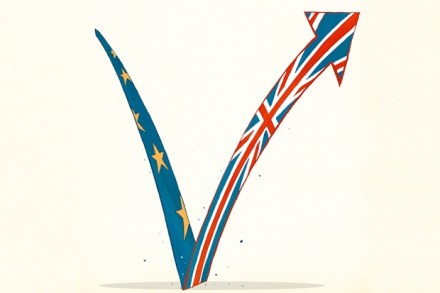
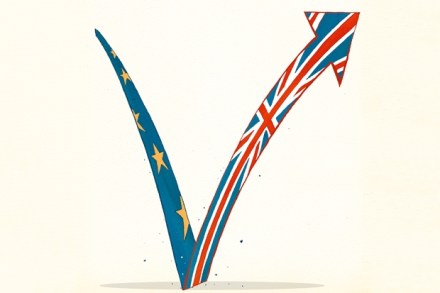
The Brexit bounce

From our UK edition

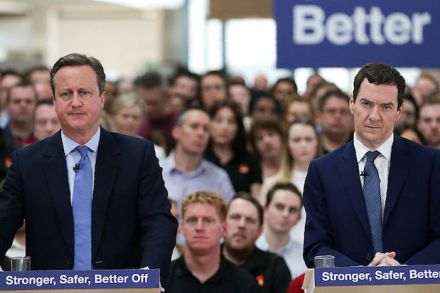
Next time it comes to redesigning the PPE course at Oxford, I suggest a module beginning with a quotation from George Osborne. It’s something he said to the Treasury Select Committee in May, back when he was still Chancellor: ‘If you look at the sheer weight of opinion, it is overwhelmingly the case that people who look at the case for leaving the EU come to the conclusion it would make the country poorer, and it would make the individuals in the country poorer, too.’ There might be advantages to Brexit, he said, ‘but let’s not pretend we’d be economically better off’. In other words: it wasn’t just George Osborne’s opinion that Britain would be worse off if we left the EU; it was objective fact.

Mark Carney’s referendum ‘uncertainty spike’ exposed as bluster

From our UK edition

In the runup to the referendum, we heard repeated warnings that, whatever the outcome of the actual vote, the damage to the UK economy had been done. The Bank of England, whose governor has been accused of becoming something of a fellow traveller for Project Fear, warned in its Monetary Policy Committee meeting in March that: ‘There appears to be increased uncertainty surrounding the forthcoming referendum on UK membership of the European Union’. In April, the BoE was at it again, downgrading second-quarter growth from 0.5 per cent to 0.3 per cent. Warnings such as these risk of being self-fulfilling: if you talk about uncertainty, it’s hardly surprising that investors feel uncertain, creating a knock-on effect out of nowhere.

Business confidence is returning to Brexit Britain

From our UK edition

For all Gordon Brown’s economic mistakes, he at least tried to build confidence in the British economy. In the build-up to the European Union referendum, David Cameron and George Osborne did the opposite. Osborne, as Chancellor, ignored the good news, accentuated the bad and tried to portray Britain as an economic weakling propped up by EU membership. He was joined by a great many investment banks who produced analyses saying that Britain’s life outside the EU would be catastrophic. Since the referendum, these anticipations of doom have continued. It is rather strange to watch. Encouraging economic news — the increase in high-street spending, the buoyant demand for jobs through recruitment agencies — is brushed aside.

Pre-Brexit jitters? No, Britain boomed during the Referendum campaign

From our UK edition

It is still a little too early to say for sure that George Osborne’s gloom-laden economic forecasts for post-Brexit Britain were bunk. But never mind the future, it now emerges that he wasn’t much good at telling us what was happening in the present. Throughout the referendum campaign he could barely disguise his contempt for the whole exercise, telling us that the UK economy was suffering from the mere fact we were having a vote. A week before referendum day, for example, he told us that  'The economic uncertainty that the ‘Leave’ campaign carelessly insist won’t be caused is already being seen.' Whatever he was seeing, it didn’t reflect reality. The growth figures for the second quarter released today reveal that in fact the economy grew by 0.

The bust that wasn’t

From our UK edition

It has been a month since the UK voted to leave the European Union — but something is missing. Where is the economic collapse? What of EUpocalypse Now? Where is the Brexageddon that we were promised? To the shock of many — not least business titans who bankrolled the Remain campaign — the instant collapse doesn’t seem to be happening. The UK economy is, for now at least, taking Brexit in its stride. The oft-predicted job losses? During the three weeks from 23 June, job listings were up 150,000 compared to the same period last year according to Reed Group, a recruitment consultant. ‘That’s an 8 per cent rise,’ says James Reed, its chairman. ‘The vote hasn’t affected things — people are still hiring.

Is Brexit’s impact coming at us like a derailed train – or am I panic-mongering?

From our UK edition

I enjoyed the Daily Mail’s lambasting of the Financial Times as ‘panic-monger-in-chief’ for its doom-laden post-Brexit tone: ‘Is it determined to provoke a downturn in a bid to justify its lurid predictions?’ And I’m happy to let ‘Britain’s most self-important business newspaper’ take some flak, my own rather downbeat column last week having been so at odds with our ‘optimist’s guide’ on other pages. Panic-mongering used to be the Mail’s own stock-in-trade back in the Gordon Brown era, when it regularly invited me to wax apocalyptic on ‘the death of the middle classes’ in response to stock-market wobbles and stealth taxes.

Set out your Brexit model, Foreign Secretary tells Tory leadership contenders

From our UK edition

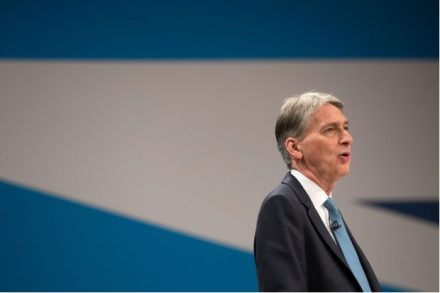
This morning, Philip Hammond has insisted that those running for the Tory leadership explicitly set out how they intend to leave the EU. The Foreign Secretary told Robert Peston that he wanted to know how they would manage the trade-off between single market access and free movement. Hammond himself appears to favour a version of the Norwegian model; in the single market and accepting free movement. Now, I think we can take this as meaning that Hammond won’t back Boris Johnson. Hammond accused Boris and other Leavers of making ‘contradictory promises’ in the referendum campaign.

Jonathan Hill’s resignation is an act of gross irresponsibility

From our UK edition

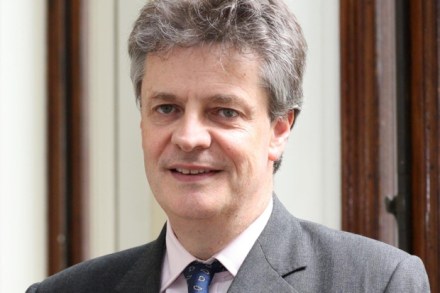
The UK’s EU Commissioner, Jonathan Hill, has resigned today saying that he couldn’t carry on as ‘though nothing had happened.’ This strikes me as an act of gross irresponsibility. Britain has not yet invoked Article 50, the two-year process for leaving the EU, and Hill staying on would have provided some continuity at a time of uncertainty. Supporters of his argue that his resignation was the honourable thing to do as Britain is no longer part of the team in Europe. It might have been right that Hill should have volunteered to move to another portfolio. But an outright resignation seems excessive and an over-reaction. Even Jean-Claude Juncker tried to persuade Hill to stay on.

A response to David Smith’s economic case for Remain

From our UK edition

When it comes to making economics understandable, no one does it better that David Smith of the Sunday Times*. Today, he has written a emphatic endorsement of the case for the UK remaining in the EU. As a longstanding admirer of his work, a few points jumped out at me when reading it. Here they are. Britain’s economy is convalescing from the biggest financial shock in a century. A few years ago we were on the edge of the abyss. We live in the shadow of the crisis. One shock was careless: to impose another, self-inflicted one before we’re over it would be stupid. Yes, you can argue that now is not the best time.

Leave six points ahead in latest phone poll

From our UK edition

Fraser Nelson and Nick Cohen discuss The Spectator's decision to back Brexit: The Ipsos MORI phone poll released this morning shows a dramatic turnaround since its last poll which had a double digit advantage for Remain. Leave is now six points ahead amongst those likely to vote. This means that Leave has been ahead in 7 out of the last 10 polls and 2 of the last 4 phone polls. Almost as worrying for the Remain campaign as the headline number is what the internals of the Ipsos MORI poll show. In a change from last month, immigration is now the top issue for people in this referendum, overtaking the economy. Alarmingly for IN, 70% percent of people don’t believe the Treasury’s claim that households wold be £4,300 worse off after Brexit.

Osborne’s dead cat Budget

From our UK edition

The In campaign believe that they win when the referendum debate is focused on the economy. So, today George Osborne and Alistair Darling are outlining a deliberately provocative post-Brexit emergency Budget. It is stuffed full of horrors: a 2p rise in the basic rate of income tax, a 3p rise in the higher rate and cuts to the NHS budget to name but a few. The plan is clear, to get the economy and the supposed effects on the public finances of Brexit to the top of the agenda. Now, as Fraser and Jonathan Portes have pointed out these aren’t the kind of measures that a government would actually enact in the case of Brexit. But this move is designed to help get the Remain campaign over the line, and nothing else. Brexit backing Tory MPs are furious about this.

Euro 2016 will be bad for the nerves but good for the economy

From our UK edition

Here we go again. As the nation prepares itself for the glory and the pain of Euro 2016, supermarkets and DIY stores are readying themselves for a run on beer, crisps, pizzas and barbecues. And there's the rub. While our natural inclination is to expect the worst on the field (and no Sir Geoff Hurst, I don't think England's squad is the most exciting since the World Cup winning team of 1966), there is a glimmer of good news for the economy. If you've seen the glut of booze offers and cut-price fast food on the shelves of your local shops, you'll know what I mean. According to Lloyds Bank, the countries reaching the final four stages in the last five tournaments have tended to see rises in both consumer spending and GDP growth.

Could the Vote Leave strategy work?

From our UK edition

The Leave campaign have had their best week of the campaign this week. After months of being battered by the Whitehall machine, they’ve taken advantage of purdah silencing government departments to get themselves onto the front foot. As I write in The Sun this morning, even IN supporting Cabinet Ministers admit that Leave have had a good week. But they argue that they won’t be able to ride the immigration issue to victory on June 23rd. One argues that you can’t focus on immigration week after week, or ‘By week four, you end up sounding like Nigel Farage’. But Vote Leave think their trump card is the link between immigration and people’s pay packets. That is the economic argument they are confident they will win.

The case for lowering taxes

From our UK edition

There’s a saying that when you tax something, you get less of it. Sometimes, this is a good thing. The government taxes smoking, alcohol, and petrol partly because we think these things have costly side-effects—like pollution or burdening the NHS—that we want to discourage. But most of our taxes do not fall on activities with costly side-effects: they fall on things like working, travelling, and socialising. And because we have such a high tax burden—this year we'll work for the chancellor for 154 days before we start working for ourselves on Tax Freedom Day, today—we almost certainly have less of those things. With lower taxes we'd be happier, and our descendants would be richer.

How Vote Leave plan to persuade the electorate that there are real risks to staying in the EU

From our UK edition

The IN campaign’s plan for victory in this EU referendum is relatively simple.  ‘Do you want the status quo or the riskt alternative?’, is how one Cameron ally sums it up. To date, Remain—aided by the various government dossiers—have been pretty effective at pushing this message. That is why they are ahead in the polls. So, Vote Leave know that they need to push the risks of staying in, up the agenda. I write in The Sun this morning that their message in the coming weeks will be that ‘wages will be lower and taxes will be higher if stay in the EU’. Their argument will be that the continuing troubles in the Eurozone will hit the UK in two ways.

The Treasury dishes up more Brexit fearmongering. Will it work?

From our UK edition

It’s now exactly one month until the EU referendum and the Treasury has marked the moment with another economic warning about the consequences of Brexit. The analysis out today claims that walking away from the European Union would kick-start a year-long recession. Brexit would also lower the country’s economic growth down by 3.6 per cent, according to the analysis. Although George Osborne must be nearing the point of running out of words to describe the economic ramifications of Brexit, in an article in the Daily Telegraph, Osborne and Cameron had this to say: ‘It is clear that there would be an immediate and profound shock to our economy. The analysis produced by the Treasury today shows that a vote to leave will push our economy into a recession that would knock 3.

Brits are worried that the economy will tank – but still wouldn’t trust Labour with it

From our UK edition

Amid all the fun and games of the EU referendum campaign, the polls suggest that economic anxiety is growing, along with concern about the government’s economic management. Voters are worried, but they don’t think Labour would do any better. Economic optimism has fallen to its lowest level since March 2013, and only 18 per cent believe the economy will improve over the next year. Many more are pessimistic. It’s worth noting that this isn’t necessarily a sign of a slump because for most of this century – long before the Crash of 2008, the public were pessimistic about the economy – even though it grew after year after year.

Wishful thinking | 19 May 2016

From our UK edition

Deirdre McCloskey has been at work for many years on a huge project: to explain why the world has become so much richer in the past two centuries, and at an accelerating rate since 1945. This is the third and final volume in the series. In it she argues that ‘our riches were not made by piling brick on brick, bank balance on bank balance, but by piling idea on idea’. The Great Enrichment, which she dates from 1800 to the present, depends on the spread of ideas of liberty, seeded in a series of ‘egalitarian accidents’ in European politics between 1517 and 1789.