Economy

Land of the Donald

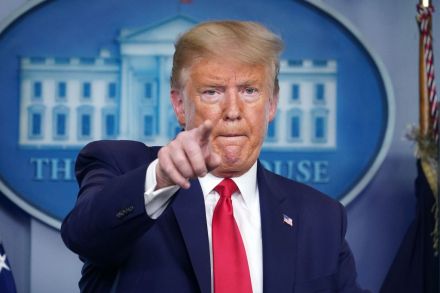
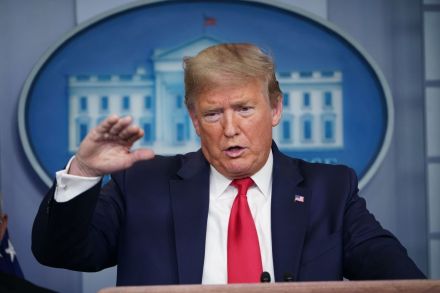
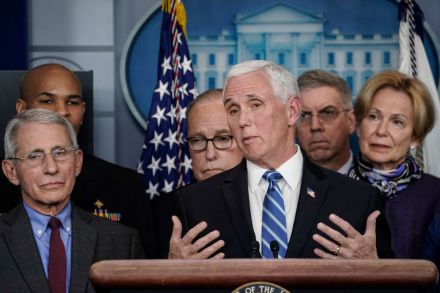
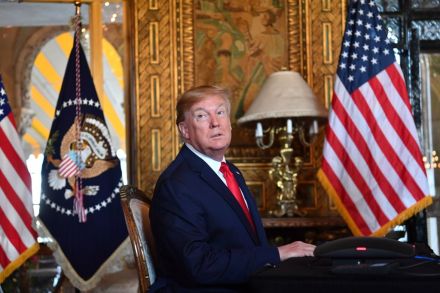
[audioplayer src="http://rss.acast.com/viewfrom22/donaldtrumpsangryamerica/media.mp3" title="Freddy Gray talks to Isabel Hardman about Donald Trump's angry America"] Listen [/audioplayer]It was, in the end, the best possible night for Donald Trump. On Super Tuesday, 11 American states voted for Republican and Democratic presidential candidates. Trump won seven. That was enough to ensure he remains easily the frontrunner, but not enough to persuade his opponents to coalesce around one of his rivals. Had he won nine or ten, the Republican party might have fallen in behind the man in second place, Ted Cruz. As it turned out, Marco Rubio, the last establishment man standing, won one state, which has encouraged him to keep fighting.

Will Cameron pull his punches to help the Tories reunite?

[audioplayer src="http://rss.acast.com/viewfrom22/donaldtrumpsangryamerica/media.mp3" title="James Forsyth, Fraser Nelson & Isabel Hardman discuss the opening skirmishes of the EU referendum campaign" startat=540] Listen [/audioplayer] If Downing Street’s calculations are correct, next week will see politics begin to return to normal. We’ll all move on from talking about Boris Johnson and Brexit and instead start fretting about the budget and pensions: the first phase of this four-month referendum campaign will be over. The two sides will regroup and try to work out what they can take from these initial skirmishes. One lesson from the first weeks of the campaign is that the ‘in’ side have the advantage when the debate is on the economy.

When sharing isn’t fair

In Silicon Valley, renting out is the new selling —and renting out stuff that belongs to other people can be far more profitable than renting out your own. Over the past few years, companies like Airbnb and Uber have made a great deal of money by pioneering a business model of connecting consumers, who want to use things — such as apartments and cars with drivers — with other people, who want to provide them. For public relations reasons they promote this model as the ‘sharing economy’. And who could be against ‘sharing’? But this isn’t the kind of sharing your mother taught you.

Exclusive: Sajid Javid to back staying in the EU

Sajid Javid will campaign for Britain to stay in the EU. The Business Secretary’s decision is a blow to the Leave camp which had been hopefully of recruiting him; Javid had spoken in the past of how he was ‘not afraid’ of Britain leaving the EU as it ‘would open up opportunities’. Senior figures on the Leave side had hoped that Javid would help them persuade voters that quitting the EU would not be bad for business. Those familiar with the Business Secretary’s thinking say that what has swung Javid to IN is his sense that it is just too risky for Britain to leave right now given the parlous state of the global economy.

The EU must change

David Cameron’s attempt to renegotiate Britain’s EU membership has served as a powerful reminder of the case for leaving. The EU is designed in such a way that almost no sensible proposal can be passed. If one member state has a good idea, the other 27 members demand a price for approving it, or they demand concessions until it is completely watered down. If the leader of a country protests, the response is clear: What are you going to do? Walk away? You wouldn’t dare. The EU’s power-mongering has a cost. The euro has hideously distorted the economies of the member states that adopted it, and the abolition of so many border controls has worsened the immigration crisis — which, in much of Europe, has fostered a political crisis.

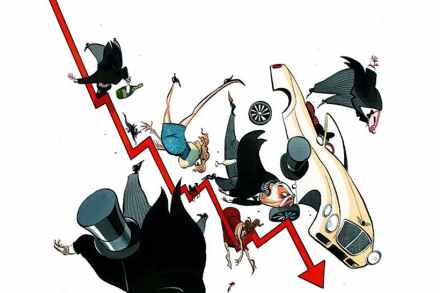
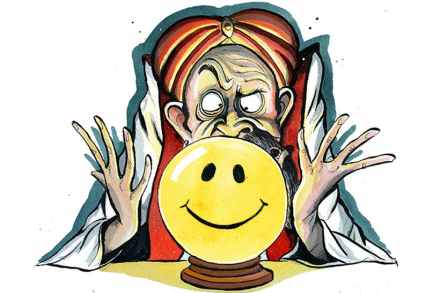
Apocalypse now? Markets seem set on a self-fulfilling prophecy

All this talk of a new financial apocalypse, so soon after the last one, is starting to annoy me. Partly because investors as a crowd are so irrational; -partly because so much that governments and central banks have done to contribute to the current market mayhem seems to work against the sensible efforts of ordinary folk to build a bottom-up recovery. Markets first. We’ve had hissy fits about China, even though connections between the Chinese and UK economies are so marginal. We’ve had near-hysteria about the prospect of (and in the US, the start of) rising interest rates.

How is it where you live? A tale of two nations and a message for George

Upbeat or downbeat? I asked last month whether the mood where you live is energised by enterprise or demoralised by public-sector retreat — or both. Replies poured in while the news mostly got worse. Governor Carney warned that ‘the UK cannot help but be affected by an unforgiving global environment and sustained financial market turbulence’ as shares took another dive. BP and Shell announced profit falls and job cuts. The Brexit debate took off, but the migrant benefits row overwhelmed any sensible discussion of economic pros and cons, on which voters must so far be utterly confused. Then again, it wasn’t all bad: like-for-like retail sales surged by 2.

Investment: This dragon won’t bite

At the risk of sounding like Neville Chamberlain, how bizarre that we should be panic-selling our stock-market investments in reaction to the news of a slight economic slowdown in a faraway country to which we export little and whose direct investments in our own economy created fewer than 5,000 new jobs last year. Throughout the mini-crash of 2016, it has become received wisdom that a Chinese slowdown is threatening the global economy, spreading contagion to every corner of the globe. The fear manifested itself in a 3.

Mr Bear is back: sit tight because he may be with us for a while

Like Leonardo DiCaprio in The Revenant, we’ve just been savaged by a bear but we’ll probably survive. Leading UK-listed stocks have fallen 20 per cent from last April’s peak after a six-year climb, and the FTSE100 chart has taken on a saw-toothed downward trajectory that suggests, to those who rely on such indicators, that there are further falls to come. The end of quantitative easing and the US Federal Reserve’s first interest-rate rise in almost a decade set the direction of travel. The sinking oil price, combined with worries about a global debt build-up, darkened the mood. Repeated bouts of mayhem on the Shanghai bourse, though little or nothing to do with western investors, have provided a news peg.

The Spectator’s Notes | 21 January 2016

Many have rightly attacked the police for their handling of the demented accusations against Field Marshal Lord Bramall, now at last dropped. They ostentatiously descended on his village in huge numbers, chatted about the case in the pub and pointlessly searched his house for ten hours. But one needs to understand that their pursuit of Lord Bramall — though not their exact methods — is the result of the system. Because the doctrine has now been established that all ‘victims’ must be ‘believed’, the police must take seriously every sex abuse accusation made and record the accusation as a reported crime (hence the huge increase in sex abuse figures).

The Spectator Dashboard: interactive UK data

Great progress has been made in open data over the last few years, with most important facts and figures now available online. The quality of the UK economic debate has been enhanced by the creation of the Office for Budget Responsibility, which publishes forecasts in a non-tricksy way. The journalist is spoiled for choice. But, still, you don't tend to see such forecasts republished: the BBC doesn't share them and even the FT's 'economy at a glance' restricts itself to historic data – and static graphs, which you can't interrogate. At The Spectator, we've been using dynamic graphs for a while. Now, we're moving up to the next level using HighCharts, a more versatile Norwegian graph-making engine. The below graphs are part of it.

The spending cuts Osborne flatly refused to make

[audioplayer src="http://rss.acast.com/viewfrom22/thegreatfakewar/media.mp3" title="Fraser Nelson, James Forsyth and Isabel Hardman discussing the Autumn Statement and Spending Review" startat=870] Listen [/audioplayer]The Autumn Statement on 25 November had long been circled in Downing Street diaries as the season’s defining political moment. Its importance only grew after the Lords rejected the government’s tax-credit changes and George Osborne announced that he would present his revised proposals in this statement.

Does George Osborne really want to make himself the scourge of the strivers?

Without George Osborne, we’d probably be living under Prime Minister Ed Miliband right now. His value to the government goes far beyond his brief as Chancellor; he is across most departments most of the time. But as Chancellor, he is judged by the success (or otherwise) of his Budgets – which is why he is now in a moment of great danger. His love of complexity has come to threaten not just his own reputation, but that of the Conservative Party too. Sometimes, Osborne is so clever that he can be downright stupid: This is one of these times. In my Telegraph column today, I say that Osborne is currently planning to soften – but not abandon – his tax credit cuts programme.

Tory MPs hold their breath for tax credit changes

George Osborne received a fulsome banging of desks last night at the 1922 Committee, joking that he should come back again once he’s won a vote if he gets that sort of reception when he’s lost. Tory MPs were doing the desk banging for the benefit of those hacks skulking outside, but they are now holding their breath to see what the Chancellor actually comes up with to mitigate the tax credit cuts in the Autumn Statement. Inside the meeting, the Chancellor was upbeat, but made clear that there will be movement on the issue. The waiting game means that David Cameron had to refuse to answer the same question six times at PMQs, and anyone else asked about the issue in broadcast interviews will have to deploy the same duck and weave technique.

The spectre haunting George Osborne

Rather more attention was paid last week to the strange position of George Osborne’s feet than to the dark shape lurking behind him. My own theory about his stance on the conference platform is that he was imagining himself as a operatic tenor, belting out an aria in praise the magic elixir he has administered to the formerly consumptive heroine, the UK economy, and pitching to be her next prince. But operas, like political careers, tend to end badly: so why the rumbling bass notes from the orchestra pit, and what is that sinister thing in the shadows? I’m not talking about Corbyn and McDonnell fighting in a sack with their own colleagues: they’re a comic subplot.

David Cameron: Corbyn poses a threat to Britain’s financial security

Jeremy Corbyn hasn’t even been elected Labour leader but the campaign to undermine him begins today. David Cameron will give a speech on the economy, in which he will warn that Corbyn will threaten Britain's security — a strategy I wrote about earlier this week. According to today’s Times, the Prime Minister will make his first significant attack on a Corbyn-led Labour by focusing on the threat to Britain’s financial security: ‘I have watched with some bewilderment the Labour leadership election of the past few months. 'Whoever wins . . . this is now a party that has completely vacated the intellectual playing field and no longer represents working people.

Even China can’t buck the market

Some years ago, I sat with an old China hand in a Beijing teahouse sipping oolong. An American director at a local education firm, his face was grey, creased by decades of pollution and office politics. But when talk turned to the country’s first spacewalk, recently completed, his brow furrowed. 'Have you ever noticed that the government is trying to do everything the United States did, but 50 years later?' He ticked off a list of the mainland’s aims and achievements, from manned space travel, to plans to place a Chinese citizen on the surface of the Moon. But the comparisons don’t end there. For all of its trumpeted exceptionalism, this is a country desperately striving to catch up with and copy the West. A network of Chinese motorways mimic Dwight D.

China’s ‘Black Monday’ is just the start

One-party states are rarely any good at admitting to any form of blunder. It is certainly the case with China’s prickly political leaders, who love to flood domestic media with jolly tales of fashion shows and bamboo-chomping pandas – anything to divert people’s attention from a flagging economy and rising unemployment. This makes today's main headline on China Daily's website all the more arresting: 'Stocks plunge most since 2007 as state support measures fail' the state-run newspaper blared, after the Shanghai Composite share index lost 8.5 per cent in a single day. The wider world followed China’s lead: all major Asian stock indices fell on Monday, with oil tumbling to a six-year low.

Exit the dragon

[audioplayer src="http://rss.acast.com/viewfrom22/chinasdownturn-labourslostvotersandthesweetestvictoryagainstaustralia/media.mp3" title="Elliot Wilson and Andrew Sentance discuss China's economic slump"] Listen [/audioplayer]I stood alongside the chairman of the board of a state-owned enterprise in eastern China. The factory floor, partially open to the elements, stretched out far in front of us, littered with towers and blades designed for some of the world’s largest wind turbines. It was an impressive sight, one to which regular visitors to mainland factories are accustomed: China as the workshop of the world. But something was missing: workers. ‘They’ve been given the day off,’ the chairman said with a slight cough, as we stared out over the vast compound.

Osborne rules

[audioplayer src="http://rss.acast.com/viewfrom22/theosbornesupremacy/media.mp3" title="Isabel Hardman and George Parker discus how George Osborne rules Westminster" startat=38] Listen [/audioplayer]Against the heavy artillery fire of the Labour leadership battle, the struggle of the Conservative leadership contest goes almost undetected outside Westminster. It is no less intense, even though the Conservatives will not elect a new leader for at least three years. After a week of the parliamentary recess, there is no question about who is winning. This week, for the first time, George Osborne overtook Boris Johnson as William Hill’s favourite. Not so long ago, Osborne was a mere limpet on David Cameron’s wetsuit, clinging on thanks to the patronage of his boss.