Economics

The Spectator Podcast: The New Arrival

From our UK edition

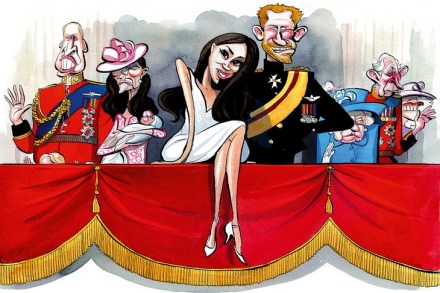
In this week's podcast, we discuss Meghan and the monarchy – is Meghan Markle good news for the Establishment? And what are we to make of her anyway? We also discuss the potential for Tory rebellion on the customs union, and ask, does economic research back up higher government spending? As the royal baby is born earlier this week, all eyes are on the monarchy. But he’s not the only new arrival to the family in recent times – Meghan Markle will be formally joining the monarchy in less than a month’s time. So what are we to make of the new Princess? For this week’s cover, Jenny McCartney thanks God that Meghan is not a spoilt, entitled Chelsea Sloane, and Julie Burchill writes that Meghan is a modern ‘adventuress’.

‘We need to get creative’

From our UK edition

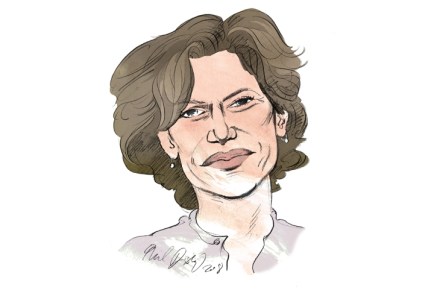
‘It was Plato who said storytellers rule the world,’ observes Mariana Mazzucato, her powerful voice tempered with a beaming smile, ‘But the stories we’re constantly told about how value is created are largely myths. We must rethink where wealth really comes from.’ An economics professor at University College London, Mazzucato is fast emerging as one of the world’s leading public intellectuals. From her high-ceilinged office in Bloomsbury, a host of grant-making bodies on speed dial, this 49-year-old Italian-American is determined to ‘replace our current parasitic system with a more sustainable, symbiotic type of capitalism’. Mazzucato emerged from the academic shadows five years ago, when she wrote The Entrepreneurial State.

Investing in zero-carbon shipping will only benefit the UK economy

From our UK edition

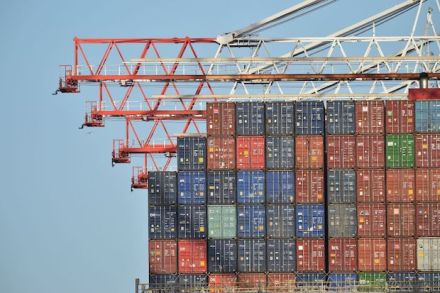
The shipping industry contributes around 2% of all global carbon emissions – a figure comparable to the entire CO2 emissions of a country the size of Germany.  In many ways that isn’t surprising: shipping powers the world economy, and carries 90% of all international trade. But although people understand the link between trade and prosperity, they quite rightly demand it is done in a responsible and environmentally friendly way. Globalised trade has brought rapid growth and helped see a remarkable fall in extreme poverty around the world, but it is not without negative consequences. Scientists say that to stave off potentially dangerous levels of warming later in the century, global emissions need to decline quickly to near-zero.

Could the Russian economy benefit from some Roman history?

From our UK edition

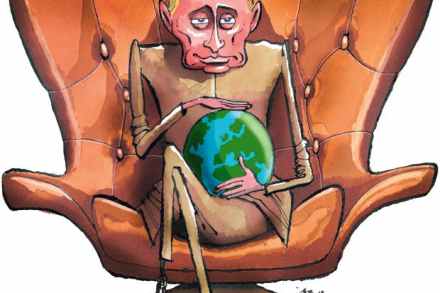
The Russian economy is not in the greatest of shapes. That being the case, one would have thought friendly diplomatic and economic relations with the West would be a priority for Vladimir Putin, given his need for cash to build weapons against threats from superpowers such as Estonia. A little Roman history would help. As has been well documented, the collapse of the Roman Empire in the west in the 5th C ad heralded something of an economic dark age for Europe for some 200 years. The long-nurtured Roman economic networks extending east as far as China simply could not survive the break-up that would create the beginnings of today’s Europe. The ancient sources, as well as the archaeological record, make clear just how connected that world had been.

Letters | 12 October 2017

From our UK edition

Let’s talk about guns Sir: I was surprised that the cover stories on the recent shootings in Las Vegas (‘Say nothing’, 7 October) did not address the issue of gun control. The point surely is that if weapons are readily available, and not universally disapproved of, sooner or later someone will use them. There doesn’t have to be a specific motive, religious or otherwise, and often there is no point in looking for one. There is no question that for some people, using guns and explosives gives a thrill which they probably do not find elsewhere — and the more powerful and rapid-firing the weapon, the greater the thrill.

If only the Tories understood economics

From our UK edition

‘I don’t think I’m quite as Austrian as you are,’ a Tory minister said to me the other day. And I knew then that the party is doomed. It wasn’t what he said so much as the way that he said it: in the fond, amused, each-to-his-own tone you might use to dismiss a friend’s enthusiasm for Morris dancing or Napoleonic re-enactment or dogging… But personally, I think free market economics (of the Austrian or any other classical liberal school) is far too important to be left to wonks, think-tankers and out-there right-wing commentators. So did Margaret Thatcher. ‘Hayek’s powerful Road to Serfdom left a permanent mark on my own political character, making me a long-term optimist for free enterprise and liberty,’ she said.

How the economics of cow-milking can help explain Brexit | 1 August 2017

From our UK edition

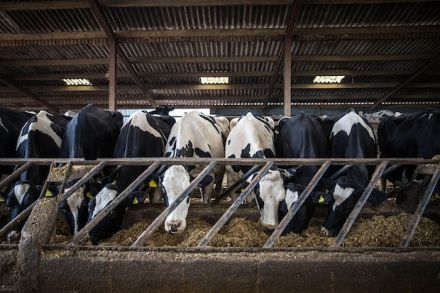
Writing about judicial appointments, I incautiously compared a silly interview question asking a judge to cite an example of when he had acted with integrity, to asking a farmer, ‘How many times a day do you milk your cows?’ Jamie Blackett, a farmer, writes to say that, in the 21st century, it is a question to which the answer reveals much. He explains. Farmer One milks his 50 cows only once a day. He follows the Norwegian system and makes a marketable green virtue of leaving the calf on the cow. He lives near rich people and sells them his artisan cheese and yoghurt. He voted Remain. Farmer Two milks 120 cows twice a day in the time-honoured way. Even when the price is good he earns less than the minimum wage. He scrapes extra money as a delivery driver.

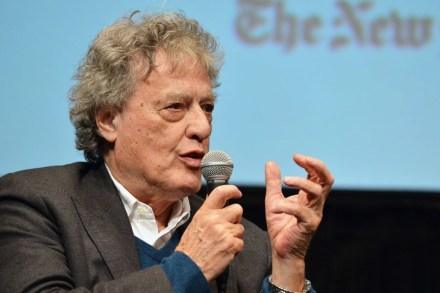
What stopped Stoppard?

From our UK edition

Two programmes this week presented two radically different world views, or rather ways of life. Aditya Chakrabortty’s series for Radio 4, Decoding the News, looked at five words or phrases which have come to characterise how politics, finance and business operate in the UK. We entered a world of policy wonks and pundits, of words used not to enlighten or explain but to calculate and confuse. A world in which those who tell stories get all the attention, while those who insist on sticking to the facts are ignored or on occasion ridiculed. It made for chilling listening as, for instance, Chakrabortty deconstructed the meaning of that slippery term, ‘shareholder value’.

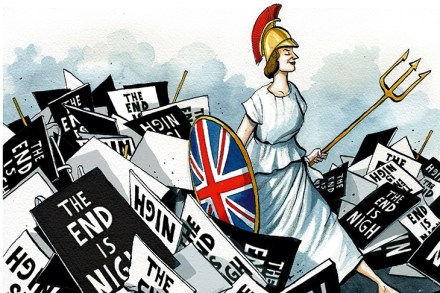
Down with declinism

From our UK edition

On the anniversary of Britain voting to leave the European Union, the Principal of Hertford College, Oxford, found some words to sum it up. ‘An entire society crucified by the delusional ambitions of Brexiteers chasing moonshine,’ wrote Will Hutton. ‘An anniversary to mourn.’ One might agree or disagree with his position on the European Union, but has British society really committed suicide? It’s a theme we have heard rather a lot recently: that Britain is a mess, an international laughing stock, leader-less and futureless. The case is normally made by Brits. Rapid shocks — terrorism, the surprising election result, the Grenfell Tower disaster — have inspired forebodings just as the Brexit negotiations are beginning.

Even the BBC’s Business Editor struggles to explain the deficit

From our UK edition

With austerity so last election, voters no longer seem too fussed by the deficit. It may be that they no longer think it's a problem, with polls showing that the average voter thinks that debt is going down. Why? Because they keep being given that impression by broadcasters who talk about ‘deficit reduction’ while wrongly thinking that people know what this means. ‘Deficit’ is a Westminster wonk word, used nowhere outside of politics. Reducing the deficit means cutting down the annual government overspend, but you won’t hear the state-funded BBC using phrases like that. The BBC might be state-financed but this is not a conspiracy.

Boats, goats and landslides

From our UK edition

J.L. Carr’s classic novel How Steeple Sinderby Wanderers Won the FA Cup (1975) contains a character named Arthur Fangfoss. Mr Fangfoss is a rural tyrant who, when standing for the local council, limits his election address to a pithy eight words: ‘If elected, I will keep down the rates.’ No such brevity, alas, attends the 2017 manifestos of the UK’s three main political parties. The shortest of them — the Lib Dems’ Your Chance to Change Britain’s Future — weighs in at over 80 pages, while Labour’s For the Many, Not the Few extends to a well-nigh novella-length 23,000 words.

Keynes’s grandchild

From our UK edition

‘Did you really deserve the Nobel prize?’ I ask Amartya Sen. ‘Why do you think you won?’ When you’re sitting opposite the world’s most respected living economist, at a time when the dismal science is under intense scrutiny, an opening question should be punchy. Thankfully, Sen, an 83-year-old Harvard professor, has a sense of humour. ‘You can’t ask me that,’ he says with a grin. ‘I have absolutely no idea why I won.’ He then composes himself. ‘Like any researcher, I’m happy if my work interests others,’ he says carefully. ‘But it would be a pretty bad way to conduct one’s life, thinking about how to win prizes, rather than being listened to.’ Sen has achieved both.

Don’t ask the experts

From our UK edition

Michael Gove never intended to make his most famous remark. In an interview during the EU referen-dum campaign, the then justice secretary was told that the leaders of the IFS, CBI, NHS and TUC all disagreed with him about Brexit. He had tried to reply that people have ‘had enough of experts from organisations with acronyms saying that they know what is best and getting it consistently wrong’. But he was picked up mid-sentence by his appalled interviewer. ‘Had enough of experts? Had enough of experts?’ Gove’s partial quote was held up to ridicule, as if it embodied Trump-style populist rage; the battle of emotion against reason.

Food on the home front

From our UK edition

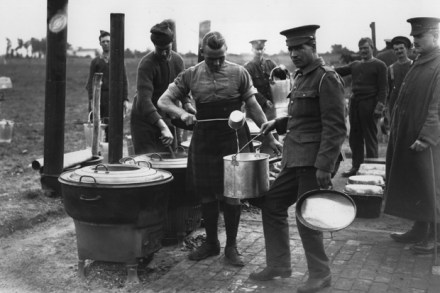
From ‘The food shortage and how to meet it’, The Spectator, 2 December 1916: A rise in prices, if properly understood and properly used, will be our salvation, not our injury. High prices help conservation, and, what is still more important, they help supply… If we artificially cut down prices here, we sterilise instead of stimulating the impulse to feed us from abroad. We are in effect saying to the world: ‘If you are such fools as to send us food, we warn you that you are not going to obtain inflated prices. You will get nothing more here than what we choose to tell you is a fair price. Our people, even if they want to do so, are not going to be allowed to pay you a penny more than we think suitable.

When reasoning goes wrong

From our UK edition

It’s the intellectual bromance of the last century. Two psychologists — Danny, a Holocaust kid and adviser to the Israel Defence Forces, and Amos, a former child prodigy and paratrooper — meet at the end of the 1960s, and sparks immediately begin to fly. They spend countless hours locked in rooms together at Hebrew University and elsewhere, and eventually co-write a series of papers that will revolutionise the field, and lead to the surviving partner being awarded the Nobel prize in economics. Not, however, before this extraordinary partnership has itself fallen apart, like a love affair, in regret and mutual recrimination.

Breaking the Bank

From our UK edition

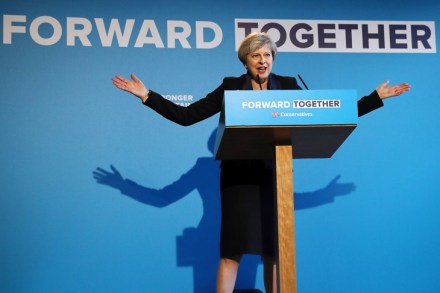
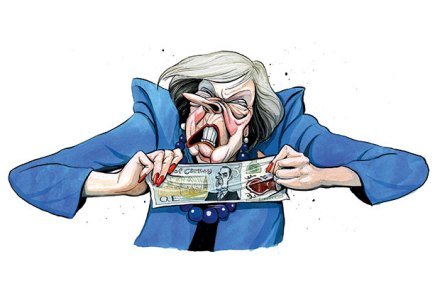
The exchange of letters this week between Mark Carney and Philip Hammond made it very clear who the supplicant was. The Governor of the Bank of England informed the Chancellor of the Exchequer that he was prepared to extend his term by one year. Carney pointed out that while the personal circumstances that had made him want to limit his term to five years had not changed, this country’s circumstances had. So he would be here a little longer. Things had seemed very different a few weeks ago, when Theresa May bemoaned the consequences of the Bank’s monetary policy in her party conference speech. ‘A change has got to come,’ she had warned. ‘And we are going to deliver it.

Letters | 27 October 2016

From our UK edition

Bear baiting Sir: I couldn’t agree more with Rod Liddle’s exposé of western politico-militaristic hypocrisy (‘Stop the sabre-rattling’, 22 October). We’ve already poked the Russian bear way too hard — unnecessarily so. What Rod could have also highlighted was that Nato has spread so far eastwards that it’s a blessed surprise the next world war hasn’t already started. It almost did in 1962 when Khrushchev tried to move nuclear missiles into Cuba. The same principle applies to what ‘we’ are doing now — frontline, aggressive technologies, nuclear-implied, established in the old Soviet states of Latvia, Estonia, Lithuania and even Poland.

Brexit’s philosopher king

From our UK edition

‘There was never a consensus among economists that Britain should stay in the European Union,’ insists Professor Patrick Minford. ‘That was always rubbish.’ During the heat of the referendum campaign, Chancellor George Osborne asserted it was ‘economically illiterate’ to back Leave. ‘It’s Osborne himself who is economically illiterate,’ Minford shot back. Three months on from the UK’s EU vote, Minford has reason to feel pleased with himself. Economists for Brexit — the campaign group he hurriedly founded on a shoestring — is credited with helping to swing the result. Yet Minford is anxious, in part about the dismal behaviour of his fellow scientists.

The internet of stupid things

From our UK edition

Back in the 1980s a colleague of mine was paranoid about being burgled. Before he went away on a two-week holiday, he bought the most expensive telephone answering-machine he could find and installed it in plain view on his hall table. Each morning he phoned it from Spain and hung up once he heard the outgoing message. He’d then enjoy the rest of the day content in the knowledge that his flat was safe; if no one had stolen his absurdly flashy answering machine, he reasoned, they wouldn’t have stolen anything else. Today he could buy a Canary. These cost about £139 (the website’s canary.is) and let you view your own hallway in glorious HD from anywhere in the world.

We need to invent something better than Machu Picchu

From our UK edition

Don’t know if you’ve noticed, but middle-class rules now require that every dinner party cheeseboard must contain at least two cheeses which aren’t very nice. Typically one will be a veiny French cheese which is not as good as Stilton; another may be that foreign thing with rind on it which isn’t nearly as good as Cheddar. I was baffled by this for a long time, until I realised that these cheeses are not bought to be eaten, but to signal the sophistication of the occasion. Economists might call them Veblen cheeses. (One day someone should make an inedible cheese called Veblenne. They’d make a fortune.