Economics

The last banking crisis and its architects, Dodd and Frank

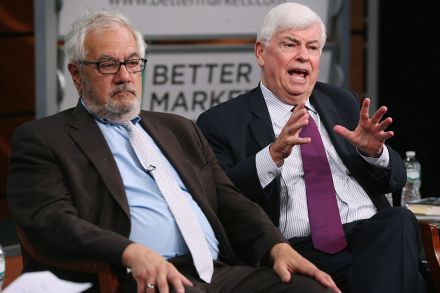
The Dodd-Frank law, enacted in 2010 following the financial crisis of 2007-08, was named for two of its chief architects, Senator Chris Dodd, Democrat of Connecticut, and Representative Barney Frank, Democrat of Massachusetts. It's ironic that both had been involved, politically or personally, in exactly what had caused the financial crisis in the first place. In the 1930s, only about 10 percent of American non-farm families owned their own homes. But that began to change with the New Deal. The Federal Housing Administration was established in 1934 to guarantee mortgages, making banks much more willing to initiate them.

Britain could come to regret moving away from China

From our UK edition

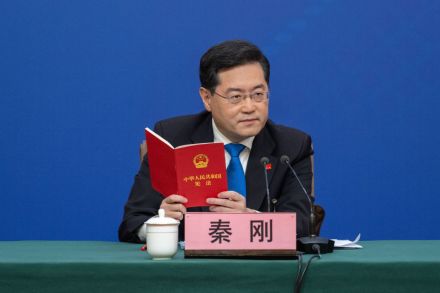
China’s relationship with America is getting worse and worse. The Chinese Foreign Minister, Qin Gang, warned yesterday that ‘containment and suppression will not make America great. It will not stop the rejuvenation of China’. The Biden administration, meanwhile, recently accused China of readying to send weapons to Russia, and Americans are still fuming about the Chinese balloon that entered their airspace. China thinks they’re being hysterical. Britain will soon be forced to decide whether it will decouple from China. The Americans no doubt want Britain to join them in cutting ties to Beijing, but it is not clear that British policymakers are ready to do this yet. In 2020, China accounted for around 7 per cent of British trade.

Free markets are part of the American tradition

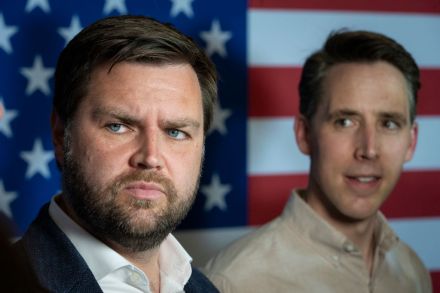
Election aftermaths are always an opportunity for taking stock. Since the 2022 midterms, we’ve heard prominent Republicans stressing the need to revisit questions ranging from electoral strategy to how to engage the culture wars. What desperately needs discussion on the American right, however, is conservatism’s approach to economic policy. Since 2015, American conservatives have been deeply divided over economics. Conservative skepticism about markets predates Donald Trump, but there’s little question that Trump shattered the favorable views of free markets that had prevailed since Ronald Reagan’s presidency.

Saying goodbye to the crypto nerd utopia

It’s been a great year for those of us who didn’t have the nerve to invest in crypto. The value of Bitcoin, Ethereum and Luna crashed in May. Now, crypto giant FTX has gone bankrupt amid serious allegations of criminal misconduct. At last! For years, we kicked ourselves for not investing in Bitcoin, ETH, et cetera, when we had the chance. We heard tales of people who went from bums to millionaires, while we grinded in our offices and fretted about debts. Suddenly, we can reframe our risk aversion as foresight! Of course we knew that this would happen! Of course we did! Really, I shouldn’t joke about this crypto craziness. A lot of people have lost a lot of money. People will lose businesses, homes, and families. Some might even commit suicide.

Liz Truss: my part in her downfall

From our UK edition

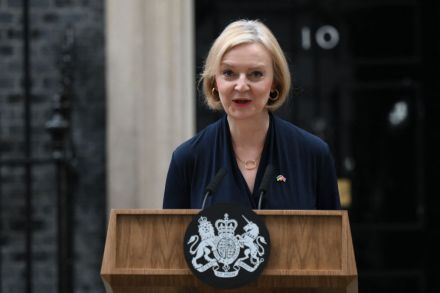
Now that the final curtain has fallen on Liz Truss’s brief and tumultuous premiership, it is time for reflection. A chance to set the record straight and also to own up to mistakes – especially for those of us who tried to advise her. What went wrong? Yes, the tipping point was Kwasi Kwarteng’s mini-Budget. But three problems were by then already brewing. First, the leadership campaign over the summer had become very focused on tax cuts. Even Rishi Sunak ended up saying he would cut the basic rate of income tax from 20 per cent to 16 per cent by the end of the next parliament, while Jeremy Hunt (now Chancellor) would not settle for cancelling the planned increase in corporation tax to 25 per cent, but instead wanted it cut to 15 per cent.

These figures show the enormity of the next PM’s task

From our UK edition

Next week we will have a new prime minister (again), but the economic problems facing the country will remain the same. This morning’s update from the Office of National Statistics shows public sector net borrowing was  £20 billion last month: the second-highest borrowing September record and significantly higher than the Office for Budget Responsibility’s last forecast, which put the figure close to £15 billion. It’s this rapid rise in borrowing that the markets have turned on in recent weeks Economists thought borrowing would rise, but even the consensus (roughly £17 billion) was lower than what the government borrowed in practice.

Why Liz Truss had to go

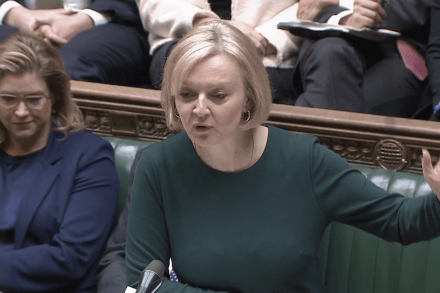
London, England Nobody in British politics really thought things could get worse than last night. Conservative MP Charles Walker told the BBC that the day was a "pitiful reflection" of the party; he added that there was "no coming back from it." Seasoned political editors described Wednesday as the most catastrophic day of their careers. The government victory on fracking — with 326 votes opposing the Labour motion to 230 backing it — was tarnished by claims of intimidation and bullying in the House of Commons. The home secretary, Suella Braverman was fired for sending official documents from her personal phone, something which is likely now a relief for her. Two other figures were said to have quit, but remained in their posts when questioned twelve hours later.

liz truss

Can you feel sorry for Liz Truss?

From our UK edition

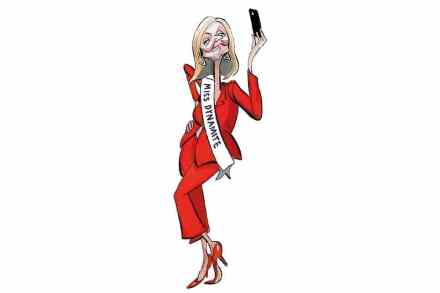
It is not easy to feel sorry for Liz Truss. She has a deeply unattractive streak of vanity – when in the Foreign Office, she seemed more interested in posing for the official photographers who trailed her round than she did in building relationships with the places she visited. She campaigned hard and sometimes dirty to obtain a job for which she was manifestly out of her depth. Once in that job, she exercised power with peremptory arrogance. She rewarded people who had sucked up to her, cast out anyone who had spoken up for her rival, and allowed experienced civil servants to be hoofed ruthlessly out of their jobs.

Truss says no to spending cuts. Here’s the caveat

From our UK edition

The mini-Budget was a spending spree. The ‘medium-term fiscal plan’ was meant to explain the funding. But what exactly is going to be in it?  Liz Truss and Kwasi Kwarteng were thought to have (finally) come to terms with the need to address the need for some restraint, after their mini-Budget led to market chaos which is yet to settle. Their fiscal statement – in other words, how they would fund their tax cuts – was moved forward by almost a month, to 31 October. Its contents were thought to include some major spending cuts, in a bid to convince markets that fiscal discipline still guides the Tory party.

Kwasi Kwarteng’s easy ride

From our UK edition

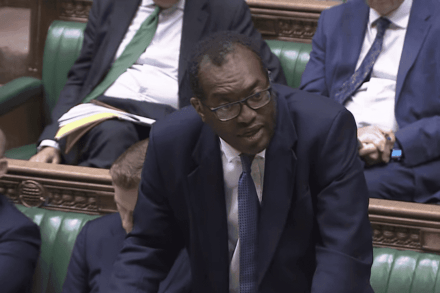
Tory MPs were in an anxious mood as they returned to the Commons this afternoon after weeks of conference recess and government meltdown. Their first session in parliament was, appropriately enough, Treasury questions, where they had a chance to air some of their anxieties with the Chancellor and his team. It could have been a much worse session for Kwasi Kwarteng, given the way things have gone recently. But the number of MPs seeking reassurance won't have left him feeling very relaxed. Kwarteng told the Commons that his mini-Budget had been ‘really strong' Kwarteng told the Commons that his mini-Budget had been ‘really strong’ and that MPs constituents would have been pleased with many of the ‘strong measures that we have introduced.

Does the ‘anti-growth coalition’ run the Treasury?

From our UK edition

‘Permanent revolution’ is the on dit in Whitehall these days – and what it means is that the Truss administration U-turns so often the whole machinery of government is constantly spinning round on its axis. The latest volte-face is the decision to appoint James Bowler, a 20-year establishment veteran, as Permanent Secretary to the Treasury. The Chancellor, Kwasi Kwarteng, declared himself ‘delighted to welcome James back to the Treasury,’ which is causing a few chuckles in SW1. The joke in Westminster today is apparently that the anti-growth coalition actually runs the Treasury It’s well-known that Kwarteng’s plan was to shake up the Treasury. Bowler represents precisely the sort of orthodox officialdom he has for years wanted to remove.

What crisis? A tough week for Trussonomics

From our UK edition

What’s the sign of a successful Budget? Chris Philp, the new chief secretary to the Treasury, gave his answer moments after Chancellor Kwasi Kwarteng’s statement last Friday: a strong pound. ‘Great to see sterling strengthening on the back of the new UK growth plan,’ he tweeted out. A (temporary) rising pound made sense to Truss supporters, who argued that markets would support their transition to a lower-tax, higher-growth economy. This was, they thought, their vindicating moment. The moment didn’t last. Within minutes, the pound had entered a steep descent and UK borrowing costs surged. But Kwarteng is not a politician who panics.

Will Liz Truss take on the IMF?

From our UK edition

Tonight the International Monetary Fund has weighed in on the UK’s mini-Budget, offering a direct rebuke of Liz Truss and Kwasi Kwarteng’s tax cuts. ‘We are closely monitoring recent economic developments in the UK and are engaged with the authorities,’ its spokesperson said, in reference to the fluctuating pound and rising borrowing costs. ‘Given elevated inflation pressures in many countries, including the UK, we do not recommend large and untargeted fiscal packages at this juncture' – suggesting some concern that the measures could be inflationary.

Why football needs a regulator

From our UK edition

Plans by the government to introduce a regulator to the football industry – endorsed by all Westminster parties just a year ago – have, to use jargon oddly appropriate in this case, been ‘kicked into the long grass’. Truss is instinctively against regulating almost anything. When I asked her about the ‘fan-led’ Crouch Report on the campaign trail a few weeks back, she replied, not very cryptically, that she would apply a ‘very high bar’ to any new types of regulation. So, the news that the legislation has been paused is no great surprise to me.

Can the Bank of England inspire confidence?

From our UK edition

It has dawned on the government that last week’s mini-Budget might have been a bit too one-sided: £70 billion worth of extra borrowing and not a single mention of spending cuts or efficiency gains has seen borrowing costs spike (up by 0.3 per cent just today). As James Forsyth reports on Coffee House, this afternoon’s announcement that a ‘medium term fiscal plan’ will be announced next month is an attempt by the Treasury to reassure markets – and convince them that fiscal responsibility has not totally disappeared from this government’s agenda. Emphasis is being placed on previous promises to make sure debt falls as a percentage of GDP in the coming years. But what about the other side of the coin?

How worrying is the falling pound?

From our UK edition

How are markets responding to Kwasi Kwarteng’s mini-Budget? A sharp fall in the pound today has plenty of critics arguing that the tax-slashing announcements have already proved a failure. Sterling fell this afternoon to $1.09, bringing the currency to another 37-year low against the dollar. This is more than a 3 per cent dip in just one day. The euro took a hit too, but a smaller one at 1.5 per cent. It’s difficult to separate this new record low from today’s announcements – but also near impossible to draw direct correlation, as the pound and euro have both been in freefall against the dollar for weeks now.

How far will Truss’s ‘growth plan’ go?

From our UK edition

It was only a few weeks ago that Liz Truss was talking about holding an ‘emergency’ fiscal event towards the end of September, mainly to address rising energy bills and how the government would support people through the winter. This targeted approach helped to justify the speed at which her new government would announce some major policy, and even more importantly was used to justify not commissioning analysis from the Office for Budget Responsibility to go alongside it. Energy bills were too time sensitive for the government to wait for the OBR to run all the numbers and produce forecasts, Team Truss’s argument went.

Kwarteng axes top Treasury civil servant

From our UK edition

Liz Truss's shake-up of Whitehall continues. Her Chancellor Kwasi Kwarteng has sacked Tom Scholar as permanent secretary to the Treasury – with the Cabinet Secretary to begin the recruitment process to find his successor. Announcing the news in a government press release, Scholar made clear the decision was made by Kwarteng: 'The Chancellor decided it was time for new leadership at the Treasury, and so I will be leaving with immediate effect'. What message does it send to the markets? There's a risk that it suggests turbulence The new Chancellor did at least offer some parting words of praise – describing Scholar as 'a dedicated and exceptional civil servant' who had provided a great service to the government and the country for the past 30 years.

Universal school choice would transform real estate

A new Arizona law which funds all the state’s K-12th grade children to attend a school of their family’s choosing, public or private, has been widely hailed as a landmark education reform, although evidence suggests the benefits will go far beyond academics. Studies by the Manhattan Institute, New Jersey’s E3, and Connecticut’s Yankee Institute all show that subsidizing students to use alternative placements would save any state millions each year. But perhaps the most unexpected promise of universal school choice is the impact it would have on area real estate markets, simultaneously lowering the cost of what families must pay for a desirable home, improving the value of distressed areas, and equalizing the quality of life between rich and poor communities.

Who is Gordon Brown to pose as the voice of fiscal sanity?

From our UK edition

Gordon Brown is demanding Parliament be recalled for an emergency budget. By October, he says, quoting a study he commissioned from the University of Loughborough, half the population could be living in fuel poverty. ‘Not enough thinking is being done about the major social crisis,’ he told Radio Four’s The World at One on Monday. The former Chancellor and Prime Minister does, of course, have every right to make what representations he wishes to the government, and no-one can call him a hypocrite for wanting the Chancellor and MPs to sacrifice their summer holidays for an emergency budget. His first holiday as PM, in 2007, famously lasted half a day before he found an excuse – a minor outbreak of foot and mouth – to return to Downing Street.