Economics

Bank-bashing with a vengeance

From our UK edition

Over the decades of (relative) macroeconomic stab- ility in the second half of the 20th century, profit-seeking com- mercial banks and state-owned central banks worked together to lower the cash-to-asset ratios in the banking industry. An understanding grew that profitable and well-capitalised commercial banks should be able to borrow cash from the central bank if they had trouble maintaining a positive cash reserve balance. The associated arrangements were technical and complex, and were of no interest whatever to politicians and journalists. Fashionable economic commentators regarded them, or rather ignored them, as the municipal drainage of the financial system.

Hayek vs Keynes

From our UK edition

This is superb. Friedrich August vs John Maynard. Rapping. Needless to say, if we were to have a real discussion and a real debate between FAH and JMK this election season then we'd have an election to look forward to. As it is no-one of any sense can be anything but terrified by the nonsense that is about to be unleashed upon us all. Guilty confession, mind you: I tend to live as a Keynesian while believing or at least suspecting hoping that Hayek is right. If we each contain multitudes we're also made of weakness and contradiction. Right? And yes, too many videos on this blog lately. Been a busy couple of days. "Proper" blogging to return soon.

Griffin to complain about “lynch mob” Question Time

From our UK edition

Nick Griffin has just made the following statement: “It was not a genuine Question Time, it was a lynch mob… People wanted to see me and hear me taking about things like the postal strike. Let’s do it again and do it properly this time.” He added that he would lodge a “formal complaint to the BBC over the way it twisted Question Time”. As James wrote last night, the debate was an extended navel gaze into whether it was right that Griffin appeared on the programme. Whilst Griffin unquestionably came off worse by babbling about a rather enigmatic, non-colour specific group called British aborigines, the panel missed the opportunity to demolish the BNP’s policies, by concentrating on illustrating that the BNP is ideologically racist.

Unamazing insights

From our UK edition

Four years ago, we learn from this book’s jack- et, Malcolm Glad- well ‘was named one of Time’s 100 Most Influential People’. Four years ago, we learn from this book’s jacket, Malcolm Gladwell ‘was named one of Time’s 100 Most Influential People’. As Gladwell himself might ask, ‘Is what Time says really significant? And what is significant?’ Gladwell is significant, all right. Not only is he a staff writer on the New Yorker but he wrote the bestsellers Blink and The Tipping Point that made him millions and — here is more significance — put him number one on the New York Times’ bestseller lists. What is Gladwell’s secret?

Rural flotsam

From our UK edition

Notwithstanding’s suite of inter- linked stories draws on Louis de Bernière’s memories of the Surrey village (somewhere near Godalming, you infer) where he lived as a boy. Notwithstanding’s suite of inter- linked stories draws on Louis de Bernière’s memories of the Surrey village (somewhere near Godalming, you infer) where he lived as a boy.

The demise of the speed camera

From our UK edition

One of the more interesting influences on the Conservatives is behavioural economics. The book ‘Nudge’ informs quite a lot of their thinking and one of its author Richard Thaler is now an official advisor to the party; his co-author is heading up regulatory policy for Obama. One of the major British evangelists for behavioural economics and its insight is The Spectator’s own Wiki Man, Rory Sutherland. He drew this magazine’s attention to Thaler and Nudge long before people in the Westminster Village had cottoned onto it.

Osborne’s crazy admission

From our UK edition

Tim Montgomerie flags up this passage from Andrew Rawsley's column today: "Mr Osborne raised some eyebrows at a recent private meeting in the City when he was heard to remark that '40% of my time is spent on economics' - meaning that most of his hours are spent on campaigns and tactics. Mr Osborne seemed to think that 40% was an impressively large amount of his time to find to spend on economics; some of his audience thought it was a worryingly low proportion for the man who expects to be chancellor in less than a year's time." Of course, it's no secret that Osborne has other responsibilities within his party.

One crisis after another

From our UK edition

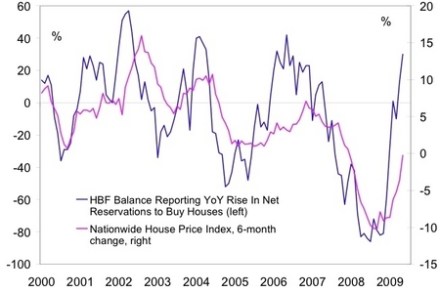
Many CoffeeHousers will give a horse laugh to the idea of “green shoots” – especially the idea of Gordon Brown winning a fourth term because a grateful nation will thank him for a recovered economy. It’s a delusion, nothing surer, and the same one Callaghan and Major suffered from. In both cases, there were firm signs of an economic recovery – but the electorate never forgave the government which landed them in the mire. But is Britain recovering? We’ve seen a few developments lately which, given the fun and games elsewhere, have gone unnoticed. So here’s a catchup. Pick up the financial pages, and you’ll find numerous stories of success: bonuses are back, the corporate debt market has recovered, house prices are moving.

Darling’s position of strength

From our UK edition

Interviewed in today's Indy, Alistair Darling's "get real" warning to the bankers seems to be grabbing the headlines - but his comments on public spending rather jumped out at me.  After Peter Mandelson said that there wouldn't be a spending review before the next general election, there were rumblings that Darling was actually still thinking about a pre-election review.  Here, he confirms that: "Mr Darling insists the uncertain economic position means he cannot decide now whether to go ahead with the scheduled comprehensive spending review (CSR). He will announce his decision in his pre-Budget report, due in November. 'To do detailed allocations running up to 2013-14 at the moment, with all the uncertainty, just does not make any sense,' he says.

Paul Krugman’s Rather Odd Love Affair With Gordon Brown

From our UK edition

I wouldn't ever dream of debating economics with Paul Krugman*. Politics, however? Well that's a horse of a different colour. The Nobel laureate is, it seems, in Britain and he has this to say: Weird politics here in London, with Gordon Brown desperately unpopular even (or maybe especially) among those who surely share his general ideological outlook. And yet … ...It’s not far-fetched to imagine that Britain will soon be experiencing at least a modest recovery, even as its neighbors languish. Yet that possibility doesn’t seem to factor into any of the political discussion. Even if one grants that is true - and, who knows, perhaps it is! Let's hope so!

Nor all that glisters

From our UK edition

Fool’s Gold, by Gillian Tett Millions of words and scores of official reports on the credit crisis have poured out. There has been no shortage of criticism, especially from political leaders eager to deflect responsibility from themselves. The catastrophe is a man-made disaster, and in years to come historians will ask how it could possibly have been allowed to happen. Gillian Tett’s Fool’s Gold is the book they will turn to. The story she tells reveals in painful detail how credit derivatives came to be invented and then misused on an unimaginable scale. It is a thriller. The idea emerged from a wild weekend party of J. P. Morgan ‘rocket scientists’ (as they used to be called) in 1994 at Boca Raton, a Florida resort.

Back to the future?

From our UK edition

With the economy in recession, the close attentions of the IMF, taxation rising to punitive levels and a general sense of our having lived beyond our means, reminders of the 1970s are all around us at present. Last week, both the death of the union leader Jack Jones and Alistair Darling’s extraordinary budget in their different ways took us back to the atmosphere of 30 years ago. Andy Beckett’s history of the political engagement of those years comes at a highly opportune time. He rightly focuses not on the familiar popular culture — there is no mention of flared trousers, the Osmonds, platform shoes or space-hoppers — but on the much stranger political landscape of the time.

A load of hot air | 29 April 2009

From our UK edition

As a general rule, I do not believe in reviewing bad books. Review space is limited, and the many good books that are published deserve first claim on it. But climate change is such an important subject, and — thanks to heavy promotion by that great publicist, Tony Blair — the Stern Review of the economics of climate change has become so well known (not least to the vast majority who have never read it, among whom in all probability is Mr Blair), that anything from Lord Stern deserves some attention.

A predictable guru

From our UK edition

There is only one politician who has emerged from the recession with his reputation enhanced. Yes, you’ve guessed right: I’m referring to Vince Cable, the ubiquitous grey-haired, sober-suited deputy leader of the Liberal Democrats. Even many Tories would feel reassured were Cable, who exudes reasonableness, to become Chancellor; broadcasters with little understanding of finance defer to him, with the BBC treating him as a cross between a living saint and a Nobel laureate in economics. A former chief economist at Shell, he is always at the other end of a mobile phone; journalists know they can count on better copy talking to him than anything on offer from the Tories.

Debating Larry Summers

From our UK edition

Terrifying news. Terrifying that is for anyone reared in the free-wheeling yet genial and sensible world of British parliamentary style debate. It turns out that Larry Summers, erstwhile Saviour of the Universe, was a policy debater while he was an undergraduate. Noam Scheiber reveals all in his informative profile of Mr Summers: Personality aside, Summers has long been associated with a certain tactical and strategic brashness. "I'm somebody who wants their errors to be of trying to do too much rather than trying to do too little," he told Portfolio magazine last September. One early outlet for this instinct was the college debate circuit, which Summers joined while an undergrad at MIT. Policy debate was a labor-intensive activity.

Countercyclical Assets

From our UK edition

One of my favourite features at Marginal Revolution is Tyler Cowen and Alex Tabarrok's occasional look at countercyclical assets - ie, products and economic sectors that are doing quite nicely at the moment. They include: Safes, Atlas Shrugged, the Mafia, Economic Disaster Tours, Tinned Soup, Matchmakers, Prayer, Second Life's economy, Cobblers, Tasers and Alpacas. So there's the future: Self-sufficient, heavily-armed Randian Alpaca farmers holding out against the Mafia with only the consolation of prayer and the escapism of online fantasies to sustain them as the "real" world collapses and man returns to a Mad Maxian, elemental state of being. Hold on tight folks, it's going to be one hell of a ride...