Economics

Shelf Life special: The Skidelskys

From our UK edition

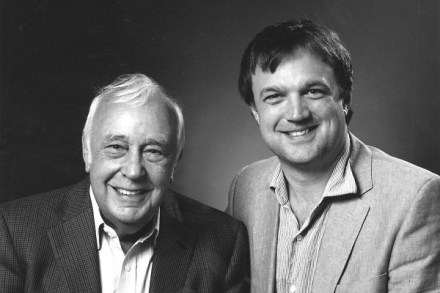
Robert and Edward Skidelsky have written a new book for our times, How Much Is Enough? The Love of Money, and the Case for the Good Life, which is published today. In their own words: ‘it is the story of… how we came to be ensnared by the dream of progress with purpose, riches without end.’ But what have this father son combination been reading while penning this and their other books? The answer is: rather more than just John Maynard Keynes. Robert Skidelsky 1) What are you reading at the moment? Laurent Binet, HHhH 2) As a child, what did you read under the covers? J.B.Priestley, The Good Companions Somerset Maugham, Of Human Bondage 3) Has a book ever made you cry, and if so which one? As a child, F.W. Farrar, Eric, or Little by Little — uncontrollably.

There are economic reasons to cut the state, irrespective of the deficit

From our UK edition

Treasury Select Committee Chairman Andrew Tyrie recently explained he would support cutting back the size of the state even if our public finances were in balance. I doubt whether the leadership of the Conservative party agrees. Cameron and Osborne seemed settled on the Brownite consensus until the financial crisis threw them a curved ball. This, in many ways, makes the so-called ‘austerity’ programme more difficult for them to implement. Without the argument that they genuinely believe in smaller government for economic or moral reasons, the party has had to adopt the ‘we wish we weren’t doing this but we have to’ line.

Eurozone v Facebook — which is the economic model of our time?

From our UK edition

Even as our attention is gripped by a crumbling eurozone, another huge economic entity is emerging in the marketplace — Facebook, which has just upsized its number of IPO shares by a quarter before its $100 billion flotation tomorrow. Providing the crisis in Europe does not blow out into a huge political standoff (and just stays the gigantic economic mess it currently is), which entity would future historians regard as the defining business model of our age? Both the eurozone and Facebook, in a way, try to deal with the problems of geography — how to connect people from different places and cultures.

A plan that could change the face of future Budgets

From our UK edition

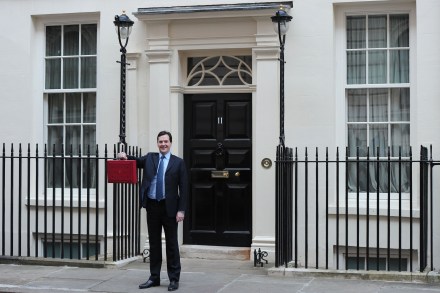
‘I’ve never seen a government document with a Laffer curve in it before’, declared Ed Balls last week. Well it looks like he might be seeing a lot more of them, if George Osborne gets his way. Yesterday, as James noted, the Chancellor told the Treasury select committee that: ‘I think the Treasury can now, and I've asked this to happen, start undertaking some real research into dynamic scoring, and what the broader economy effects are of changes to taxation’. Now, it’s hard to get all that excited about something with a name like ‘dynamic scoring’. It was never going to make the front pages, especially when there’s a ‘pasty tax’ to get worked up about.

The time for Osborne to shed Brown’s 50p rate is now

From our UK edition

Will George Osborne have a better chance to abolish the 50p tax than this month’s Budget? It would be unpopular, so it’s the kind of move he’d be unlikely to make before an election. The Lib Dems have something they want to trade: permission to raise the tax threshold towards £10,000. And two recent reports, by the CEBR (pdf) and IFS (pdf), have reinforced that this tax is losing money. At the heart of the 50p tax is a deeper question: is Osborne a transformative Chancellor who will change the terms of debate? Or is he doomed to operate within parameters set by Gordon Brown? I look at this in my Telegraph column today. Here are my main points:   1.

Greece is still the word ahead of today’s eurosummit

From our UK edition

How about this for a claim by Nicolas Sarkozy, made in a TV appearance yesterday? ‘Europe is no longer at the edge of the cliff.’ It's quite some statement, so let's hear it again: ‘Europe is no longer at the edge of the cliff.’ Of course, Sarkozy has reasons for saying it beyond mere pre-electoral braggadocio: the rates paid on Italian and Spanish 10-year bonds have generally been falling since the the beginning of the year; the euro has been making some tentative progress against other currencies; and so on. But it still constrasts heavily with much else that is being said around the eurozone. Only last week, Angela Merkel was talking of the overall failure to ‘stabilise the situation’ in Greece.

The paradox of incentives

From our UK edition

Banker bashing has become something of a national pastime, and politicians have been quick to join in. But rather than devoting their energy to avenging past sins, our political leaders might be better off learning the lessons of Dan Ariely’s book, The Upside of Irrationality. In this valuable work, Ariely shows that the incentive of big bonuses can actually damage performance, not improve it. He cites a century-old experiment in which rats were placed in a cage with two pathways. One led to a reward, the other to a device which gave the rats an electric shock. The aim of the experiment was to see how quickly the rats learned which path to take. As an added twist, the scientists varied the size of the electric shock.

Lord Glasman’s target is the other Ed

From our UK edition

Maurice Glasman’s New Statesman piece on Ed Miliband is causing a bit of a stir. Lord Glasman, an academic who Miliband proposed for a peerage, writes that the Labour leader ‘has not broken through. He has flickered rather than shone, nudged not led.’ But if you read between the lines of Glasman’s article it is clear that he thinks someone is holding Miliband back and he drops very heavy hints as to who that is. For instance, the second sentence reads as follows: ‘Old faces from the Brown era still dominate the shadow cabinet and they seem stuck in defending Labour's record in all the wrong ways - we didn't spend too much money, we'll cut less fast and less far, but we can't tell you how.

Ed Balls & his Fellow-Travellers at the New York Times

From our UK edition

Ed Balls is a bonny fighter and even his opponents often appear to enjoy being wound-up by the Shadow Chancellor's pleasingly-shameless* approach to opposition. There was a typical piece of Ballsian chicanery during this afternoon's debate on the economy when Balls accused George Osborne of stubbornly sticking to a failed "Plan A" and, to buttress his argument, pointed out that the New York Times agrees that the coalition has failed to get Britain working again. Well, if the New York Times says something it must be true! Or, you know, not. Though the Old Gray Lady is a mighty paper it is not the last word on anything, let alone the British economy.

From the archives: Fall of the Rock

From our UK edition

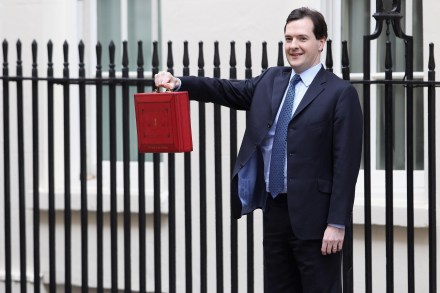
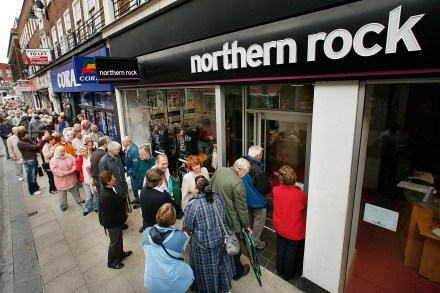
Yesterday, George Osborne announced the sale of Northern Rock to Virgin Money. Here, to mark the occasion, is the piece Allister Heath wrote on the bailout of the bank in 2007: Northern Rock: morally hazardous, Allister Heath, 29 September 2007 First we heard about 'sub-prime mortgages'; then it was 'collateralised debt obligations'; now it's the turn of 'moral hazard' to appear on the Ten O'Clock News. Jolted out of prosperous complacency by market turmoil, the public has started to care about economics: strange jargon and obscure concepts previously familiar only to investment bankers are going mainstream.

How do you leave the euro?

From our UK edition

A few weeks ago, Lord Wolfson announced a £250,000 prize for the person who could figure out how a country could leave the eurozone. Given what is happening to the euro, it seemed an awful lot of money to spend on a sub-section of the real question: namely, how Europe can maintain monetary stability and promote growth. The euro, as Gideon Rachman pointed out in the FT last week, is a means to an end, not an end in itself.  It seems Lord Wolfson agrees that he asked too narrow a question and has reformulated the task. The winner will now have to answer what will be the best way of ejection from the Euro ‘to be managed to provide the soundest foundation for the future growth and prosperity of the current membership?’ Much better.

A counterweight to France-German power

From our UK edition

It was only a matter of time before the Franco-German drive to reshape Europe's "economic governance" met with a counter-proposal. In international politics, a powerful state or group of states tends to lead others to band together in or order to provide some form of balance. This is now happening in Europe. David Owen and David Marsh are proposing the creation of a "Non-Eurogroup" (NEG), corralling the 10 EU countries outside the Eurozone into a group. Writing for the Financial Times, they argue that such an NEG would bring many benefits. They say: "Setting up the NEG would establish rights and responsibilities for non-eurozone members, ending the long-held European position that non-membership of the euro represents a form of second-class EU citizenship.

Another voice: Against austerity

From our UK edition

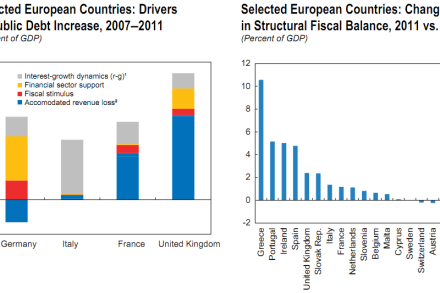
Here's the latest in our Another Voice series of posts, which give prominence to viewpoints outside the normal Coffee House fold: You can't help but notice that the UK economy isn't doing too well. Part of this is down to international developments, sure. But part – as Mervyn King said in "http://www.bankofengland.co.uk/monetarypolicy/pdf/govletter111006.pdf">his letterto George Osborne last week – is the result of "fiscal consolidation", aka spending cuts. The IMF's assessment, published a few days ago, shows both why debt has risen (lower tax revenues) and what is happening now (sharp contraction): And there's much more contraction to come: So why keep on contracting if it is affecting economic growth?

Another round of Easing

From our UK edition

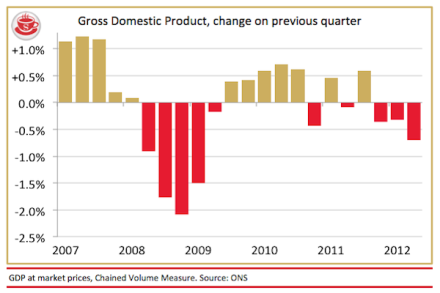
So the Bank of England has pulled the lever on a second round of Quantitative Easing. Apparently sluggish economic growth, plus more ominous signs from the eurozone, have persuaded the central bank it can’t wait any longer to print more money. But given the evidence from QE1 - only a small boost to GDP accompanied by extra inflation - it's a big gamble. Mervyn King & the rest of the Monetary Policy Committee clearly believe that more money in the system is what’s needed to kick-start growth. But even they admit that QE1 didn’t live up to expectations, so why should QE2?

An Irish Recovery?

From our UK edition

I think it's tiresome the way countries in desperate economic trouble are treated as lab rats by pundits far away whose sole interest in their travails lies in their providing an argument to buttress favoured policies back home. It's a pretty grim game, really. So when Paul Krugman spends a summer writing about Ireland's enforced austerity he's not really writing about Ireland at all. He's arguing about the United States and never mind what the hell happens to the poor, miserable Irish. The worse things go for them, the better they go for the Krugman school. Tyler Cowen documents all this rather neatly. This doesn't mean that a return to economic growth in Ireland (while Spain remains sluggish) demonstrates the wisdom of austerity's advocates.

Thought for the Day | 26 September 2011

From our UK edition

Via Samizdata, here's Jeff Randall on the eurozone crisis: The fallacy at the heart of this crisis is that every financial problem has a political solution. True. And one can make another, related point: the fallacy at the heart of this and every other matter is that every political problem has a financial solution.   Or, often, a solution at all.

Time for the QE gamble, again

From our UK edition

It's time to warm up the printing presses. When growth evaporates and governments feel politically unable to cut spending or raise taxes, there's only one tool left: printing more money. We can expect more of it soon. As James says today, Osborne believes he has created the conditions where the Bank of England can do some more Quantitative Easing and it could start as early as next month; an unusual move, given how high inflation is. But the Bank is (as ever) forecasting a return to the 2 per cent target soon – and may now claim that economic weakness makes an undershoot likely. And so (the logic will run) it’s time for more QE so as to keep inflation to target. The other arguments for QE are harder to make.

Huhne ramps up the rhetoric on 50p

From our UK edition

Chris Huhne’s comments to Prospect magazine about the 50p tax rate are typically provocative. The millionaire, former City boy accuses the Tories of wanting to abolish the 50p tax rate to help ‘their friends in the City to put their feet up’. He even suggests that the Lib Dems would not vote through any Budget that contained its abolition. Huhne’s intervention comes at a time when George Osborne is trying to build support for abolishing—or, at least cutting—the 50p rate. Tellingly, the letter from economists opposing the 50p rate was drawn up with the help of one of the Chancellor’s closest lieutenants.

Obama’s plan B: tax cuts

From our UK edition

Washington, DC The clue is in the name. A stimulus is supposed to stimulate, and Obama's first attempt stimulated nothing more than the American national debt. So he's trying again, with a $447 billion package (he's careful not to call it a "stimulus") in what will probably be his last roll of the pre-election dice. But $245 billion of it would be debt-financed tax cuts.  Not sales tax cuts, the type of which Ed Balls is prescribing for Britain. It's all payroll tax cuts: reducing the tax on jobs in the hope of encouraging more hiring. Given the temporary nature of the tax cuts, I doubt this will be the pre-election silver bullet.

50p tax isn’t just hurting the economy, but Treasury revenues too

From our UK edition

So where were these 20 economists when Gordon Brown first set the 50p trap for George Osborne? Then, Brown's gamble was that the Shadow Chancellor was a political strategist with little interest or expertise in economics, so he'd be unlikely to work out just how much the 50p tax would lose the Exchequer, or guess it could be more than £3 billion a year – with further, less calculable damage on Britain's reputation as a home for entrepreneurs. This was when we needed those economists. At the time, all Osborne had to go on was the IFS which calculated it would cost £800m - assuming the rich were no more mobile now than they were in the 1980s. A ludicrous assumption, of course. What proportion of Britain's super rich are immigrants?