Economics

Spectator Play: The highs and the lows of what’s going on in arts this week | 4 October 2013

From our UK edition

The latest adaptation of one of Trainspotting author Irvine Welsh's books is Filth  - a film so filthy that Deborah Ross had to ‘endure’ the film ‘from behind her hands’. But, somewhere amongst the ‘enduring’, she became ‘strangely hooked’, as Bruce Robertson (aka James McAvoy) led her through Edinburgh’s ‘dark underbelly of general horridness’. Filth may be ‘ghastly and unpleasant, but also kind of brilliant’, says Ross. Here’s the trailer: Breaking Bad started off with mixed reviews and an ‘uncertain future’, as it ‘dumbfounded viewers and critics alike’ – at least according to the economics professor Steffen Huck.

Can you trade love for wealth? The economics of Breaking Bad

From our UK edition

It has been the social-science equivalent to the Large Hadron Collider, the most expensive and most awe-inspiring experiment of our time. Like Cern’s particle collider, it started in 2008 and this week, just six months after the Geneva researchers confirmed that they had found the Higgs Boson, it, too, has reached a conclusion. Walter White (above), hero of Vince Gilligan’s Breaking Bad, is...(spoiler averted). When Breaking Bad hit our screens, it dumbfounded viewers and critics alike with the sheer complexity of its narrative and aesthetics. The reviews were mixed and its future uncertain. The social experiment that the series set out to explore was strikingly simple: take an ordinary, law-abiding citizen and have him dabble in crime.

Why Britain’s economy will overtake Germany’s

From our UK edition

What’s the most surprising thing that could come out of the current economic upturn? A rapid revival in northern manufacturing? The City really getting behind small British businesses? Ed Balls admitting higher public spending wasn’t always the best way to promote growth? Any of these eventualities would be fairly amazing. But the biggest surprise would perhaps be this: a gradual realisation that the UK is on track to become the largest economy in Europe. In the 19th century, at the height of the industrial revolution, the UK outproduced all of its European competitors. It steadily lost that position, however, ceding industrial leadership to the Germans and the French. In the next couple of decades that pattern will start to reverse.

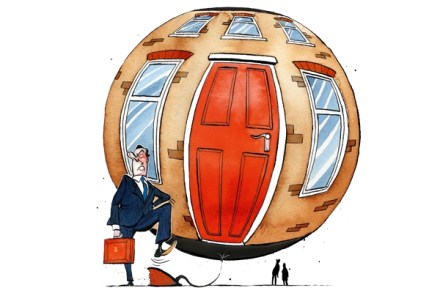
My mansion tax solution: hit rich foreigners. But no one else

From our UK edition

I am surprised no more attention has been given to Martin Vander Weyer’s suggestion in The Spectator two weeks ago that a mansion tax should be levied on those buyers who pay no other UK tax. Why has it taken so long for anyone to raise this idea? Where tax paid against income should be set against tax paid on property? Let’s consider this question in psychological terms. Assume that you are eager to buy a particular house but someone else decides he wants to live there too. He is twice as rich as you are and so comfortably outbids you. Whatever the other person’s moral worth, you know two things. He has become rich under roughly the same system as you. And he has, in the process, paid more tax than you. Now consider another scenario.

The Downfall of Money, by Frederick Taylor – review

From our UK edition

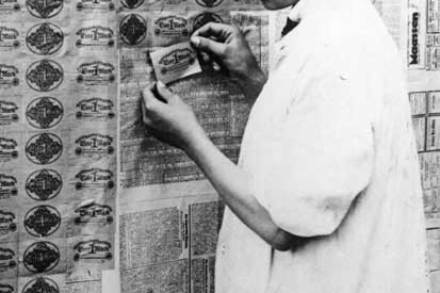
In Germany in 1923 money was losing its value so fast that the state printing works could not keep up. The work had to be contracted out to 130 different printing firms, all churning out marks with the lifespan of mayflies. Only ten years earlier, the mark had been as good as gold. Then Germany had set out to fight a short war and send the bill to the losers. This had worked well the last time round: after the 1870 war, France had handed over 5 million gold francs, not to mention two provinces. But the 1914 war turned out to be longer and far more expensive, and Germany had to pay its own way — which meant borrowing — and the Reichsbank, as a wartime precaution, had taken the mark off the gold standard. In the end there were losers all round. Frederick Taylor tells the story.

Amartya Sen interview: India must fulfil Tagore’s vision, not Gandhi’s

From our UK edition

Amartya Sen is Thomas W. Lamont University Professor and Professor of Economics and Philosophy at Harvard University. Sen’s previous books include: Development as Freedom; Rationality and Freedom; The Argumentative Indian; Identity and Violence, and The Idea of Justice. In 1998 Sen won the Nobel Prize in Economics. Much of the work done by the Indian economist has focused on poverty, specifically looking at developing new methods to predict and fight famines. His research also discusses ways to measure poverty, so that more effective social programs can be designed to prevent it. Sen has recently co-written a book with fellow economist, Jean Drèze, called An Uncertain Glory: India and its Contradictions.

Never seen the need for a class system? Take a long-haul flight

From our UK edition

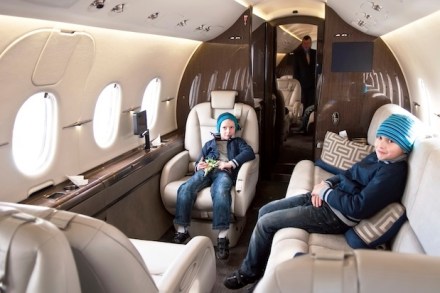
Usually it is annoying when you have to board an aeroplane via a shuttle bus rather than an airbridge. The exception is when the plane is a 747. That’s because, with the single exception of Lincoln Cathedral, the Boeing 747-400 is the most beautiful thing ever conceived by the mind of man. Any chance to see one at close quarters is a delight. But aside from the engineering, the most beautiful thing about a long-haul airliner is the economic wizardry which keeps it flying. On board are a variety of seats from the sybaritic to the spartan for which people have paid wildly varying amounts of money, even though each seat will reach the same destination in the same length of time. You may find this class division offensive.

Don’t abolish The Knowledge!

From our UK edition

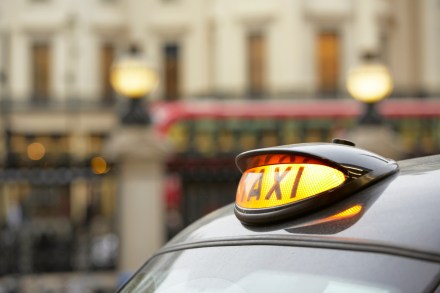
Now that most taxi drivers use satnavs, should ‘the Knowledge’ be abolished? Shouldn’t we ditch the requirement that all London black cab drivers spend several years acquiring an insanely detailed knowledge of London before obtaining a badge? In cabbie folklore, the model for the Knowledge was first suggested by Prince Albert. True or not, there is something German about the notion that every tradesman should have a qualification. And the test is teutonically stringent: more than 70 per cent of applicants fail or drop out. It demands that the prospective driver memorise 25,000 streets and 20,000 landmarks within six miles of -Charing Cross.

Don’t blame the baby boomers – they had it tough too

From our UK edition

Here’s a competition for you: ‘The most irritating discussion on Radio 4 in the past month.’ Answers in not more than 140 characters — but on a proper postcard, preferably written in fountain pen. My own choice was an edition of The Moral Maze that heaped abuse on ‘Baby Boomers’ (usually understood as those born in the decade after the second world war, including me as a happy arrival of January 1955) for ‘raiding their kids’ piggy-banks’ and other offences of ‘generational theft’. The argument — vehemently made by the former Labour policy guru Matthew Taylor, and rebutted by Melanie Phillips when she could get a word in — is that the cohort now at retirement age is, in a moral sense, disgustingly well off.

What the Arab world really wants

From our UK edition

Two years ago, the West thought it recognised what was happening in the Arab world: people wanted democracy, and were having revolutions to make that point. Now, recent events in Egypt have left many open-mouthed. Why should the generals be welcomed back? Why should the same crowds who gathered in Tahrir Square to protest against the old regime reconvene to cheer the deposing of their elected president? Could it be that the Arab Spring was about something else entirely? I believe so. The Arab Spring was a massive economic protest: a demand that the poor should have the basic rights to buy, sell and make their way in the world.

Why politics needs more Darwinists – and fewer economists

From our UK edition

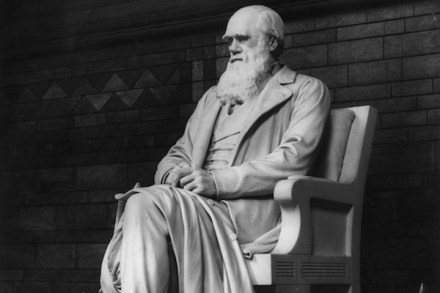
An ardently left-wing friend of mine is travelling over from Thailand next week to look for a private school for his daughter. My email to him was short. It read ‘Charles Darwin 1, Karl Marx 0’. Nobody among the sharp-elbowed middle class ever allows his political convictions to override the pursuit of a good education for his children. They will pay or move house or, if those two approaches fail, rapidly reawaken a long-dormant interest in Catholicism. One reason for this inconsistency is explained in four words by the evolutionary theorist and sociobiologist E.O. Wilson, by common consent the world’s leading expert on ants. His simple observation on Marxism was ‘Beautiful theory. Wrong species.

To transform schools, sack bad teachers and hire great ones. It’ll transform education – and the economy

From our UK edition

The Labour years can, in retrospect, be seen as a massive experiment into the link between cash and education. Gordon Brown almost doubled spending per pupil over the past decade, the biggest money injection in the history of state schooling. But as he did so, England hurtled down the international league tables. It now languishes in 18th place, according to the Organisation for Economic Co-operation and Development (OECD). The plan didn’t work. Only now is the full cost of that failure becoming clear. In an age when ‘work’ is increasingly something done with the head rather than the hands, education standards determine the wealth of nations. There is now enough data to draw a direct relationship between the two and put a price on it. Smarter nations are richer nations.

George Osborne is on course to hit his NewBuy housing target — in 2058

From our UK edition

The latest figures for NewBuy, one of George Osborne’s prop-up-the-housing-market schemes, have been published. Mercifully, perhaps, they continue to be underwhelming. To recap: inspired by the American success story of providing mortgages to those that can’t afford them, the scheme provides a guarantee backed by the government and house-builders (who commit 5.5 and 3.5 per cent of the purchase price of a property, respectively) to lenders. Buyers put in a deposit of 5-10 per cent, but the extra money means they can get a higher loan-to-value mortgage than they could otherwise afford. Houses have to be newly built and costing £500,000 or less. It has to be the buyer’s main residence. The Chancellor made available funds to support up to 100,000 mortgages.

Norman Lamont: QE is blowing another bubble. It will soon meet a pin

From our UK edition

Now that Mervyn King has given his last press conference and spotted some green shoots of his own, attention is turning to his successor, Mark Carney. He is being portrayed as the man on the white horse riding to our rescue. He has been very successful in Canada and I wish him well. But I do hope he is well prepared for the English press. Reports suggest that the Chancellor will urge the new governor to increase ‘quantitative easing’ (QE), the printing of money or the buying up of the government’s own debt in order to speed up the recovery. I hope the new governor will exert his independence and be cautious about that. At the beginning of the financial crisis, QE in the US, Japan and here was necessary as money supply plunged to levels not seen since the 1930s.

Norman Lamont’s diary: Green shoots, George Osborne and Mark Carney

From our UK edition

I was surprised to be told, by the editor of this magazine, that next week will mark the 20th anniversary of my standing down as Chancellor. The anniversary had entirely passed me by. I was asked this week why, if the economy was turning, George Osborne didn’t announce that he had spotted ‘green shoots’, as I observed in 1991. Although my remark, much rubbished at the time, turned out to be surprisingly prescient, I think Osborne is right to be cautious. Economic statistics are revised so often, trying to steer the economy as Chancellor is, as Harold Macmillan observed, like trying to catch a train using last year’s timetable. The best comment on green shoots was that of my then wife: ‘You don’t get green shoots in the autumn.

Why Mark Carney’s Canadian success story may be about to fall apart

From our UK edition

No Bank of England governor has ever been installed in office with quite so much advance hype as Mark Carney. When he moves from running to the Bank of Canada to his new office in Threadneedle Street, expectations will be running high. Carney arrives with a reputation as a master of economic strategy, a man who can single-handedly steer an economy through the most treacherous of waters, and get a country growing again with a few deft strokes of monetary magic. Certainly, George Osborne has invested his hopes in him. During Carney’s time as governor in Canada, the country was ‘acknowledged to have weathered the economic storm better than any other major western economy’, he said on announcing the appointment.

The ludicrous 20-year timescale for HS2 is reason enough to abandon the whole thing

From our UK edition

If I stand on the forecourt of Euston station tomorrow morning, I will be able to get to Manchester by high-speed train in 20 years, one hour and eight minutes. That’s only 19 years, 364 days and 23¾ hours longer than it took me last month. But at least we know that 17 June 2033, the day earmarked for the opening of the London to Manchester High Speed Rail service, will be a nice, sunny day. As the inaugural train pulls out of Euston, it will travel under clear blue skies until the train reaches Birmingham (scattered clouds: chance of precipitation 20 per cent). We know this, because, of course, we can forecast the weather 20 years in advance. Well at least we should be able to do this, since economic forecasters can clearly predict the demand for travel 20 years ahead.

Michael Sandel interview: the marketization of everything is undermining democracy

From our UK edition

Michael Sandel is a political philosopher and a professor at Harvard University. He is best known for his  ‘Justice’ course, which he has taught for over two decades. Sandel first came to prominence in 1982 with his book Liberalism and the Limits of Justice. The book offers a critique of liberalism, arguing that individuals’ needs are rooted with a sense of community and obligation to others, rather than the self. Last year, Sandel published What Money Can’t Buy: The Moral Limits of Markets. When one initially begins to read this book, it seems as if Sandel is simply stating the obvious. He asks questions that many of us think about on a day to day basis, but perhaps are afraid to ask, such as: do we want a society where everything is up for sale?

Investment special: The case for gold

From our UK edition

Few assets are more misunderstood than gold. I might even refine that statement — if you’ll pardon the pun — and say that few assets are more misunderstood than money. Gold happens to be both. Technically, of course, we are constrained by government edict to use pounds sterling for the payment of our taxes and debts. My take on this dismal state of affairs, but also my optimism, can best be summarised in the title of Nathan Lewis’s recent book, Gold: The Once and Future Money. Economists give money three attributes. It should be a unit of account (we can price things in it). It should be a medium of exchange — which avoids the inconvenience of barter.

In Praise of Sweatshops

From our UK edition

In today's Telegraph David Blair has a strong and angry piece arguing that we - that is, western consumers - are complicit in or partially responsible for the deaths of nearly 300 Bangladeshis killed when the building in which they worked collapsed. Many will agree with him. This, they will say, is the true price of our addiction to (or, rather, preference for) cheap clothes manufactured in often appalling conditions. If you shop at Primark today you have blood on your hands. In the aftermath of an appalling accident such as this it is no surprise that people are calling for more to be done.