Economic history

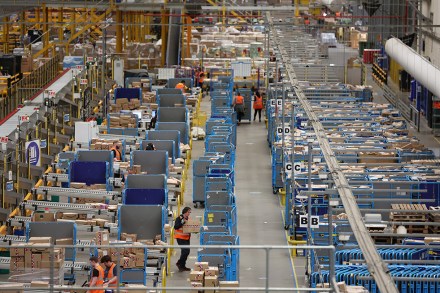
How the 18th-century Panopticon inspired today’s giant distribution hubs

The future of work is increasingly on our minds. Now that AI is coming for our jobs, will we end up supervising or being supervised by it? One way of spending the time freed up by smart tech is to read Control Science, an economic history showing how work rules were established and have since come to dominate our lives. The book’s timeline covers the past 400 years, its settings ranging across the world from North America to Europe to Japan and back to the US. A historian of labour, Henry Snow dissects four entrenched ideas: that society is a mere collection of individuals; that they are solely driven by selfishness; that they are therefore incapable of self-administered planning; and that ‘everything is – and should be – a market’.

What makes Thomas Piketty so sure he can save the world?

The French economist, statistician and polymath Thomas Piketty sprang to fame in 2013 with a daunting tome, Capital in the Twenty- First Century. In it he documented a ‘fundamental force of divergence’ in the capitalist system, which he represented by the equation r>g — the tendency for returns to capital to grow faster than national income, and therefore for wealth to concentrate in fewer and fewer hands. This tendency was reversed between 1914 and 1980 by the impact of two world wars, the Great Depression, social democracy and the trade unions, but it has since reasserted itself, restoring levels of inequality last seen 100 years ago.