EastEnders

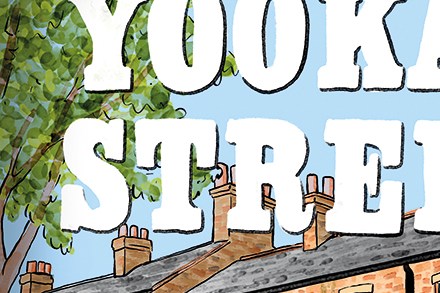
Up next… Yookay Street, a refreshing new soap opera

The idea of TV soap operas was originally, at least in part, to reflect the nation as a whole. This was never really true – out of dramatic necessity, the characters in these shows take an unusual interest in one another’s business and tend to have peculiarly eventful lives. But it was more true than today, when soaps – for all their obsession with ‘issues’ – are squeamish and avoidant, preferring to duck difficult topics. Here is my attempt to restore the balance with a more honest soap opera, where all the problems of modern Britain are concentrated in one place. Everything is absolutely fine on… Yookay Street. SCENE 1 – THE STREET. Afternoon We open on a long, terraced urban street with a corner shop at one end and a pub at the other.

The Tracy-Ann Oberman Edition

31 min listen

Actress and writer Tracy-Ann Oberman is well known for her roles across theatre, radio and television, including Dr Who, Friday Night Dinner, It’s a Sin and, of course, EastEnders. Most recently, she has taken on one of the most famous, and problematic, Shakespearean roles: as Shylock in The Merchant of Venice. Inspired by her great-grandmother, she has reimagined the role as a Jewish matriarch, and the play returns to London’s West End this December.On the podcast, Katy Balls talks to Tracy about her obsession with the Roman Empire, what it was like spending a term in Moscow towards the end of perestroika, and her  career from soap to Shakespeare, hero to villain.

How is Arnold Wesker’s Roots, which resembles an Archers episode, considered a classic?

The Almeida wants to examine the ‘Angry Young Man’ phenomenon of the 1950s but the term ‘man’ seems to create difficulties so the phrase ‘Angry and Young’ is being used instead. It’s strange to encounter a theatre that’s scared of words. The opening play, Roots, by Arnold Wesker, looks at the conflict between town and country in 1950s Norfolk. Beatie, in her early twenties, returns from London and announces to her warm-hearted but unsophisticated family that her boyfriend, Comrade Ronnie, wants to meet them. He’s a pastry chef who supports a Marxist revolution and Beatie is eager to fight for everything he believes in.