Earth

The difficult pursuit of happiness

For six centuries, from the Renaissance forward, the architects and creators of modernity have promised and predicted a new world, one which, in Thomas Jefferson’s immortal words, would be dedicated to “the pursuit of happiness.” The birth of that world in its political aspect is being celebrated this year in the United States, as well as, to some extent or another, throughout the West. This phrase, so vague and rhetorical as to be meaningless, is also the best definition there is of the modern project. Hence the 250th anniversary of the birth of the US is an obvious moment to consider how far America, and with it the world it has so radically influenced, have advanced since 1776.

A brief history of flat earthers

In 2020, an American pilot and daredevil named “Mad Mike” Hughes launched himself in a homemade steam-powered rocket, hoping to achieve enough altitude to prove to himself that the Earth was flat. Unfortunately, the rocket crashed and Mad Mike was no more. “I’m not going to take anyone else’s word for it, or NASA, or especially Elon Musk with SpaceX,” he had once explained in an interview. “I’m going to build my own rocket right here and I’m going to see it with my own eyes what shape this world we live on is.” In this way he became a martyr to the modern conspiracy theorist’s mantra: “Do your own research!

Flat earthers

Going out on a fossil fuel bender

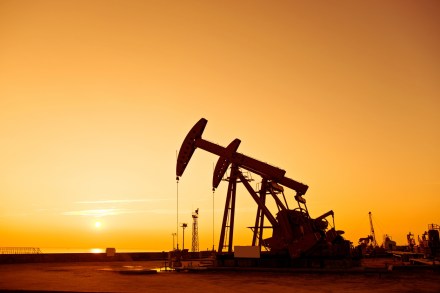
Covid rates are abating just in time for surging gas prices to eclipse the pandemic as our crisis du jour, and people from both sides of the political aisle are crying out in unison: something must be done! The current energy crisis debate consists of a few camps: one group professes that they can’t abide fossil fuels being used at all, while another can’t imagine living without them. The third group makes up the middle of the Venn diagram, and though a paradoxical state of mind, it contains the most members. Choosing a winner from among the prevailing arguments is no simple task.

oil