Donald trump

Starmer is the unlikely hero of the hour. Can it last?

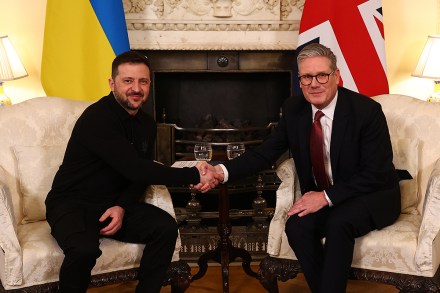
When Donald Trump addressed Congress this week, he declared he was ‘just getting started’. His words will not have soothed politicians in the UK, who are still playing catch-up with the President’s first 43 days. This week, Trump proved yet again that he is the biggest force in British politics. His blow-up with Volodymyr Zelensky at the White House, threats of a trade war and the disparaging comments by his Vice-President, J.D. Vance, about European countries that haven’t ‘fought a war in 30 or 40 years’ dominated Westminster. Amid all the noise, UK party leaders have been drawn into new positions. Despite his close links to Team Trump, Reform’s Nigel
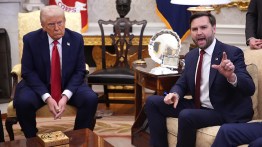
The bully-boy tactics of Trump and J.D. Vance

Just before Russia invaded Ukraine three years ago, Vladimir Putin and Xi Jinping announced a ‘friendship without limits’. The phrase seems to apply equally well to Vladimir Putin and Donald Trump. Has Trump ever breathed a word of serious criticism of Putin, questioned his democratic mandate, challenged his right to invade an independent country, condemned his kidnapping of children? Before his inauguration, Trump stepped in on behalf of ‘the hostages who are being held so violently, inhumanely and against their will in the Middle East’. He warned Hamas that there ‘would be ALL HELL to PAY’ for the perpetrators and that they must ‘RELEASE THE HOSTAGES NOW!’. But although Ukraine is,

Trump has shifted the world in Putin’s favour

The verbal pummelling of Volodymyr Zelensky in the White House last week was an ugly moment of bitter truth. We saw the West tearing itself apart thanks to Donald Trump’s vanity and J.D. Vance’s disdain for the Ukrainian leader. If there is anything positive to be taken from the uncomfortable spectacle, it is that Europe now understands it has to take its defence much more seriously. And it is a mercy that negotiations between Zelensky and Trump have not been derailed for good. The Ukrainian President spent the week doing what his US counterpart accused him of failing to do: thanking the US for military and other aid it has

Dirty deal: what Trump really wants from Ukraine’s natural resources

In Sergio Leone’s epic spaghetti western The Good, the Bad and the Ugly, Blondie, played by Clint Eastwood, and Tuco, played by Eli Wallach, are rival hunters for stolen Confederate gold. The treasure, they discover, is buried in a huge Civil War cemetery. Unfortunately, they have no idea exactly where. Having earlier taken the precaution of emptying Tuco’s revolver, Blondie turns to him and utters the immortal lines: ‘You see, in this world there’s two kinds of people, my friend. Those with loaded guns. And those who dig. You dig.’ This week has seen good, bad and ugly moments in geopolitics. And it’s ended with Donald Trump playing Blondie and

Michael Wolff: How Trump Recaptured America

33 min listen

In this week’s Book Club podcast, I’m joined by Donald Trump’s outstanding Boswell, the magazine writer Michael Wolff. Michael’s new book, All or Nothing: How Trump Recaptured America, takes Donald Trump and his colourful cast of hangers-on from the aftermath of the 6 January riots to his triumphal return to the White House. Michael tells me why he thinks people in Trumpworld are still talking to him, how the Donald has changed over the decade he has been reporting on him, why he’s confident American democracy will survive a second Trump presidency – and how world leaders, such as Keir Starmer, are best advised to handle this volatile and unpredictable character.

Where does Trump's suspension of Ukraine aid leave Europe?

13 min listen

Overnight President Trump made another extraordinary move in his ongoing attempt to broker a deal between Ukraine and Russia, suspending all U.S. military aid to Ukraine. Katy Balls talks to James Heale and geopolitical analyst Mark Galeotti about how serious this development is and where it leaves Ukraine’s European supporters. Produced by Natasha Feroze and Cindy Yu.

Coffee House Shots Live with Robert Jenrick and Jonathan Ashworth

70 min listen

The Spectator’s Katy Balls, Michael Gove and Kate Andrews were joined by special guests Robert Jenrick and Jonathan Ashworth for a live podcast, recorded at the Emmanuel Centre in Westminster. The main topic of discussion was, of course, Donald Trump, whose inauguration has ushered in a new world disorder. His ‘shock and awe’ foreign policy has sent Europe scrambling as it tries to work out who will be responsible for ensuring its security in the future. We have seen a move away from the idealism that has defined foreign policy in the last decade and towards ‘realism’, with countries committing to boots on the ground and greater defence spending. Are

How successful was Keir Starmer's visit to Washington?

25 min listen

Freddy is joined by The Spectator World’s deputy US editor, Kate Andrews, and The Telegraph columnist, Tim Stanley, to talk about Keir Starmer’s much-anticipated meeting with Donald Trump in Washington. Across the board, it has been read as a success – at least domestically, that is. The victories include movement on the Ukraine backstop, some positive discussions around the UK avoiding tariffs, and a second state visit is on the horizon as well. The biggest win, though, was the number of compliments that the president gave Starmer, including – puzzlingly – about his accent. The Spectator World’s Ben Domenech secured an interview with Donald Trump after the Starmer meeting, in which he was

Can Starmer charm Trump?

12 min listen

Keir Starmer is in D.C. for what will probably be one of the most important bilateral meetings of his premiership. The goal is to charm Trump and secure some guarantees for Ukraine’s security after a negotiated peace in the war. Can he succeed? Cindy Yu talks to James Heale and Peter Quentin, Rusi Associate Fellow and former policy adviser to Ben Wallace. Produced by Cindy Yu.

The Roman approach to ending a war

We await the full details of Donald Trump’s ‘take it or leave it’ solution to the Ukraine war, but at least Romans liked that sort of clarity. Take the war between Rome and the Carthaginian Hannibal, begun in 218 bc. Rome had already defeated Carthage in a long drawn-out battle over the possession of Sicily. In search of revenge, the father of young Hannibal made him swear never to befriend Rome. His family conquered southern Spain, rich in silver mines, agriculture and manpower, and when in 219 bc Hannibal sacked Saguntum, a town allied to Rome, Rome sent an embassy to clarify the situation. The Carthaginians complained of Roman treachery

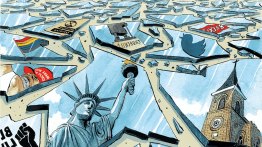
The woke movement is finally over

Is the ‘Cathedral’ about to fall down? That’s the name given by the right-wing blogger Curtis Yarvin to denote the 21st century’s most prestigious intellectual institutions, particularly in journalism and academia. He’s talking about the BBC, CNN, the Guardian, the New York Times, the Washington Post, Reuters, Oxford, Cambridge, Imperial, Harvard, Yale, Princeton, etc. But we can enlarge the definition to include nearly all the West’s high-status institutions and professions. One of the mysteries of the Cathedral, he says, is that the people in these power centres seem to be members of the same cult-like religious movement – the Great Awokening, Wokus Dei – even though there’s no Holy See

The engagement vs isolation debate returns

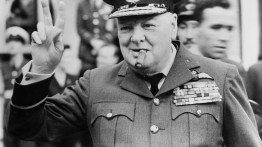
British foreign policy has always oscillated between isolation and engagement. The division has shaped Conservative thinking over generations. The archetypal icon of engagement is Winston Churchill. In the wake of the Munich Agreement, Churchill made his greatest anti-appeasement appeal: ‘What I find unendurable is the sense of our country falling into the power, into the orbit and influence of Nazi Germany.’ He was for rearmament and, ultimately, for war. Churchill had in his sights the isolationists of the right – those Tories who would not ‘die for Danzig’. Victory in the second world war, the western alliance, Nato, America’s nuclear guarantee, the European Union, communist collapse – all seemed to

Donald Trump is utterly wrong about Ukraine’s leadership

The Anti-corruption Action Centre, the NGO I chair, is probably one of the loudest watchdogs in Ukraine that is monitoring President Volodymyr Zelensky and his administration. We expose corruption, advocate for comprehensive rule-of-law reforms, and demand better governance ­– even during war. For over a decade we have built anti-corruption infrastructure in Ukraine, and endured persecution for simply carrying out our work. We want to strengthen Ukrainian institutions and build a more effective, resilient democracy. It’s unacceptable for any foreign leader (even of the United States) to humiliate our president, decide on behalf of the Ukrainian people that we should hold elections, and spread falsehoods about who started the war.

My Valentine’s Day car crash

Marco Rubio, the US Secretary of State, is not a MAGA groupie, but a believer in the Nato alliance. He knows about working with allies. Yet he says that the Americans should go right ahead with Russia, the murderous aggressor, without bringing Ukraine, ally and victim, or the Nato member states, into the talks. This is President Trump’s will, he says. Compare with the Middle East. Would Rubio – or Trump – say that Hamas, the murderous aggressor, was the key player, and should therefore have bilateral talks with the US whereas Israel, ally and victim, should just sit and wait to be told later what is happening? Trump helped

Portrait of the week: US and Russia talk, Chiltern Firehouse burns and Duchess of Sussex rebrands

Home Sir Keir Starmer, the Prime Minister, said that, to guarantee the security of Ukraine, he was ‘ready and willing’ to put ‘our own troops on the ground if necessary. I do not say that lightly’. Parliament would be allowed a vote on such a deployment, the government said. Earlier, Sir Keir took an unannounced telephone call from President Donald Trump of America about their forthcoming meeting. Afterwards, Mr Trump said: ‘We have a lot of good things going on. But he asked to come and see me and I just accepted his asking.’ The Chiltern Firehouse hotel in Marylebone burnt down. The Lady Chief Justice, Baroness Carr of Walton-on-the-Hill,

Let Trump buy the Chagos Islands

Forgive me for returning in this column to Diego Garcia. The issue is too important to shrug aside: important not only in itself, in defence terms and in the immediate, but in the longer-term lesson this has for Britain in our relationship with the United States; and there is a new rumour to report, and more to say. America is having a laugh. Washington – not China, not the International Court of Justice, not Mauritius and not particularly Donald Trump – is the problem here, and the author of Britain’s present difficulty. America is hiding behind our skirts and leaving Britain to face the flak. But it is they, not

Does Trump deserve the Nobel Peace Prize?

Donald Trump told reporters this week that he deserved the Nobel Peace Prize for helping to free some of the Israeli hostages in Gaza. But, he went on, ‘they’ll never give it to me’. Trump’s chances of putting on white tie and tails in Oslo have receded to a distant speck with his plan to Make Gaza Great Again – by removing the Palestinians.  This proposal may have doomed the brittle ceasefire and jeopardised further hostage releases. It has made the prospect of a deal between Saudi Arabia and Israel vanishingly small. It might also end up destabilising Jordan and Egypt. But the agent of chaos in the Oval Office

Why don’t Yale students want to drink?

They say it is good to learn new skills as you get older. Well here goes. I am about to arrive in New Haven, Connecticut, to teach as a senior fellow at Yale University. Last time I taught anything to a class it was at Sunday school more than half a century ago. Arriving late at night I see little of the town but then next morning when I draw up the blinds – wow, it’s just like Oxford! In a sense it was meant to be, as Yale’s buildings were to some extent modelled on Oxford and Cambridge. One thing is very different though: there is only one student

Portrait of the week: Andrew Gwynne sacked, Trump saves Prince Harry and a £30m refund over moths

Home Andrew Gwynne was sacked as a health minister and suspended from the Labour party for making jokes about a constituent’s hoped-for death, and about Diane Abbott and Angela Rayner. Oliver Ryan, a member of the WhatsApp group where the jokes were shared, had the Labour whip removed and 11 councillors were suspended from the party. Asked about 16,913 of 28,564 medics registering to practise medicine in Britain last year having qualified abroad, Wes Streeting, the Health Secretary, said there was ‘no doubt’ that ‘the NHS has become too reliant’ on immigration. The government issued guidance saying that anyone who enters Britain by means of a dangerous journey will normally