Donald trump

Does Steve Bannon’s arrest damage Trump’s re-election’s bid?

From our UK edition

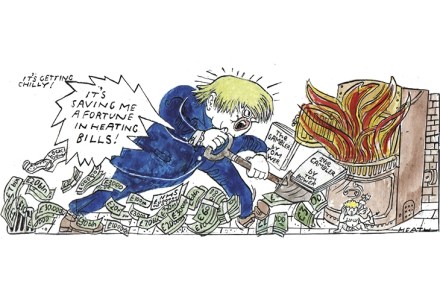
Oops. Not only did the wall that Donald Trump promised to build never get built, but it turns out that some of his closest former confederates are now accused of deploying the slogan in the interests of building up nothing other than their own fortunes. A grizzled Steve Bannon, Trump’s former campaign adviser, wearing a green Barbour jacket was arrested this morning on charges of fraud by New York federal prosecutors. The contention of the Manhattan prosecutors is that Bannon, who is said to be worth tens of millions, pilfered about £760,000 ($1million) through a private group called 'We Build the Wall'. The advisory board contains a bevy of conservative all-stars, including former Rep. Tom Tancredo and Erik Prince. Kris Kobach was general counsel.

Trump’s autocratic antics risk becoming the new normal

From our UK edition

It is easy to forget the abnormality of Donald Trump’s presence in the White House. Before his election it would have seemed unthinkable to have the leader of the free world bragging of being a ‘very stable genius’ on social media, then taunting the despotic ruler of a nuclear-armed nation as ‘Little Rocket Man’ and threatening annihilation of his country. Or for a United States president to lie so frequently and casually that the Washington Post counted more than 10,000 ‘fishy claims’ by the end of last April alone. But we have become inured to Trump’s self-obsessed boasts and infantile tantrums.

Dear Boris: what happens if Trump doesn’t accept defeat?

From our UK edition

Dear Prime Minister, You already have quite enough on your plate. So forgive me if I hoist a storm cone over another potential problem. I refer to the US presidential election on 3 November and the possibility of its ending in deadlock and confusion. I was the British ambassador to Washington during the Bush/Gore election of 2000. The outcome hung in suspense for a month. Everything turned on which contestant had won more votes in Florida. In the end, the matter had to go to the US Supreme Court for a decision. I was present at the hearing. After 9/11, it was the most dramatic moment of my time in Washington. The events of November and December 2000 were a stress test for the American constitution.

Has Trump’s Covid-19 response really been so dire?

From our UK edition

The sight of Donald Trump fumbling with charts during his interview on HBO this Monday has provided much ammunition for his enemies. The words ‘train wreck’ and ‘toe-curling’ have been used multiple times to describe how the President insisted that the US has one of the lowest death rates from Covid-19, while interviewer Jonathan Swan quoted figures suggesting the US has one of the worst rates. True, Trump looked ill-prepared, but was he fibbing, as many of his critics have implied? America cannot claim to have a lower death rate than comparable western countries – but neither does it come out especially badly The truth lies somewhere between what Trump and Swan were each trying to assert.

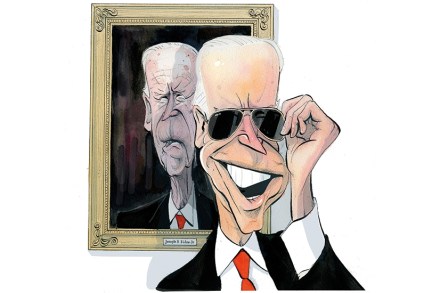
The real Joe Biden: what would his presidency look like?

From our UK edition

It is usually a bad idea for a presidential candidate to leave himself open to the accusation that he is soft on law and order. Yet last weekend Joseph Robinette Biden Jr did exactly that. He attacked the ‘egregious tactics’ of the federal officers trying to control the apparently never-ending riots in Portland, Oregon. Sensing an open goal, President Trump’s campaign promptly accused Biden of ‘siding with the criminals’. In any normal election year, such an exchange would be a major flashpoint. In the Covid-19-riddled anarchy cauldron that is America in 2020, nobody much cares. Joe Biden can say pretty much anything, or nothing at all, and his lead in the polls just grows and grows.

Is Trump toning himself down for re-election?

From our UK edition

The last time a U.S. President lost re-election, the year was 1992 and the victim was George H.W. Bush. President Donald Trump is currently doing everything in his power to make sure he isn’t the first incumbent in 28 years to vacate the White House after a single, four-year term; if that means ditching the improvisation and unconventionality he wears on his lapel every day, so be it. That Trump gave two consecutive press conferences, on 21 and 22 July, about the coronavirus now rampaging the American South and West is not surprising. You may remember this past April, when Trump and his advisers thought it would be a good idea for the President to give daily news briefings about the virus with vice president Mike Pence, Dr. Anthony Fauci, and Dr.

We’re spending lockdown defending a family of mice

From our UK edition

Austin My first Independence Day in the US for many years. Usually I’d be in Paris avoiding Texas heat. My wife and I are self-isolating with much more square feet and wildlife to enjoy. Our garden is lush and green, full of flowers, owls, hawks, possums, squirrels, skunks, armadillos and snakes. Recent wild fires drove more animals into town. Joyously athletic with the recklessness of youth, squirrels and redbirds chase each other through our oaks and pecans and it’s pretty good to sit on the front porch with a cooling drink and the rich scent of magnolias in the evening air. The young hawks are in heaven. They have discovered our bird feeders. We have become very defensive of our bluejays, cardinals, chickadees, wrens, woodpeckers, mockingbirds and others.

Trump is taking on the historical revisionists

From our UK edition

Ahead of Independence Day last week, CNN went live to its correspondent Leyla Santiago. Here is how she described the upcoming celebrations: ‘Kicking off the Independence Day weekend, President Trump will be at Mount Rushmore, where he’ll be standing in front of a monument of two slave owners and on land wrestled away from Native Americans.’ She went on to report that the President was expected to focus on efforts to ‘tear down our country’s history’. And where might the President have acquired such an idea? Even a few years ago it would have been unthinkable for a major network like CNN to have described Mount Rushmore in such nakedly hostile terms.

This ‘revolution’ isn’t what it looks like

From our UK edition

America is not in the middle of a revolution — it is a reactionary putsch. About four years ago, the sort of people who had acquired position and influence as a result of globalisation were turfed out of power for the first time in decades. They watched in horror as voters across the world chose Brexit, Donald Trump and other populist and conservative-nationalist options. This deposition explains the storm of unrest battering American cities from coast to coast and making waves in Europe as well. The storm’s ferocity — the looting, the mobs, the mass lawlessness, the zealous iconoclasm, the deranged slogans like #DefundPolice — terrifies ordinary Americans.

Why Biden might be better for Brexit Britain

From our UK edition

At the best of times, US presidential elections require the British government to walk a tightrope. In 1992, a Tory prime minister got this very wrong. John Major’s excessive support for George Bush Sr’s unsuccessful re-election effort alienated Bill Clinton. The damage to the UK’s relationship with the country’s most important security partner was only fully repaired when Tony Blair became prime minister in 1997.

Watch: Hoyle hits out at John Bercow’s ‘retrograde’ Trump ban

From our UK edition

Since becoming the new Speaker of the Commons, the softly-spoken Lancastrian Lindsay Hoyle has sought to distance himself from the tenure of John Bercow. While the latter spent his days constructing long monologues and pontificating from the Speaker’s chair, Hoyle has instead focused on limiting his own contributions in the Chamber and attempting to be an impartial arbiter of Commons debates. Despite this change in approach (and the fact that he ran for Speaker as the anti-Bercow candidate) Hoyle has generally avoided criticising his predecessor directly. Mr S wonders though if that now might be about to change. This week, Hoyle was interviewed by chief executive of the rugby league team, the Warrington Wolves.

Portrait of the week: MPs return, dentists reopen and racing resumes

From our UK edition

Home Primary schools were allowed to reopen but many did not want to. MPs voted to return to their physical presence in parliament. The government told people they were allowed to meet in gardens or on rooftops, up to the number of six, as long as those from different households remained two metres apart. About 2.5 million vulnerable people in England and Wales, who had been advised to stay at home, were now advised that those living alone might meet another single person out of doors. Rosie Duffield, the Labour MP for Canterbury, resigned as a whip after she was found to have gone for a walk with her current partner at a time that he was still living with his wife. Racing resumed. The Queen rode a fell pony at Windsor Castle.

Why is YouTube so afraid of free speech?

From our UK edition

On Sunday, the hosts of Trigger--nometry, a YouTube show, posted an interview they’d done with Peter Hitchens. They labelled it ‘Lockdown is a catastrophe’, which is an accurate summary of the journalist’s view. Over the next 24 hours, instead of generating tens of thousands of hits, which their interviews normally do, it got very few. Why? The hosts got out their laptops and discovered that when they searched for the video on YouTube or Google, its parent company, it didn’t come up. That wasn’t a technical hitch. On the contrary, it’s a tried-and-tested method that YouTube and Google employ to suppress traffic to material they regard as suspect. It’s a form of censorship known as ‘shadow banning’.

American police should not be above the law

From our UK edition

In Minneapolis, where George Floyd was killed, a black entrepreneur had his bar destroyed before he even had a chance to open its doors for the first time. In Richmond, Virginia, a mob set light to a building, then blocked firefighters who were trying to save a child from the flames (-thankfully the child survived). These actions, repeated in cities all over America, are harmful in two ways: night after night, rioters are trashing their own backyard, destroying private property and putting innocent lives at risk. They are also diverting attention away from the legitimate grievances of peaceful protestors, whose efforts are far more laudable than looting.

America is burning – and it could cost Trump the presidency

From our UK edition

‘The crime and violence that today afflicts our nation will soon come to an end,’ said Donald Trump on 21 July 2016, as he accepted the Republican party’s nomination for the presidency of the United States. ‘Safety will be restored.’ Mark that down as a broken promise. On Friday, as a seething mob menaced the White House, the Secret Service rushed Mr Trump down to the emergency bunker under the East Wing. Downtown Washington has come to resemble a war zone. On Monday, police deployed cavalry and tear gas to clear Lafayette Square so the President could shoot a video of himself walking outside looking tough. In other parts of the capital, rioters carried on smashing buildings and starting fires.

America’s immune system is failing

From our UK edition

‘This American carnage stops right here and stops right now,’ said President Donald Trump in his inauguration speech on January 20, 2017. Three and a half years later, in the early summer of 2020, a bout of heavy riots has broken out, like a virus spreading, in cities across America. Minneapolis rioted for days on end. Other cities erupted: in Los Angeles, Las Vegas, Phoenix, Houston, Dallas, Atlanta, New York and Washington. A mob now menaces the White House. Maybe that American carnage is just beginning. This latest unrest, coming as it does in the middle of an ongoing global health crisis and a concomitant economic recession, feels more devastating We’ve seen plenty of riots in America in the last few decades.

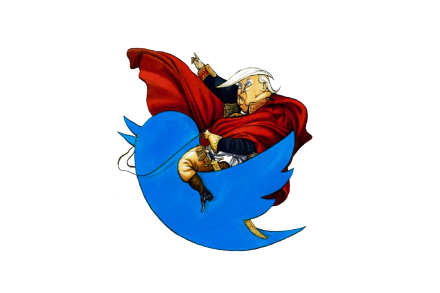
Trump vs Twitter: the battle begins

From our UK edition

When Tony Wang, general manager of Twitter in the UK, described the company as the ‘free speech wing of the free speech party’ he was expressing an ideal that would soon collapse. This was in 2012, long before the prospect of a Donald Trump presidency was anything other than a flippant punchline in The Simpsons. Six months after the 2016 election, Twitter’s co-founder Evan Williams expressed his regret for the part they played in securing Trump’s victory. The implication – that the decisions of the general public are shaped by bad actors who prey on their malleability, and it is the responsibility of technocrats to do something about it – is one that has since become depressingly familiar.

Portrait of the week: Unemployment up, bathers banned and Corbyn’s brother arrested

From our UK edition

Home The United Kingdom seemed reluctant to come out of its lockdown. ‘We are likely to face a severe recession, the likes of which we haven’t seen,’ said Rishi Sunak, the Chancellor of the Exchequer. Unemployment rose by 856,500 in April to 2.1 million. More than two million claims had been made for the grant scheme for self-employed people. The government was estimated to be paying ten million of the UK’s 27.5 million private-sector workers. At quiet railway stations, wardens supposedly trained in crowd control stood around talking to each other. Police in England and Wales issued 14,444 fixed penalty notices for breach of the coronavirus regulations up to 11 May; one person was fined nine times.

Watch: Trump says he takes hydroxychloroquine for Covid-19

From our UK edition

As scientists around the world race to find a cure, treatment or vaccine for Covid-19, the US president Donald Trump revealed that he had been doing his bit of medical experimentation this week. At a press conference last night the President revealed that he had been taking the anti-malarial drug hydroxychloroquine every day for a week and a half, to ward off the virus. Trump said that ‘a lot of good things had come out about’ the drug, that frontline workers were using it, and that there was no harm in taking it, even if it didn’t stop the disease. Hydroxychloroquine has been touted as a potential treatment for Covid-19 after French studies seemed to show that it inhibited the infection of cells.

Taxonomy reaches celebrity heights

From our UK edition

Heteropoda davidbowie is a species of huntsman spider. Though rare, it has been found in parts of Malaysia, Singapore, Indonesia and possibly Thailand. (The uncertainty arises because it’s often mistaken for a similar-looking species, the Heteropoda javana.) In 2008 a German collector sent photos of his unusual looking ‘pet’ to Peter Jäger, an arachnologist at the Senckenberg Research Institute in Frankfurt. Consequently, and in common with most other living finds, David Bowie’s spider was discovered twice: once in the field, and once in the collection. Bowie’s spider is famous, but not exceptional.