Divorce

Setting fire to my house was an act of radical self-love

One of my favorite pastimes is reading those alternate-lifestyle essays that the left-wing media loves to publish unironically. You know the sort: Why I quit my job at a high-powered social media firm to become a minimum-wage pansexual. Or: How my open relationship with three maple trees and a rhinoceros helped me find inner peace. The august New York Times rarely indulges such deviancy, if only because the cardinal rule of that paper's op-ed page is to never let down one's guard lest one accidentally say something interesting. Yet recently the Times did make a modest exception. Last week it ran an essay by Lara Bazelon titled 'Divorce Can Be an Act of Radical Self-Love’.


self-love

Post-Brexit divorce is getting messy

From our UK edition

The City has resigned itself to being locked out of the EU. The hauliers are adjusting to all the extra paperwork. Now it looks as if the lawyers will have to get used to no deal as well — and while that won't do any serious long term damage to the profession's booming global status, it now looks as if a lot of divorcing families will be collateral damage.Over the last month, it has become clear the EU plans to block the UK from joining the Lugano Convention, which helps settle in which jurisdiction disputes should be resolved. The reason is no great mystery to anyone. Brussels wants to make it harder for London's firms to sell their services globally, and take some of that business for competitors in Paris, Amsterdam and Frankfurt.

The disappearing man: who was the real John Stonehouse?

From our UK edition

November 1974 was the month to disappear. On the 7th, Lord Lucan went missing, and a fortnight later John Stonehouse MP dis-appeared from a beach in Miami. Lucan was never found, so remains prominent in our national mythology. Nothing endures like a mystery. Stonehouse, on the other hand, was discovered in Melbourne six weeks later, living under an assumed name. His vanishing trick, so carefully rehearsed, had unravelled — partly due to Lucan, as it happened. Having been alerted to a suspicious Briton by a beady bank clerk, the Australian police thought he might be Lucan. Their first act after arresting their suspect was to lift his trouser leg to look for the missing earl’s telltale scar. Stonehouse had long had a tendency to vanish.

Abandoned by Paul Theroux: the diary of a sad ex-wife who sadly can’t write

From our UK edition

When I interviewed Paul Theroux 21 years ago at his home in Hawaii, there were already rumours that his ex-wife Anne had written a book about him. In fact their son Marcel said in an interview that she had sent Paul the manuscript. Theroux denied it to me, and said breezily that he wished Anne would write a book, because then she’d have greater respect for the work involved. And: I don’t see that if she wrote a book it’s going to be an attack on me. I don’t think it’ll be ‘I discovered his lies’. So it doesn’t worry me. I’m sure she’d show it to me, but it doesn’t really matter — I’m happy to just buy it off the bookstalls. So is this the long-awaited book?

Will the real Bill Gates please stand up?

Humans are capable of growth. Even the most immoral of individuals have the capacity for change. Your second act can be distinctly different from your first. If in doubt, just ask Bill Gates. When you close your eyes and think of Bill Gates, what images spring to mind? A kindly man in a knitted sweater promising to rid the world of suffering? Gates has become synonymous with words like compassion and care. But what about words like tyrant, megalomania, pettiness, insincerity and greed? Surely not. How could a benevolent philanthropist, a man who exudes kindness, also be cruel and petty? As has been reported ad nauseam, Bill Gates has devoted so much of his life to eradicating illnesses like malaria and addressing issues of poverty in disadvantaged countries.

bill gates interviews

Bill Gates isn’t a creep. He’s a beta

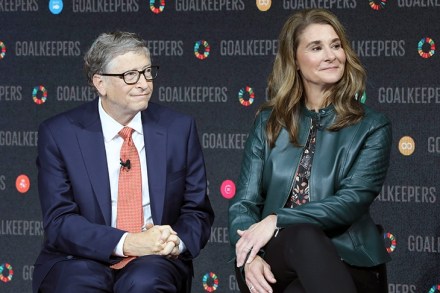
Won’t you spare a thought for poor William Henry Gates III? For most of America, the collapse of a marriage is a private trauma, or at worst publicized in a series of ill-thought Facebook posts. But Mr Gates is worth $120 billion — and it turns out an unfathomably enormous fortune can buy a great deal of unwanted attention when your personal life is disintegrating. Jeff Bezos had an even bigger fortune at stake when he divorced — and his public breakup involved cringeworthy X-rated text messages being leaked to the world via the National Enquirer. Somehow Gates’s divorce has already managed to become more publicly excruciating. First, there were the leaks about Melinda’s $132,000 a night island getaway where she planned to wait out the media storm.

bill gates

Can Melinda still keep Bill Gates in check?

The end of the 27-year marriage of Bill and Melinda Gates looks tidier, so far, than Amazon founder Jeff Bezos’s parting from his ex-wife MacKenzie Scott, but will no doubt turn into another fee fountain for Seattle’s legal fraternity. Melinda French was a manager at Microsoft, the software giant created and driven by Bill, when the two met in 1987 — and is widely credited with turning him from a hardcore techie and ruthless competitor into a mellower, more admirable human being. The $50 billion charity they created together has become the flagbearer for ‘venture philanthropy’, which is the application of large-scale private funds to address global problems, particularly in healthcare, that governments and market forces fail to solve.

melinda

How to avoid a lockdown divorce

From our UK edition

They say absence makes the heart grow fonder. Well, the coronavirus pandemic now provides us with the ideal conditions to test whether the opposite is equally true: does being cooped up together in a small space for a long period of time also do the same? I think we all know the answer to that one. It will come as no surprise to any married couple – happy or otherwise – that the Chinese city of Wuhan, epicentre of the coronavirus outbreak, has seen a large spike in divorce cases after couples escaped from a month’s quarantine. So, as millions of families across Britain embark on weeks, and possibly even months, of lockdown in their homes, here are my tips for helping you and your increasingly irritating other half to survive with your marriage intact.

Detailed and devastating: Marriage Story reviewed

From our UK edition

Noah Baumbach’s Marriage Story is a drama about the breakdown of a marriage and it is, at times, devastatingly painful. ‘Divorce,’ says a lawyer at one point, ‘is like a death without a body.’ It’s certainly not the most fun you’ll ever have at the cinema — although it is witty and there are some brilliantly comic lines — but you will see something riveting, detailed, authentic and excellent. Plus it also marks the return of Scarlett Johansson as an interesting actress — remember Lost in Translation? — rather than the one who hangs out with Iron Man and Thor and just does sexy kicks. I’d even forgotten she could be as interesting as this, frankly. Johansson plays Nicole while Adam Driver plays Charlie.

Divorce’s faultless history

From our UK edition

The Christian church ordained that marriage, a sacrament imparting divine grace, was for life. In 1857, the state enacted its first generally applicable divorce law, to be triggered only by sexual misdemeanours. Liberalisation slowly followed,and now ‘no fault’ divorce is being proposed in England. We edge closer to pre-Christian practice. To generalise: in both Greek and Roman worlds, marriage was essentially an understanding between two families, with fathers on both sides agreeing to and sealing the deal (that does not mean the couple’s view was irrelevant), and the bride being given a dowry by her father. The state had no official stake in the relationship. It did not keep records of births, marriages, divorces or deaths.

The Spectator’s Notes | 11 April 2019

From our UK edition

In his famous speech to both Houses of Parliament in March 1960, General De Gaulle praised Britain: ‘Although, since 1940, you have gone through the hardest vicissitudes in your history, only four statesmen [Churchill, Attlee, Eden and Macmillan] have guided your affairs in these extraordinary years. Thus, lacking meticulously worked-out constitutional texts, but by virtue of an unchallengeable general consent, you find the means on each occasion to ensure the efficient functioning of democracy.’ De Gaulle admired us and disliked us, and concluded that we threatened France if we joined the EEC. So he blocked our entry. He was right about us, wrong about the effect of our joining.

Dear Mary | 4 April 2019

From our UK edition

Q. A woman I’ve known for years is getting divorced and rings me every day to talk about it. I have closer friends with ongoing problems and, though I do care, I don’t have the emotional energy or time to deal with her problem as well. I work and she never has, so she can’t really understand how tired I am. Your advice? — Name and address withheld A. Confide that you are finding it difficult, both at work and at home, to talk on the telephone without being overheard. Explain that this is inhibiting your ability to empathise and strategise with her. Suggest that instead she begins to communicate her feelings to you by daily email. In this way you can give her situation your undivided attention and email back your considered responses.

Conflicted genius

From our UK edition

Boxing writers sometimes try to make comparisons across weight groups. They used to say, for example, that Floyd Mayweather was the best pound-for-pound fighter in the world. Saul Bellow for many years has had the reputation of the best page-for-page writer. Every paragraph has something that arrests you: an image, an insight, a line of dialogue, or a moral dilemma. This is the kind of thing: ‘My brother picked me up by the trustful affections as one would lift up a rabbit by the ears.’ The sentences flow, both natural and vivid. Bellow can capture the moment’s peace of a commercial traveller, sitting in the garden of his lover’s rented apartment: He breathed in the sugar of the pure morning. He heard the long phrases of the birds. No enemy wanted his life.

Why is no one sticking up for marriage?

From our UK edition

I took part in a debate organised by the Times this week about reform of our divorce laws. Well, I say a ‘debate’. There wasn’t much of that. Not much in the way of dissent. The four other panellists, who included a government minister, all wished to liberalise our divorce laws. And it was chaired with great impartiality by Sir James Lawrence Munby, who was until recently the president of the Family Division of the High Court of England and Wales. He made a stirring ten-minute speech on why we need to liberalise the divorce laws. Yes, it was like one of those exquisitely balanced Newsnight debates, then. The audience consisted of 100 or so lawyers who wished to liberalise the divorce laws. So I felt a little bit, you know, isolated.

Ignore Lily Allen’s sub-adolescent politics – her new album is brilliant

Grade: B+ Here we go again, then, I thought — another gobbet of self-referential, breast-beating respec’ me bro sputum against a backdrop of the usual overproduced r&b pop schlock. What used to be called ‘indie’ singer-songwriters are always moaning about how utterly useless they are, taking Radiohead’s ‘Creep’ as a kind of self-flagellating worldview. Chart singer-songwriters, meanwhile, can’t stop telling everyone how absolutely bloody marvellous they are, despite being traduced, which fits right in with the extraordinary narcissism of our current youth culture, its bovine #MeToo grandstanding and exquisite sensitivities. I don’t mind Allen, despite her irritating sub-adolescent Corbynista politics.

Something nasty in the woodshed

From our UK edition

I’ve diagnosed myself with early onset cottage-itis. It’s not supposed to happen for another decade, but at 29 I dream of just the smallest bolthole in the country: a bothy, a gatehouse, a folly below the ha-ha in someone else’s stately home. A shepherd’s hut in tasteful shades of prime ministerial greige. Liberated from the city I would be a nicer, calmer, more industrious person. I would write my magnum opus and be self-sufficient in rhubarb crumble. Every morning when the drills start on the cycle super-highway that will speed the passage of Deliveroo couriers through west London, I put my head in my hands and will myself into a gingerbread cottage in the country. Be careful what you wish for, is Amanda Craig’s message.

Lily Allen: No Shame

Grade: B+ Here we go again, then, I thought — another gobbet of self-referential, breast-beating respec’ me bro sputum against a backdrop of the usual overproduced r&b pop schlock. What used to be called ‘indie’ singer-songwriters are always moaning about how utterly useless they are, taking Radiohead’s ‘Creep’ as a kind of self-flagellating worldview. Chart singer-songwriters, meanwhile, can’t stop telling everyone how absolutely bloody marvellous they are, despite being traduced, which fits right in with the extraordinary narcissism of our current youth culture, its bovine #MeToo grandstanding and exquisite sensitivities. I don’t mind Allen, despite her irritating sub-adolescent Corbynista politics.

A year full of birds

From our UK edition

Deborah Levy draws her epigraph for The Cost of Living from Marguerite Duras’s Practicalities: ‘You’re always more unreal to yourself than other people are.’ Practicalities (1987) is a series of interviews Duras gave to a young friend with all the questions left out and the interview format effaced. Levy’s book is, similarly, one side of an intense conversation about life, love, power, home-making and writing. Her interlocutors, many of them dead but still living through their words and work, include Simone de Beauvoir, Louise Bourgeois, Emily Dickinson, Barbara Hepworth and Elena Ferrante. Levy is a playwright and novelist whose Swimming Home (2012) and Hot Milk (2016) were shortlisted for the Man Booker Prize.

However you look at it, divorce is a disaster

From our UK edition

I went to Relate once, the counselling service formerly known as the National Marriage Guidance Council. I wasn’t married at the time — this was about 25 years ago — but in a long-term relationship. Or at least it was long-term for me at the time. My girlfriend went with me and I rather hoped they might say to her: ‘Stop shagging that man called Raymond, you little whore.’ But they didn’t at all. They kind of noted the existence of Raymond in what seemed to be a slightly approving manner, and suggested it was probably for the best if we all moved on, separately, away from each other. Relate was founded in 1938 by a clergyman, Herbert Gray, who was worried about rising divorce rates. I think he believed this was a bad thing on the whole.

Puppy love

From our UK edition

There have been times since the break-up when I’ve felt so low I’ve opened a bottle of Shiraz and spent the whole night flicking through my mobile-phone photos of the two of us: the sunsets we watched; the meals we shared. I’d remember long walks on the beach and longer mornings in bed. How you’d crawl up over the duvet and wake me by licking my head. Leaving the boyfriend was surprisingly easy but oh, the agony of losing the dog! My sweet double doodle (that’s a labra-doodle, goldendoodle cross). ‘Yes, she is pretty isn’t she?’ I’d say to the strangers who accosted us. ‘She’s 18 months old and she’s called Stringerbelle after the crack dealer in The Wire.