Divorce

Journey of discovery: Beginning Middle End, by Valeria Luiselli, reviewed

From our UK edition

Valeria Luiselli’s previous novel Lost Children Archive (2019) was a formally inventive, highly erudite reworking of the American family road trip, a bravura performance that won both the Dublin Literature Prize and the Rathbones Folio Prize. Her follow up, Beginning Middle End, is a formally inventive, highly erudite reworking of a European family road trip. The framework might be the same – even down to the inclusion of Polaroid pictures – but this is far from a pale retread of earlier themes. It is a visionary portrait of three generations of women, as well as the times in which we find ourselves. Mother and Daughter have escaped New York and are housesitting for the Pianist in Sicily.

Christmas with my soon-to-be-ex-wife

From our UK edition

I didn’t force any hyacinths this Christmas. Most years I plant a dozen bulbs at the end of September and hide them in a dark corner so they’re ready for Christmas Day – they never are, of course, but they usually arrive shortly after the Wise Men on Epiphany. But last September I took out the wooden planters – oak boxes stamped with the date of our wedding, a gift for our fourth wedding anniversary (wood) – and they fell apart in my hands, the wood split and rotten. I always thought the Christmases Yet to Come after my wife and I separated would be sad and un-Christmassy. I saw a vacant seat in the chimney-corner and all that.

Why is divorce so seldom addressed in art?

From our UK edition

Two years ago I was flown to Reykjavik to interview the Icelandic performance artist Ragnar Kjartansson. It was a weird old trip, booked in at 48 hours’ notice, but Ragnar was consistently charming and generous. Indeed, the only slightly touchy moment came when I asked him about his 2012 video installation The Visitors, a berserk undertaking split across nine screens, in which the artist and an entourage of musician friends spend 52 minutes chanting the baleful refrain from a song written by his then recent ex-wife. The artist tensed up as he considered the question. ‘Shit, I gotta go,’ he said. He probably did, but his reticence might also have had something to do with the fact that the work was possibly conceived as a cathartic means of putting his first marriage behind him.

The tragedy of a life not lived: Slanting Towards the Sea, by Lidija Hilje reviewed

From our UK edition

‘He leaned in to kiss me. And when he did, something inside me reoriented itself, my world softly tipping into his direction, as if he himself were the sea.’ This is the story of Ivona and Vlaho, one that aches from the offset. The two fall in love as students against the backdrop of postwar Croatia, with the promise of their lives ahead of them. Ten years later, divorced yet longing for one another, they’ve kept up a delicate connection, despite Vlaho’s new partner. But when a fourth person enters their orbit, buried feelings resurface, threatening to unravel everything. Lidija Hilje’s Slanting Towards the Sea is ostensibly a love story. It is poignant and evocative, exploring first love with an intensity so raw that reading feels like pressing on a bruise.

Cooking up a storm of memories – Bee Wilson’s kitchenalia

From our UK edition

When Bee Wilson’s husband abruptly called time on their 23-year marriage, she was left with a house full of memories embedded in the everyday objects around her. Two months after his departure, the heart-shaped tin of the title – in which she’d baked their wedding cake – clattered to the floor for no apparent reason. Symbolic or what? That leap inspired another, sending Wilson on a quest to explore our relationship to objects, specifically kitchenalia. After years of use, all possessions hold symbolic memories and actual DNA, and kitchen tools are handled more than most household items, from wooden spoons and cooking pans to salt shakers and china.

Trump’s security, dress codes and airport romance in Palm Beach

With President Trump spending so much time away from Washington at his home and club, Mar-a-Lago, in Palm Beach, there are good spin-offs and not-so-good spin-offs for Palm Beachers. One of the good ones is for the local hotels: his security guard is of such a size that they are being billeted all over town. Less good is the sheer cost of security. The city council has this month had to transfer $20 million to the sheriff’s department for the costs incurred so far, and anticipates a further $25 million expenditure in the course of the year. It expects to be reimbursed by the federal government, as it was during Trump’s first term as president, but it won’t be paid before the next financial year.

Palm

Is it Democrat divorce season?

Source: Trump appointee struggles for coherence before TV hit Which top Trump pick caused concern — bordering on panic — at a major news network this week, by turning up in a daze, slurring their words so heavily employees couldn’t understand them? The appointee claimed to have slipped on the ice and was moving “like a cripple” around the studio and spilling food, a source tells Cockburn. “To me,” the tipster says, the pick “seemed addled on pain meds. Could barely stand.” Cockburn of course wishes nothing but the finest health to the incoming administration — they need to stay safe if they’re serious about taking on the Big Pharma cartel!

The inevitable rise of the divorce party

From our UK edition

Have you been to a ‘divorce party’ yet this season? If you haven’t, not to worry, there’s still time. Divorce season lasts for the whole of January, I’m told, so there’s a couple of weeks left to celebrate. And if perhaps the details of your own nasty separation aren’t yet finalised, or if your lawyer and your ex have between them drained the champagne fund, then why not simply nip into town and crash someone else’s? You’re bound to find one. Perhaps in the future there will be un-wedding lists, allowing guests to repurchase things the ex took Divorce parties have become so popular here in London that several of the savvier venues have started to offer special divorce-party deals, just as they do for weddings: balloons, cakes, music.

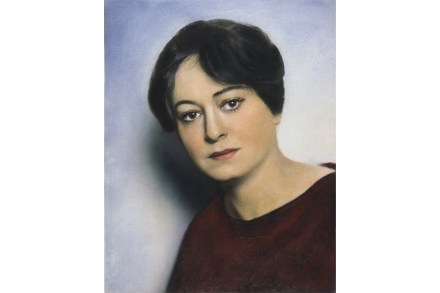
The fresh hell of Dorothy Parker’s Hollywood

From our UK edition

Hollywood didn’t kill Dorothy Parker, but booze probably did. In fact, if Hollywood hadn’t paid her so well to spend so much time at home, she couldn’t have afforded the booze – as well as maintain a lifelong ability to insult almost everyone she loved while still earning their (sometimes reluctant) affection.

The shame of being an alcoholic mother

From our UK edition

Recollections of crimes, misdemeanours and shameful stories can pall, especially when viewed through the bleary-eyed lens of alcohol. But In the Blood, a memoir of devastating clarity – the result of an unprecedented collaboration between a mother and daughter whose alcoholic gene was ‘baked into them like a curse’ – provides a frightening insight into the labyrinthine workings of the addict’s devious mind.  The illness had run riotously through many generations until Julia Hamilton and Arabella Byrne both rejected what had ‘zig-zagged through [their] family like a knight in chess’.

Hands off my empty plastic bottles!

From our UK edition

‘Where are my empty plastic bottles?’ I ran around the house screaming, after discovering my stash had disappeared. The government in Ireland has done something with the recycling laws that has made people into wild-eyed scavengers. It has introduced a scheme whereby you can feed all your empty bottles and cans into a machine in the supermarket that crushes them down and spits out a voucher – by which I mean about 20 small plastic water bottles, for example, makes you two or three euros, which is enough for a coffee, a sandwich or some money off your shopping bill.

The Christian view of sex contains multitudes

From our UK edition

Lower Than the Angels (that is the condition of man, according to the psalmist and St Paul) is a book that combines the two most fascinating subjects, religion and sex – but you do have to take both bits of the agenda. This is Christian history with an eye to marriage, sexual acts, sexuality, celibacy, feminism and gender. Diarmaid MacCulloch is primarily a historian of the Reformation but, as his A History of Christianity (2009) demonstrates, he’s up for the bigger picture. This history takes us from early Jewish concepts of God and sex (I was startled to find the God of Abraham was once assigned a spouse, Asherah) right up to current Anglican rows about homosexuality.

Letters: you can have a ‘good’ divorce

From our UK edition

Splitting the difference Sir: Hannah Moore’s article ‘Split personalities’ (27 July) is brutal. ‘There’s no such thing as a kind divorce,’ she writes. Ms Moore cites Amicable, the company I co-founded after my own long, painful divorce, as promoting the impossible idea of a ‘successful divorce’. Unless you have been divorced, it is hard to understand the pain and soul-searching that ending a marriage entails. Emotionally, psychologically and financially, it tears you apart. Divorce can reduce unhappiness and remove unbearable pressure from families. In broken relationships, the only thing worse than breaking up can be staying together, especially for the children. Do you really want to role-model ‘put up or shut up’ to your kids?

Letters: Why marriage matters

From our UK edition

Pretender to the crown Sir: Kate Andrews combines detail and analysis with a sprinkling of satire to devastating effect in her article on Kamala Harris (‘Trump’s new rival’, 27 July). The news anchor she describes in the first sentence (‘I’m struck just in your presence’) is more partisan than journalist, and would give Ofcom good reason to clutch its pearls if they popped up on GB News. Here is someone who identifies as, but isn’t actually, a news anchor. Rather like Harris, who identifies as a politician but hasn’t gone to the trouble of securing any actual votes. Perhaps this is why the Democrats have the overwhelming support of Hollywood, whose whole business is, after all, pretence.

Absinthe and the casual fling: Ex-Wife, by Ursula Parrott, reviewed

From our UK edition

‘Ex-wives like us illustrate how this freedom for women turned out to be God’s greatest gift to men,’ quips Patricia, the flapper heroine of the American novelist Ursula Parrott’s 1929 bestseller, which, republished nearly a century later, reveals striking contemporary resonances. Both timeless and unmistakably of its time, this candid portrait of marital breakdown, and the life of a girl about town in Jazz Age New York, took the US by storm at a moment when dawning sexual liberties jostled with lingering Victorian values. Parrott married in 1923, before birth control was legal, and had a son in secret, against her husband’s wishes. She left him with her family, until her husband discovered his existence and divorced her.

The rise of the ‘divorce influencer’

From our UK edition

On Woman’s Hour recently, Anita Rani and her guests set out to celebrate the positive sides of a woman’s midlife. Forget the crisis: your forties and fifties could instead be a time for change, a refresh. You could take up a new hobby, they said, or a new exercise regime. Or you could get a divorce! What’s alarming is that this sort of discussion isn’t unusual. I regularly spot articles in newspapers and on social media that talk about divorce as if it’s just the latest wellness trend. They usually go like this: a middle-aged woman walks out on a long marriage and insists that she’s never been happier, that she’s free, that she’s ‘starting a new chapter’ in her life. She then demands through a rictus grin that you be happy for her.

What’s behind the risk-averse approach toward love and family?

Human risk assessment is not a dispassionate numbers-crunching game. Those who fear flying have to know we’re four times more likely to die in a car crash than in a fiery plunge from the skies, even if we’re boarding a Boeing. The fear of flying may be common, but only a select few will rule out the jet engine entirely. When it comes to emotional risk evaluation, there is one area where phobia prevails over reason: our increasingly sterile view of what constitutes a good bet when it comes to marriage and family life. Since the second half of the twentieth century, American society has been on a mission to eliminate risk. Seatbelt and helmet laws reduced deaths in automobile and bike accidents at the expense of comfort and self-respect.

risk
letters

Letters from Spectator readers, August 2024

Can the GOP do normal? I switched from Dem to Rep in 2014 after the disasters of the Obama presidency and the Dems’ loony hatred of the West and the US became clear. Since then I’ve not voted for the Rep nominee for president once, although I have voted for Reps down the ballot and have written in a Rep for president each cycle. I’m looking forward to the day when the GOP’s weird swooning over the orange one is over. - Thomas Nienow ‘Justice’ and the fall of a republic Great article and I hope you’re wrong.

A sea of troubles: The Coast Road, by Alan Murrin, reviewed

From our UK edition

Contemporary Irish writers have a knack of making their recent past feel very foreign. Clare Keegan’s Small Things Like These is set in 1985, but the horrors she reveals about one of Ireland’s Magdalene laundries seem more like ancient history. Alan Murrin pulls off something similar in The Coast Road, where in late 1994 divorce is still illegal in Ireland, unlike the rest of Europe. Izzy Keaveney, a housewife with two teenage children, ‘has the depression’ and has dragged herself to Sunday morning mass despite a hangover. She spent the previous evening at a dinner-dance, listening to her politician husband James give a talk about the importance of business in the local community. ‘Are you going to spoil another night?

How divorce never ends

When my parents split up I was twelve years old. They were officially divorced and in new relationships a year later. My husband was ten when his parents split up. We both talk about how those moments were pivotal in our lives, the moment that we went from shy, straight-A students to troublemaking partiers. My mom moved us to Minnesota with our shiny new (insane) stepfather, apparently with my father’s blessing. He’d taken a huge financial hit and couldn’t afford to fly all us kids home, so we spent that first lovely Christmas eating McDonald’s on the beds of the Mall of America hotel. Logistically it would be a nightmare forever.

divorce