Diplomacy

America and Russia are finally talking to each other again

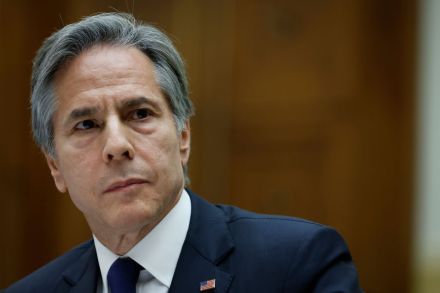
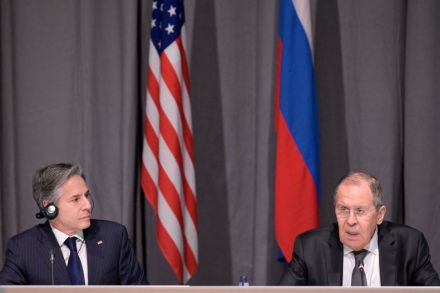
Defense Secretary Lloyd Austin and Russian Defense Minister Sergei Shoigu haven’t really been on speaking terms. That is, until last weekend, when the two defense chiefs conversed with each other twice in three days. The readouts released by the Defense Department are about as brief as brief can get. They don’t tell us much about what was said, other than the general observation that Austin, a former four-star army general, swatted away Moscow’s explanations for the war in Ukraine. What the conversations illustrate more than anything is just how rare they've been. Indeed, the reason why so many news outlets wrote about the Austin-Shoigu calls was because they were extraordinary.
Pelosi’s visit to Taiwan is about politics not diplomacy

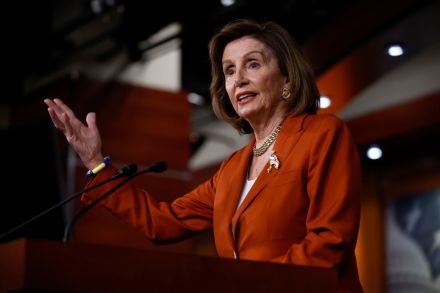
The Biden administration is increasingly concerned about a trip to Taiwan next month by House Speaker Nancy Pelosi. And they should be. The visit is pointlessly provocative for little gain. Pelosi would do well to remember the Chinese proverb: "Always know if the juice is worth the squeeze." The domestic political juice is charm points for Pelosi from her large, pro-Taiwan constituency back home as she runs for reelection. A third of Pelosi’s congressional district is Asian-American and taking on Big China has long been a major part of her political identity. She, for example, made a public show out of meeting with pro-democracy protesters from Hong Kong and urging a boycott of the 2022 Winter Olympics in Beijing.

Shinzo Abe was Japan’s indispensable conservative

Shinzo Abe, who was assassinated today while electioneering, was his country's indispensable man. Prime minister of Japan for much of this century, from 2006 to 2007 and 2012 to 2020, Abe's stature on the world stage eclipsed that of other post-war Japanese leaders, just as his time in office surpassed them all. For a taste of the shock of his murder, look back to the surprise and incredulity which met his resignation from office in the pandemic's worst days. Plagued by a debilitating health condition which had earlier caused him to leave office in 2007, Abe concluded he did not have the stamina left to rule.

The State Department’s woke surrender

America's diplomatic corps is the latest victim of diversity uber alles. Choosing diplomats for the 21st century is now about the same process as choosing which gummy bear to eat next. But fear not, because the State Department assures us that America will have "an inclusive workforce that... represents America's rich diversity." At issue is the rigorous entrance exam, which once established a color-blind baseline of knowledge among all applicants and was originally instituted to create a merit-based entrance system. Until now, becoming an American diplomat started with passing this written test of geography, history, basic economics and political science, the idea being it was probably good for our diplomats to know something about all that.

Unmasking ‘panda diplomacy’

From our UK edition

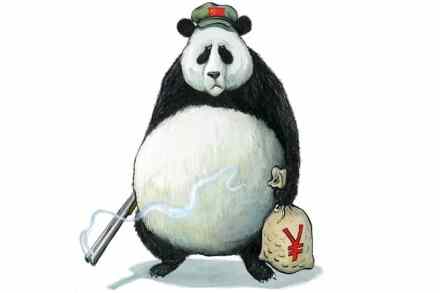
The star of the Beijing Winter Olympics wasn’t an athlete: it was Bing Dwen Dwen, the spacesuit-clad panda mascot. It was deployed to cover the harsher political edges of the games, and was romping around on the ice at the closing gala. Bing Dwen Dwen is only the latest example of China’s use of ‘panda diplomacy’, so successful over recent decades. The Chinese Communist party has long used them as envoys to potential partners. A bill now wending its way through the US Congress strikes at the heart of panda diplomacy. If it passes, it will keep American-born giant panda cubs in the US, which would break China’s monopoly on these vulnerable animals.

Putin may yet resist a full-on invasion

From our UK edition

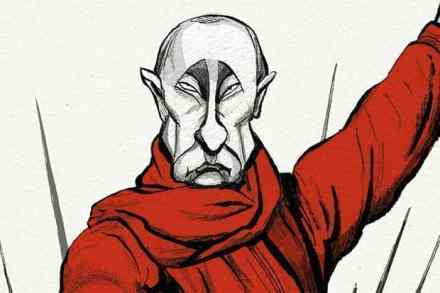
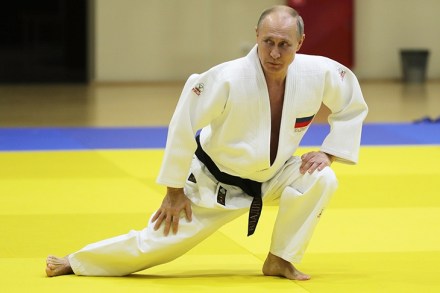
The west is still in the dark on what Vladimir Putin will do next. The Russian military build-up on the Ukrainian border continues but in televised meetings with Sergey Lavrov, his foreign minister, Putin was told that there is a case for ‘continuing and intensifying’ diplomatic discussions with the West. For Putin — who smarts at what he sees as the humiliation of the end of the Cold War and the decline of Soviet power — there is a satisfaction in watching the West scramble to respond to his actions. The Biden administration wanted to prioritise competition with China, but Putin is succeeding in forcing him to concentrate on European diplomacy — something that will please both Moscow and Beijing.

Russia may very well invade Ukraine

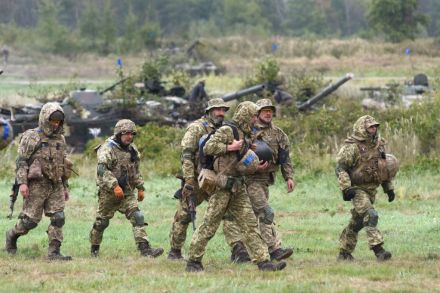
The United States is doing what it can to deter Russian President Vladimir Putin from ordering another invasion of Ukraine. Despite the cool and collected persona that Ukrainian President Volodymyr Zelensky is trying to present to his people, the White House still believes Russian military action is "imminent.” The Biden administration recently put 8,500 American troops on alert for deployment to Eastern Europe. Washington has spent the last several weeks trying to convince the Kremlin that any incursion into its neighbor would be costly. On Tuesday, the US sent a third shipment of lethal equipment to the Ukrainian military, including 300 additional Javelin anti-tank missiles. This comes on top of the 200,000 pounds of lethal aid that had already been provided by Washington.

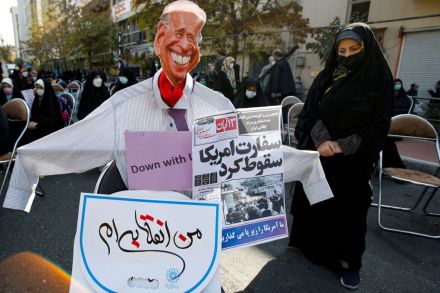
Biden’s diplomacy with Iran is falling apart

While American and Iranian negotiators continue to clash in Vienna, policymakers back in Washington are debating the right course of action should nuclear diplomacy collapse. Ever since negotiations between the US and Iran resumed in late November after a five-month hiatus, the Biden administration has repeatedly told their Iranian counterparts that Washington’s patience for diplomacy isn’t unlimited. In the ensuing weeks, American officials have grown frustrated by Iran’s hardening stance, including its insistence on verified sanctions relief before Tehran rolls back its own nuclear advances. According to the State Department, the current round of talks, the eighth since April, are making scant progress toward a mutually agreed-upon resolution.

iran

Biden’s diplomacy of disaster

Fool me once, shame on you. Fool me seven times, shame on the United States, whose leaders seem determined to drive it into a decline whose rapidity and extent is unparalleled in the history of great powers. Shame on the Democrats too, for putting domestic vanity over the national interest. Shame on Barack Obama and, should he be aware of what’s going on in Vienna, shame on Joe Biden, for pursuing the diplomacy of disaster. The State Department’s envoys are back in Vienna in the hope of starting a seventh round of negotiations over reviving Obama’s “Iran deal.” But there seems to be nothing left to talk about. Iran is increasingly intransigent, and its latest demands give the US and its allies a choice between surrender or defeat.

There is no Russia-China axis

From our UK edition

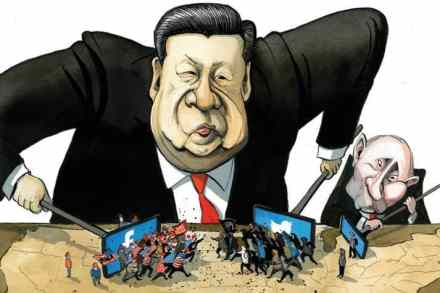
You should be careful what you wish for, because you might just get it, so the old cliché goes. In diplomacy at the moment, it seems you should be careful of the threats you prepare for, because you may end up producing them. There is a growing trend in the West towards treating Russia and China as some single, threatening ‘Dragonbear’ (a reference to the two countries' national animals). This underrates the very real tensions between Moscow and Beijing, but risks pushing them even closer together. The most recent case in point was Nato secretary-general Jens Stoltenberg’s interview in the Financial Times, in which he criticised ‘this whole idea that we either look Russia, or to China… because it goes together.

Wrapped up in satire, a serious lesson about the fine line between success and scandal

From our UK edition

Have you heard of champing? Neither had I. Turns out it’s camping in a field beside a deserted church. When it rains, you abandon your flimsy tent and instead bed down in the hushed aisles. At the beginning of Ferdinand Mount’s new novel, Making Nice, Dickie Pentecost and his wife Jane, together with their daughters Flo and Lucy, are doing just that. In the morning they meet fellow champer Ethel, short for Ethelbert, a bewitching man with stony eyes and sticking-up hair. ‘Ethel,’ says Dickie. ‘I suppose they could have shortened it to Bert instead.

Britain’s golden diplomatic opportunity

From our UK edition

‘The world’s changed quite a bit,’ was Domic Raab’s fitting, if somewhat understated, opening remark at the G7 meeting of foreign secretaries this week. The first in-person meeting of the alliance in two years saw masked dignitaries, elbow bumps and distanced discussions behind plexiglass screens. But two members of the Indian delegation still ended up testing positive for Covid. Beyond the immediate challenges of the current crisis, Raab’s words seemed prescient. Quite a bit has changed since the G7 last met in France in 2019. Britain has left the EU and is no longer paralysed by parliamentary deadlock. President Biden has replaced Donald Trump in the White House.

Alan Duncan rants about ‘idiot’ parliamentary colleagues and Britain’s waning influence

From our UK edition

As a budding political apparatchik, my first job out of university was as a junior parliamentary assistant to Alan Duncan MP. Working for him was never taxing because it was never boring. Nicknamed ‘Hunky Dunky’, he was well known in the Tory fraternity. Too young to be a grandee and too old to be a rising star, he occupied a special space in the parliamentary party, never part of a clique yet consistently present during his 27 years in parliament. We’d often remark — to his annoyance — that he was the Chips Channon of his generation, since both often ended up on the wrong side of the winning team. How apt, then, that the updated Channon diaries and Duncan’s own should appear within weeks of each other.

The Kremlin’s strategy to undermine Britain

From our UK edition

The past week has seen the war in Ukraine, which has been simmering for the last seven years, once more come to the boil. According to Kiev, Russia has massed as many as 85,000 troops near its border, while Moscow has actively talked-up the possibility of full-scale war and warned that it ‘would mean the beginning of Ukraine’s end’. Is such a war likely? You can forgive Kiev for worrying so — Vladimir Putin is already getting his excuses ready. The Kremlin claims to have an obligation to protect the residents of the Donbass if tensions continue to rise (just like it claimed to have an obligation to the residents of Crimea, in 2014, prior to annexing the peninsula).

War was never Sir Edward Grey’s métier

From our UK edition

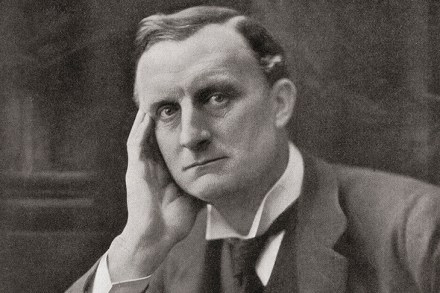
This meaty but easily digested biography pivots around the events either side of that fateful evening of 4 August 1914 when Britain’s ultimatum to Germany over Belgium ran out and Sir Edward Grey memorably remarked that the lamps were going out over Europe. As foreign secretary for almost a decade before that, Grey had deftly orchestrated a web of alliances designed to keep the peace in Europe, and Britain the dominant global power. But war and its attendant carnage unravelled his life’s work, leaving him a nervous wreck. He hung on in office until 1916 when the new prime minister David Lloyd George unceremoniously swept him out.

The art of negotiation: Peace Talks, by Tim Finch, reviewed

From our UK edition

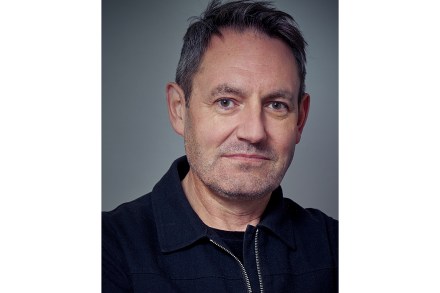
Early on in Tim Finch’s hypnotic novel Peace Talks, the narrator — the diplomat Edvard Behrends, who facilitates international peace negotiations — reflects: ‘Peace talks settle into this repeating pattern after a while, a pattern like that of the floor carpets in places like this conference centre, in which a polygonal weave mesmerises the eye almost to a vanishing point.’ He is commenting on the lonely, relentless routine of the talks, walks, meals and drinks, as official negotiations inch forward, stall, reverse and proceed again over the course of months.Alongside the diplomatic conference, another type of peace talk is underway: the meandering, intimate prose of the novel’s first-person narrative from Edvard to his wife Anna.

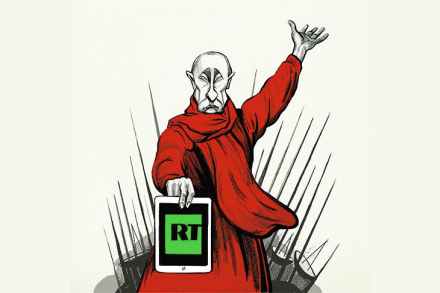
Disputes over Putin

From our UK edition

These two refreshingly concise books address the same question from different angles: how should we deal with Russia? Mark Galeotti focuses on Vladimir Putin himself, his background, aims, tactics and strategy (if any).  Andrew Monaghan takes a wider approach, analysing Russia’s strengths and weaknesses, its self-image, its perceptions and misperceptions of us, ditto ours of it. Both argue that relations between Russia and the West suffer because we are sometimes prisoners of our own preconceptions. Monaghan describes what he calls the two-part security dilemma, a problem firstly of interpretation and secondly of response.

Mean Girls and meaner trolls: the rise of Twitter diplomacy

From our UK edition

You can tell a lot about a leader by the diplomats they choose to represent them. Brezhnev had Anatoly Dobrynin, Nixon had Henry Kissinger, and Benjamin Netanyahu has Regina George. The queen bitch of North Shore High, fictional setting of the 2004 teen comedy Mean Girls, is blunt, conniving and vicious with a mid-hallway putdown. Played by sweetness personified Rachel McAdams but scripted by the acid Tina Fey, Regina is not someone you'd like to encounter in double French -- or at Camp David. That is no doubt why the Israelis selected her as the latest face of digital hasbara. Ayatollah Khamenei -- probably not a connoisseur of high school chick flicks -- had a run-in with Regina on Monday.

Rats in the ballroom

From our UK edition

At first blush this looks like one of those run-of-the-mill coffee-table books published just for the Christmas market — expensively produced, replete with beautiful photographs, a text as undemanding as the tinkling notes of a cocktail-bar pianist, and the whole thing massively heavy. It is a beautiful — and heavy — book, with fine photographs by Luke White. But what distinguishes it is the skill and acuity with which James Stourton has written the commentary, making it a serious and engrossing work of history. His text takes the form of an introductory essay on the changing nature of diplomacy over the centuries, a model of elegant concision, followed by the histories of 26 embassies and ambassadorial residences scattered around the globe.

Letters | 19 October 2017

From our UK edition

The great divider Sir: Niall Ferguson (‘Tech vs Trump’, 14 October) draws a parallel between the Reformation — powered by the printing press — and today’s social networks — powered by the internet — in their influence on the established hierarchy. Ferguson astutely observes that the consequence of the Reformation was not a hoped-for harmony but ‘polarisation and conflict’. The difference was then, and is now, between collectivism and individualism. Collectivists always saw the internet as a vehicle for the universal consciousness: the blending of minds. Individualists always saw the internet as an integrator: establishing facts using the principle of non-contradiction. The first is mystical.