Diplomacy

Why has Trump turned on India?

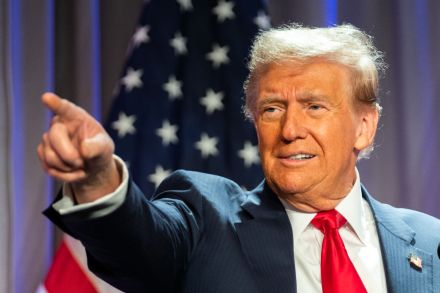
President Donald Trump, not someone to let a good insult go to waste, has caused outrage in India after sharing a social media post describing the country as a “hellhole.” Trump did not make the disparaging remarks himself, merely reposting the statement (without comment) on his Truth Social account. The words actually came from the conservative podcast host Michael Savage, as part of an attack on birthright citizenship. “A baby born here becomes an instant citizen, and then they bring the entire family in from China or India or some other hellhole on the planet,” the Savage said. He accused Indian immigrants in the tech industry of not hiring white native-born Americans, and also said that they lack proficiency in English.

India

Sorry, but America still holds all the cards

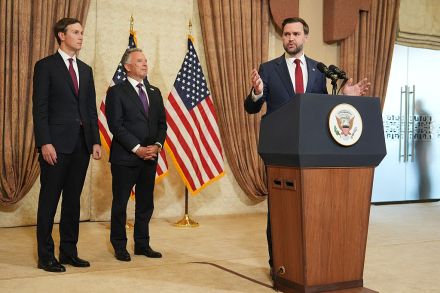
“Negotiations.” Are you heartened or dismayed by that word? Those who remember or who have read up on the seemingly interminable Paris Peace Talks designed to bring an end to the Vietnam War have reason to be dubious. A negotiation, if it is to be successful, requires that both sides be candid and in earnest. The Vietnamese were not candid participants. They stalled. They prevaricated. They acted out. It seems that the Iranians are hoping to reprise that melodrama. They will be profoundly disappointed. On the second weekend in April, Vice President J.D. Vance, Steve Witkoff and Jared Kushner met some 70 Iranian representatives in Islamabad to hammer out a peace deal.

Iran negotiations

Iranian attacks aren’t worrying Washington

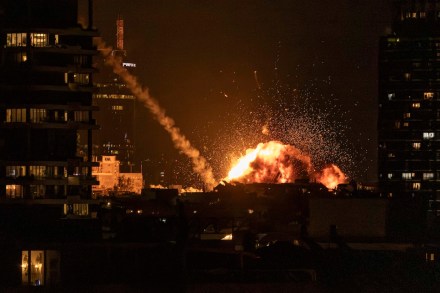
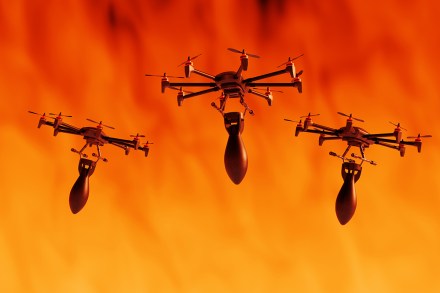
Many commentators are already claiming that the war with Iran is “spiraling out of control.” I try not to be uncharitable: I am a Catholic, after all, and the Church tells me it is a sin. But if I were tempted, I should say that the only thing spiraling out of control is cliché. You could argue that drone attacks are a sign that Iran’s ballistic and cruise missiles aren’t actually proving that effective Iran said it would hit out wildly if it were attacked. It also made clear that direct attacks on the leadership of the Islamic Republic would be treated as an existential threat.

What will happen in Alaska?

"Alaska," said the mountaineer Jon Krakauer, "is a place that constantly reminds you of just how small you are in the grand scheme of things." I doubt somehow that Vladimir Putin and Donald Trump will echo that sentiment when they meet tomorrow in the Last Frontier to carve up the future between themselves – Plumb-Pudding-in-Danger-style. The two leaders will have each traveled some eight hours over their own mighty lands to see each other. It will be a case of today, Ukraine; tomorrow, ze world.  Yesterday, the Trump administration went to great lengths to assure nervous European leaders and Ukrainian President Volodymyr Zelensky that Trump would not, in their absence, simply roll over for Putin.

Britain’s foreign secretary faces fine for fishing without a license

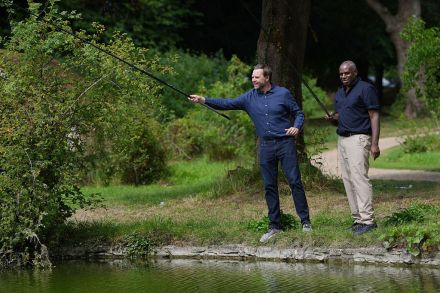
What people on the other side of the pond call "Brand Britain" has taken something of a knock in recent years – especially in the United States, which the British often still view as an errant son. With unnerving speed Britain's reputation has collapsed stateside, especially among the political right, from the country of Brideshead Revisited to a grotty Airstrip One. The symbol of the new Britain in the eyes of many Americans are the ubiquitous licenses (or, in the argot of a London copper, "loicenses") that citizens seem to need for everything – including, most notoriously, owning a TV. Now even the Foreign Secretary has been caught without a loicense. On Friday David Lammy went fishing with the now-Vice President J.D.

Lammy Vance

Trump drains Foggy Bottom

In the pantheon of American bureaucracies, none have guarded their prerogatives more jealously – or become more allergic to reform – than the State Department. And so, predictably, when the Trump administration moved in recent weeks to cut the agency’s workforce by 15 percent, Washington’s political and media class protested in unison. But strip away the histrionics, and something else emerges: a much-needed effort to realign the State Department with the America it’s supposed to represent. No one celebrates the pain of sudden job loss. Many of the terminated employees were sincere public servants (some of whom I count as personal acquaintances).

Trump is already the diplomat-in-chief

The United States only has one president at a time. Until January 20, that’s Joe Biden. But President-elect Donald Trump and his skeleton foreign policy team are waiting in the wings, plotting policy behind the scenes on issues — Ukraine, Gaza, Iran, Middle East peace — that have stymied the Biden administration for the last year. In fact, Trump is already influencing the respective calculations of allies, partners and adversaries before he even steps foot in the Oval Office. And Biden’s advisors seem perfectly fine with it. Trump fancies himself as a master negotiator, somebody who’s inherently skilled at poking, pressuring and sweet-talking the opposite side of the table until he gets what he wants.

diplomat

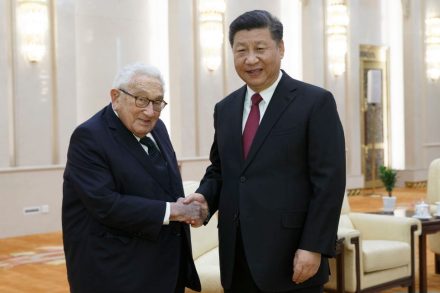
China will miss Henry Kissinger

A hero to some and a villain to others, the late Henry Kissinger impacted American foreign policy thinking in the last six decades more than anyone else. Of the former secretary of state and Nobel Peace Prize winner's contributions, one of the most significant was the strengthening of Sino-American relations. His détente policy was once celebrated by Nixonites when the Soviets were seen as the US’s main competitor. More recently, though, as anti-China sentiment has risen in America, Kissinger’s desire to soften relationships with the Asian giant has gained him some detractors on the right — and he already had more than enough on the left. Arguably his death will be mourned more in China than America.

Kissinger

After decades of waiting, China goes on the diplomatic offensive

China has been an epicenter of diplomacy over the last month and American officials can’t help but take notice of the shift. Statesmen flying to China, hat in hand, to sign business deals with Chinese firms or enlist Chinese diplomats to assist in solving international disputes gives the foreign policy graybeards ulcers. The general rule seems to be: what’s good for China is bad for the United States. There’s no question that China’s Xi Jinping has had a good few weeks. After being occupied with a nationwide Covid-19 disaster that lasted for three years, Xi, a man whose entire legacy depends on China transforming into a superpower on par with or perhaps even surpassing the US, isn’t wasting any time before injecting his country back into the diplomatic arena.

syria peace

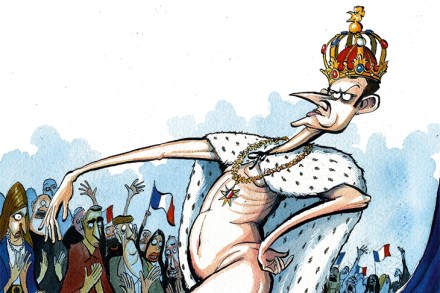
Macron tries to be the Xi whisperer

God bless Emmanuel Macron for his perseverance and self-confidence. The French president seeks to lead Europe and turn the continent into a strong, independent player in its own right. And he is eager to take on the hard, thankless diplomatic work that few of his peers are willing to do. Whether it was his ploy in 2019 to connect then-US president Donald Trump and then-Iranian president Hassan Rouhani on the phone or his months-long, intensive personal dialogue with Russian President Vladimir Putin before the war in Ukraine, Macron invests a lot of time and capital into these gambits. Unfortunately for him, many of them fail to accomplish anything of substance. Macron wasn’t able to convince Rouhani to speak with Trump (although Trump reportedly agreed to the call).

napoleon macron tantrum diplomacy

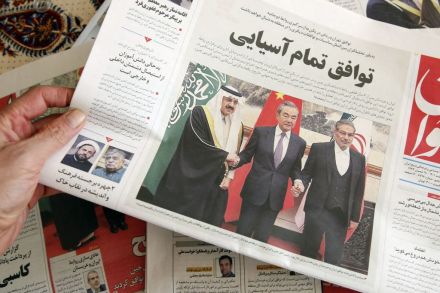
The Middle East catches diplomacy fever

Peace isn’t exactly blossoming like rosebuds in the Middle East. The region is still host to a devastating civil war in Yemen, a humanitarian crisis in Syria, sporadic terrorist attacks in Iraq and an endless tit-for-tat between the US and Iranian-backed militias in Iraq and Syria. Indeed, just last night, President Biden authorized several airstrikes against three militia locations in retaliation for a drone attack on an American base in Syria that killed one contractor and injured six others. But for an area of the world so often regarded as hopeless, the Middle East is suddenly looking like an epicenter of diplomacy.

syria peace

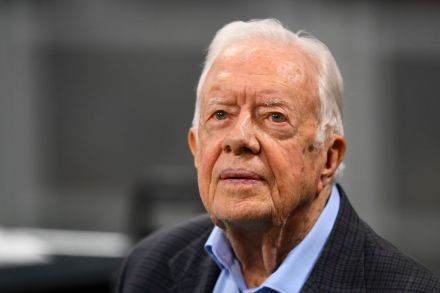
Jimmy Carter’s second act was better than his first

Jimmy Carter is commonly depicted as one of America’s worst presidents. His four-year tenure is said to be a mishmash of screw-ups, from high energy prices and even higher inflation to low economic growth and a very public, very embarrassing hostage rescue attempt in Iran. His signature achievement, the 1978 Camp David Accords, which codified peace and normalized diplomatic relations between Egypt and Israel, is treated as a small stretch of fresh pavement in an otherwise potholed road. Fair or not, that’s the perception.

jimmy carter

America and Russia are finally talking to each other again

Defense Secretary Lloyd Austin and Russian Defense Minister Sergei Shoigu haven’t really been on speaking terms. That is, until last weekend, when the two defense chiefs conversed with each other twice in three days. The readouts released by the Defense Department are about as brief as brief can get. They don’t tell us much about what was said, other than the general observation that Austin, a former four-star army general, swatted away Moscow’s explanations for the war in Ukraine. What the conversations illustrate more than anything is just how rare they've been. Indeed, the reason why so many news outlets wrote about the Austin-Shoigu calls was because they were extraordinary.

Pelosi’s visit to Taiwan is about politics not diplomacy

The Biden administration is increasingly concerned about a trip to Taiwan next month by House Speaker Nancy Pelosi. And they should be. The visit is pointlessly provocative for little gain. Pelosi would do well to remember the Chinese proverb: "Always know if the juice is worth the squeeze." The domestic political juice is charm points for Pelosi from her large, pro-Taiwan constituency back home as she runs for reelection. A third of Pelosi’s congressional district is Asian-American and taking on Big China has long been a major part of her political identity. She, for example, made a public show out of meeting with pro-democracy protesters from Hong Kong and urging a boycott of the 2022 Winter Olympics in Beijing.

Shinzo Abe was Japan’s indispensable conservative

Shinzo Abe, who was assassinated today while electioneering, was his country's indispensable man. Prime minister of Japan for much of this century, from 2006 to 2007 and 2012 to 2020, Abe's stature on the world stage eclipsed that of other post-war Japanese leaders, just as his time in office surpassed them all. For a taste of the shock of his murder, look back to the surprise and incredulity which met his resignation from office in the pandemic's worst days. Plagued by a debilitating health condition which had earlier caused him to leave office in 2007, Abe concluded he did not have the stamina left to rule.

The State Department’s woke surrender

America's diplomatic corps is the latest victim of diversity uber alles. Choosing diplomats for the 21st century is now about the same process as choosing which gummy bear to eat next. But fear not, because the State Department assures us that America will have "an inclusive workforce that... represents America's rich diversity." At issue is the rigorous entrance exam, which once established a color-blind baseline of knowledge among all applicants and was originally instituted to create a merit-based entrance system. Until now, becoming an American diplomat started with passing this written test of geography, history, basic economics and political science, the idea being it was probably good for our diplomats to know something about all that.

Russia may very well invade Ukraine

The United States is doing what it can to deter Russian President Vladimir Putin from ordering another invasion of Ukraine. Despite the cool and collected persona that Ukrainian President Volodymyr Zelensky is trying to present to his people, the White House still believes Russian military action is "imminent.” The Biden administration recently put 8,500 American troops on alert for deployment to Eastern Europe. Washington has spent the last several weeks trying to convince the Kremlin that any incursion into its neighbor would be costly. On Tuesday, the US sent a third shipment of lethal equipment to the Ukrainian military, including 300 additional Javelin anti-tank missiles. This comes on top of the 200,000 pounds of lethal aid that had already been provided by Washington.

Biden’s diplomacy with Iran is falling apart

While American and Iranian negotiators continue to clash in Vienna, policymakers back in Washington are debating the right course of action should nuclear diplomacy collapse. Ever since negotiations between the US and Iran resumed in late November after a five-month hiatus, the Biden administration has repeatedly told their Iranian counterparts that Washington’s patience for diplomacy isn’t unlimited. In the ensuing weeks, American officials have grown frustrated by Iran’s hardening stance, including its insistence on verified sanctions relief before Tehran rolls back its own nuclear advances. According to the State Department, the current round of talks, the eighth since April, are making scant progress toward a mutually agreed-upon resolution.

iran

Biden’s diplomacy of disaster

Fool me once, shame on you. Fool me seven times, shame on the United States, whose leaders seem determined to drive it into a decline whose rapidity and extent is unparalleled in the history of great powers. Shame on the Democrats too, for putting domestic vanity over the national interest. Shame on Barack Obama and, should he be aware of what’s going on in Vienna, shame on Joe Biden, for pursuing the diplomacy of disaster. The State Department’s envoys are back in Vienna in the hope of starting a seventh round of negotiations over reviving Obama’s “Iran deal.” But there seems to be nothing left to talk about. Iran is increasingly intransigent, and its latest demands give the US and its allies a choice between surrender or defeat.