Diet

How the multi-billion-dollar wellness industry is putting us at risk

From our UK edition

No one could accuse Dr Nick Tiller of taking health and wellness issues lightly. In his latest book he recounts an occasion in which a friend asked him whether he was an extrovert or an introvert – the kind of question most of us would treat as small talk to pass the time. Tiller, though, took it seriously. What did she mean by those terms, he asked, hearing in response that it depended on whether he got energy from being around others, or not. OK, then: what did she mean by energy? ‘At this point,’ he writes, ‘she got frustrated and didn’t speak to me for the rest of her wedding. Which was awkward, since I was the best man.

Why brown food isn’t always best

From our UK edition

This past week has shown that, when discussing the colour of eggshells, we need to walk on them. Sainsbury’s has announced that it is phasing out brown eggs in favour of white because the latter have a 12.7 per cent lower carbon footprint. As suspiciously precise as that figure is, it caused some commentators to rant that net zero madness is just a cover for cost-cutting. White hens lay white eggs and eat less feed, which in turn reduces emissions, so what's everyone getting scrambled up over?  However, buried in the original press release is a throwaway admission that Britain only switched to brown eggs in the 1970s because they were ‘perceived as more natural’. Even Queen Elizabeth ‘favour[ed] brown eggs, believing that they taste better’.

Is it time to clean up my act?

From our UK edition

I was having a drink in the Bishops’ Bar in the House of Lords last month when I was introduced to a 92-year-old peer called Lord McColl of Dulwich. I asked him if he’d known my father, Michael, who was made a life peer in 1978. Had they overlapped? He told me he hadn’t merely known him; he’d operated on him. If I have mild indigestion I think I’ve got stomach cancer; if I get a headache I decide it’s a brain tumour I realised with a start that the man I was talking to was the famous surgeon Ian McColl, who was made a life peer in the Queen’s birthday honours list in 1989. As professor of surgery at Guy’s Hospital, he treated my father for bowel cancer in 1983, an operation so successful that Michael had gone on to live for another 19 years.

The rise of protein washing

From our UK edition

I bought some pork scratchings the other day, and the packet said it was ‘high in protein’. Gruntled, the brand, is distributed by the Keto Shop and is now being marketed as some type of health food. I had to laugh. Wolfing down a packet of pork scratchings in the pub is now part of the latest health kick? Demand for protein is being driven by health-conscious middle classes, including Gen Zers. According to one national poll, nearly half of adults in the UK have increased their protein intake in the past year, including a whopping two-thirds of those aged 16-to-34-year-olds. This is boosting demand for chicken breasts, lentils and – I can hardly believe I’m writing this sentence – cottage cheese.

With Tim Spector

From our UK edition

27 min listen

Tim Spector is a leading professor of genetic epidemiology at King’s College London and a renowned expert in nutrition, gut health, and the microbiome. He is the founder of the Zoe Project, which focuses on personalised nutrition and how individual responses to food impact health. His new book, The Food for Life Cookbook, is out now. On the podcast, he tells Lara about his time growing up in Australia, how a skiing accident changed his view on nutrition, and why ham-flavoured crisps are his guilty pleasure. Produced by Oscar Edmondson and Joe Bedell-Brill. Click here for tickets to our Americano live event, with Nigel Farage.

Are we any closer to finding a cure for depression?

From our UK edition

Some years ago, the Harvard psychiatrist Leon Eisenberg commented that, in the course of his lifetime, his discipline had swung from the brainless psychiatry propounded by psychoanalysts to the mindless psychiatry of those enamoured of biological reductionism and neuroscience.  Camilla Nord, who runs a neuroscience laboratory at Cambridge, is firmly a member of the latter camp. Though in a few places in The Balanced Brain she is driven to concede that social factors seem to play a role in mental health or mental distress, she immediately insists that ‘the process by which social factors are able to cause mental illness is entirely biological’.

A new war on obesity is underway

Consume American media for more than five minutes, and sandwiched between advertisements for KFC $5 Fill-Ups and a dramatic Golden Corral short pondering the age-old question, “Chicken tenders or baby back ribs?,” you’re bound to behold at least a half-dozen ads for prescription drugs. They tend to last longer than the straight-to-the-glutton-button fast-food commercials, and they play over and over and over again (who doesn’t know the Oh, Oh, Oh, Ozempic! jingle by now?) — and airtime ain’t cheap. “When Oprah Winfrey’s bombshell interview with Prince Harry and Meghan Markle aired in March 2021, the British tuned in, and many were gobsmacked at the number of drug commercials they saw,” Vox reported earlier this year.

obesity

Our flawed body politics

From our UK edition

‘New year, new you’, or so they say. And as sure as eggs is eggs (particularly for the high protein advocates), new year’s resolutions for many will have revolved around the quest for a new body. I use the word ‘body’ specifically because our prevailing culture keeps finding new and alarming ways to reduce us all, but women in the most dehumanising terms, into mere bodies; bodies that can be chopped, changed, rearranged increasingly even to accommodate the outward trappings of the opposite sex. This manifests itself most completely of course in porn, as it always has, where the cold-eyed camera sees everything of the body and nothing of the person inhabiting it.

Keto no-no

I recently got engaged. After the celebratory Champagne and indulgent restaurant meals my fiancé and I enjoyed in our month of post-betrothal bliss, reality set in: soon I must fit into a wedding dress. Of course, dresses come in all shapes and sizes, just like brides. But have you seen the price of a wedding photographer lately? I’d like to look my best. These days, the main weight-loss food trend seems to be the ketogenic diet. Like the Paleo and Atkins diets, eating keto means cutting carbs. Unlike these other diets, keto isn’t high in protein; it’s high in fat. The idea is that depriving yourself of carbs and protein will cause your body to burn fat for energy — starting with the bacon and eggs you ate for breakfast and ending with your thighs.

keto

My £50-a-week chocolate habit

From our UK edition

As I’ve got older my tastes have generally become less refined. During my youth I dutifully slogged through Kafka, Camus and Sartre, but my current bedtime reading is Sharpe’s Trafalgar by Bernard Cornwell. With movies, I used to feel obliged to watch subtitled masterpieces like La Règle du jeu and Le Salaire de la Peur, but now I’m perfectly happy with the latest Marvel blockbuster. However, when it comes to food and wine, I’ve become more snobbish – insufferably so. My last meal on death row would be the twice-baked cheese soufflé from Le Gavroche washed down with a bottle of Corton-Charlemagne Grand Cru. For some reason, this is particularly true of my taste in chocolate.

Are you man enough to eat raw offal?

From our UK edition

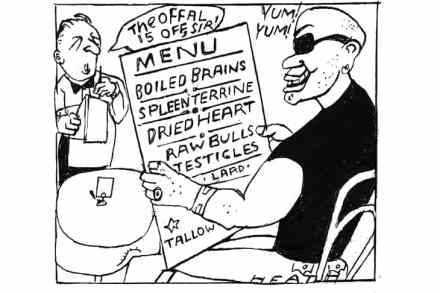
The dominant wolf gets the liver, at least according to the American podcaster Joe Rogan. In one episode, a bodybuilder called ‘CarnivoreMD’ (real name Paul Saladino) tells him: ‘If you eat liver, you get to be an alpha male… or alpha female.’ Offal has taken a markedly macho turn in recent years. No longer resigned to memories of the postwar school canteen, organs have become the preferred food of a certain type of gym bro. The word offal implies wastage – from the Middle Dutch for offcuts – but it can also be a delicacy. Recently saved from a government ban on cruel foods, foie gras is only the most obvious example. For the most part, though, the West has become squeamish about what was once called ‘variety meat’.

Have my suits shrunk in lockdown?

From our UK edition

I hadn’t noticed how much weight I’d put on during lockdown until I went out for a business lunch a couple of weeks ago. It was the first time I’d put on a suit and tie in 16 months. As I struggled to pull on the trousers, I thought: ‘Something’s wrong here. Did Caroline hang one of the children’s suits in my cupboard by mistake?’ But no. It was mine. To fasten the trousers I had to suck in my stomach like Mr Incredible trying to squeeze into his superhero costume. And my ‘slim fit’ white shirt wasn’t merely snug; it was more like a straitjacket. I looked like a bald Boris in his pre-Covid pomp.

Can the Mayr diet work at home?

About five years ago, just after my 50th birthday, I noticed that I was extremely fat. Not ‘overweight’, not ‘heavy’, not ‘big-boned’, not possessed of a ‘good sense of humor’; fat is what it was. It was down to a long-undiagnosed medical condition and the attendant medication. It was also down to enjoying food a lot. What to do about it? Like a lot of men, I like a solution. I fundamentally believe that if you have a problem, you just need to find the right expert, who will lift the hood, run a few tests, give you a schedule to follow and it’ll be right as rain. ‘Go to the Mayr,’ a friend said. ‘They’ll put you right.’ And so it was. The Mayr Clinic is a celebrated health farm on the shores of the Wörthersee, a lake in eastern Austria.

mayr diet

Fat-shaming didn’t do me any harm

From our UK edition

One of the genuine pleasures I always take in arriving back in the north-east after being in London is that I am suddenly transformed from being an aged fat pig with bad teeth into a youthful, lissome creature with teeth no different to anybody else. It is not the clean air or the glorious countryside which has this effect; it’s just that everything is comparative. Giles Coren once observed that for every 50 miles you travel away from our capital, you go back in time about ten years. If this is true — and I suspect it is — then up here on Teesside we’re in the middle of that very agreeable summer of 1970, with hot pants, Ted Heath suddenly elected, Rivellino scoring goals for fun in the World Cup and The High Chaparral on the telly.

Does Jordan Peterson’s carnivore diet work?

From our UK edition

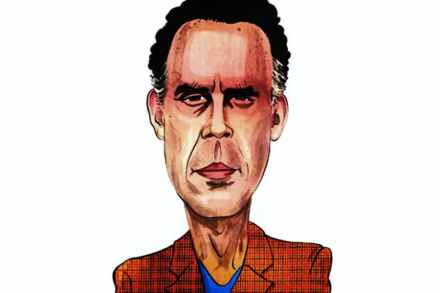
Jordan Peterson has spent much of the past few years eloquently torpedoing all that the liberal progressives hold dear, and he’s not done yet. Citing a profound health transformation, the bolshy Canadian psychologist is now piling into the opinion-saturated arena of diet, and the vegans aren’t happy. But Peterson’s latest revelation is not about culture wars or the eroding of free speech. This is about his own mental health, which has at times been unspeakably grim. Controversial as ever, Peterson is now claiming to have beaten away his regimen of antidepressants through the excessive consumption of a rather more rudimentary substance: meat.

I’m back on the ‘public humiliation diet’ – thanks to my kids | 26 August 2019

From our UK edition

I’m on holiday with my family in Turks and Caicos, and maintaining my current weight is proving difficult. Regular readers will recall that I lost about half a stone at the beginning of 2018, after an army of offence archeologists started sifting through everything I’d written, dating back more than 30 years, looking for evidence that I was an unsuitable person to be involved in education. Since then, this type of inquisition has become much more common — scarcely a day passes without someone being defenestrated from public life on account of having said or done something imprudent in the past — but 18 months ago it was sufficiently distressing to cause rapid weight loss.

I’m back on the ‘public humiliation diet’ – thanks to my kids

From our UK edition

I’m on holiday with my family in Turks and Caicos, and maintaining my current weight is proving difficult. Regular readers will recall that I lost about half a stone at the beginning of 2018, after an army of offence archeologists started sifting through everything I’d written, dating back more than 30 years, looking for evidence that I was an unsuitable person to be involved in education. Since then, this type of inquisition has become much more common — scarcely a day passes without someone being defenestrated from public life on account of having said or done something imprudent in the past — but 18 months ago it was sufficiently distressing to cause rapid weight loss.

Food for future thought

From our UK edition

The Way We Eat Now begins with a single bunch of grapes. The bunch is nothing special to the modern eater: seedless, one-note sweet. It appears to be unchanged from those which might have been dropped into the mouths of Roman emperors. But, Bee Wilson explains, the grapes’ sweetness, their lack of seeds, their sheer abundance and affordability makes them a wholly different beast to those eaten by our forefathers. As she puts it: ‘Almost everything about grapes has changed, and fast.’ From there, The Way We Eat Now expands outwards to examine the peculiarities and vagaries of our modern eating habits. How they vary across different countries and continents (surprisingly little); how they have changed from those of previous generations (a lot).

The curse of having to go vegan

From our UK edition

I’m on a no-alcohol, no-caffeine, no-sugar, vegan diet. It’s less fun than it sounds. Occasionally I cheat, but mostly I don’t, because I don’t want to upset the lovely doctors at the Infusio clinic in Frankfurt who gave me my stem cells for the Lyme disease treatment and who insist they need the right anti-inflammatory, alkaline diet to thrive. And besides, even though it’s horrible, I’m quite enjoying, in my masochistic way the rigour and the punishing asceticism. Also, it has given me insights into a world which I never imagined in a million years I would ever enter. Vegans walk among us. They are everywhere. But you don’t really notice this until you become one and suffer alongside them.

My BMI calculator has me inching towards despair

From our UK edition

I’ve become obsessed with my BMI. For those of you who don’t know, it stands for body mass index and is supposed to be a more reliable way of assessing whether you’re a healthy size than weighing yourself. It’s calculated by dividing your weight by the square of your height and is expressed as kg/m². If your BMI is under 18.5 kg/m² you’re underweight, if it’s over 25 kg/m² you’re overweight, and if it’s above 30 kg/m² you’re obese. The sweet spot is anywhere between 18.5 kg/m² and 25 kg/m². As regular readers will know, I’m on a diet. At the beginning of the year I was nearly 13st and I’m trying to get down to 11st 7lb. So far, so good, with only 4lb left to go.