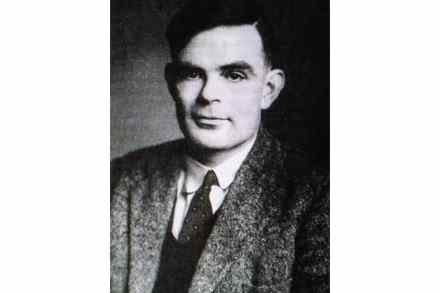
Descartes

The humiliating truth about the way we think

Over the long span of human existence, different cultures have held varying notions as to how responsible we are for our own thoughts and beliefs. Before the dawn of the Abrahamic religions, and in places untouched by these faiths, it tended to be the rule that individual members of the group could only be understood as parts of the whole, or in the grander cosmic scheme of things. The ascendence of Christianity in Europe, with its idea of the indivisible soul, tilted matters more towards a belief in individual agency and accountability. This concept, secularised by Descartes, who gave us the commanding rational ego, has proved resilient ever since, despite the best efforts of Freud, neuroscience and gene selection theory to dethrone it.

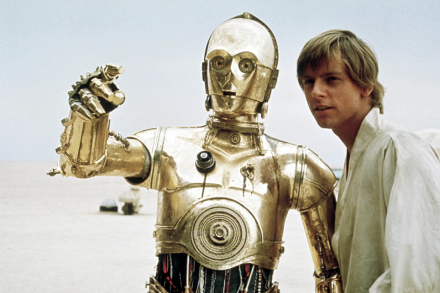
Am I alone in thinking?

‘Et remarquant que cette vérité, je pense, donc je suis, était si ferme et si assurée, que toutes les plus extravagantes suppositions des Sceptiques n’étaient pas capables de l’ébranler, je jugeai que je pouvais la recevoir sans scrupule pour le premier principe de la Philosophie que je cherchais.’ Pardon my French – and I translate below. But so elemental was what René Descartes wrote (afterwards rendered in Latin ‘Cogito ergo sum’) that his phrasing should confront us first in his own language. Though in 1637 Descartes will have known nothing of robots, still less of artificial intelligence, he settled by this remark a debate that we think remains open, and which has recently resurfaced in media commentary. Can robots achieve consciousness?

What exactly do we mean by the mind?

Given the ingenuity of machine-makers, said Descartes in the 17th century, machines might well be constructed that exactly resemble humans. There would always, however, be ‘a reliable test’ to distinguish them. ‘Even the stupidest man’ is equipped by reason to adapt to ‘all the contingencies of life’, while no machine could ever be made with enough pre-set ‘arrangements’ to be convincingly versatile. But suppose it could? In 1950 Alan Turing proposed a test remarkably similar to Descartes’s. A computer and a human are asked questions, each being invisible to the questioner, and their respective responses compared.