Dementia

My mother — as I remember her best

From our UK edition

Nine cups of milky Nescafé Gold Blend a day; a low-tar cigarette smouldering; a hot-water-bottle always on her lap; the Times crossword almost completed at the Formica table; knitting on the go; and novels — she always read the last page first. She was one of that generation of women who didn’t go to university but were incredibly well-read and knew poems by heart. This was Kathleen, the mother of Nicholas Royle, novelist and professor of English at Sussex University. In a remarkable and moving memoir he has captured and preserved a loving, kind, impatient woman — and perhaps, with her, all of our mothers in the sweet predictability of their sayings and habits.

Jan Morris, at 93, meditates on what it means to be old

From our UK edition

‘I’m getting rather tired of me,’ begins Jan Morris in one of the diary entries in Thinking Again, almost certainly the writer and journalist’s last book. She is only half kidding. This collection of essays and whimsical daily musings — a sequel to 2018’s In My Mind’s Eye — is both a deep dive into the charming and erudite mind of Morris, now 93, and also a moving meditation on just what it means to be old. Morris was launched to fame in 1953 when, as James Morris, she was the first journalist to report on Edmund Hillary and Tenzing Norgay reaching the summit of Mount Everest. She experienced a different type of fame altogether when in 1972 she had gender reassignment surgery in Morocco.

Letters: Should conservatives be worried that high-spending Boris has a majority?

From our UK edition

My father’s imprisonment Sir: Harald Maass’s piece on the plight of Uyghurs in China (‘A cultural genocide’, December 14) captures the grim reality of what has been happening. Articles like this draw vital attention to the crisis. I am an ethnic Uyghur and live in Belgium with my wife and children. My father, a 58-year-old secondary school teacher from Xinjiang, was jailed in China in April 2018. No reason was provided by the authorities as to why, and there was no trial or any other legal procedure. He was obviously imprisoned just because he is a Uyghur. After 18 months in prison, he was finally released recently and is at home in Xinjiang. Even so, we have only been in touch once — he and all my family members in China are too afraid to be open with me.

Wisdom of the ages: we must keep listening to the elderly

From our UK edition

My beloved grandmother died at 90, and my mother at 89, after having Alzheimer’s for 11 years. So I am not rattled by the old; I find their memory lapses challenging rather than frightening. (If I were the full-time carer of an elderly husband, it might be another matter. One woman described it as being strangled slowly by a python.) I recently visited 96-year-old Sir Peregrine Worsthorne, former columnist, journalist and editor of the Sunday Telegraph, at his house in Bucks. In May, his wife (writer Lucinda Lambton) and a kind Croatian carer were present. This time, the two of us were alone for three hours. Perhaps this made it easier for Perry, and me, to focus. I brought up key figures from his past.

A frank description of dementia is a searing, suffocating read

From our UK edition

In Annie Ernaux’s The Years — her extraordinary act of collective autobiography —the ‘I’ disappears. Her memoir becomes the memoir of France since the war: each year of the author’s life is evoked in a collage of memories, images and historical fragments. Apart from a handful of photographs, in which Ernaux is the dispassionately observed ‘she’, the self is erased and in its place an ambiguous ‘we’ narrates the flow of years and the slippage of time. In I Remain in Darkness, the ‘I’ is everywhere, yet it is still a treacherous word. In this work of shocking honesty and intimacy, Ernaux bears witness to her mother’s final years of living and dying with dementia.

Letters | 13 June 2019

From our UK edition

The benefits of indecision Sir: Belgium has often been without a government for months on end without suffering any economic collapse. In Britain in recent decades governments with large majorities and led by ideologically driven prime ministers have made disastrous decisions on welfare reform, foreign policy and selling off social housing. Isabel Hardman is correct to say that ‘decisions are needed to solve problems that have festered for years’ (‘The in-tray of horrors’, 8 June). However her analysis should also consider the benefits of government paralysis: the damage that has been avoided because superficial and ill-thought-out policies never saw the light of day.

Diary – 6 June 2019

From our UK edition

Don’t you just love garden centres? You have to be mad to go on a sunny Sunday morning in the full bedding-out season but all human life is there, enjoying the full English breakfast or even kippers. They sell everything — sofas, lamps, barbecues, waterfalls, bread, toys, meat, mountaineering gear. Oh, and plants and Growmore and those little windmill things. I went to buy extra geraniums and lobelia because it is a truth universally acknowledged that whenever you buy far more than you can possibly need for your pots, those pots expand when you turn your back. It was a gladiatorial clash of trolleys, and I trampled on several old ladies in fighting for the last ivy-leafed Brilliant Scarlet. I got it of course. I am an old hand.

The upsides of dementia

From our UK edition

My 91-year-old father-in-law has always had a terror of hospitals. This dates from his time as a Royal Marine when, just after the second world war, he was infected with polio by a contaminated needle. The first he knew of it was when a visiting dignitary came on board ship and he was unable to lift his arm in salute. Ever since, he made it very clear that he doesn’t want to go to a hospital under any circumstances, ever. But last week he was admitted to A&E with a high temperature and I didn’t fret for one moment that he’d be alarmed. Why? He’s got late-stage dementia. He’s forgotten that he was ever frightened of needles or men in white coats. In fact, he rather enjoys the kind attention of the nurses.

Mind games | 9 May 2019

From our UK edition

‘Beep!’ This is one of the most maddening computer games I’ve ever played. I’m tracking a flock of birds, and when I hit the right one, it explodes with a satisfying ‘phutt’. But as I get better at spotting them, the birds scatter ever more wildly across the screen, and I hear that unforgiving ‘beep’: you missed. Frankly, I feel like giving up. But many players don’t dare. For this is HawkEye, a brain-training programme that claims it can sharpen my brain beyond simply getting faster at mouse-clicking. Trials have found that older people who play enough hours of this particular kind of game have fewer car crashes — and even, apparently, a lower risk of dementia.

Low life | 10 January 2019

From our UK edition

We were eight for dinner on New Year’s Eve: four men and four women with a combined age, I would guess, of around 500. A quarter of the company — two of the men — had been officially diagnosed as suffering from one form or another of dementia. We whose brains still neatly fitted the inside of our skulls were instead prey to all the usual anxieties, delusions, depressions and addictions typical of those wealthy, late middle-aged English people who exist in the strange limbo of expatriation. We sat there facing each other across the dinner table on the last day of the year, knackered, it’s true, each drifting aimlessly in a private universe of his or her own devising.

Low life | 6 December 2018

From our UK edition

I entered the cave house carrying groceries and panting from the climb to find an old hippie woman displaying rugs to Catriona. Evidently Catriona had narrowed her final choice down to the two spread out on the red floor tiles. She and the hippie were silently contemplating them. One was about six feet by four, the other four by two. ‘What do you think?’ said Catriona. ‘Very ethnic,’ I said. ‘From where?’ The hippie woman asserted ‘Cappadocia’ rather too hastily for my liking. ‘They’re kilims,’ said Catriona, brightly and knowledgeably. Top of the class, she informed me that a kilim is a traditional prayer mat or wall decoration decorated with symbols and coloured with natural dyes.

A stranger to oneself

From our UK edition

Wendy Mitchell was diagnosed with dementia at the age of 58, three years ago. At the time, she was a non-clinical team leader in the NHS, managing rosters for hundreds of nurses and keeping much of the information stored in her head. She lived in York and had brought up two much-loved daughters on her own. She was clearly efficient, organised and independent. Mitchell realised something was wrong when, after a series of falls, she experienced a distinct lack of energy (she had been a keen runner and walker): a ‘fog’ in her head.

Fixing social care is key to the future of the NHS

From our UK edition

On 12 September, The Spectator hosted a round-table dinner, sponsored by Bupa, to discuss the future of healthcare in Britain, involving MPs and practitioners. This is a summary of the evening’s discussion. We are forever being told that the health and social care system is in crisis thanks to government ‘cuts’. The trouble is that political parties which try to be honest about the rising cost of healthcare, and come up with solutions as to how we will fund it, tend to be given a rough reception – as the Conservatives discovered when they launched their manifesto for this year’s election, which saw their proposals for social care funding damned as ‘dementia tax’.

Speed limit | 19 October 2017

From our UK edition

Slow radio is popping up everywhere at the moment — programmes that have no outward form but just meander through the schedule, and often, but not always, are played out live in real time. In spite of their spontaneous feel and free flow these programmes have usually been carefully orchestrated, and that’s part of slow radio’s appeal: crafted to sound like life itself, impressionistic, en plein air, long-running. It’s not to everyone’s taste — too slow, too redolent of nostalgia for a mystical past where there was once time and space to think. Who wants to follow Horatio Clare’s every footfall as he tramps for ten miles along Offa’s Dyke (as happened on Radio 3 in the spring)?

Light at the end

From our UK edition

It’s an irony of our secular age that the more we fear death, the more enticing we find it. The past few years have seen a slew of bestsellers on the subject — Atul Gawande’s Being Mortal, Julian Barnes’s Nothing to be Frightened Of, Paul Kalanithi’s When Breath Becomes Air, Henry Marsh’s Do No Harm (a title taken from the Hippocratic Oath —an oath no doctor actually swears). To this crowded field Robert McCrum brings a book both intensely personal — he reflects not only on his mortality but on the death of his marriage — and coolly objective. It’s proof, yet again, that death makes for lively reading. Twenty-one years ago, as readers of the memoir My Year Out will know, McCrum suffered a near-fatal stroke.

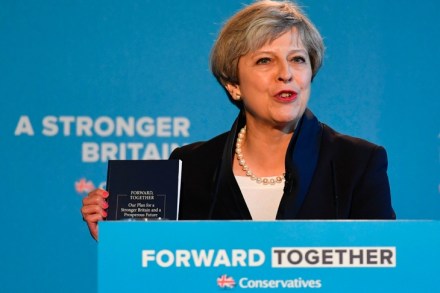
How the dementia tax – a ‘nasty party’ policy – lost Theresa May her majority

From our UK edition

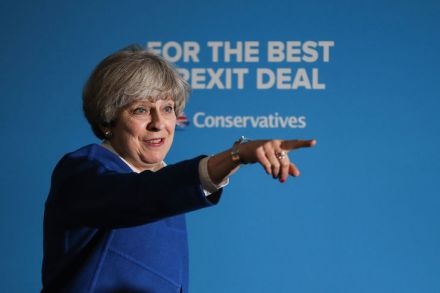
Pundits and pollsters have spent the last year trying to explain what the Brexit vote meant. Was it right-wing or left-wing? Was it about immigration or sovereignty? Was it a bit racist? They'll do the same for this election – trying to pinpoint where it all went so humiliatingly wrong for Theresa May. But to me one answer, even so soon after shock result – and before we've been able fully to analyse the results – stands out by a mile: the dementia tax.  There are five reasons, I'd argue, why it ruined Theresa May's election campaign and may have been the key factor in destroying her parliamentary majority. 1.

This election will be remembered as a triumph for the wealthy

From our UK edition

This dismal, unnecessary election, conducted between the scream of police sirens and the murders of civilians, will be remembered for one thing only: the dementia tax. In years to come, political pros will shake their heads at the naivety of Theresa May. She appeared invincible, they will say. All she had to do was to keep quiet, turn up and she would win a landslide victory. Then she faced one of the great questions of the day. Everyone says they want politicians to do that. Who has not exclaimed that they must stop listening to focus groups and be brave? May was, and see how she has suffered. The PM understood that the social care system cannot cope now, and could collapse as more of us trudge into senility.

May’s mistakes

From our UK edition

On the eve of the US presidential election, experts at Princeton university decided that Donald Trump had a 1 per cent chance of being elected. Before the last general election, Populus, the opinion poll firm, gave David Cameron a 0.5 per cent chance of winning a majority. Much is made of the need to look at ‘the data’ when considering political arguments, but so often it is a wildly inaccurate guess with a decimal point at the end to give an aura of scientific specificity. So when we read that Jeremy Corbyn has just a 17 per cent chance of becoming prime minister, this does not mean that the election is in the bag. The Tories are still quite capable of blowing it. It’s understandable that voters have misgivings about Theresa May.

Letters | 1 June 2017

From our UK edition

Ignoring the hadith Sir: Douglas Murray and Jenny McCartney (‘The known wolf’ and ‘A war on joy’, 27 May) are correct to cite hatred of women and young girls and fear of their independence as a trigger for terrorist violence — witness Malala Yousafzai. But it is of course not the only trigger since, denial notwithstanding, it is against the generic and non-gender-specific ‘infidel’ that the Koran fulminates. The prohibition said to exist against killing women and children in war is not found in the Koran (of divine infallibility) but in the hadith (of debatable provenance on a case-by-case basis).

Weak and wobbly

From our UK edition

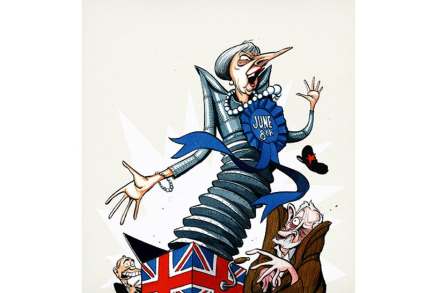
When Theresa May decided to go for an early election, she transformed the nature of her premiership. Up to that point she had been the steady hand on the tiller, righting a ship of state buffeted by the Brexit referendum. By going to the country to win her own mandate, she sought to become more than that. She wanted her own sizeable majority and, in so doing, invited comparison with the two prime ministers who have done the most to shape modern Britain: Margaret Thatcher and Tony Blair. She was asking to be judged against their electoral triumphs. At the start of this campaign, May looked comfortable in this company. The polls suggested that she would get a higher vote share than either Thatcher or Blair and win a majority to stand any comparison with their landslides.