Dementia

A dementia tax would be a euthanasia bonus

From our UK edition

Had Theresa May not on Monday summarily abandoned her manifesto threat to raid the savings of those who end up senile in care homes, I had planned to defend the idea here in terms that might have added to her woes.  I’ll do so regardless. The so-called dementia tax would, over time, have become a euthanasia bonus. And that would be a good thing. As I argued on this page two weeks ago, morality is the father of religion, and not the other way around. Secular morality can be largely explained by social Darwinism.

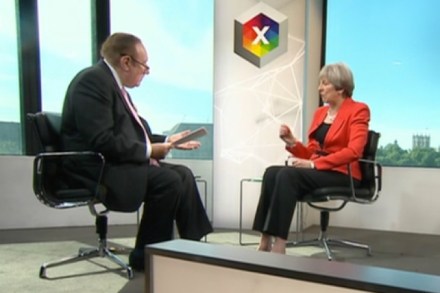
Theresa May forced to defend U-turn in her most difficult interview yet

From our UK edition

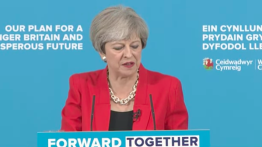
Today was not a day that Theresa May will want to repeat anytime soon. In the morning, she had to U-turn on one of the centrepieces of her election manifesto and in the afternoon, she faced the most difficult interview she has had as Prime Minister. Theresa May never really got onto the front foot in her half-hour interview with Andrew Neil. She spent the first ten minutes of the interview claiming that the principles behind the Tories’ social care policy hadn’t changed, while Andrew Neil hammered the point that something has: there is now a cap whereas the manifesto had explicitly rejected one. May was also uncomfortable on the question of whether the £8 billion extra the Tories are proposing for the NHS is all new money or not.

U-turns matter less than journalists think, especially if voters like the result

From our UK edition

This is the latest in a series of posts that could be entitled 'things I could never say when I was a political journalist but now I can.'  Today’s topic: U-turns. The bottom line: they don’t matter, or at least, they don’t matter anywhere near as much as most of the coverage of them suggests. Theresa May has changed her mind on social care. Political Twitter is still, as I type, in the sort of excited spasm that suggests that this is an event that will change EVERYTHING.  To some, Mrs May has shattered forever her image as a strong, steady leader. A slightly more sophisticated take suggests that she’s shattered her relationship with the Conservative Party, which will never trust her again.

Theresa May forced into ‘dementia tax’ U-turn by Jeremy Corbyn

From our UK edition

Theresa May promised ‘the first ever proper plan to pay for – and provide –social care’ in the party’s manifesto. Four days later, that plan has now changed. The Prime Minister has said that there will, after all, be a cap on the amount people have to pay for the cost of their care. So what made May change her mind? Jeremy Corbyn, according to the PM. May said that ‘since my manifesto has been published, my proposals have been subjected to fake claims made by Jeremy Corbyn’. The reaction to the policy, May suggested, meant that the government would ditch the manifesto plan.

Five reasons why the ‘dementia tax’ U-turn was inevitable

From our UK edition

'The Tory "dementia tax" could backfire for Theresa May' was the Coffee House take last Thursday, perhaps the first mention of that phrase in the media last week. It took a few days for the announcement to sink in, and for the 'dementia tax' tag to stick. But it most certainly has backfired now. Jeremy Hunt tells the Evening Standard that the government wants to 'make sure that people who have worked hard and saved up all their lifetimes do not have to worry about losing all their assets'. It seems there will, after all, be a cap on what an individual has to spend on care. Theresa May has separately promised a consultation that will at least look at a cap. https://twitter.

Diary – 18 May 2017

From our UK edition

On the heels of the Today programme’s invitation to discuss ‘cultural appropriation’ (again), the New York Times reported the disheartening fate of a Canadian magazine editor, Hal Niedzviecki. ‘Anyone, anywhere, should be encouraged to imagine other peoples, other cultures, other identities,’ he wrote, gamely proposing an Appropriation Prize for the ‘best book by an author who writes about people who aren’t even remotely like her or him.’ After the usual social media shitstorm, Niedzviecki had to resign. The Times correctly quoted me asserting that this cockamamie concept threatens ‘our right to write fiction at all’.

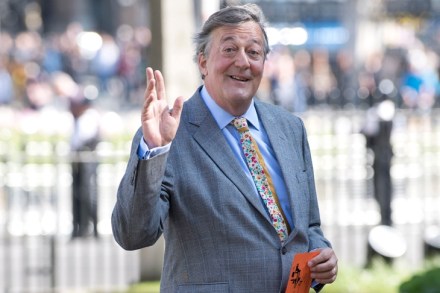
The cops should have said: it’s just Stephen Fry, what did you expect?

From our UK edition

Coming to a workplace near you, perhaps — masturbation breaks. The policy was first recommended by a psychologist at Nottingham Trent ‘University’ and has now been supported by Dr Cliff Arnall, who is a life coach. These brief moments of respite in the working day would, according to old Cliff, result in less aggression, higher productivity and more smiles. I’m sure he’s right. ‘I’ll read the lesson in a few minutes, Justin, I’m just off for a quick Sherman. Pass me that copy of the Tablet, will you?’ I do wonder if in some workplaces — the BBC commissioning centre, all advertising agencies, Channel 4 News, the Law Society — these breaks are already de rigueur and, further, are unceasing in their duration.

Old, unhappy, far off things

From our UK edition

August Geiger led an unremarkable life. Born in 1926, the third of ten children of a Catholic farming family in western Austria, the most unusual thing about him was his unwillingness ever to leave Wolfurt, the village where he had grown up. He built a house there, for his schoolteacher wife and their children, and refused ever to go on holiday. His wife had suggested that they go on a walk and call it their honeymoon, but August rejected even this slight change in his routine. It was, therefore, particularly poignant that when he developed Alzheimer’s disease, August’s dominant obsession became his desire to go home. Nothing could convince him that he was already there.

Low life | 20 October 2016

From our UK edition

In 1999 I went to the doctor about the impotence. Don’t worry, he said. I have good news for you. He prescribed a new drug called Viagra to get me over the psychological hump. It worked; spectacularly. In 2001 I went to the doctor mumbling about depression. Don’t worry, he said. I have good news for you. He prescribed a new drug called Prozac to lift me out of it. Within three months I was back on the poop deck of this ship of fools with the wind in my hair and salt spray on my face. In 2013 I went to the doctor because I couldn’t pee. A blood test showed I had cancer. Don’t worry, he said. I have good news for you. These days we have so many effective new drugs against cancer, it might not kill you. Three years later it still hasn’t.

Shaw thing

From our UK edition

T.E. Lawrence is like the gap-year student from hell. He visits a country full of exotic barbarians and after a busy few months rescuing them from their spiritual frailties, and helping them emulate their Western superiors, he returns home and never stops boring on about it. ‘How much I learned from them,’ he gushes, when what he means is, ‘How much they learned from me.’ That’s always been the view of Lawrence’s critics, among them fellow British army officers, who saw him as a reckless, attention-seeking fantasist. Howard Brenton’s new play offers a more charitable portrait of Lawrence as a brilliant, sensitive, rootless genius. The action opens with him newly enlisted as a flunkey in the RAF under the surname ‘Ross’.

Letters | 3 March 2016

From our UK edition

What might have been Sir: Harry Mount points out that Boris Johnson is two years older than David Cameron (Diary, 27 February). Both, however, began their careers in the same year. On 15 June 1988 I interviewed David Cameron for a post in the Conservative Research Department; on 26 July it was Boris’s turn (‘Johnston’ in my diary). The former was signed up to cover trade and industry issues (memorably forgetting the trade figures when Mrs Thatcher asked him for them). Boris was invited to follow in the footsteps of father Stanley, who had been the department’s first environment expert in the Heath era. But journalism lured him away. Would they have forged a lifetime’s close and harmonious friendship if Boris had reached a different decision?

Letters | 3 September 2015

From our UK edition

Suicide and assisted dying Sir: As a mental health practitioner, I am grateful to Douglas Murray (‘Death watch’, 29 August) for his incisive commentary on the impact of legalised euthanasia on people with psychiatric conditions. Supporters of assisted dying argue that a permissive act would be tightly framed, but the scope would inevitably widen, as has occurred in Holland. Although Lord Falconer and fellow travellers would bar people of unsound mind from the intended provision, this would soon be challenged as discriminatory: because effectively, a person would be punished for losing decision-making capacity. If proponents of euthanasia are really so rational, while their opponents are blinded by emotion or faith, how can this anomaly be justified?

Sea sound

From our UK edition

It’s often not visual images that stimulate memory but a smell, a taste, the sound of pebbles crashing on to the beach, ice cream being scooped into a cone, seagulls circling overhead. Where was I when I first heard that sound? That’s why the National Trust (in association with the British Library sound archive) has just announced its Coastal Sounds of our Shores campaign. We are all invited to send in our own audio recordings from the beach: short, five-minute clips, impressions taken outdoors, in real time, which capture what the seaside means to us. Not photos, or postcards, but an online archive of sound memories.

Presence of mind

From our UK edition

‘It’s hard to know how to tell this story,’ she said as she began. ‘Because it’s so loaded. It’s so heavy-duty.’ Lore Wolfson was talking about the death of her husband, Paul, or rather about the onset of the illness that led him a year later to take an overdose of heroin, aged 61. He had been diagnosed with early-onset dementia, in a peculiarly aggressive form, rapidly losing his words, his memory, his capacity to work or function independently. Lore began recording her conversations with Paul very soon after they knew for sure why he was having word-finding difficulties. ‘It was the natural thing to do,’ she said, because she’s a radio producer and, for her, keeping an audio diary was more natural than writing things down.

Fat chance

From our UK edition

[audioplayer src="http://rss.acast.com/viewfrom22/theriseofleft-wingpopulism/media.mp3" title="Julie Burchill and Katie Hopkins discuss whether you can be fat and happy" startat=924] Listen [/audioplayer]I’m a very off-message type of fat broad; one who gladly admits she reached the size she is now solely through lack of discipline and love of pleasure, and who rather despises people (except those with proven medical conditions) who pretend that it is generally otherwise. I’m not attached to my fat in any but the most obvious way; would I lose it if I could snap my fingers? Without doubt. Would I work at losing it? Not a chance, Vance. ‘But it’s not about vanity,’ the weight bores bleat, ‘it’s about health.’ Hmm.

Dementia is ‘an opportunity’, according to Michael Gove. What a brave thing to say

From our UK edition

Michael Gove said something startling about dementia in a speech last night launching an initiative called 'The Good Right' at the Legatum Institute. But blink and you would have missed it. If you regard dementia as a friend’s departure from our world rather than an opportunity to bring them closer to your heart, then you miss the essence of compassion. I bristled when I heard that – at first. Mary, my dearest friend in the world, a lady in her 90s, has dementia. Probably. Depending on how you define it.

Call them crazy – the foolhardy new incentives for dementia diagnoses

From our UK edition

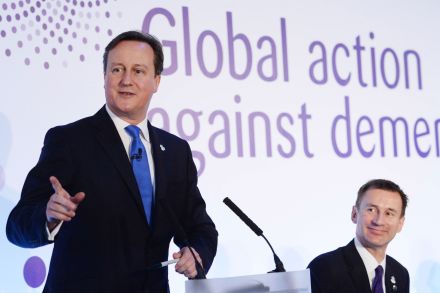
Remember this time last year, when Jeremy Hunt decried the 'national shame' of neglected old people suffering from undiagnosed dementia? The health secretary lamented that fewer than half of dementia cases are ever diagnosed, and promised 'to make a big change.' His initiative got rave reviews at the time. Now that the details are in, not so much. 'A bounty on the head of certain patients' is how the head of the Patients Association characterised NHS England's new scheme, to pay doctors £55 per patient whom they diagnose with dementia. The so-called 'Dementia Identification Scheme' began on October 1 and runs through March 31. It is, per the NHS document, 'designed to reward GP practices for undertaking a proactive approach'.

Farewell, Speccie

From our UK edition

So we are all going to have to pay for fatties to have stomach bands and bypasses, are we? It may be ‘cost-effective’ to treat the obese before they go on to develop diabetes and other medical problems, but I’m not sure how much sympathy they will get when we already hear about cancer patients having operations delayed and drugs withheld because of stretched NHS budgets. According to the OECD, Hungarians are the most obese people in the EU, followed by Brits. Rather surprisingly, Romanians are the least fat. Surprising, because on a recent holiday to the island of Lefkada, there were a huge number of Bulgarians, Serbs and Romanians. And, yes, most of them were huge.

How to beat Alzheimer’s

From our UK edition

British scientists have identified a set of proteins in the blood which can predict, with 87 per cent accuracy, the start of dementia. Symptoms, apparently, take about ten years to appear after the actual start of Alzheimer’s. Having lived with someone with this horrendous condition, I am certain that I wouldn’t want to take a blood test that would show that in a decade I would develop dementia unless, obviously, I could have it reversed. Ignorance is bliss… But research can’t move forward without volunteers. Between 2002 and 2012, 99.

Why I get my health advice from the Daily Mail

From our UK edition

When one is in one’s seventies, as I am, one begins to fear the horror of dementia and to carry out anxious checks on one’s memory to see if the brain is still working. The results in my case are not very encouraging. For example, it took me several days to remember that the film star who canoodled with Leonardo DiCaprio in the stern of the Titanic was called Kate Winslet, although I am an admirer of hers and even once met her. Nor can I remember the words of the songs and poems that I used to know by heart. Am I on my way to becoming a helpless vegetable at the mercy of resentful carers? This is the point at which one turns to the Daily Mail for comfort.