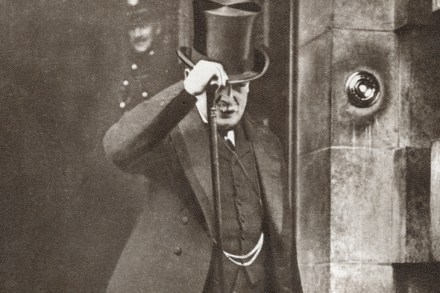
David lloyd george

The Labour party should finally grow up about Ramsay MacDonald and his conduct

The subtitle of Walter Reid’s biography of James Ramsay MacDonald refers to ‘the extraordinary rise and tragic fall’ of Labour’s first prime minister. The rise was not especially extraordinary. In the first decades of the 20th century several people from relatively humble backgrounds – David Lloyd George and John Burns from outside MacDonald’s party, and Philip Snowden and Arthur Henderson (to give just two examples) from within it – reached the top or very near the top of British politics. But did MacDonald have a tragic fall? He was prime minister for six of the last eight years of his life; a cabinet minister to within six months of his

The anxious gaiety of Britain’s interwar years

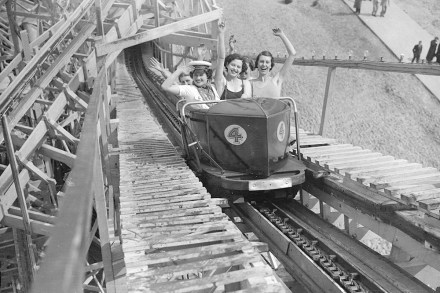
However many times one absorbs the brevity of the interlude between the first catastrophic worldwide conflict of the 20th century and the next, it was the not-knowingness of that timetable that allowed society to cope. In the 20 years between world wars that shattered several generations, Britain’s full emotional recovery was never really accomplished. But with his eye for the political and the cultural, for the game-changing and the deliciously absurd, for comedy and for tragedy, Alwyn Turner demonstrates the irrepressible optimism of humanity, whatever the circumstances: ‘Highbrows and lowbrows [lived] cheek by jowl, rubbing along with politicians, priests and pressmen.’ Relentlessly twisting the kaleidoscope, Turner finds a stunned nation

The last straw in Lloyd George’s cash for honours scandal

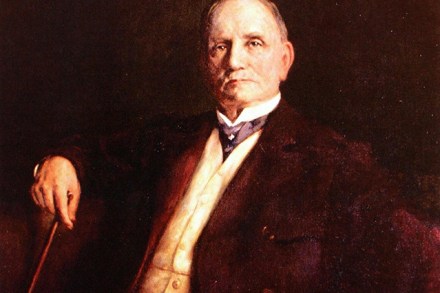
Why another book about Maundy Gregory? The spiv who in the 1920s acted as middleman between David Lloyd George and potential peers, baronets and knights – the former desperate for money to fund his campaigns, the latter greedy for status, irrespective of any merit they might have – has been documented extensively. Gregory also features in histories of the period, in studies of the honours system and in countless newspaper and magazine articles. Stephen Bates’s book, which appears to have been published to mark the centenary of the 1925 Honours (Prevention of Abuses) Act, adds little to what we already know. Despite other potential candidates, Gregory is the only person

The mystery of the missing man: Green Ink, by Stephen May, reviewed

Stephen May used to write contemporary novels about men who ‘live outside big cities, lack self-confidence and rarely feature in contemporary fiction’, as he once put it, adding: ‘Even Nick Hornby’s characters are more sorted than mine.’ But a chance discovery of a Wikipedia page about the three weeks that a young Stalin spent in Edwardian London sent May’s imagination hurtling back through the decades. The result was Sell Us the Rope (2022), his sixth novel, which imagined what Koba, the Georgian then better known as Joseph Dzhugashvili, got up to in 1907 while attending the Fifth Congress of the Russian Social Democratic Labour party. May mixed the real with

Blindness and betrayal still bedevil Britain’s policy in Ireland

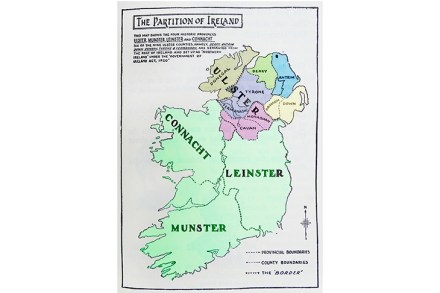
Charles Péguy’s adage that everything begins in mysticism and ends in politics is sharply illustrated by the development of the Irish Revolution. In his previous scintillating studies, Easter 1916: The Irish Rebellion and The Republic: The Fight for Irish Independence 1918–1923, Charles Townshend traced the progress of Ireland’s long-drawn-out severance from Britain. The completion of the trilogy is delivered with his characteristic scholarly panache. And by foregrounding how Northern Ireland came into being in 1920–21, and was sustained by the notable fudge of a non-delivering Boundary Commission in 1925, he brings into unforgiving focus the carelessness, double-dealing and myopia which has bedevilled Britain’s government of Ireland, so spectacularly demonstrated in