David cameron

The energy price freeze is becoming the new 50p tax

From our UK edition

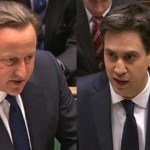
David Cameron clearly didn't think he'd had a good PMQs by the time he'd finished with Ed Miliband. There was something irritable and tired about the Prime Minister as he took questions from backbenchers, and that weariness was compounded by the sight of Dennis Skinner limbering to his feet to deliver a long, angry and moving question about the work capability assessment. Dennis Skinner is the last thing you want floating to the top when your PMQs performance has been below par. And it was below par. I understand that Cameron was given a very detailed briefing indeed today on energy prices because it was highly likely that Ed Miliband was going to come back for round two. As James says, the session is settling into a pattern.
EU red tape push will give Cameron cover for renegotiation

From our UK edition

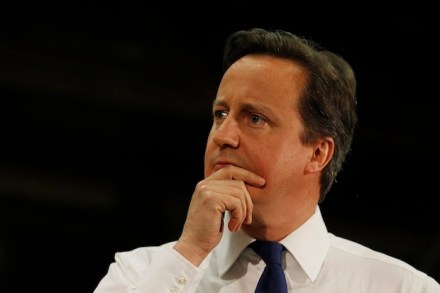
The government's business taskforce will give a presentation today to Cabinet on its report on slashing EU regulation. David Cameron has already indicated that he will support the 30 recommendations in the report, compiled by M&S chief executive Marc Bolland, Kingfisher chief executive Ian Cheshire, ATG Access managing director Glenn Cooper, BTG chief executive Louise Makin, entrepreneur Dale Murray and Diageo boss Paul Walsh. European Commission president Jose Manuel Barroso has said that he will look to resolve complaints about legislation burdening companies, and Cameron sees this as an important way of showing that Britain can lead on making the case for reform in the European Union as a whole.

Britain’s stated aim of getting Turkey to join the EU is mad

From our UK edition

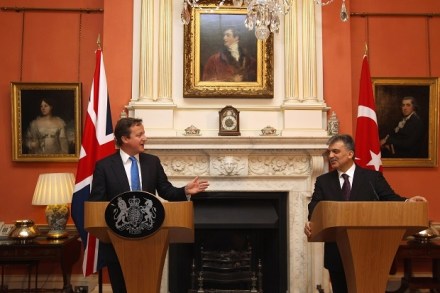
Rather to my embarrassment, I find that I missed last night’s episode of the BBC2 three-part series on The Ottomans, Europe’s Muslim Conquerors, in which I briefly featured. So Heaven knows what I actually said in it; it’s been a while since filming. But I’m rather hoping that the point I wanted to get across did, viz, that it’s nuts, barking mad, insane, away with the fairies, for Britain to be agitating for Turkey to be part of the EU. On David Cameron’s last visit to Turkey in 2010, he expressed anger at the delay in Turkey’s admission to the Union and blamed opponents for playing on fears of Islam in order to advance their case. Which more or less mirrors the rhetoric from Labour on the same subject.

The hunting debate returns – and with it, the chance to strengthen the rural vote

From our UK edition

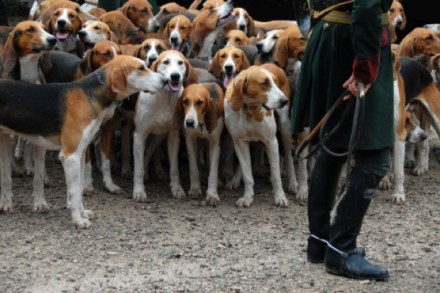
So hunting returns to the front page of the Telegraph, just like old times. But today provides an intriguing variation on the norm. Instead of Tories calling on the Prime Minister to scrap the Act (my preferred route) we have Lib Dems and Plaid Cymru leading calls to make some relatively minor changes in the light of a new study into the Hunting Act's failings. The detail is simple, if a little dull. At the moment farmers can only use two dogs to locate and flush a fox into the open so it can be shot to protect his livestock. The research shows that if you use two dogs instead of more you will find half as many foxes and chase those foxes for twice as long before you can shoot them.

2010 intake of Tory MPs write to Adam Afriyie telling him to drop his amendment

From our UK edition

More than 140 of the 147 Tory MPs elected in 2010 have written to Adam Afriyie telling him to drop his amendment to the EU referendum bill. Given that Afriyie has previously suggested he’ll drop his attempt to bring the referendum forward to 2014 there is no support for it, it now seems doomed. This loyalist flexing of political muscle by the 2010 Tory intake will cheer Downing Street. It shows that the parliamentary party does, for the moment at least, want to stay united on Europe. It also indicates that a certain discipline is returning to Tory ranks as the next election approaches. Even six months ago, an amendment of this sort would have caused the leadership real trouble.

Yes, of course the War on Drugs exists (but it shouldn’t)

From our UK edition

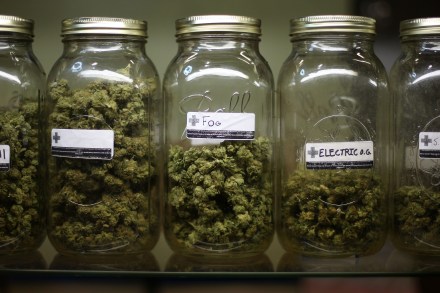
There is something contemptible about Nick Clegg's latest piece of handwringing. the Deputy Prime Minister - a position that, at least notionally, carries some clout - complains that he'd very much like to do something about Britain's antiquated drug laws but, well, he can't because it's hard and, besides, the Tories are such rotters. Clegg could have made this a cause. He could have done something about this before now. He could, at the very least, have talked about the War on Drugs rather more than he has. He could even have noted, frequently, that David Cameron has changed his own tune on these matters, abandoning the sensible attitude he once had. He has, instead, chosen not to. That's fine and his prerogative.

PMQs sketch: Ed Balls leaves them wanting more

From our UK edition

Here’s a favourite Tory joke. Question: What does ‘BBC’ stand for? Answer: Buggers Broadcasting Communism. David Cameron seemed tempted to try this gag at PMQs today. He mentioned the Beeb four times in sardonic asides. ‘Let’s praise the BBC for once,’ he said, bitingly. He woke this morning, he said, to a BBC report stating that public satisfaction with council services had risen despite the cuts. ‘I thought I’d died and gone to heaven.’ He berated Ed Miliband for wanting to introduce new decarbonisation targets. ‘Even the BBC doesn’t agree with that.’ And he attacked Milband’s promise to freeze energy bills as evidence that ‘he’d like to live in a Marxist universe.

Score draw at PMQs as leaders bicker about energy bills

From our UK edition

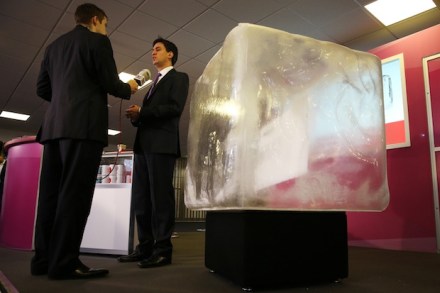
Perhaps David Cameron got up super-early to open his birthday presents today, or perhaps he's a bit tired after his fortnight of party conference and reshuffle mayhem, but the Prime Minister wasn't on top form today at PMQs. Neither was Ed Miliband, for that matter. Both men bickered about who had the best energy policy, like two kids comparing birthday presents in a playground. Neither really got in a deadly shot, with both seeming a little halting.

As it happened: Government and shadow cabinet reshuffle

From our UK edition

The Conservatives, Labour and Liberal Democrats undertook reshuffles today. As it happened, here is how Fraser Nelson, James Forsyth, Isabel Hardman and Sebastian Payne reported the day's events. You can see a list of who's in and out here. 1839:  So in the end three reshuffles that could have toiled on all week are pretty much wrapped up by the end of play. Here are our top lines from tonight's Evening Blend: All three parties reshuffled their frontbench ranks, with a cull of the Blairites in Labour and jobs for rising stars and allies of George Osborne for the Tories. …while Nick Clegg showed his brutal side by sacking popular Home Office minister Jeremy Browne with a terse letter. The new appointments include a beefed-up whips' office.

Female and northern MPs charge your phone, the reshuffle is on

From our UK edition

There are two more government resignations ahead of tonight’s reshuffle. John Randall, the deputy chief whip, has gone as has Chloe Smith, the Cabinet Office minister. Randall’s retirement has been overdue for a while now in the opinion of many in Downing Street. There is irritation at the way he put pressure on David Cameron to get rid of Andrew Mitchell during the plebgate affair. His departure and the expected elevation of several whips—Nicky Morgan and Karen Bradley are both in line for promotion—paves the way for a freshening up of the whips’ office. Chloe Smith quitting is going to tempt everyone to dust off the footage of that Paxman interview with her.

Bercow baiter Simon Burns to run for deputy speaker

From our UK edition

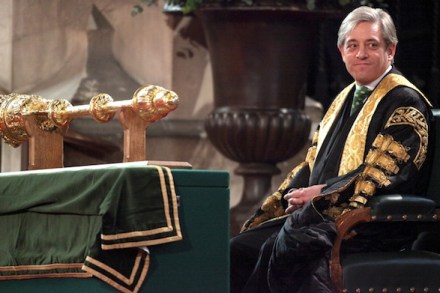
We’re about to find out what Tory MPs really think of John Bercow. Simon Burns, Bercow’s biggest Tory critic--and that’s says something, has resigned his ministerial post to run for deputy speaker. If he wins, the Speaker will be forced to work day in, day out with someone who, as Tim Shipman who broke the story points out, once called him a ‘stupid, sanctimonious dwarf’. David Cameron’s very warm letter accepting Burns’ resignation suggests that the Prime Minister is rather amused by the prospect. I also suspect that he’s grateful for Burns freeing up a ministerial post ahead of the reshuffle next week. The vote for deputy speaker is a free vote.

The View from 22 podcast: Tory conference review

From our UK edition

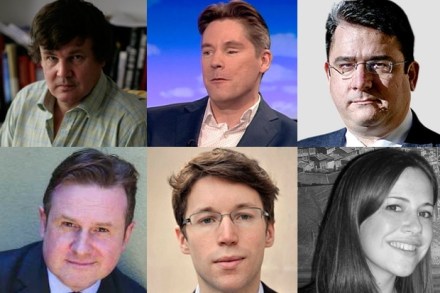
Peter Oborne thought David Cameron's speech was well delivered with a new sense maturity, while James Forsyth believes the blandness will reignite the Tories. Isabel Hardman reckons it was less exciting than last year and Iain Martin thinks the Tories are now perplexed by Ed Miliband. Guido Fawkes thought Cameron outshone his rivals and Dan Hodges thinks the Tories have held their nerve On this week's View from 22 podcast, our panel of commentators review this week's Tory conference in Manchester, what it means for the party's standing and debate who 'won' the conference season.

Will David Cameron be sticking his finger up at Ed Balls after the latest service sector figures?

From our UK edition

Yesterday David Cameron told the Tory conference that he had a new gesture for Ed Balls - a finger pointing upwards to indicate a stream of positive figures on the economy. You can almost imagine him doing it today at his desk in Downing Street after reading the latest figures on the service sector. Markit/CIPS' Purchasing Managers Index of activity recorded a level of 60.3, a slight decrease from August's seven-year high of 60.5, but enough to give the UK's best quarter for the services sector since 1997. Any number above 50 indicates growth. The level of growth, according to research from Citi's Michael Saunders, could be consistent with an annualised GDP growth rate of between 4 and 6 per cent.

The ravelling and unravelling of the only policy in David Cameron’s speech

From our UK edition

David Cameron's speech to Tory conference yesterday was supposed to be policy-free so that the media would pick up his list of achievements because it had no other choice. The problem with this, though, was that the papers found a policy in the speech anyway, and if they did splash on the speech, they chose this policy, not the 'finish the job' line or any other (although the Mail used the 'Land of Hope is Tory' line). It was on housing benefits for the under-25s, but it wasn't exactly ready to be a set-piece conference announcement, more a fleeting reference to gain more applause in the hall. Because the policy wasn't quite ready, a rushed briefing came out when it was demanded. You can read the note in full at the bottom of this post.

In it together? Matthew d’Ancona’s book on the coalition is a huge letdown, says Peter Oborne

From our UK edition

There are two ways of being a political journalist. One is to stay on the outside and try to avoid being compromised by too much contact with politicians. This approach comes at what many regard as an impossible cost. After all, the job of a journalist is to get stories and gain insight. Story-getting can only come through access, but this too creates a problem. The politicians who supply information, atmosphere, gossip and revelation tend to demand loyalty — and protection — in return. There is no right answer. Matthew d’Ancona has always sought the status of an insider. His Sunday Telegraph column is valuable because it provides an accurate and informed account of the stresses at the heart of the government.

Tory conference 2013: five things we learned

From our UK edition

1. Labour set the agenda for this conference. Ed Miliband might be preoccupied by his row with the Daily Mail about his father, but he can take heart that his shift to the left in Brighton last week had a huge influence over this Conservative party conference. This wasn't just the cost of living agenda, which Tory ministers felt the need to rebut and respond to in their own speeches, but, as James explains in his politics column this week (get a sneak preview on Coffee House here), Ed Miliband has energised the Tories into being more determined than ever to beat Labour. David Cameron's own speech contained 25 references to Labour, and he tried to deal with Ed Miliband in a number of ways, which I outlined here.

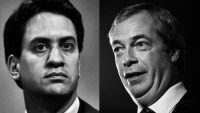
Who’s united the Tories? Ed Miliband and Nigel Farage

From our UK edition

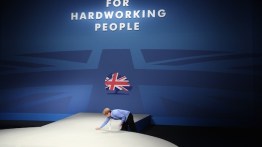
The Tory party has been at peace with itself this week. Eurosceptic backbenchers have given Nigel Farage a verbal kicking on the fringe, Cabinet ministers have stuck resolutely to the ‘hard- working’ conference script, and even Boris Johnson has behaved himself. Gay marriage, which so divided the leadership from the grassroots, has barely been mentioned, and you’d never know that just a month ago David Cameron lost a Commons vote on Syria. The new harmonious mood has come about in part because the leadership has moved towards the rest of the party. Tory conference was once decorated with posters extolling the benefits of ‘the big society’. Now, there is a simple Conservative message: ‘Welfare Capped: Immigration Down: Crime down’.

Tories shift their plans on benefits for under-25s

From our UK edition

Although David Cameron's speech was deliberately light on policy, it did contain one hint about a manifesto commitment for the 2015 general election. The Prime Minister told the conference that 'we should give young people a clear, positive choice: go to school. Go to college. Do an apprenticeship. Get a job. But just choose the dole? We've got to offer them something better than that.' The party is clear this afternoon that this will be a fully fleshed-out pledge in the Conservative manifesto, and that it is linked to Cabinet Secretary Sir Jeremy Heywood's review of training and education for under-25s. The benefits that could be docked for young people who aren't 'earning or learning' include housing benefit and job seekers' allowance.

Cameron’s speech shows he wants a re-run of 1992

From our UK edition

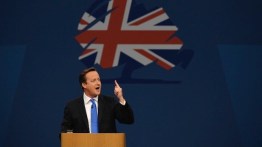
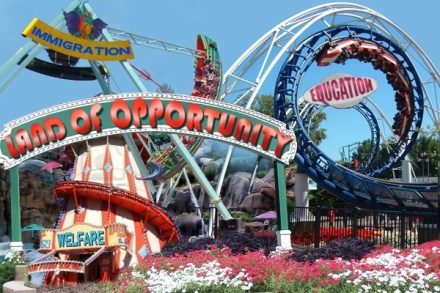
David Cameron’s Chequers speech writing session was held hours after Ed Miliband had finished speaking at Labour conference, and it showed today. This was Cameron’s passionate, sometimes angry, response to the Labour leader. He wanted to make the case that Miliband’s move to the left would endanger the British economy. His message was give me the time and I will finish the job. What’s the job, building a ‘land of opportunity’. This seems to mean an enterprise economy with an education system good enough to enable social mobility. It is a very Tory message. But Cameron was keen to show that he’s still a compassionate Conservative.