David cameron

Can Britain leave the Commonwealth?

From our UK edition

My dad used to tell me that when he was a foreign correspondent in the 1960s he was once assigned to the Gambia where, upon arriving at the airport, some man started trying to sell him a watch. Brushing aside the persistent chap, dad finally said ‘sorry, I’m going to be late for my meeting with the foreign secretary’, only for the man to tell him ‘I am the foreign secretary’. They got on famously, my dad said. I imagine the standard of African politician at the time was probably higher than it is now.
Lord Ashcroft to embark on biography of David Cameron

From our UK edition

Lord Ashcroft is writing a biography of David Cameron, which can’t have pleased the prime minister: the pair fell out, spectacularly, after the 2010 election. Ashcroft has announced that the book is expected ‘in the second half of 2015’. He has achieved the significant coup of convincing Sunday Times Political Editor Isabel Oakeshott to step down and join him on the project. Oakeshott is one of the most determined journalists in the lobby. If stones were left unturned by previous Cameron biographers (none of whom wrote particularly biting books), then Mr S expects her to find and turn them over. Given that Lord Ashcroft’s own polling shows that Cameron is unlikely to win the next election, is he preparing to write a political obituary?

David Cameron: Miliband’s Labour poses the same old danger

From our UK edition

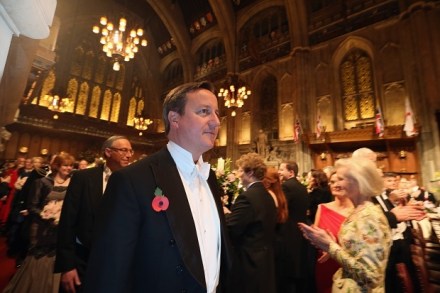
David Cameron’s speech at the Lord Mayor’s banquet yesterday evening rehearsed some basic political arguments that will be honed between now and 2015. Cameron made a decent assault on Labour over the cost of living: ‘There are some people who seem to think that the way you reduce the cost of living in this country is for the state to spend more and more taxpayers’ money....At a time when family budgets are tight, it is really worth remembering that this spending comes out of the pockets of the same taxpayers whose living standards we want to see improve.’ The logical corollary of that statement is pretty obvious: smaller government and tax cuts are the solution to the cost of living crisis.

Can the Tories become a mass membership party again?

From our UK edition

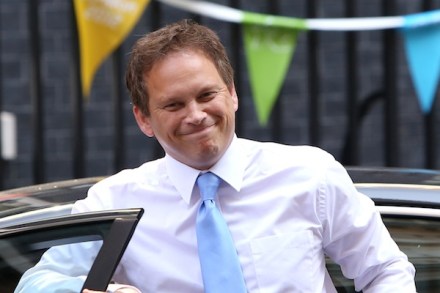
In the average Tory seat, only around 0.5% of Tory voters are Tory members. Grants Shapps, the Tory chairman, wants to change this. He’s written to every Tory MP asking them to take charge of a push in their seat to raise this percentage to 3. If this drive succeeds, Tory membership would rise to 800,000 plus. Opinion among Tory MPs on this move is divided. Some think that the era of the mass membership political party is over. Others, though, argue that increasing membership is doable—even if Shapps target is a tad too ambitious. There is also the issue of how the Tories can increase their presence in areas which they have been absent from for t0o long. At the moment, only two Tory members have associations which pass the Shapps’ size test.

Can we expect more social conservatism from the Tories?

From our UK edition

The Telegraph reports that the Relationships Alliance, which is to launch in the House of Commons, warns that the ‘disintegration of romantic, social and family relationships costs the average taxpayer around £1,500 a year’. Apparently this amounts to £50 billion a year. The story is of course familiar, even if the figures involved are new. Broken relationships can cause immense social and economic damage to the wider community. The Relationships Alliance, which is a union of charities, actions groups, politicians and individuals, has come into being to convince the government to adopt a national strategy to counter these costly ills. Relationships do break down, and some relationships should be dissolved.

Help to Buy mortgage subsidies show how little politicians learnt from the bubble years

From our UK edition

Gordon Brown used to joke that there are only two types of Chancellors: 'those who fail and those who get out in time.' Inside this joke lay his strategy: he was stoking a debt-fuelled bubble that was going to burst, but he hoped it would do so after the election or on someone else’s watch. It’s the textbook definition of putting party over country. I’m afraid that we can see its reflection in Help to Buy. David Cameron’s article in the Sun today shows this politicking is back. Look, he said, this policy shows I’m on the side of aspirational voters. If you want to get on in life, the Tories are on your side – they’ll kit you out with a sub-prime housing loan. After all, what could possibly go wrong?

David Cameron prepares for winter of discontent in A&E

From our UK edition

There are two important NHS stories in the papers today. First, the Times reports (£) that A&E departments are facing severe pressures because of historic staff shortages. The paper notes: ‘Half of all senior doctor posts go unfilled at accident and emergency departments, putting unsustainable pressure on life-or-death care. The College of Emergency Medicine (CEM) says that 383 of the 699 specialist registrar posts in A&E have been left vacant over the past three years, stretching emergency ward doctors beyond capacity and driving up waiting times. The shortfall in senior doctors deprives A&E departments of the ability to see 766,000 people each year, since the CEM points out that each registrar would have seen about 2,000 patients.

How ‘Help to Buy’ helps the Tories

From our UK edition

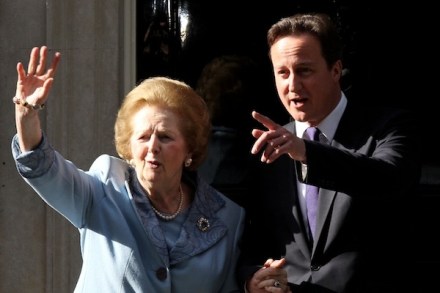
Few images are more seared in the Tory consciousness than that of Margaret Thatcher handing over the keys to people who had brought their council house under ‘right to buy’. The image seemed to sum up the aspirational appeal of Thatcherism. I suspect that there’ll be a slight homage to these images when Cameron meets some of those that the government’s ‘Help to Buy’ scheme is helping onto the housing ladder tomorrow. Number 10 wants to show that the full scheme, which has only been running for a month, is already being used by a large number of people. The economics behind ‘Help to Buy’ might make many on the right nervous; even some Cabinet ministers are worried about it stoking another housing bubble.

The Union is in peril

From our UK edition

Something quite remarkable happened last week. David Cameron proposed a major change to the constitutional fabric of the United Kingdom and barely anyone noticed. The fact that Cameron’s proposal, subject to a referendum, to let the Welsh Assembly vary income tax rates garnered so little interest is a sign of how inured we have become to constitutional tinkering. But these constant constitutional changes are putting the Union at risk. If Scotland votes no to independence that won’t, as I say in the column this week, be an end to the matter. Everyone from Cameron to the Better Together campaign have reassured the Scots that if they vote no, more powers will be devolved to them. Tactically this is the best way to limit the yes vote, but strategically it is a mistake.

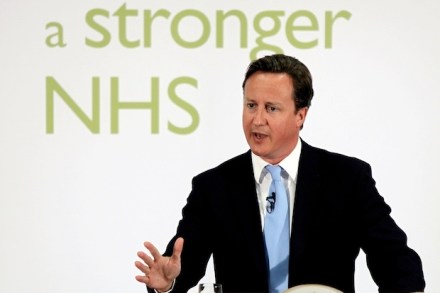
Why Cameron’s NHS lines didn’t quite work at PMQs today

From our UK edition

Though the NHS made a welcome change from endless bickering about energy bills at today's PMQs, the exchanges were just as unedifying. There is very little gain in the sort of fact war that David Cameron and Ed Miliband tried to indulge in, as there is no killer fact that can silence an opponent on the NHS. Instead, the exchanges descended very quickly into 'let me give the right honourable gentleman the facts about the NHS under this government', 'we have a Prime Minister too clueless to know the facts' and 'once again, the right honourable gentleman is just wrong on the facts'. Each man used his own 'simple facts' that he claimed either showed the NHS was safe in the Tories' hands or that it was being killed by the Tories.

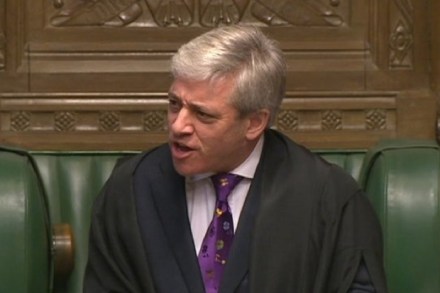
PMQs: Relations between Cameron and Bercow break down

From our UK edition

PMQs today was a typically bad tempered affair. The Tories have responded to David Cameron’s mauling two weeks ago, by upping the aggression in Cameron’s answers and the noise levels. Today, the Tories wanted to talk about Unite. At every opportunity, Cameron sought to bring Unite the union, who donate millions to Labour, into his answers. He floated the prospect of new laws to combat the aggressive and unpleasant ‘leverage’ tactics that Unite had used at Grangemouth. He likened Ed Miliband to the mayor of a Sicilian town who had been put in by the mafia and was afraid they would take him out if he took them on. Miliband led on the NHS. But the exchanges were far from enlightening.

Murdoch son-in-law ‘clarifies’ that the PM did come to his party after all

From our UK edition

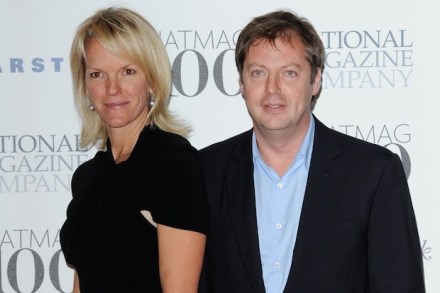
You know how it is. You've had a heavy night, everyone has left your party and empty bottles are all that remains. Then those pesky diary journalists start calling. Elizabeth Murdoch's husband Matthew Freud has 'clarified' that Cameron and Osborne were actually at his birthday party on Saturday, as described by Mr Steerpike yesterday. Initially, Mr Freud said that the PM had not attended. I can sympathise; I always forget when the Prime Minister and his Chancellor pop round for a knees-up.

Cameron and Osborne supping with Murdoch – again

From our UK edition

It was PR guru Matthew Freud's 50th birthday on Saturday: he and his wife, Elisabeth Murdoch, hosted a fairly lavish party. But would Westminster's finest attend? Guests were struck to see the Prime Minister and the Chancellor both in attendance, evidently quite happy to rejoin the social set that they have both kept clear of in recent years. Tony and Cherie Blair were also tripping the light fantastic. It was, after all, a Noah's Ark theme and they came in twos: PM and Osborne, Blairs, Naomi Campbell and Kate Moss. Perhaps the Chancellor is so confident that his pre-Budget report will be a festival of good news that he feels he can start partying again. After some initial confusion, Downing Street confirmed that Cameron attended the bash.

How the Tories will write their manifesto

From our UK edition

This week, David Cameron will announce the creation of a series of policy commissions charged with drawing up policies for the next Tory manifesto. Strikingly, every commission will include on it the chosen representative of the Tory backbenches. The groups will, as I say in the Mail on Sunday, be made up of the relevant Cabinet Minister, a member of the Prime Minister’s policy board and the MP in charge of the 1922’s policy work in this area. The Downing Street Policy Unit will provide the secretariat. Number 10’s hope is that by bringing MPs into this process, they’ll feel more loyal to the manifesto once it is produced. As one source puts it, Cameron is 'reaching out and hugging people close’. But this strategy is not without its risks.

Why do the Tories lead on the economy and leadership but trail overall?

From our UK edition

One of the odd things about the polls at the moment is that the Tories lead on economic competence and leadership, traditionally the two most important issues, yet trail overall. There are, I argue in the column this week, three possible explanations for this polling paradox. The first possibility is that Ed Miliband is right, that the link between GDP growth and voters’ living standards is broken. A consequence of this is that voters put less emphasis on economic management in the round. Instead, they want to know which party will do most to help them with their cost of living. Then, there’s the possibility that the traditional political rules don’t apply in this era of coalitions and four party politics in England.

Dave’s ‘crimson tide’ is not a family trait

From our UK edition

Sky News made history today by broadcasting for the first time ever from inside the Court of Appeal, and Counsel for the Appellant looked familiar. Indeed, it was none other than Alexander Cameron QC, the Prime Minister's brother. Dave's florid face evidently runs in the family; but, while the PM is prone to getting rather shouty at the dispatch box (the so-called 'crimson tide'), Alexander was a model of composure before the bench. Perhaps he might give his little brother some lessons?

The View from 22 podcast: Cameron’s countryside revolt, assisted dying, Terry’s Chocolate Oranges and HS2

From our UK edition

Has David Cameron lost the countryside? On this week's View from 22 podcast, Spectator columnist Melissa Kite debates Renewal's David Skelton on whether the Tory grassroots supporters have been abandoned by the urban elite who run the party. Have the previously hardcore Tories in the Countryside Alliance flocked to Ukip? Will this be a deciding factor in who wins the next election? And how import have house building, HS2 and hunting been? Isabel Hardman and James Forsyth also examine at why the next general election will be the most ideological battle in decades, as well as the problems Labour faces due to its soft polling lead. What has happened with High Speed 2 this week, and is a Terry's Chocolate Orange becoming politically significant again?

The next election will break all the rules

From our UK edition

Ed Miliband’s aides used to scurry around the parliamentary estate, their shoulders hunched. A look in their eyes suggested that they feared their boss’s harshest critics were right. But times have changed. Now Team Ed marches with heads high. The success of his pledge to freeze energy prices has given them a warm glow. Five weeks on from the Labour leader’s conference speech, his commitment still dominates political debate. It has boosted his personal ratings, helped his party increase its support in the polls and convinced his supporters that he might be Prime Minister after the next election. In these circumstances, one might expect the Tories to be panicking. But they’re not.