David cameron

PMQs sketch: Ed Miliband’s fuel bill and Labour’s trappist vow on public finances

From our UK edition

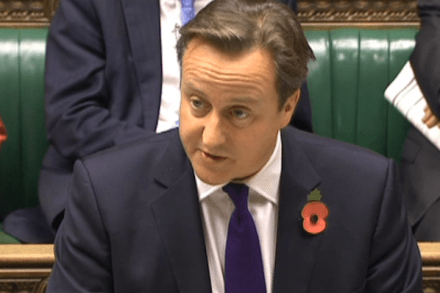
It was a doddle for Ed Miliband at PMQs this afternoon. The nation watched agog yesterday as the energy companies deployed a handful of silk-lined suits to justify their price hikes to a parliamentary committee. Miliband arrived at the house knowing that victory was simple. He just had to fuse the Tories and Big Energy in the public mind and then sit back and enjoy the results. But he got ambushed by David Cameron who had a surprise document up his sleeve. Miliband’s fuel bill. First Cameron reminded us of his advice to consumers last week. ‘Switch your energy company and save £200.’ This idea had been instantly derided by the Labour leader. Yet he himself had just changed supplier. Cue Tory hilarity. Cameron twisted the blade.
British journalists lock each other up and throw away the key

From our UK edition

In the past few days, my colleagues on the Guardian have been publishing stories of national and international significance – indeed, if truth be told, they have been publishing them for most of the autumn. The international scoop was that America’s National Security Agency tapped Angela Merkel’s mobile phone (along with the phones of many more world leaders). As the shock of the revelation has sunk in, most observers have grasped that the shrug-of-the-shoulder explanation that 'spies spy', doesn’t really work in this instance. Spies in democratic countries are meant to be under democratic control. Elected politicians have few problems authorising surveillance on their country’s enemies.

European Council statement: Leaders seize opportunity for economic ding dong

From our UK edition

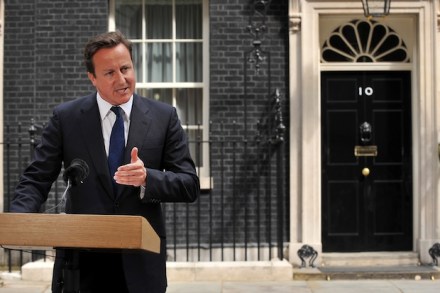
Why did the Prime Minister give a statement in the Commons on the outcome of last week's European Council summit? Though he is expected to report back to MPs each time one of these jamborees takes place, David Cameron didn't really have a great deal to tell them other than the tantalising suggestion that the leaders had made progress on cutting red tape and the declaration that 'the EU is changing'. It was hardly one of those statements where Cameron can wave a budget cut or some other great policy victory at MPs.

Coalition parties near a deal on energy bills

From our UK edition

The good news for the Cameroons on energy is that it looks like they’ll get an agreement by the Autumn Statement to take at least some of the green levies off energy bill. The bad news is that this means that the debate sparked by Ed Miliband’s pledge to freeze energy prices for 20 months if elected is going to continue until, at least, December 4th. An agreement between Cameron and Clegg on energy bills does now appear to be close. The Lib Dem anger at Cameron using PMQs to try and bounce them into a set of concessions has been replaced by a fast-moving negotiation. As one senior Number 10 source says, ‘There’s lots of shouting and public posturing, but 12 hours later Clegg is signalling that he’s prepared to do business.

MPs still fracked with nerves about shale gas incentives

From our UK edition

In the days before Ed Miliband went all Marxist/brave on energy (delete as tribally appropriate), the debate around energy was more about fracking than it was about freezes. Shale gas has taken a back seat while ministers wonder what on earth they can do about bills to take the wind out of the Labour leader's sails. But the political problems haven't gone away. The debate is still about whether the incentives on offer are enough for local communities to accept fracking pads in their area. MPs whose constituencies sit atop the Bowland Shale don't think the government is offering enough, and have continued to tell the Prime Minister that. He recently held a meeting with MPs interested in fracking, but those who attended complain that they got little out of it.

PMQs sketch: Cameron is a buffoon who might as well eat his own manifesto

From our UK edition

At PMQs today, the Tories’s energy policy went bi-polar. The Conservatives now seem to touch both extremes of the debate. For eight years they’ve presented themselves as a gang of happy tree-huggers who applaud every green subsidy going. But today David Cameron announced his plan to ‘roll back some of the green regulations and charges’. John Major started it all. Yesterday he lurched back into front-line politics by suggesting that energy companies should pay a windfall tax this winter. Otherwise, he said, the poor will have to choose between starving or freezing to death. Number 10 called this bombshell ‘interesting’. Ed Miliband asked David Cameron if John Major was now a Marxist. ‘Has he been claimed by the red peril?

Cameron ‘lost’ PMQs, but he’s moving into a better position on energy bills

From our UK edition

David Cameron took a pasting at PMQs today. Ed Miliband, armed with a whole slew of lines from John Major’s speech yesterday, deftly mocked the Prime Minister. Cameron, faced by a Labour wall of noise, struggled to make his replies heard. At one point, he rose to his feet thinking Miliband had finished, only for the Labour leader to contemptuously signal at him to sit down. listen to ‘PMQs: Cameron v s Miliband on energy prices’ on Audioboo But Cameron did announce some policies today that might offer him a way out of the energy hole he’s currently in. First, he made clear that he wants to scale back the green taxes and levies that are pushing up bills.

Nuclear should never be ‘the last resort’

From our UK edition

Yesterday’s agreement between the French state-owned company EDF and the UK Government regarding the ‘strike price’ for the electricity that will be generated by Hinkley C should be welcomed by everybody who cares about our environment, our economy and the security of our energy supplies. It’s taken three political parties, three Prime Ministers and two governments eight years to reach this point. Over this period, David Cameron has gone from espousing an investment-deterring policy of nuclear generation as ‘a last resort’ to welcoming the environmental and economic benefits of the industry in the shape of the deal that should pave the way for the construction of Britain’s first new nuclear reactor for a generation.

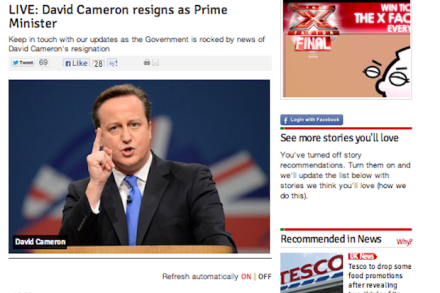
David Cameron resigns…according to Wales Online

From our UK edition

It has been an eventful afternoon at the Western Mail and South Wales Echo. As seen in the screen grab above, Wales Online, the papers' online variant, reported (and tweeted) that the Prime Minister resigned at 16:33 today. It was a 'shock' resignation and the government was 'rocked' by the news, apparently. As you'd expect for such breaking news, the piece quickly garnered traffic from Facebook and Twitter. But, Cameroons will be relieved to hear, it was only a test: Apologies to anyone who saw that unfortunately published article just now - a training exercise never intended to see the light of day.

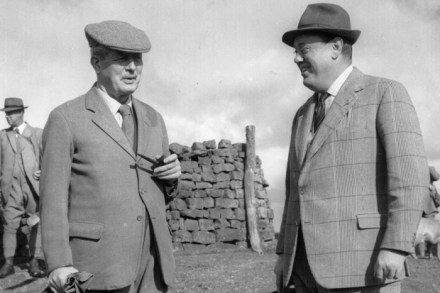
David Cameron should look to Harold Macmillan for political guidance

From our UK edition

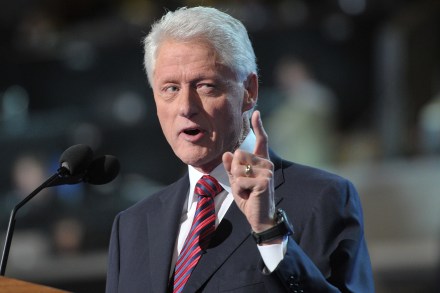
When Harold Macmillan published The Middle Way in 1938, its title at once entered the political lexicon. As he anticipated, his message that there was an alternative to socialism and political individualism received a frosty reception from right and left. Even the Macmillan family nanny said 'Mr Harold is a dangerous pink'. Yet correctives such as Friedrich Hayek's The Road to Serfdom in 1944 did not immediately dampen the impact of Macmillan's philosophy. 'In this illogical island,' Harold Nicolson wrote to Hayek, 'there exists an infinite capacity for finding middle ways'. Sixty years later, concepts such as President Clinton's 'triangulation', Anthony Giddens' 'Third Way' and the first ten years of New Labour showed the durability of the hare that Macmillan set running.

Is it still the economy, stupid?

From our UK edition

The coalition wants this week to be all about the GDP figures, out on Friday. As I say in the Mail on Sunday, Downing Street is confident that they’ll show the economy is continuing to grow at a relatively decent clip and is already working out how to make political out of that. They have, as Simon Walters reports, already prepared a video mocking Labour’s claims that the coalition’s polices would lead to a million more people on the dole. Ed Miliband’s circle expects that the GDP numbers will again be positive. But they take the view that as long as prices are increasing faster than wages, squeezing voters’ living standards, economic growth won’t mean much politically.

Why politicians shouldn’t say ‘should’

From our UK edition

David Cameron is currently trying to work out what his position on jumpers is after Number 10 was forced to issue an amazing clarification this afternoon. A spokesman said: 'To be clear, it is entirely false to suggest the PM would advise people they should wear jumpers to stay warm. Any suggestion to the contrary is mischief-making. The Prime Minister would point people to a range of things being done to help people with their fuel bills, such as legislating to put everyone on the best tariff for them. He believes Labour's "price freeze" policy is a con - and certainly would not advise people on what they should wear.

Why bother to switch energy provider?

From our UK edition

The Prime Minister and the Energy Minister, Ed Davey, were unanimous in their response to the British Gas price hike this week by 10 per cent, about four times the rate of inflation – described judiciously by the PM as 'disappointing'. Shop around! they said. 'We need more competition!' cried Mr Davey. They haven’t yet recorded their opinion of today’s price increase from little Co-op, another energy provider, at about twice the rate of inflation, but I expect it will be much the same.

Tristram Hunt’s diary: Why has Gove allowed a school that makes women wear the hijab?

From our UK edition

ONE OF THE MINOR sociological treats of being appointed shadow education secretary is a frontbench view of David Cameron’s crimson tide — that half hour journey, every Question Time, during which the Prime Minister’s face turns from beatific calm to unedifying fury. It starts at 12.04 with the merest ripple of annoyance in his shiny, placid countenance. At 12.07, the ripple has become a swell of irritation, still far out to sea, at anyone daring to question the wisdom of government policy. By 12.10, it is a wave of indignation and wounded amour propre at the wilful duplicity of his opponents. And by 12.14, the crimson tide is crashing over the rocks of the dispatch box, back and forth for the next quarter of an hour. Close up, it is a marvel to behold.

Press Freedom: The state goes for everyone (and you have no right to be surprised)

From our UK edition

Britain's journalists ought to be asking themselves an unfamiliar question: what is the point of my life? If they have any knowledge of history, they ought to know that they are the custodians of a tradition of press freedom, which began with John Milton and the “Independents” who opposed both Charles I and the Presbyterian theocrats of the 1640s. The point of having freedom is to hang on to it. Although you would never guess that from imbecilic games the British media plays. Before I go further, I must acknowledge that you only have to say “press freedom” to see sneers appear on the wolfish lips of the media academics, who provide what intellectual backing the movement towards a state-supervised media possess. 'What does it mean?' they ask.

The View from 22 podcast: is climate change good, Tommy Robinson and another Tory/Lib Dem pact

From our UK edition

Are there any upsides to climate change? On this week's View from 22 podcast, author and columnist Matt Ridley discusses the economic impact of global warming with Fraser Nelson, and whether there are any benefits to a rise in temperatures. Will there be a tipping point for disastrous effects? Are we taking the right precautions to deal with that point? Douglas Murray also looks at his encounter with ex-English Defence League leader Tommy Robinson, and what lies ahead for the far-right movement in Britain. Will the EDL wither away without Robinson? And are all far right parties finished in this country? Plus, Isabel Hardman and James Forsyth examine the prospects for another Conservative coalition with the Lib Dems and the problem of too many Tory red lines.

Don’t hug me! (Even though sometimes it’s rather nice)

From our UK edition

When, in 1957, Harold Macmillan accepted the Queen’s invitation to become prime minister, following the resignation of Sir Anthony Eden, he returned from the Palace, marched up Downing Street to where Eden was waiting for him, and gave his old rival a man-hug, right there in front of the Pathé news cameras. No, of course he didn’t. But we have come a long way since then. Indeed, at the party conferences they were all at it: MPs, ministers, party activists, hug, hug, hug — and not a hoodie in sight. After the Mayor of London delivered his speech he was rewarded with a bear-hug from the Prime Minister, no less. At least it was away from the cameras this time, unlike last year at the Olympics, when Boris and Dave had a manly embrace in full view.

PMQs sketch: Exaggerations, solecisms and clangers

From our UK edition

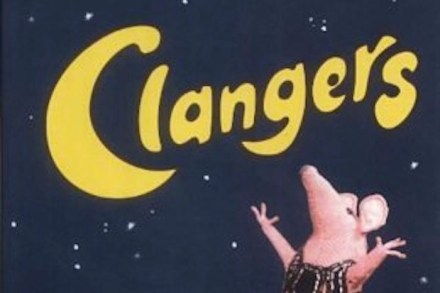
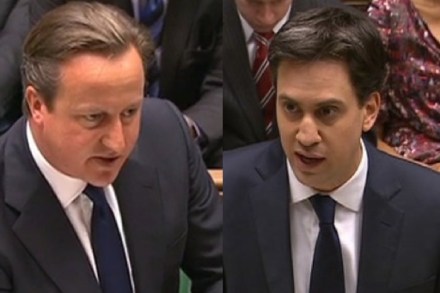
The Clangers are back. And not just on television. At PMQs, both the party leaders tried to embarrass each other with solecisms, exaggerations – and, yes, clangers – which they’d dropped in the past. Ed Miliband led with the cost of living crisis and said ‘record numbers are now working part-time’. Cameron retaliated with a Miliband prediction from October 2010. ‘The government programme will lead to the disappearance of one million jobs,’ Wrong! A million jobs have been created. Miliband brought up his pet-policy, the energy bill freeze, and accused Cameron of supporting the Big Six fuel giants. A price con, not a price freeze, said Cameron. And why had Miliband not parked our bills in the chiller-cabinet while he was Energy Secretary?

PMQs: The cost of living versus the economy

From our UK edition

PMQs has settled into a pattern. Ed Miliband attacks David Cameron about the cost of living and David Cameron responds by attacking Ed Miliband about the economy. With economic growth returning, Miliband needs to make the political argument about the cost of living if he’s to win. But Cameron is trying to stop Miliband from changing the subject. So, today Cameron dismissed Miliband’s energy freeze as a ‘price con’ while trying to wrench the argument back to the economy. The result: no clear winner. listen to ‘PMQs: Cameron vs Miliband’ on Audioboo Interestingly, Cameron again emphasised that the best way to help people with the cost of living was to cut taxes. The Tories do seem to be limbering up for a classic, tax cut election offer.