David cameron

The post-Cameron long-list

From our UK edition

Boris being Boris, he has managed to rule something out without actually ruling anything out at all. As Isabel noted this morning, the Mayor of London has said he will not stand for Parliament before 2015, and will remain in City Hall as promised until 2016. Which is not the same as ruling out standing in the 2015 election. The latest Boris v Osborne twists have allowed speculation about a post-Cameron age to rise to the surface again, and having spoken to Tory MPs over the last few weeks, it is obvious that said speculation is never far from their lips. 2015 is still a white-knuckle fight, but that’s not to say plans are not afoot were it all to go very wrong for the PM.
Who is David Cameron? Read all about it

From our UK edition

Whatever happens to David Cameron, he will have some reading material post 2015. Dr Anthony Seldon has announced that he will be writing about the Cameron years, just as he did for the Blair and Brown premierships. Seldon plans to publish two books: The Cameron Effect, written with Dr Mike Finn, and Cameron at 10, with Peter Snowdon. Both will be released after the election. Seldon is not the only scribe documenting the life and times of our chillaxing PM; former Sunday Times Political Editor Isabel Oakeshott has revealed more details about her book (co-written with Lord Ashcroft): ‘When I interviewed the Prime Minister for the Sunday Times at New Year, I was struck by a casual remark he made.

Welcome to the age of four-party politics

From our UK edition

[audioplayer src="http://traffic.libsyn.com/spectator/TheViewFrom22_27_February_2014_v4.mp3" title="James Forsyth and Isabel Hardman on why the two party political system is dying" startat=1207] Listen [/audioplayer]Two things will make the next general election campaign quite unlike any previous election in this country. The first is that we now have four-party politics right across Britain. In Scotland and Wales, the nationalist parties have been a political force for a generation. But the big change is in England, where Ukip is emerging as a fourth force. Second, the campaign will be haunted by the spectre of another hung parliament. The question of what happens if no party wins an overall majority will be asked time and time again by an impatient media.

Net migration is up, but net migration is a meaningless term

From our UK edition

The latest figures showing a big increase in net migration are a blow to the Conservatives, although it obviously reflects on the relative strength of the British economy; at least in relation to the basket cases of southern Europe, from where large numbers have come. It will almost certainly mean more Tory voters joining Nigel Farage’s purple revolution, especially because it illustrates the impossibility of controlling immigration while Britain is inside the EU; the number of EU citizens arriving went up from 149,000 to 209,000 in a year. But that’s part of the curious 80/20 Rule about the immigration debate; Europeans accounted for only a fifth of migration under New Labour, and yet received at least 80 per cent of the coverage.

Coffee Shots: Ever closer union?

From our UK edition

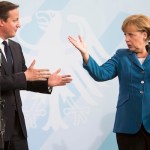
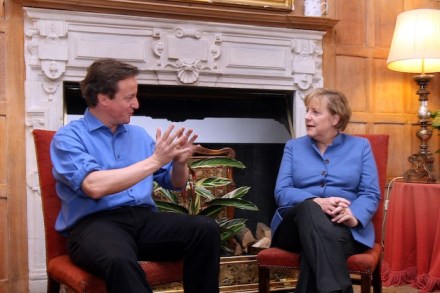
Things certainly seemed cosy between Angela Merkel and her favourite 'naughty nephew' when David Cameron greeted the German Chancellor in Downing Street earlier. So what on earth was said between that greeting and this sofa moment? I'm happy to welcome Angela Merkel to my Downing St flat, after her excellent address to Parliament. pic.twitter.

Why Angela Merkel is part of Cameron’s ‘Northern Alliance’

From our UK edition

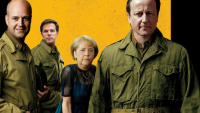
[audioplayer src="http://traffic.libsyn.com/spectator/TheViewFrom22_27_February_2014_v4.mp3" title="Fraser Nelson and Stephen Booth discuss Cameron's Northern Alliance"] Listen [/audioplayer]For a Prime Minister seen to have no real interest or clout in Europe, David Cameron is doing pretty well – and far better than this morning’s newspapers suggest. He has built around him an alliance of reformers, which I describe in my Spectator cover piece today (and discuss in this week’s podcast). It is what Cameron calls a ‘Northern Alliance’: the Scandinavian states, plus the Dutch and Germans. His friend and conservative leader, Fredrik Reinfeldt of Sweden, is all up for reform.

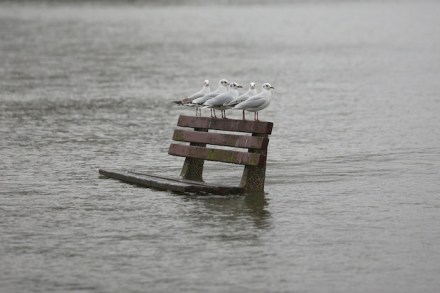
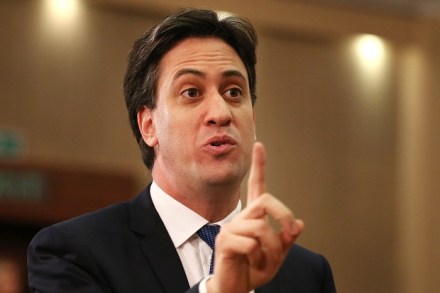
PMQs sketch: Miliband turned Cameron’s flooding fraud into a faux pas

From our UK edition

Earlier this week David Cameron threatened the Lib Dems with divorce. Today, two of their senior figures offered to kiss and make up. Sir Alan Beith and Sir Bob Russell, bearing their knighthoods like dented old battle-shields, made their overtures at PMQs. Each of these leathery old libertarians seems to have discovered his inner Tory. Sir Alan went first. He invited Cameron to slap down rogue Anglicans who dare to criticise welfare reform. ‘There’s nothing moral about pouring more borrowed money into systems that trap people in poverty,’ he said. Cameron accepted Sir Alan’s invitation for a waltz.

Tory MPs dismiss minority govt hints as lacking ‘solid logic’

From our UK edition

While Number 10 is pouring cold water on suggestions that the Prime Minister might rule out a second coalition in the 2015 manifesto, his MPs have given it a rather icy reception. If the hints about him preferring a minority government to governing with the Lib Dems were supposed to reassure those on the Right that he does love them more than he loves Nick Clegg, they seem to have backfired rather. Instead, Conservative MPs I've spoken to today are annoyed for a variety of reasons. The first is that backbenchers feel any plan to rule out a coalition in the manifesto is counterproductive. It's worth noting that Number 10 sources are insisting that 'our manifesto is about policy' rather than giving any suggestion that there would be a commitment on minority government in the document.

How helpful can Angela Merkel be?

From our UK edition

Angela Merkel is, as James explains in this week's magazine, central to David Cameron's hopes of getting anything meaty at all from his renegotiation and reform of the European Union. Her address to Parliament later this week will be scrutinised for every hint that she might support one reform or another - and for her enthusiasm for supporting Cameron in his quest. So it would be helpful if Merkel said some encouraging things in her speech. But can the Prime Minister suggest anything that would be particularly helpful for the German Chancellor to say?

Minority government hint is boost for backbenchers – if they believe it

From our UK edition

That David Cameron is reportedly considering committing to minority government above coalition is a strong message to his backbenchers that he's not preparing to hop back into bed with Nick Clegg and co in 2015. They have been growing a little feverish about the idea, and ministers have made it known in the party that they would vote against a coalition in any secret ballot on a new deal (provided, of course, that there is a secret ballot). This is good for party relations in the straightforward sense that Cameron is signalling to his backbenchers that he doesn't like the Lib Dems as much as they suspect he does, but also because he is to a certain extent signalling that he is prepared to do business with his own MPs, even though that will not be a walk in the park.

David Cameron’s ‘unremittingly positive’ case for the Union

From our UK edition

David Cameron says he wants the case that he makes for the Union and against Scottish independence to be 'unremittingly positive'. Is it? In an interview with BBC News, the Prime Minister said: 'That’s my whole argument, which is go back to the big picture, and I think this family of nations is better off together. Not just is better off in the United Kingdom, but we in the rest of the United Kingdom think we’re better off with Scotland that we want you to stay. That argument is one that is unremittingly positive about the success of this family of nations and how we should keep this family together.

Coffee Shots: Ministers visit Scotland to point at things

From our UK edition

Today's Cabinet meeting in Aberdeen, now underway, has given ministers plenty of opportunity to stare earnestly at Scottish things while trying to make the case for the Union. Here are some of Mr Steerpike's favourites. [caption id="attachment_8719911" align="alignnone" width="620"] Image copyright The Cabinet Office[/caption]   All captions gratefully received in the comments...

The Etonian, the SNP and the Black, Black Oil

From our UK edition

You will recall that, according to the greatest account of England's history, every time the English thought they had solved the Irish Question, the Irish changed the Question.  Something similar afflicts David Cameron's grapplings with the Scottish Question. The poor man is damned if he does and equally damned if he doesn't. The other week he was lambasted for his effrontery in giving a speech about Scotland in, of all places, London. Today he is lambasted for bringing his cabinet to Aberdeen. How dare he lecture us from afar; how dare he venture north like some touring proconsul! The optics, as the pros say, are not very good for the Prime Minister. The cabinet very rarely comes to Scotland. Drawing attention to that fact may not help Mr Cameron's cause.

Angela Merkel is the key to reform – but David Cameron still needs a European strategy

From our UK edition

Angela Merkel is getting the full red carpet treatment when she visits next week. In a 24 hour visit, she'll address both Houses of Parliament and meet the Queen. These honours are being heaped on her because she is Cameron's indispensable ally. Merkel is so vital to Cameron because as the most important person in the most important country in Europe she holds the key to his plan to renegotiate the terms of Britain's EU membership. If she is prepared to offer encouragement to this, then Cameron's plan is credible. If she's not, then it isn't. Several of the other big European players, notably the French, would be happy to cut Britain out of any future treaty talks by simply using an inter-governmental treaty rather than an EU one to define the governance of the Eurozone.

Only Angela Merkel can save David Cameron now

From our UK edition

[audioplayer src="http://traffic.libsyn.com/spectator/TheViewFrom22_20_February_2014_v4.mp3" title="James Forsyth and Isabel Hardman discuss Cameron's relationship with Merkel" startat=1204] Listen [/audioplayer]British politicians still prize a visit from the President of the United States above all others. Yet no American President has been as important to a British Prime Minister, in domestic political terms, as the German Chancellor is to David Cameron. Angela Merkel is the person who can both help him keep his party together as it approaches the next election and then, with luck, deliver his promised renegotiation of Britain’s EU membership. For Cameron, Merkel — far more than Barack Obama — is the indispensable ally.

Ukraine reinforces the case for a wider but shallower EU

From our UK edition

With Ukip heading for possible victory in the European elections and anti-EU fervour growing across the continent, it is hard to imagine a country where people are so desperate to join the EU that they are prepared to take on water canon in order to make their point. But that country is Ukraine. The violence which has been brewing for weeks and which erupted yesterday has its source in many tensions in the country, but one issue defines the two sides: protesters who are looking westwards towards EU membership and a government which rejects this and looks eastwards towards Russia.

David Cameron warns Ukraine’s president: the world is watching

From our UK edition

As violence flared up again in Kiev this afternoon, and EU leaders threatened to impose sanctions on those responsible for the violence in Ukraine, David Cameron issued this statement: 'I am deeply concerned by the scenes we are witnessing in Ukraine. The violence on all sides is completely unacceptable and President Yanukovych has a particular responsibility to pull back government forces and de-escalate the situation. 'Violence is not the way to resolve the political differences across the country. The President needs to engage with the opposition and work with all sides in Ukraine to agree political reforms that reflect the democratic aspirations of the Ukrainian people. There must be a clear commitment to the rule of law, respect for fundamental human rights and civil freedoms.

Want to make welfare a ‘moral mission’? Stop toting it as a weapon.

From our UK edition

Quite naturally, a piece from the Prime Minister claiming that welfare reform is 'at the heart… of our social and moral mission in politics' is provoking hilarity from those who've never backed that moral mission in the first place. David Cameron is writing in the Telegraph as a response to the Archbishop of Westminster Vincent Nichols' comments in the same paper at the weekend that the government's welfare reforms were a 'disgrace'. He argues: 'Of course, we are in the middle of a long and difficult journey turning our country around. That means difficult decisions to get our deficit down, making sure that the debts of this generation are not our children’s to inherit.