David cameron

An EU referendum isn’t ‘bad for the economy’ – businesses want it to happen

From our UK edition

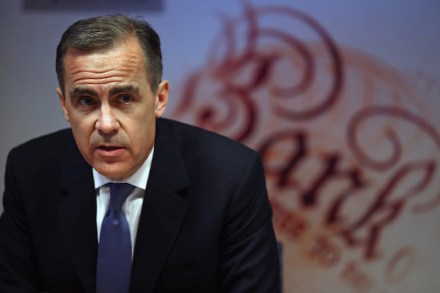
Mark Carney has been a very successful Governor of the Bank of England. Since coming to office in June last year, the British economy has gone from strength to strength. Although Mr Carney can’t take all the credit, on his watch unemployment is falling rapidly and business confidence is at a record high. His appointment and policies have been met with general approval by the UK’s business leaders, which is to be welcomed. So it is a shame that yesterday there were reports that the Governor thinks an EU referendum would be ‘bad for the economy’. The claim stems from the Governor’s comments on the Andrew Marr show on Sunday.
Why Nick Clegg is so keen to pick a fight with Nigel Farage

From our UK edition

Before the European Elections in May, don’t expect either David Cameron or Ed MIliband to engage with Nigel Farage. Both the Tory and Labour leaders think that the best strategy for dealing with Ukip and its leader is to deny them the oxygen of publicity. Nick Clegg, by contrast, is desperate for a scrap with the Ukip leader. Clegg’s rationale is that the more fights he can pick with Farage, the more he can turn the European Elections into a fight between In—led by Clegg and the Liberal Democrats—and Out, championed by Farage and his party. Clegg hopes that this polarised contest will prevent a total wipeout of Lib Dem MEPs. Being pro-European might, to put it mildly, not be the most popular cause in Britain but it is a lot more popular than the Liberal Democrats.

Boris and ballots: what might happen to the Tory party in 2015

From our UK edition

What are Boris Johnson's real chances of becoming Tory leader? I examine the Mayor of London's standing with Conservative MPs in my Telegraph column today - and it is fascinating how polarised opinion is about the Mayor in the Tory party. His supporters insist he is the only hope for the Conservative party, while those who don't want him to lead really, really don't want him to lead and display a fair bit of personal hatred when talking about the Mayor. But the problem that those in the anti-Boris camp have is that they can't see who else from the current group of well-known leadership hopefuls would enjoy the same sort of cut-through. As for when he might come in, my sources among those who are actively promoting Boris in the Commons are adamant that this is about 'post-Dave'.

If David Cameron can’t get the floods right, all his hopes will wash away

From our UK edition

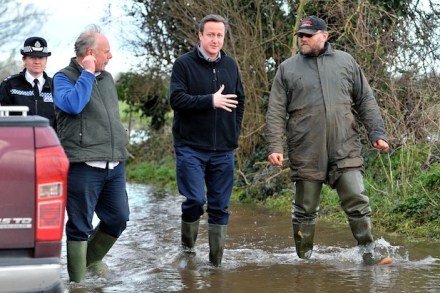
[audioplayer src="http://traffic.libsyn.com/spectator/TheViewFrom22_13_February_2014_v4.mp3" title="James Forsyth and Isabel Hardman on how the floods will define the PM's legacy" startat=1218] Listen [/audioplayer]It is all hands to the pump in Downing Street. The entire No. 10 operation from the Prime Minister down to the Policy Unit is focused on the floods. ‘We are all on a war footing,’ declares one official. David Cameron is spending his time poring over maps of the affected areas. ‘It is quite remarkable,’ says one minister who attends the Cobra meetings on the floods, ‘to hear the Prime Minister asking Gold Command about individual farms.’ Cameron knows that the floods will be a defining moment for his government.

An incompetent response to the floods could lose Cameron the election

From our UK edition

David Cameron can't win the next election in the next three weeks, but he can lose it. If the floods see the government forfeit its reputation for competence, then the coalition parties won't get the credit they need for the economic recovery. As John Major's experience after Black Wednesday showed, once a government is no longer seen as competent, it doesn't receive any of the credit for the good things that happen on its watch. Number 10 is acutely conscious of this and, as I say in the column this week, the whole building from the Prime Minister to the Policy Unit is now working on the government's response. One normally level-headed official tells me that the place is 'on a war footing'. There are two parts to showing that the government has a grip.

If Scotland leaves, what name should we give to the remaining nation?

From our UK edition

Last week, David Cameron said that we have ‘seven months to save the most extraordinary country in history’. He meant the United Kingdom. It was a powerful speech, part of a welcome and overdue campaign to make us all think about what is at stake in the referendum on Scottish independence. It seems strange to argue that the loss of less than 10 per cent of the population would bring this country to an end, and yet I do really suspect it might be so. Mr Cameron did not touch on the question of what the nation, minus Scotland, might be called, perhaps because he does not know and is fearful of making plans for such an eventuality. But the difficulty of getting the right name is a fascinating emblem of the depth of the problem.

PMQs sketch: Floods dominated everything

From our UK edition

Wellies off, gloves on. The party leaders greeted each other with forced displays of warmth and mutual esteem today. Outside, the gusts blew, the rivers rose and the heavens wept. Floods dominated everything. The PM has spent so much time with emergency committees that he’s adopted their can-do battlefield vocabulary. He talked of ‘Gold Commanders calling on military assets’ which is butch-speak for ‘squaddies with shovels being shouted at by Ruperts.’ Having sploshed around for ten days with flow-rate experts and sandbank architects he is also a world authority on flood management. The Thames, he declared, with Michael Fish-like gravity, ‘is expected to reach a second peak on Sunday or Monday.

Cameron betrayed public trust – and sounded like Arthur Scargill – when he said ‘money is no object’

From our UK edition

There are some things that as a politician you really mustn’t say - things that suggest your priorities are so wrong, and your understanding of public duty so defective, that you can never be entrusted with anything serious. When David Cameron announced yesterday that, in coping with floods, ‘money is no object’, he said one of those things. For any responsible politician, money – tax payers’ money – is always an ‘object’. As Mrs Thatcher endlessly reminded her colleagues, the government, itself, has no money, only the money it takes from the people. She was right. To declare that there is no limit to what the government is prepared to take from taxpayers for a particular purpose is worse than populism.

PMQs: Miliband won’t put politics away over the floods

From our UK edition

PMQs today started with a more genteel tone in deference to the floods. But Ed Miliband showed that he has no intention of putting politics away entirely, effectively needling David Cameron on cuts at the Environment Agency. Tellingly, at the end of their exchanges, Cameron rebuked Miliband for seeking 'to divide the House'. When a Prime Minister uses that line, it is a sure bet that they haven't had the best of the exchanges.

David Cameron’s clear lines on flooding put essay crisis PM back on top

From our UK edition

We certainly didn't learn much new about David Cameron from his flooding press conference this afternoon. We already knew that his approach to crises is to let things get rather bad for a little while, and then, with his back against the wall, to perform well as a statesman taking control of a messy situation. He did that again today, with a clear line that 'money is no object' as a means of countering the Ukip line on diverting some of the aid budget to flood victims.

David Cameron has set a precedent on smoking in cars with children

From our UK edition

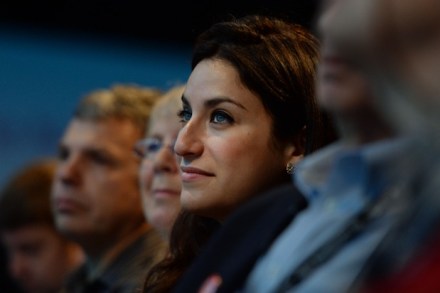
What next after Luciana Berger's victory from the opposition benches on smoking in cars with children? Yesterday MPs were making all sorts of dire warnings in the House of Commons about what might happen next and supporters of the ban are dismissing them as trying to find a slippery slope when this is just a sensible public health issue. But a precedent has been set here of the Prime Minister initially saying he's 'nervous' about what passing laws on what people do in a private space, then being forced to fold when legislation is thrust upon him by a member of the opposition. He made last night's vote a free vote, and it passed. What if Berger or one of her colleagues decides to push for a ban on smoking in a house where children are present? Or indeed, when they aren't?

PM courted by KP and Strauss

From our UK edition

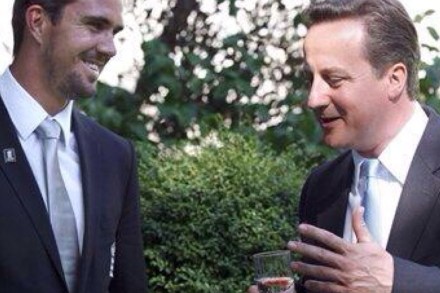
The love-in between Kevin Pietersen and David Cameron continues. As I reported last week, the PM waded into the row over the sacking of the England batsman, and now KP has changed his Twitter picture to this snap of the two of them in happier times. Mr S doesn’t want to stunt this blossoming love, but he hopes that Pietersen is aware that his old captain Andrew Strauss was spotted on Friday hobnobbing at the Olympic Park velodrome during Cameron’s speech about the future of the union. A new twist to their rivalry.

David Cameron should take aim at the Turner Prize

From our UK edition

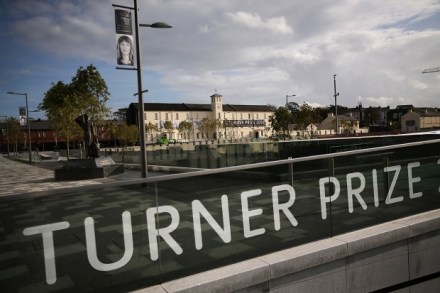
David Cameron seems to be prepared to speak out on certain subjects that many other politicians avoid. This is very welcome. I think it’s about time he took a dig at the Turner Prize. I am unconvinced by the banal installations and grainy videos that consistently win that particular prize. The Prime Minister needs to take the lead and say that the emperor has no clothes. He has also failed to address the question of whether men should use facial moisturiser (many women think they should) — or should that be left to one of his colleagues? It would carry more weight if it came from the Prime Minister, but he has a lot on his plate and might not get round to it. Boris could, though. This is an extract from Alexander McCall Smith's diary in this week's magazine.

Lyrical Dave – PM’s union speech packed with song lyrics

From our UK edition

David Cameron’s speech on the union this morning prompted many questions. Why was he in London? Why were there so many empty seats in the Olympic velodrome? Etc, etc, etc. But Mr Steerpike wants to know why the speech was peppered with song lyrics. ‘We don’t walk on by,’ said Dave - unlike Dionne Warwick. The ‘North Sea’ is, apparently, ‘a light that never goes out’ – now we know what The Smiths were warbling about. Gordon Brown once professed his love for the Arctic Monkeys. It seems that his successor has got hold of the band’s fourth album, which contains the song ‘Brick by Brick’: ‘And we built it together. Brick by brick. Scotland, England, Wales, Northern Ireland. Brick by brick.

David Cameron’s speech on Scottish independence – full text and audio

From our UK edition

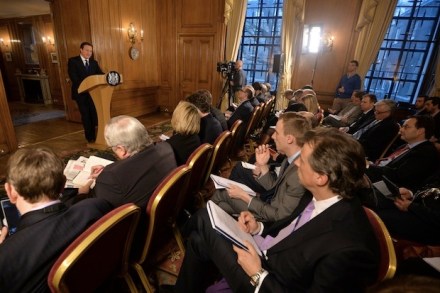
At the Lee Valley Velopark today, David Cameron gave a speech where he called on people across the UK to speak out for the UK and against Scottish independence. Here's what he said:- listen to ‘David Cameron's speech on the importance of Scotland to the UK’ on Audioboo I want to thank Glasgow Caledonian for co-hosting this event. This is a fantastic, forward-looking university – and we are very grateful for your support today as we are to the Lee Valley VeloPark, for hosting us in this magnificent space. Less than 2 years ago, this Velodrome was a cauldron of excitement. Chris Hoy was ripping around at 40 miles per hour I was up there, I had a whole seat but believe me, I only used the edge. 3 more golds – an incredible night.

David Cameron’s tricky role in the fight against Scottish independence

From our UK edition

David Cameron will tell Scots this morning that the UK wants Scotland to stay a part of the Union. That he's giving this speech at all is being read in some quarters as a sign that he's at least underwhelmed by the show put on so far by Better Together leader Alistair Darling. The PM's intervention certainly marks a change of tone from the most recent speeches, particularly Mark Carney's, which George Osborne praised as a very good 'technical' speech. Thus far the 'no' campaign has relied more on the technical argument which Alex Salmond has brushed away as minor objections to the great principle of independence. So Cameron is making the emotional case.

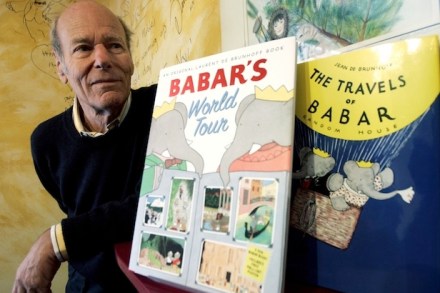
Alexander McCall Smith’s diary: Meeting Babar’s creator

From our UK edition

As any author will tell you, literary festivals differ widely. If you are invited to Willy Dalrymple’s Jaipur Festival, with its renowned final party, you say yes within minutes of receiving the invitation. Other invitations you might take a little longer to accept. The Key West Literary Seminar, which took place a couple of weeks ago, is one of the glamorous ones. I was ready for Florida, as Scotland had been visited by gale after gale and accompanying driving rain. As luck would have it, we arrived in Key West at exactly the same time as the polar vortex that had frozen the entire United States, including a normally balmy Florida. No matter: Key West was, for the duration, one huge literary celebration. I was invited to lunch at a house in the old part of the town.

How the first world war inspired the EU

From our UK edition

Among the millions of words which will be expended over the next four years on the first world war, very few will be devoted to explaining one of its greatest legacies of all, the effects of which continue to dominate our politics to this day. One of the best-kept secrets of the European Union is that the core idea which gave rise to it owed its genesis not to the second world war, as is generally supposed, but to the Great War a quarter of a century earlier. It was around that time that the man who can be described as ‘the Father of Europe’ was first inspired to the detailed vision which only after 1945 was he finally in a position to launch on its way.

Dave gives up on sticky wicket

From our UK edition

The prime minister was waxing lyrical about ousted England slogger Kevin Pietersen when speaking to BBC Lancashire earlier today. The PM confessed that he is ‘an enormous fan of KP.’ And added: ‘Some of my most enjoyable times have been watching him tonking the ball all over the park.’ Some members of the media pack have been giving the PM flak for this intervention; but Mr S is willing to give him the benefit of the doubt.

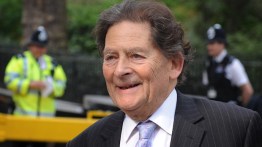
Nigel Lawson: David Cameron’s aid policy is doing more harm than good

From our UK edition

Earlier this week, George Osborne named Lord Lawson as one of the economic thinkers who had influenced him. But the Chancellor's mentor isn't quite so impressed with some of his policies. Here's his letter from this week's Spectator on the 'anomalous aid policy' that the government is pursuing: Sir: I was glad to see the excellent Acemoglu and Robinson article (‘Why aid fails’, 25 January) and your endnote recording that David Cameron has just declared their book, Why Nations Fail, to be one of his favourites. It is indeed an important book, which is why I quoted from it extensively in a House of Lords debate on overseas development aid in 2012.