David cameron

Political meltdown

From our UK edition

I have consistently maintained that the Liberal Democrat party is an anachronism, a perversion and general waste of political space. So imagine my joy in recent weeks at discovering that the remaining members of the Liberal Democrat party are starting to agree with me. First there was the Lib Dem MP Jeremy Browne saying in April that the party had become ‘pointless’. And now there is the Lib Dem peer Lord Oakeshott saying that under Nick Clegg the Lib Dems have become a ‘split-the-difference centre party, with no roots, no principles and no values.’ I am relieved to see this, and look forward to welcoming similar statements of support for my position.
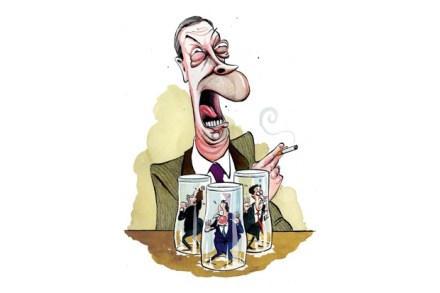
If Britain has a culture war, it’s the euro-enthusiasts who started it, not Ukip

From our UK edition

Following last week’s Purple Revolution in which the pro-democracy Faragist rebels liberated Britain from the hated pro-EUSSR LibLabCon stooges (at least this is the version I’m telling my kids to repeat to their teachers), a number of people have written about what appears to be the opening of a ‘culture war’ in Britain. Andrew Sullivan talks about ‘blue Europe and red Europe’ in the sense of America’s blue and red states, and sees Ukip as representing the latter just as the Republican Party does conservative, left-behind America. I think there’s some truth in that.

The truth about being a politician’s child

From our UK edition

It was a Friday morning in 1992, Britain had just had an election, and I was on an ice rink. No special reason. You’re in Edinburgh, you’re a posh teenager, it’s the Christmas or Easter holidays, weekday mornings you go to the ice rink. It was a thing. Maybe it still is. I was only quite recently posh at the time, having moved schools, and I was — in both a figurative general sense and literal ice-skating sense — still finding my feet. My new boarding-school life was pretty good, though. The way you went ice-skating in the holidays was a bit weird, granted, but you could smoke Marlboro at the side and it was a chance to meet girls. Even better, they were girls’-school girls, who had nobody to compare you against. Always my favourite.

David Cameron has fewer problems than Ed Miliband and Nick Clegg this morning

From our UK edition

For more than year Westminster has assumed that David Cameron would have a Tory crisis to deal with after the European Elections. Whenever anyone remarked on the Tories unifying, someone would say ‘well, wait until after the Euros’. The conventional wisdom was that the Tories coming third would lead to a slew of senior Tories pushing for more robust policies on immigration and Europe and more and more Tory MPs calling for a pact with Ukip. But this morning, Cameron has fewer problems than either Ed Miliband or Nick Clegg. The fact that the Tory party has responded so calmly to coming third in a nationwide election for the first time in its history is partly a triumph of expectation management.

The Tories and Ukip: deal or no deal?

From our UK edition

I can understand why some of my Conservative colleagues are calling for a pact with Ukip. At varying times over the past few years I have been concerned that our party isn't doing enough to respond to the electorate's hunger for an EU referendum, and I agreed that Ukip put necessary pressure on all political parties, and especially on the Conservatives in getting them to commit to a European referendum. However, time has moved on and the Conservative Party—and the country—now has that pledge. This is a time to hold our individual and collective nerve – and not to make knee-jerk decisions while we're focussed on today's results and not the broader political landscape. The local election results have removed some able and experienced Conservative Councillors.

David Cameron’s plot to keep us in the EU (it’s working)

From our UK edition

I write this before the results of the European elections, making the not very original guess that Ukip will do well. Few have noticed that the rise of Ukip coincides with a fall in the number of people saying they will vote to get Britain out of the EU. The change is quite big. The latest Ipsos Mori poll has 54 per cent wanting to stay in (and 37 per cent wanting to get out), compared with 41 per cent (with 49 per cent outers) in September 2011. If getting out becomes the strident property of a single party dedicated to the purpose, it becomes highly unlikely that the majority will vote for it. The main parties will conspire to push the idea of EU exit to the fringe. Waverers will wobble towards the status quo.

David Cameron’s plot to keep us in the EU (it’s working) | 22 May 2014

From our UK edition

I write this before the results of the European elections, making the not very original guess that Ukip will do well. Few have noticed that the rise of Ukip coincides with a fall in the number of people saying they will vote to get Britain out of the EU. The change is quite big. The latest Ipsos Mori poll has 54 per cent wanting to stay in (and 37 per cent wanting to get out), compared with 41 per cent (with 49 per cent outers) in September 2011. If getting out becomes the strident property of a single party dedicated to the purpose, it becomes highly unlikely that the majority will vote for it. The main parties will conspire to push the idea of EU exit to the fringe. Waverers will wobble towards the status quo.

Today’s migration figures show why Cameron should drop his ‘tens of thousands’ target

From our UK edition

The inconveniently-timed net migration figures are out this morning, and they're not good for the Prime Minister's pledge to get immigration into the 'tens of thousands' by the general election. The Office for National Statistics estimates that net long-term migration to the UK was 212,000 in 2013. This is a rise—one the ONS says is 'not a statistically significant increase'—from 177,000 the previous year. But what is 'significant' is the increase in the number of EU migrants – 201,000 EU citizens came to the UK in 2013, up from 158,000 the previous year. [datawrapper chart="http://static.spectator.co.uk/ZtESo/index.

Cameron defends government policy his Tory colleagues hate

From our UK edition

A Prime Minister defending a government policy is usually quite unremarkable. But today David Cameron defended the Government's free school meals policy, and given the amount of vitriol this has attracted between the two Coalition parties in recent weeks, that really is remarkable. He told the World at One: 'I don’t really accept it was made on the hoof because, as I say, it was trialled, a decent amount of time has been set aside for its introduction, £150m… Any change is always difficult and I think you should judge the change as it comes in.

Scotching a myth: Scotland is not as left-wing as you think it is

From our UK edition

Alex Salmond and David Cameron have more in common than a shared appreciation for Andy Murray's tennis. Not, of course, that you would ever persuade either of them to admit that. At the very least, their supporters are more alike than either man would like you to believe. A new survey commissioned by Dundee University's Five Million Questions project confirms as much. On a range of issues SNP supporters are as close, or closer, to Tory voters as they are to Labour voters: [datawrapper chart="http://static.spectator.co.uk/M9xAk/index.html"] This will not surprise diehard leftists, of course. If the First Minister was ever a socialist he ceased to be a comrade long ago and if SNP voters think* like Tories that may be because a good number of them used to be Tories.

Andrew Mitchell demands the police publish transcripts of ‘plebgate’ hearings

From our UK edition

The plebgate scandal has flared back to life tonight with a letter from Andrew Mitchell to the Commissioner of the Metropolitan Police Bernard Hogan-Howe. Mitchell alleges that one of the police officers on duty on the night of the incident boasted to a friend ‘I can topple the Tory government’. According to Michael Crick, Mitchell gathered this evidence at the recent Met disciplinary hearings that he was allowed to attend. Mitchell now wants the transcripts of these hearings published along with the evidence presented to them. The Met’s response tonight suggests that they won’t agree to this. Those close to Mitchell are getting increasingly frustrated at how long this whole business is taking.

Why can’t Tory MPs keep their clothes on?

From our UK edition

The 2010 Tory intake is defined by ruthless ambition, a penchant for pamphlets and rampant Euroscepticism. But Mr S has spotted another unifying characteristic: posing in their swimwear. First we had Penny Mordaunt, the Portsmouth MP, in a variety of cossies for her appearence of flop TV show Splash! [caption id="attachment_8782581" align="alignnone" width="320"] (Image: Daily Star)[/caption] Then there was Bristol’s Charlotte Leslie, who has recreated the Baywatch pose she first struck fifteen years ago (above). While it’s all for charity, perhaps it’s also a show of party loyalty, for Young Dave never seems to be out of his trunks. Look at those legs!

Is he or isn’t he a racist? Why politicians don’t want to give a straight answer about Farage

From our UK edition

Mainstream politicians, never known for giving a straight answer, have been giving particularly wibbly and unclear responses to one particular question today. Is Nigel Farage a racist and was what he said about Romanians moving in next door racist? Ed Miliband did pick a particularly tortured definition of what Nigel Farage had said when asked about it on the Today programme. It was a 'racial slur' but Farage is not a racist, or at least, Miliband didn't want to make politics more 'disagreeable' by accusing Farage of being a racist. But he did say that Farage was right to apologise. Helpfully, Nick Griffin pitched in to tell BBC News that Farage wasn't racist, presumably on the basis that it takes one to know one.

David Cameron’s sacred cows exposed by Freakonomics

From our UK edition

There's an interesting bit in the first chapter of Think Like a Freak, (Allen Lane, £12.99), from the Freakonomics duo, Steven D Levitt and Stephen J Dubner in which the two Steves get to meet David Cameron and a few dozen of the team just before he takes office. They are there to do what freethinkers do, viz, cut through the guff and muddled thinking that surrounds the big issues. Well, I can tell you for free that Mr Cameron is unlikely to sue for his name check. They observe breathlessly that "everything about him radiated competence and confidence. He looked to be exactly the sort of man whom deans at Eton and Oxford envision when they are first handed the boy.

Why does Britain’s fight for religious freedom stop at Dover?

From our UK edition

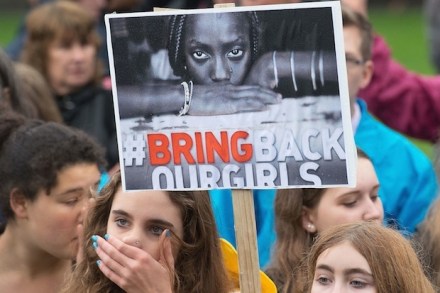
‘We don’t do God,’ was Alastair Campbell’s put-down when his charge, Tony Blair, was tempted to raise the issue of his faith. Unfortunately, it seems to have become the motto of David Cameron’s government. It is a month now since 276 girls were kidnapped from a school near the town of Chibok in northern Nigeria, and still the Foreign Office’s statements on the crisis read like a deliberate exercise in missing the point. ‘Continuing murders and abductions of schoolchildren, particularly girls in Nigeria by Boko Haram, are a stark reminder of the threat faced by women and girls in conflict-prone areas,’ Mark Simmonds, minister for Africa, said this week. ‘Young children are being denied universal freedoms such as an education.

Portrait of the week | 15 May 2014

From our UK edition

Home David Cameron, the Prime Minister, said on television that he was ‘bullish’ about negotiating change for Britain in the European Union, but that there would be a referendum on membership by the end of 2017 ‘whether or not I have successfully negotiated’. In a telephone poll by Lord Ashcroft the Conservatives were found to be ahead for the first time since 2012, on 34 per cent, with Labour at 32, Ukip 15 and the Liberal Democrats 9. An ICM poll said much the same. In the first quarter since visa restrictions were lifted, 140,000 Romanians and Bulgarians were employed in Britain, not counting dependants. Unemployment fell by 133,000 to a five-year low of 2.2 million. The FTSE rose to its highest since 1999, at 6,873.08.

My tax avoidance tip – win literary prizes!

From our UK edition

David Cameron is said to want a woman to be chairman of the BBC Trust, now that Chris Patten has had to retire early because of ill health. Perhaps he has a bad conscience about what happened last time. By far the best candidate then was the runner-up, Patricia Hodgson, a distinguished BBC veteran who is committed to its virtues and has always understood its vices. She would have led a return to the BBC’s core strengths, and saved licence fee money in the process. But the government did not know what it wanted, so it chose the nearest chum, Lord Patten, who accepted in that casual and complacent spirit and found himself plunged into crisis.

Scotland’s fate is more important than David Cameron’s

From our UK edition

‘It is never difficult to distinguish between a Scotsman with a grievance and a ray of sunshine.’ So wrote P.G. Wodehouse, and he wasn’t just talking about nationalists. And right now, that thunderous cloud is me. What I would like, you see, is for English pundits to stop connecting with the Scottish independence debate merely in terms of what it means for David Cameron. It’s an interesting question the first time, and not long ago my colleague Matthew Parris crafted a must-read column out of the idea in the Times. Otherwise smart and sensible people keep wanting to bang on about nothing else, though, and it makes me want to chew rocks. ‘Will Cameron have to go if he loses Scotland?’ they say, which is the cue for other people to say ‘Yes!

Ed Miliband makes the best of a bad situation at PMQs

From our UK edition

Today's PMQs was never going to be easy for Ed Miliband. The latest polls have put a spring in the Tories' step and made Labour MPs jittery. And today's job numbers — with employment hitting record levels — gave Cameron the perfect springboard from which to argue that the government's economic plan is working. But, given all this, Miliband did relatively well. The Labour leader went on Pfizer again, attacking its planned take-over of Astra-Zeneca. The issue suits Miliband as it allows him to make his big argument that the Thatcher/Blair consensus kept politicians and the markets too far apart. By contrast, Cameron is constrained in what he can say on the matter.

Knives still out in Coalition sentencing fight

From our UK edition

What will become of the other big coalition row that's burning away alongside free schools? David Cameron was asked today about the plans to introduce mandatory sentences for repeat knife offences, and made some very supportive noises again, which the Tories signed up to Nick de Bois' amendment to the Criminal Justice and Courts Bill think is a sign that they've made the right decision. He suggested that Nick Clegg could change his mind about it - and some have taken this as a sign that there's a compromise on the cards. The Conservatives tell me they are 'looking carefully' at de Bois' amendments, but the Lib Dems say they haven't heard of any compromise being offered and they will only accept a deal that has evidence behind it that it would cut knife crime.