David cameron

Don’t mention the war: Iraq absent from PMQs

From our UK edition

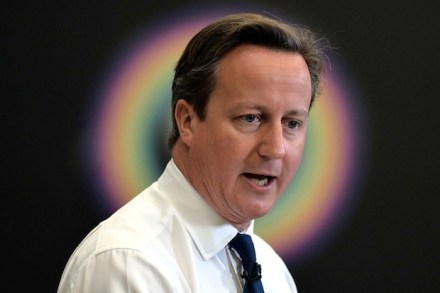
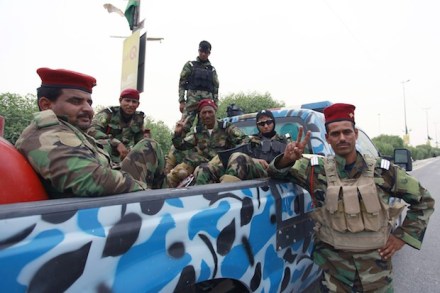
If PMQs today was anything to go by, everything is so hunky-dory in Iraq that MPs needn't discuss it at all. No-one raised it. Afterwards, the Prime Minister's official spokesman was repeatedly asked whether the UK would provide assistance. He said the government's message focuses on the 'Iraqi government working with partners in the region, for example the Kurdistan regional government'. Asked to rule out providing military assistance to the country, the spokesman said 'that's not on the table'. At the same time, the Prime Minister was finally being asked about Iraq in the Commons as he addressed MPs on the G7 talks. He said:- 'What we have to deal now is with the situation today, where we've got an extremely serious situation in Mosul.
PMQs: An easy ride for Cameron

From our UK edition

David Cameron strolled through today's session of PMQs. Ed Miliband chose not to raise the question of what the Cabinet Secretary's investigation into the May/Gove spat had found but to ask several, serious questions on the Birmingham schools row. listen to ‘PMQs: Cameron and Miliband’ on Audioboo Miliband's argument was that it was unclear who concerned parents should tell if they feared their school was being taken over by extremist elements. But Cameron was able to point out that local government accountability was not the answer as 'Birmingham City Council failed in its duties'. The Labour leader then moved on to passports. He didn't score any hits on this in the Chamber but the Tories should be concerned about this issue.

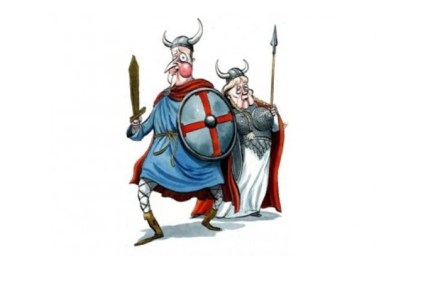
Cameron’s EU threats must be plausible; nobody likes a Prime Minister who cries wolf

From our UK edition

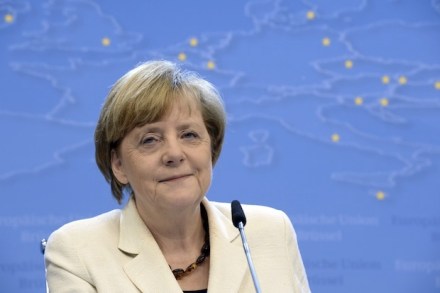
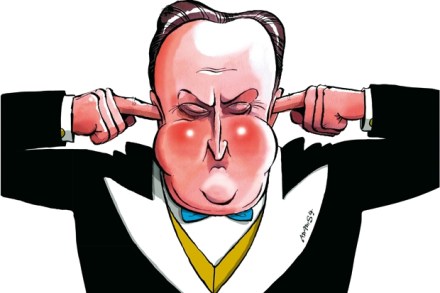
Angela Merkel is annoyed that David Cameron seems to be issuing threats to other European leaders in order to get what he wants. At a press conference concluding talks held by the centre-right EU leaders in Harpsund, the German Chancellor reiterated her support for Jean-Claude Juncker, and said: 'I made myself clear by saying that I am for Jean-Claude Juncker. But when I made that statement in Germany I also made the point that we act in a European spirit. We always do that because otherwise you would never reach a compromise. 'Thus we cannot just consign to the backburner the question of the European spirit. Threats are not part and parcel of that spirit. That is not part of the way in which we usually proceed.

Cameron calls on his ‘Northern Alliance’ to help stop Jean-Claude Juncker

From our UK edition

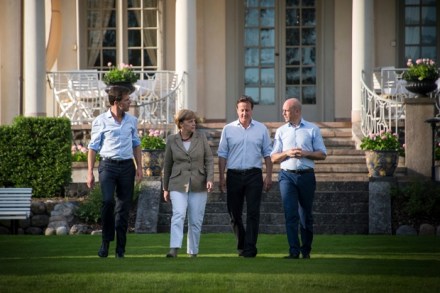
David Cameron visits Sweden today to discuss the future of the EU with the German Chancellor Angela Merkel, the Swedish Prime Minister Fredrik Reinfeldt and the Dutch Prime Minister Mark Rutte. The Prime Minister is attempting to block former Luxembourg prime minister Jean-Claude Juncker from securing the top job in Brussels. Earlier this year, Fraser Nelson explained how Cameron's 'Northern Alliance' may reshape Europe. If David Cameron were to divide Europe up, he’d make some crude distinctions. There would be the basket cases, like Italy, Spain, Greece, France — examples, by and large, of how countries should not be run.

Will Theresa May now become the Gordon Brown of this government?

From our UK edition

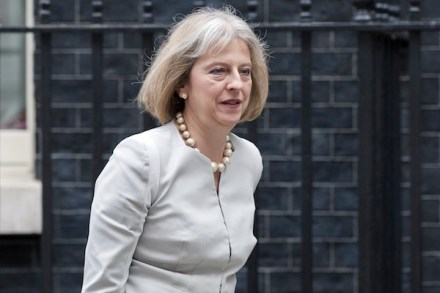
You can judge a minister by their special advisers. Ambitious ministers surround themselves with aides who view their primary loyalty as being to the minister rather than the Prime Minister or the government as a whole. But those who are just happy to be in Cabinet accept the advisers they are sent by Downing Street and CCHQ. Theresa May was, without a doubt, in the former category. Her aides are ferocious defenders and promoters of her. Indeed, May is, in many ways, the Gordon Brown of this government. Anyone who her team thought was interfering in her domain got their head bitten off. Even on relatively minor issues like visas for Chinese tourists, they fought like tigers. No quarter is given to those who disagreed with the Home Office line, no matter how minor the subject.

Labour’s radical schools hypocrisy

From our UK edition

I see that the Labour party, and Labour’s shadow education secretary Tristram Hunt in particular, are trying to make political capital out of the ‘Trojan Horse’ Islamic schools scandal. I’ll write more about this in the coming week, but for the meantime let me point out what a steaming pile of political opportunism and hypocrisy this all is. Tristram says that Michael Gove ‘chose not to act’ and is guilty of 'gross negligence' on Islamic extremism in schools. Let me remind Tristram of a very recent piece of Labour party history. In 2009 it transpired that the Labour government was funding a school-running group called the Islamic Shakhsiyah Foundation (ISF).

Cameron should stop the Tory wars – or send for the man who can

From our UK edition

Modern Conservatives seem to be allergic to success. Every time things are going right, the party spasms. Sir John Major’s government nurtured a remarkable economic recovery, yet was beaten after its infighting appalled voters. In opposition, David Cameron acquired a habit of blowing opinion poll leads — a habit he did not, alas, shake off in time for the general election. And now, just as a Conservative victory at the next election looks likely, war has broken out again. What should have been a day of success for Michael Gove has ended in his being forced to apologise for briefing against officials in Theresa May’s department. And the Home Secretary, for her part, has lost a valued and highly effective special adviser: Fiona Cunningham.

Michael Gove’s moral mission

From our UK edition

Few modern-day political speeches need to be read in full, but Michael Gove’s today does. The speech to Policy Exchange's Education Conference contains what must be the moral core of modern-day Conservatism, that disadvantage must not be destiny. Though, the speech does take a very Blairite approach to means. Gove declares that ‘what’s right is what works’. The headlines have been grabbed by Gove’s argument that illiteracy can be ended in a generation. This is a noble aim and there’s no reason why this country should be so accepting of educational failure as it is.

Tories hold Newark with a 7,000 majority

From our UK edition

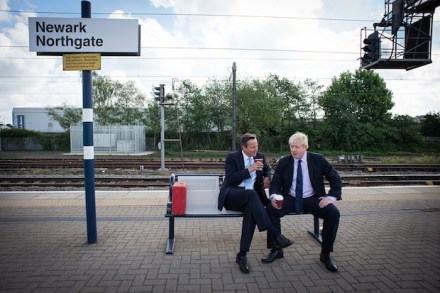
The Tories have held Newark with a comfortable majority of 7,000 plus. The party will be relieved to have won and delighted with the size of their majority over Ukip which was far larger than the 2,500 that Nigel Farage had been predicting earlier in the night. There will be relief in Downing Street and CCHQ that they have sidestepped this banana skin. Considering that the by-election was a result of the disgrace of the previous Tory MP Patrick Mercer and took place only 11 days after Ukip had topped the poll in the European Elections, it had the potential to be a disaster for the Tories that could have sent the party into a Ukip-induced panic. But victory, and especially by this margin, will ensure that the Tory party goes into the summer in relatively calm and united fashion.

Portrait of the week | 5 June 2014

From our UK edition

Home The government scrabbled together material for the Queen’s Speech, which promised measures to allow money to be put into ‘collective defined contribution schemes’ for pensions, as is done in Holland; to prevent pub landlords who are tied to large companies being worse off than independent publicans; to increase penalties for human traffickers; and to allow for by-elections when MPs do serious wrong. The European Commission called on Britain to raise taxes on higher value properties and build more houses. Theresa May, the Home Secretary, and Michael Gove, the Education Secretary, fought fiercely to blame each other over Islamic extremism in Birmingham schools.

What’s the fuss about Juncker? Better a drunken, useless federalist than an effective, sober one

From our UK edition

David Cameron is surely right to think that Jean-Claude Juncker is not the man to relieve the European Union’s woes, but I wonder if it is worth a fight. It reminds me of a similar battle by John Major, in 1994, to prevent a fat Belgian called Jean-Luc Dehaene from getting the job, on the grounds that he was too federalist. The post then duly went to Jacques Santer — like M. Juncker, a Luxembourgeois with an alleged fondness for alcohol (he was known as ‘Sancerre’). M. Santer was no better, from the British point of view, than M. Dehaene, and some European diplomatic chips were pointlessly used up.

President Obama tries to save Great Britain from itself

From our UK edition

Maybe it's a special relationship after all. President Obama has given David Cameron and the Better Together campaign a rhetorical boost this afternoon. At a press conference held at the G7 in Brussels, the president said: ‘With respect to the future of the United Kingdom, obviously ultimately this is up to the people of Great Britain. ‘In the case of Scotland, there is a referendum process in place and it’s up to the people of Scotland. ‘But I would to say the United Kingdom has been an extraordinary partner to us. From the outside at least, it looks like things have worked pretty well. ‘We obviously have a deep interest in making sure one of the closest allies we will ever remains a strong, robust, united and effective partner.

Nigel Farage is becoming a moderniser

From our UK edition

[audioplayer src="http://traffic.libsyn.com/spectator/TheViewFrom22_5_June_2014_v4.mp3" title="James Delingpole and Michael Heaver debate whether Ukip stands for anything" startat=1222] Listen [/audioplayer]There are many words that you might associate with Nigel Farage, but moderniser probably isn’t one. Yet the Ukip leader is embarking on the process of modernising his party. He has concluded that it cannot achieve its aims with its current level of support. So he is repositioning it in the hope of winning new converts even at the risk of alienating traditional supporters. If this sounds similar to what David Cameron did after winning the Tory leadership in 2005, that’s because it is.

Does Ukip believe in anything any more?

From our UK edition

[audioplayer src="http://traffic.libsyn.com/spectator/TheViewFrom22_5_June_2014_v4.mp3" title="James Delingpole and Michael Heaver debate whether Ukip stands for anything" startat=1222] Listen [/audioplayer]I’m worried about Ukip. It’s possible that my concerns are entirely misplaced but let me give you some examples of what I mean. First, a tweet from Ukip’s Newark candidate Roger Helmer (whose heroic stance on energy and climate change I greatly admire): ‘Meet Robert Jenrick, the Tory candidate for Newark: Gilded youth. Posh Tory boy. London property millionaire.

David Cameron’s inaction has fuelled the row between Michael Gove and Theresa May over extremism in schools

From our UK edition

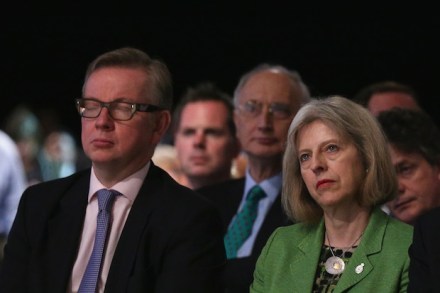
The row between Michael Gove and Theresa May over how best to tackle Islamist extremism in schools is typical of how tense things get between these two whenever the subject of Islamist extremism arises. Gove wants to wage intellectual war on Islamist extremism, taking on the argument wherever it raises its head. May, heavily influenced by the civil servant Charles Farr, who is very much part of her circle, thinks that a distinction has to be drawn between extremism and violent extremism. But this problem would never have arisen if Number 10 had made the Prime Minister's writ run on this subject. Cameron in his 2011 Munich speech made clear that he wanted even non-violent extremism tackled: ‘Now, you might say, as long as they're not hurting anyone, what is the problem with all this?

Has Merkel blinked in Juncker row?

From our UK edition

Angela Merkel has reportedly blinked in the row over Jean-Claude Juncker's candidacy for president of the European Commission and is now mooting IMF boss Christine Lagarde. The Reuters report cites two French sources who say the German Chancellor has asked France whether it could put forward Lagarde. If this is true, then it does explain or at least justify the very bullish tone that government sources took this morning when briefing Coffee House about the prospect of Juncker being blocked. And it would be a good sign that David Cameron is indeed getting his way if Merkel was prepared to raise the idea with François Hollande. But it would be odd if Hollande were enthusiastic about this.

European Commission president row is example of PM’s ‘essay crisis’ strategy, MPs grumble

From our UK edition

David Cameron might be hoping that the eurosceptics in his party are chuffed with his tough guy stance on Jean-Claude Juncker. And by and large, they are. But they're not wholly impressed. One eurosceptic remarks that this intervention is simply about the Newark by-election, given its timing. Another, who is minded to at least believe that the Prime Minister is thinking about European reform, rather than Patrick Mercer's old seat, says: 'This is no way to do diplomacy. Cameron has left this to the last minute yet again and it could be too late to do anything. He has had months to express a view yet is only engaging now.' Indeed, discussions about the next president have been taking place in Europe for months.

Osborne admits net migration target is impossible without EU reform

From our UK edition

George Osborne's interview today with the Sun on Sunday does show the Conservatives are starting to see a little bit of sense about their net migration target. They're starting to realise that they aren't going to meet it when they can only control non-EU migration. It's surprising, really, that it's taken them so long to realise that the target was going to be a bit tricky to meet. In this week's magazine, Douglas Murray argues that Cameron will need to listen - really listen - to voters' concerns about immigration if he is to have a hope of winning next year: 'Because the deep, underlying story of last week is clear: the British public have made the connection between the EU and mass immigration. They do not like the latter and they blame it on the former.

David Cameron is doing what Eurosceptics want him to do

From our UK edition

Tory Eurosceptics from the Cabinet down have long made clear that David Cameron will only be able to get a sufficiently different deal from the EU if he’s prepared to threaten that Britain will leave if it can’t get what it needs. Many have assumed that Cameron, who has been clear that he would prefer Britain to keep in the EU, would not be prepared to do this. But it seems that he is. The German magazine Spiegel reports that Cameron told his fellow EU leaders that if Jean-Claude Juncker, the Luxembourg federalist, became president of the Euroopean Commission he could not guarantee that Britain would stay in the EU. The threat here is implicit not explicit but it appears to have got the message across.