David cameron

David Davis: Cameron must turn Juncker failure into a tactical advantage

From our UK edition

David Cameron has survived the post-Juncker post-mortem without a Tory grandee briefing against him. This is comforting for the Prime Minister, although he shouldn't assume that he has the full loyalty of his party: it is quite clear that many are simply holding their fire until after the General Election. David Davis, who will again become a dangerous figure in 2015 if Cameron holds onto power, reminded everyone of what the PM has got coming to him when he popped up on the Today programme this morning. Davis said: 'He's had a very, very difficult few weeks to say the least, but what he has to do is turn this into a tactical advantage in the next year or two.

The most awkward phone-call ever? Cameron congratulates Jean-Claude Juncker

From our UK edition

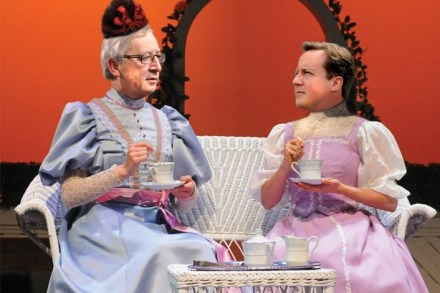
In an exchange so awkward it might rival Gwendolen and Cecily's afternoon tea in The Importance of Being Earnest, David Cameron has this afternoon phoned Jean-Claude Juncker to congratulate him on his appointment after weeks of campaigning to thwart him. Here's the Downing Street read-out of the call: 'The Prime Minister called the Commission President-designate, Jean-Claude Juncker, this afternoon. The Prime Minister congratulated Mr Juncker on running a successful campaign and securing the Council nomination. They discussed how they would work together to make the EU more competitive and more flexible. The PM welcomed Mr Juncker's commitment of finding a fair deal for Britain and Mr Juncker said that he was fully committed to finding solutions for the political concerns of the UK.

Leaked: what David Cameron really told Van Rompuy and the EU leaders last week

From our UK edition

It’s well known that David Cameron voted against Jean-Claude Juncker and tried to persuade his EU colleagues to do the same. Thanks to today’s Mail on Sunday, we know exactly how forceful the Prime Minister was in warning and rebuking his fellow leaders. According to leaked reports, an angry Mr Cameron threw Herman Van Rompuy, outgoing EU chief, out of Downing Street following an argument over Juncker: ‘If it is to be Juncker, I insist on a formal vote,’ said Cameron Mr Van Rompuy blinked: ‘I will decide how the vote is conducted.’ Mr Cameron: ‘You must guarantee there will be a proper vote.’ Mr Van Rompuy: ‘I have said I will decide that.

After being Junckered, the Cameron circle now fear for the renegotiation

From our UK edition

Getting Junckered was not an enjoyable experience for Downing Street. Not only has David Cameron lost his battle to stop the former Luxembourg PM becoming Commission President he has also discovered that Angela Merkel’s assurances to him can be trumped by her domestic political concerns. Considering how Merkel is the hinge on which Cameron’s renegotiation strategy turns, this is worrying for him. As I report in the Mail on Sunday, members of Cameron’s circle are now contemplating that the renegotiation might not deliver enough substantive change for the UK to stay in. As one of those who knows Cameron best puts it, ‘They might plump the cushions for us but the train isn’t slowing down and the points are still set the same way.

There is a silver lining to Juncker’s appointment

From our UK edition

David Cameron has been trying to look on the bright side after failing to stop Jean-Claude Juncker becoming president of the European Commission. And while that might look like the Prime Minister trying to spin something out of an abject failure, there really is a silver lining to this appointment for Britain, even though you have to look quite hard for it. The Commission president is indeed important, particularly given his role in determining the EU executive’s policy agenda – in practice, no policy can be proposed without his agreement. He also has control over the assigning of Commission portfolios, an argument perhaps against the Prime Minister’s decision to fight Juncker until the bitter end.

David Cameron has to explain exactly how he intends to reform Britain’s EU relationship

From our UK edition

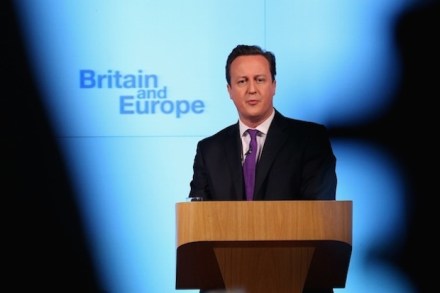
The results of last month’s European elections demonstrated an appetite for change in Europe among voters – all parties seem to agree on that. Which is why David Cameron went into the most recent set of EU Council negotiations with cross-party support to secure a candidate for Commission President that would make achieving that kind of change and reform easier, not harder. Today there is a widespread and profound sense of disappointment at David Cameron’s apparent failure to build an alliance to secure an alternative candidate for the role.

Cameron defeated as Juncker nominated for European Commission President

From our UK edition

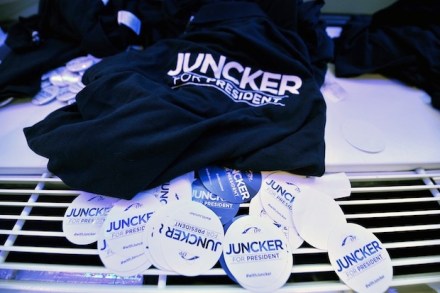
The European Council has nominated Jean-Claude Juncker to be the next president of the European Commission despite David Cameron’s staunch opposition. In the vote that Cameron forced on the appointment, he was defeated 26-2 with only the Hungarians joining the British in opposing the former Luxembourg PM. Junkcer’s appointment casts fresh doubt on whether Cameron will be able to renegotiate a new EU deal for Britain and whether this country will stay in the EU. In the coming weeks, we will have to watch and see whether other EU leaders try and come up with some kind of compensation package for Britain. When Cameron first came out in opposition to Juncker, he was pretty confident of success.

David Cameron is acting in a principled way over Juncker – so let’s back him

From our UK edition

It’s pretty rich hearing the Labour Party criticize Cameron for taking a principled stance on Europe. How vulgar, they say, how amateur. Doesn’t he know that the job is to (as Douglas Alexander put it yesterday) ‘balance’ domestic interests and European ambitions? When I thought that Cameron was following Labour’s ‘sophisticated’ approach – ie, being sellouts – I lambasted him. I had egg on my face pretty quickly: my Telegraph column was published on the day that he said ‘no’ to the Eurozone deal. In my defence, he had set out to sellout – he’d wanted to take a figleaf of protection from the French.

How will Cameron work with Juncker?

From our UK edition

David Cameron has been repeating his line about the importance of sticking to principles in opposing Jean-Claude Juncker this morning ahed of the European Council summit where his fate will be sealed. As he walked into the summit this morning, the Prime Minister said: 'There are times when it's very important to stick to your principles and stick to your convictions even if the odds are heavily stacked against you, rather than go along with something that you believe is profoundly wrong and today is one of those days.

At the Chiltern Firehouse, smugness should be on the menu

From our UK edition

Here then is Gatsby’s house, after an invasion by the Daily Mail. It is called the Chiltern Firehouse. It is a restaurant in a newly opened hotel in a Victorian Gothic former fire station in Marylebone, a proud and grimy district in total denial about its shocking levels of air pollution. The building has a fairytale intensity, with red brick turrets; it is a Roald Dahl prison repointed to its extremities by the man who made the Chateau Marmont in LA. The chef is Nuno Mendes, formerly of Viajante. But what else? Ah — now we are sucked into a wind tunnel of paps and buzz; like so much nonsense, this is media-led, the media having so little to do that they must write about the Chiltern Firehouse. In this, I am complicit.

What Cameron and Labour want to get out of the Juncker row

From our UK edition

Labour has supported David Cameron's attempt to block Jean-Claude Juncker as president of the European Commission, but that hasn't stopped it getting a little pre-emptive attack in today as the Prime Minister prepares for failure at the European Council. Douglas Alexander argued this morning that 'there was an alliance that was to be built, but alas it appears that the Prime Minister so badly misjudged his tactics and his strategy that that's not going to be the outcome in the next 24 hours'. At Business Statement in the Commons today, Angela Eagle joked: 'Two weeks ago, the Prime Minister sent the England football team a recorded good luck message, and jet over a week later, the team crashed out of the World cup.

Podcast: Is religion the new politics, and Osborne on the up, Miliband on the down

From our UK edition

Are we seeing a global revival of religion, which is having a radical impact on politics? On this week’s View from 22 podcast, Damian Thompson debates Cristina Odone on this week’s Spectator cover feature. Is the UK and Europe unable to understand many of the current conflicts because of ardent secularism? Has our current government been too secularist; obsessed with Brangelina instead of Boko Haram? And would politics be simpler if there were no religious element at all? Isabel Hardman and Fraser Nelson discuss two political figures whose fortunes are shifting in different directions — George Osborne and Ed Miliband. Are we beginning to see the real George Osborne, who has more substantial ideological views than his detractors believed?

Rebekah Brooks takes her place in a perfect picture of modern Britain

From our UK edition

What image comes to mind when we think of Britain today? I was moved to contemplate this question after reading the Prime Minister’s inspiring treatise on British values, which seemed to involve ‘being quite nice’ and not referring to other people as kaffir and then trying to blow them up. Fair enough. I suppose — as an image of Britain, Sonny and Cher jihadis bringing their arcane and vicious sandblown squabble to the streets of London is perhaps a more modernist take on John Major’s vision of an old maid cycling to morning communion through the early morning mist.

Ed Miliband bruises Cameron over Coulson. But will it make a difference?

From our UK edition

The pressure was all on Miliband today. With Cameron hurt, he needed to show that he can still press home an advantage. First, we all had to listen to the Speaker, who rather enjoys listening to himself. He began with a long and winding overture about the dangers of prejudicing the Coulson trial. One sentence would have done it: yesterday’s convictions are mentionable, those due today aren’t. But he rambled on and on. His legal witterings were delivered with all the clunking sonorities and ham pauses of an under-employed luvvie delivering the Gettysburg address. And he couldn’t stop interfering during the debate. Miliband had carefully planned his ambush and committed its wording to memory.

The hacking trial has seen the Tories unite, but may have damaged Cameron’s character

From our UK edition

Today must have been the first that David Cameron thought 'thank goodness for the Leveson report' as he prepared for Prime Minister's Questions. He used the report as a shield in his exchanges with Ed Miliband, waving it about at the despatch box and saying that he had 'totally disproved him using the evidence' on a series of accusations that the Labour leader had made about whether or not he ignored warnings about hiring Andy Coulson and bringing him into Downing Street.

Gus O’Donnell: I was not involved in Coulson’s appointment

From our UK edition

David Cameron’s claim at PMQs that Gus O’Donnell had been asked at Leveson about whether he had offered any warnings on the hiring of Andy Coulson, was met with bafflement. But O’Donnell’s written submission does address this point. Question 30 - Please set out in full for the inquiry details of your role, if any, in relation to the appointment by the Prime Minster of Andy Coulson to a post in No.10. Your account should include a full explanation of the basis on which you were asked to advise. Mr Coulson was brought in as a special adviser to the Prime Minister. I was not involved in the process of appointing Mr Coulson. Mr Coulson was cleared to SC (security clearance) level and was undergoing DV (developed vetting) clearance at the time of his resignation.

If I were Polish, I’d side with Radek Sikorski — not David Cameron

From our UK edition

In his Spectator Notes this week, Charles Moore discusses Radek Sikorski, the Polish foreign minister and former Spectator contributor, who made some disobliging comments about David Cameron this week. Here is a preview of his column... Radek Sikorski, the Polish foreign minister, is undoubtedly one of the most dashing figures on the world stage. I first met him in the mid-1980s, possibly when I was a guest of the Oxford Union and Radek who, I seem to remember, was wearing white tie and tails, was on the standing committee. At that time, he was a refugee from communist Poland, having helped organise resistance to martial law, and — though I did not know it then — a member of that nursery of world rulers, the Bullingdon Club.

Can Labour weaken Cameron with the hacking trial verdict?

From our UK edition

The phone hacking jury will only be about an hour into their continued deliberations when Ed Miliband stands up at Prime Minister's Questions today, but the Labour leader does seem determined to raise the question of David Cameron's judgement in hiring Andy Coulson all the same. Harriet Harman did the Labour late shift yesterday on Newsnight in which she pointed out that the Conservative leader ignored warnings about Coulson. Labour's thesis is that Cameron hired Coulson in spite of those warnings because he was desperate to get closer to the Murdoch empire. The party is certainly right that Cameron was desperate: the Conservatives were not particularly worth joining in 2007 and so there would not have been an endless queue of former senior tabloid journalists desperate to join the team.