David cameron

Cameron could introduce ‘voluntary’ all-women shortlists

From our UK edition

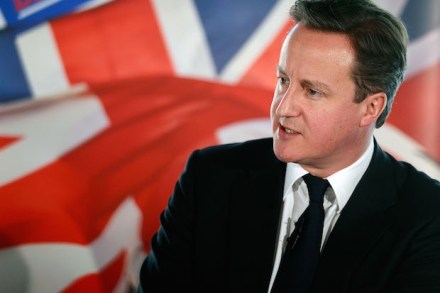
David Cameron could introduce 'voluntary' all-women shortlists if the Conservatives continue to struggle to recruit female MPs, senior Tory sources have said. The Prime Minister has also set party chairman Grant Shapps 'on the case' to remedy the current situation, whereby women are less likely to be selected for safe seats. But he is also interested in local associations using all-women shortlists on a voluntary basis after the next election if his party fails to make sufficient advances. Cameron does not want to impose shortlists on constituency parties, although of course 'voluntary' can cover a multitude of sins: many people 'voluntarily' work longer hours than those stipulated on their contract, but have little choice about the matter.
Nigel Farage hints at how a Tory / Ukip electoral pact might work

From our UK edition

Vote Farage, get Miliband might not have quite as much resonance with voters as the Tories would like. But it is certainly effective with donors. If Ukip is seen as Ed Miliband’s passport to Number 10, it will be far harder for it to raise the money it needs to fight a successful general election campaign. So when Nigel Farage spoke to the Midlands Industrial Council—a group of right-wing business people who have in the past donated substantial sums to the Tories—after the European Elections, most of the questions were about how to avoid a split on the right letting Labour back into government.

Should public servants go on strike?

From our UK edition

David Cameron has promised to change the law to make it harder to go on strike if he wins the next election. The Spectator has generally been in favour of tightening up strike laws, not trusting union leaders to do the right thing. In 1919, just as a law banning the police from striking was being passed, The National Police Union issued a sudden order to down tools, which was not a good PR move. ‘This unscrupulous attempt failed except in Liverpool and Birkenhead, where about half the police absented themselves from duty and allowed the criminal classes, who are largely Irish Roman Catholics, to riot and plunder. Order was restored last Sunday by troops. In London about a thousand men out of 19,000 failed to appear at their posts.

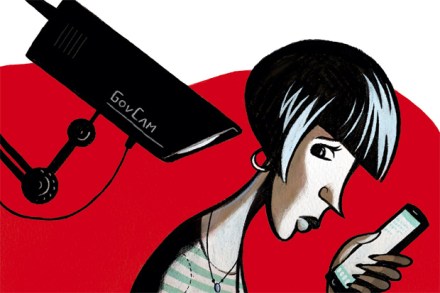
The emergency surveillance legislation will make us safer

From our UK edition

Isabel wonders whether it is a good thing that all main parties allied in passing emergency surveillance legislation into law yesterday. While it's true that legislation passed without any significant political objection can be bad news, this is one case where that rule does not apply. There are a number of reasons why the legislation was necessary. One was the European Court of Justice verdict from earlier this year that meant that this country and a large number of internet providers were at risk of entering a legally grey area. Far from being an ‘extension’ of powers, this bill is about the retention of powers which had been accepted until the European Court ruling put this into question.

The Great Brussels Steeplechase: runners and riders to be Britain’s next European Commissioner

From our UK edition

Next week, EU leaders will meet to parcel out the top jobs in the next European Commission. So David Cameron doesn't have long to decide who he is going to nominate—and Berlin is already bugging him for his pick. Here's The Spectator's run down of the runners and riders. Andrew Lansley: Until recently the firm favourite. But in recent weeks support for him has fallen away. No. 10 has been irritated by the hints he has dropped about having been offered the job. It has also grasped that nominating someone as compensation for dropping them from the Cabinet is a recipe for getting a second-tier job.

Who is Robert Peston’s ‘senior government source’?

From our UK edition

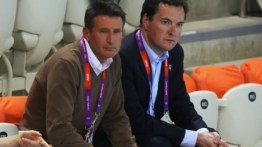
Earlier this year, a 'government source’ floated the idea that Sebastian Coe could well be appointed the next chairman of the BBC Trust. It’s no secret that George Osborne and Seb Coe go back a long way -  they both used to work together in William Hague’s private office. And while Osborne has never officially stated that he would support the appointment of his friend, both he and Cameron are reportedly keen on the idea. That appointment is a ‘virtual shoo-in’, writes the BBC's Robert Peston, who is currently in India with Osborne and Hague. According to a senior government source, 'Lord Coe is widely and snootily under-rated "as that bloke who won some gold medals”’. Mr S wonders who this senior government source could be….

Is cross-party agreement on surveillance legislation a good thing?

From our UK edition

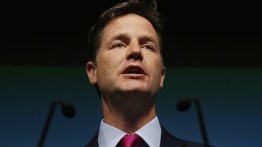
So all three party leaders agree that it's worth rushing through emergency surveillance legislation. While David Cameron and Nick Clegg were holding their rare joint press conference, Ed Miliband released a joint letter with Yvette Cooper in which he said 'we have been guided by our firm conviction that it is essential to maintain the security of our citizens and also ensure people's privacy is protected'. The Prime Minister and Deputy Prime Minister both needed to make the case for the emergency legislation today but Nick Clegg also needed to make the case for his support for it, given he had rejected the full Communications Data Bill.

Could Michael Howard be the next EU Commissioner?

From our UK edition

[audioplayer src="http://traffic.libsyn.com/spectator/TheViewFrom22_10_July_2014_v4.mp3" title="James Forsyth and Isabel Hardman discuss the EU Commissioner role" startat=732] Listen [/audioplayer]In recent weeks British government visitors to Berlin have been confronted with a persistent question: when will David Cameron make up his mind about who he’ll send to Brussels? Picking a European commissioner is a big decision: Tony Blair sent Peter Mandelson, who went on to become the EU trade commissioner. Gordon Brown nominated Cathy Ashton, who picked up the foreign affairs post. There is a tradition of Brits landing relatively big jobs — and, ergo, power and influence. But prime ministers need to send someone with enough heft and zest.

A pundit for a PM

From our UK edition

A new Coffee House competition: who can identify the most pointless comment on events made by our PM? You'll be spoilt for choice. Cameron has become, these days, Britain's uber-pundit. No celebrity death goes unlamented by the PM; no news story is too trivial, or too serious for him to spit out a soundbite, grandstanding, passing judgment, or passing the buck. ‘I am determined that lessons will be learnt,’ ‘This must never happen again’ etc etc. Here's a recent one that's irritated me. After an announcement that airports are to tighten security, DC announced with great gravitas: ‘The safety of passengers must come first.’ Well, yes, thanks PM. First before what? The safety of Islamists?

‘Hopeless’ Warsi ‘resisting’ David Cameron’s fight against extremism

From our UK edition

The government has failed to produce an adequate strategy to tackle non-violent extremism because the minister in charge of it is said to disagree with the Prime Minister's approach, sources have told Coffee House. Baroness Warsi is alleged by multiple sources in and out of government to have consistently resisted calls to develop a proper strategy on integration and tackling extremism at its roots, even though this is the Prime Minister's policy and part of her job at the Communities and Local Government department. One source says: 'Sayeeda made clear when she got the job at CLG that she didn't agree with the Prime Minister and that she simply wasn't going to do this bit of her job.

Accept it, embrace it: Conservatives aren’t cool

From our UK edition

The Times headline on Tuesday was rather cruel: ‘Stars turn down No. 10 invitation.’ This was a reference to the party the press dubbed ‘Cool Britannia II’, David Cameron’s attempt to recreate the glamour of Tony Blair’s star-studded Downing Street reception in 1997. ‘They wanted Daniel Craig and Benedict Cumberbatch,’ said the Times. ‘They got Ronnie Corbett and Bruce Forsyth.’ To be fair, the guests also included Helena Bonham-Carter, Claudia Winkleman, Harvey Weinstein, Richard Curtis, Roger Daltrey, Eliza Doolittle and Kirstie Allsopp. But according to Fleet Street’s finest, who were milling about outside with their noses pressed up against the windows, it still compared unfavourably with Blair’s bash.

PMQs sketch: Miliband’s integer attacks dissolve into a whirl-pool of squiggles

From our UK edition

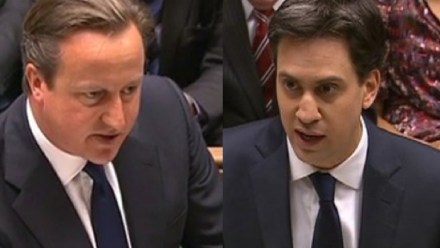
It was damn close. And it scored top marks for effort. Miliband’s plan today was to prove that Cameron’s NHS policy is a disaster. And to prove it with Cameron’s own admissions. Or omissions. ‘It’s four years since his top-down re-organisation of the NHS,’ began Miliband in that quiet, meticulous manner that always foretells a forensic ambush. ‘Have the numbers waiting for cancer treatment got better or worse?’ Cameron instinctively dodged the question. Miliband moved on to A&E waiting times. Cameron shifted and ducked again. Miliband asked about numbers waiting over four hours on a trolley. Cameron ran for cover.

David Cameron gets serious about antibiotics — too little too late?

From our UK edition

David Cameron has announced a review into why so few antimicrobials have been introduced over recent years. This seems to be too little too late. The impending car crash in healthcare of death from minor surgeries and incidental infections looms over us all. I have seen patients in critical care die of infections because we literally had no drugs left to treat them with. The continued evolution of bugs – MRSA and others– against our best drugs has been a huge problem for some time, one that rightly makes headlines problems. But it is hard for a society to take a such a grave threat seriously until it reaches epidemic proportions – and by then, it is not an exaggeration to say, we could all be at risk.

PMQs: Cameron and Miliband revisit their youthful indiscretions

From our UK edition

Today's PMQs will not live long in the memory. Ed Miliband led on the NHS and the debate quickly turned into a statistical stalemate. Indeed, at the end Andy Burnham tried via a point of order—with little success—to get Cameron to admit that one of his numbers was wrong. listen to ‘PMQs: ‘Cheer up folks, it's only Wednesday!’’ on Audioboo Miliband was in a confident mood at the despatch box because he knew he was on strong ground on the NHS. But in a week where Labour is trying to burnish its economic credentials, it is telling that Miliband didn't choose to go on the economy.

Both the Conservatives and Labour lack momentum – the election won’t be easy for either party

From our UK edition

What with his victory parade to celebrate a failure in Europe and Labour's continuing muttering and complaining, David Cameron must be feeling pretty positive about Prime Minister's Questions today. He's managed to annoy some of his MPs with a Downing Street hint that it will not oppose Michael Moore's bill to enshrine the 0.7 per cent aid target in law, but at least the Prime Minister can count on a good tribal feeling on his backbenches to tide him through today's session. He could taunt Miliband with Jon Cruddas' 'dead hand' quote, or Lord Glasman's assessment that his party lacks a sense of direction.

David Cameron makes a success of his Juncker failure in the Commons

From our UK edition

Normally when Speaker Bercow drags out a statement from the Prime Minister to over an hour and a half, the PM starts to look a bit pained. Today David Cameron looked as though he'd quite like a bit more: he'd spent most of the afternoon listening to Conservatives telling him how great he is and how pleased they are with him. It must have been an odd sensation to see MPs like John Redwood rising to congratulate him on his failure to block Jean-Claude Juncker. Some Tories went further: Stewart Jackson told the Chamber that this episode of Cameron standing up to Europe showed he had 'lead in his pencil' (Cameron told him, rather confusingly, that he would 'er, let the relevant people know').

Angela Merkel offers a sop to the poor old British

From our UK edition

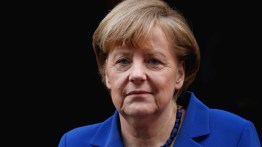
The row over Jean-Claude Juncker was confected outrage which spectacularly failed to achieve what Cameron wanted. It was confected because the alternatives to the ghastly Luxembourg bureaucrat are scarcely less federalist than he is himself. But the real giveaway, the most significant moment, came in Angela Merkel’s statement, issued as a means of giving a sop to the poor old British. Don’t worry, she said, Britain can reach 'ever-closer union' – ie political union – at a slower speed. In other words, there is no question that we will eventually succumb, we’ll just do it more slowly than everyone else. Bring on that referendum. Rod Liddle's new book Selfish Whining Monkeys is available from the Spectator Bookshop for just £12.99.

Labour’s internecine squabbles mean it missed an open goal attacking Cameron over Europe

From our UK edition

David Cameron is currently giving his statement to the Commons on the European Council and Britain's new best friend forever, Jean-Claude Juncker. It's a failure that his colleagues have given him room to spin into a success, but it's worth watching how Labour manage it too. The party had an open goal at the weekend for the newspapers to pick over the Conservatives' European strategy, Cameron's suitability to renegotiate Britain's relationship with Europe and the chances of that renegotiation being successful now Juncker is at the helm. But instead, the narrative split so that the Sunday papers were full not just of Cameron and Europe but Labour tensions.

Confronting the Tories’ original sin: they are still seen as the party of the rich.

From our UK edition

Dominic Cummings is at it again. Michael Gove's former advisor has become a reliably entertaining guide to the Whitehall labyrinth. It is plain, too, that Cummings likes to think of himself as a Teller Of Hard Truths Many Of Which Our Masters Prefer Not To Contemplate Too Deeply If At All. This is fun. His latest post purports to be about swing voters, immigration and the EU but it is really about the biggest problem afflicting the Conservative party: who is it for? And who is it seen to be for? As Cummings puts it: The fundamental problem the Conservative Party has had since 1997 at least is that it is seen as ‘the party of the rich, they don’t care about public services’. This is supported by all serious market research.