David cameron

David Cameron’s former speechwriter is ‘rooting’ for Jeremy Corbyn

From our UK edition

After David Cameron's former speechwriter Clare Foges kicked off her new career outside of No.10 with a blistering editorial in the Times criticising her former employer over a range of issues including the bedroom tax, doubts began to surface that she was not a true blue. Still, even Mr S was surprised to read in an interview with the Evening Standard that the Prime Minister's old political advisor is 'rooting for Jeremy Corbyn'. What's more, the gesture is not simply part of the jovial #ToriesForCorbyn movement: 'Foges lives alone in Archway where Jeremy Corbyn is her MP (she’s rooting for him because she lives in the area, not as part of a Tory plot).

Breaking: Tory leadership contest underway

From our UK edition

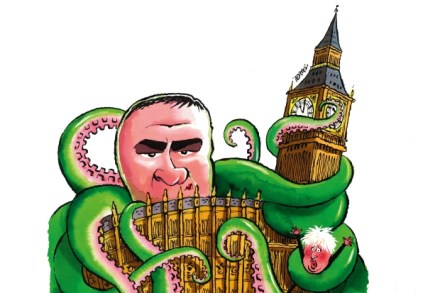
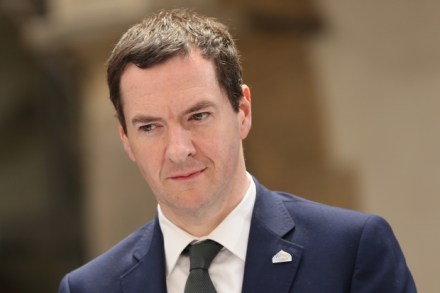
Water cannons at the ready: the Tory leadership contest is officially underway. How does Mr S know this? Well, in a clear sign that George Osborne means business, he has changed his Twitter profile picture. Osborne is now in Conservative blue, offering a confident grin as he embarks on his campaign to move into Number 10. The new photo also displays a slimline Osborne in contrast to the old photo, which depicted a more laid back Chancellor. While Mr S will of course keep readers updated as Boris Johnson and Theresa May develop their online presences, Steerpike can't help wonder why Osborne didn't opt for this week's cover image of Octo-Osborne...

Guardian journalist enjoys wild night on David Cameron’s private jet

From our UK edition

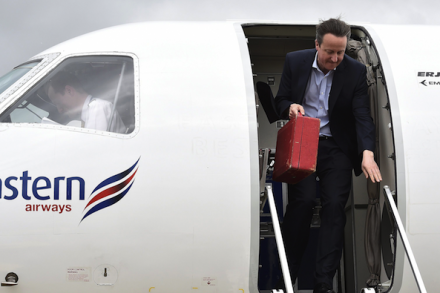
With the newspapers frequently filled with tales of former public schoolboys misbehaving abroad, Mr S was unsurprised to hear reports that a Westminster School alumnus had enjoyed a rather lively flight from Asia to Britain. Still, given that the man in question was aboard the Prime Minister's private jet, perhaps he ought to have known better. Step forward Patrick Wintour. Word reaches Steerpike that the Guardian's political editor has become the talk of David Cameron's Malaysia trip after being the life and soul of the party on the flight back to Britain. According to Mr S's mole the journey got off to a bad start when Cameron failed to call Wintour by his name on board, instead opting for simply 'Guardian'.

Portrait of the week | 30 July 2015

From our UK edition

Home A man died when 1,500 migrants tried to enter the Channel Tunnel terminal in Calais in one night. The night before, 2,000 had tried. Theresa May, the Home Secretary, spoke of spending money on fences. The Foreign Office warned travellers to the Continent via Calais that they should be prepared to return by a different route, what with migrants and French strikers. George Osborne, the Chancellor of the Exchequer, visited Paris for talks with French ministers about Britain’s place in the European Union. Chris Froome won the Tour de France for the second time in three years, although some spectators threw urine at him and some even suggested that he had a little motor hidden in his bicycle.

Osborne rules

From our UK edition

[audioplayer src="http://rss.acast.com/viewfrom22/theosbornesupremacy/media.mp3" title="Isabel Hardman and George Parker discus how George Osborne rules Westminster" startat=38] Listen [/audioplayer]Against the heavy artillery fire of the Labour leadership battle, the struggle of the Conservative leadership contest goes almost undetected outside Westminster. It is no less intense, even though the Conservatives will not elect a new leader for at least three years. After a week of the parliamentary recess, there is no question about who is winning. This week, for the first time, George Osborne overtook Boris Johnson as William Hill’s favourite. Not so long ago, Osborne was a mere limpet on David Cameron’s wetsuit, clinging on thanks to the patronage of his boss.

Ivan Massow: Was Section 28 the reason the Tories did not pick me for mayor?

From our UK edition

Over the weekend, CCHQ selected the four Tory candidates for London mayor who will proceed to an open primary in September. Playing it safe they opted for experience over celebrity, with Andrew Boff, Zac Goldsmith, Syed Kamall and Stephen Greenhalgh all chosen. This means both Sol Campbell and Ivan Massow have not been selected. While the footballer has been notably quiet since the news, Massow appears to be taking it less well. The businessman -- who is openly gay -- has issued a statement on his Facebook page in which he speaks of his disappointment. In this, Massow -- who once accompanied Margaret Thatcher to Tory conference -- asks if his history with the party over Section 28 may have held him back.

George Osborne: Britain must work with France to build a trade relationship with the EU

From our UK edition

George Osborne has revealed the aim of Britain’s EU renegotiation: to move our relationship back towards a trading partnership. The Chancellor has told the Daily Telegraph he would like to see a paired down relationship focusing on economic matters: ‘I prefer to talk about it as a single market of free trade. It’s free trade with the rules that enable the free trade to be a real success. That’s the way I think we should think about it. ‘Britain has other interests at a European level. For example, the climate change talks that are happening in Paris at the end of this year. The security work that we do with the French. 'But for Britain, I always felt that the central attraction of European Union membership was the economic one.

Revealed: the Andy Coulson joke that Nick Clegg cut from his conference speech

From our UK edition

Although Nick Clegg is under increasing pressure in some quarters to write a tell-all book about his time in coalition, the closest he has got to this so far is by signing up to an agency that has advertised his services for up to $55,000 per speech. Happily, Clegg's former speechwriter comes at no such cost. Phil Reilly has started a blog detailing his time working for the former deputy Prime Minister. In this, Reilly recalls a phone hacking joke he wrote for Clegg back in 2010: 'For days, Nick Clegg had been toing and froing over whether he could tell a joke about Andy Coulson. It was September 2010 and I was writing my first ever speech for him, which he would give at the opening rally event of the party’s autumn conference.

Is another referendum on Scottish independence actually inevitable?

From our UK edition

So here we go again. Alex Salmond, popping up on the Andrew Marr show while Nicola Sturgeon is in China, makes news without saying anything new about the circumstances in which the SNP might - or might not! - press for a second referendum on Scottish independence. David Cameron, also overseas, responds saying there's no need for any such plebiscite at any point in this parliament. Calm down, Jock. This will, I am sure, be well-received. All of which should surprise precisely no-one. Seventy percent of SNP supporters want another referendum before the end of this parliament; 90 percent want one within ten years. In such circumstances, you can understand why Salmond thinks another referendum is 'inevitable'.

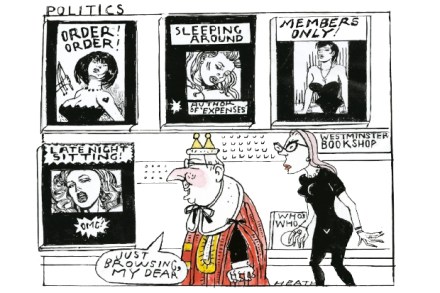
Lord Sewel takes leave of absence from Lords

From our UK edition

Lord Sewel has announced he is taking a ‘leave of absence’ from the House of Lords. In a statement sent to the Parliamentary authorities this evening, Sewel says he will be stepping out of the limelight until the investigation into his alleged behaviour is complete: ‘I wish to take leave of absence from the House as soon as it can be arranged. I also wish to make clear that in doing so I have no intention of returning to the House in any way until the current investigations have been completed, when in the light of their outcome I will review my long term position. I believe this is compatible with due process.

The SNP is forcing Cameron to think of Scotland. They may come to regret that

From our UK edition

No one can deny that the SNP has made Westminster pay more attention to Scotland. Five years ago, it was surprising—and, in many ways, shocking—how uninformed most MPs were of what was happening in Scottish politics. That is one of the reasons why the independence referendum was treated as a second-order issue - until people realised quite how close it was going to be. But that has all changed now with the 56 SNP MPs making their presence felt in the Chamber. This is particularly true of Downing Street because with Angus Robertson having two questions at PMQs each week, David Cameron—who prepares assiduously for these sessions—needs to know what is making news in Scotland and what the record of the SNP government up there is on various issues.

Barack offers David some assistance to keep Britain in the EU

From our UK edition

Barack Obama has given his perennial reminder that Britain should stay in the European Union. In an interview with the BBC, the President of the United States has said it is important for both Britain’s prosperity and influence around the world to remain ‘In’: ‘Having the United Kingdom in the European Union gives us much greater confidence about the strength of the transatlantic union and is part of the cornerstone of institution built after World War II that has made the world safer and more prosperous. 'And we want to make sure that United Kingdom continues to have that influence. Because we believe that the values that we share are the right ones, not just for ourselves, but for Europe as a whole and the world as a whole.

Giving up the fight

From our UK edition

"Whether it’s in Iraq, Syria, Libya or elsewhere — as Prime Minister, if I believe there is a specific threat to the British people, would I be prepared to authorise action to neutralise that threat? Yes, I would." It is almost two years since David Cameron lost a vote on intervening in the Syrian war and he has barely spoken about foreign affairs since. He is now slowly returning to the subject, making the case for pursuing Islamic State in Syria. The recent murder of 30 British holidaymakers in Tunisia was almost certainly planned in Isis’s Syrian stronghold of Raqqa. The Prime Minister is making the fairly simple case that the military ought to be able to pursue the enemy. But there is no chance of the RAF ‘neutralising’ the threat.

Portrait of the week | 23 July 2015

From our UK edition

Home Parents would be able to have their children’s passports removed if they were suspected of planning to travel abroad to join a radical group, under provisions outlined by David Cameron, the Prime Minister, to deal with Islamist extremism. It emerged that five British pilots embedded with allied forces had been taking part in air strikes over Syria, which Parliament had voted against in 2013. Julian Lewis, the Conservative chairman of the Defence Select Committee, accused Mr Cameron of making up policy ‘on the hoof’. Lord Richards of Herstmonceux, the former Chief of the Defence Staff, said that in order to defeat the Islamic State, ‘tanks would have to roll and there’s going to have to be boots on the ground’.

Why MPs can’t switch off this summer

From our UK edition

There are few quicker ways to annoy an MP than to suggest that they are on holiday when the House of Commons isn’t sitting. Such a suggestion will be met with a tetchy and immediate list of the constituency work they are doing in recess. This week, however, marks the start of the first summer break since the election, so the honourable members should perhaps feel entitled to a rest. Indeed, most MPs who aren’t engaged in a leadership contest will be taking one. As they sink into their deckchairs, they will have plenty to think about. The election might only have been two and a half months ago, but the dynamics of this parliament have changed, utterly. Elections will return soon enough. There will be a Scottish Parliament vote and a London mayoral contest next spring.

Why we need to talk about theocracy

From our UK edition

David Cameron is right to speak against religious extremism, even if it claims not to support violence. But what exactly is religious extremism? He defined it in opposition to British values, meaning democracy and the rule of law and so on. Maybe this is clear enough. But I think the matter can be clarified further. I think it should be defined in this way. Religious extremism idealises religious unity as the basis of good politics, and denigrates pluralism, liberal values, ‘secularism’ (in the political sense). In other words, it is theocratic religion. ‘Theocracy’ is an old-fashioned word, but I think we need to use it a lot more. It gets to the heart of the matter.

David Cameron has given his best speech yet on tackling Islamic extremism

From our UK edition

The Prime Minister’s Birmingham speech on radicalisation and Muslim communities in the UK given earlier today is a rather important one. Regular readers will know that I’m not easy to please in this area, but it seems to me that David Cameron has come to understand the real problem of Islamic extremism and has been developing his attitudes towards that problem. There might be any number of reasons for this, but the most likely one is simple observation. Anybody can see that there is a problem, and a Prime Minister who has oversight on the intelligence and security threats that never come to fruition as well as those that do has a starker confrontation with the scale of the challenge than most.

David Cameron must ally himself with moderate Muslims

From our UK edition

Those who have been involved in counter-extremism in recent years would be forgiven for thinking that there is little new in the Prime Minister’s speech today. However, we need to remember two key things. First, that this government aims to increase the counter-extremism duties of frontline workers like teachers, so the target audience is wider UK civil society. Secondly, and this is evidenced by the Prime Minister speaking at a school in Birmingham, not at a security conference on the continent, we need to engage with the people who may be vulnerable to radicalisation in the first place.

Theresa May on tackling extremism: ‘we’re not talking about curbing free speech’

From our UK edition

David Cameron will outline the ‘struggle of our generation’ today: tackling Islamist extremism. The Prime Minister is set to deliver a significant speech in Birmingham, where he will say ‘the root cause of the threat we face is the extremist ideology itself,' attacking those who blame the West's foreign policy for the rise of extremism. Cameron will outline the beginnings of a five-year plan to take on the 'discrimination, sectarianism and segregation' ideas of groups such as ISIL — but what action will the government's proposals entail?

The focus on terror has distorted the debate on encryption

From our UK edition

Surveillance has hit the headlines again. This morning, the Data Retention and Investigatory Powers Act, or DRIPA, which passed last year after just 24 hours debate, was ruled illegal by the High Court in a landmark case. DRIPA was an emergency measure to allow law enforcement agencies access to communications data, and its illegality puts even more pressure on Theresa May’s forthcoming Investigatory Powers Bill, announced in the Queen's Speech. Last week, David Cameron announced that WhatsApp, Snapchat, iMessage, indeed, any encrypted messaging system, could be banned under new laws. In the fight against terrorism, the security services’ ability to intercept communications by would-be violent extremists is said to be paramount.