David cameron

David Cameron’s PMQs answer with £60bn price tag

From our UK edition

PMQs today was interesting for all sorts of reasons. But one answer to a question which may have a longer-lasting impact than all the new politics stuff (which though quite welcome did feel a bit like someone making a show of going to the gym in January) may have completely escaped most people’s attention. It was this, from David Cameron in response to Jeremy Corbyn’s question about cutting rents: ‘What I would say to Steven, and to all those who are working in housing associations and doing a good job, is that for years in our country there was something of a merry-go-round. Rents went up, housing benefit went up, and so taxes had to go up to pay for that.
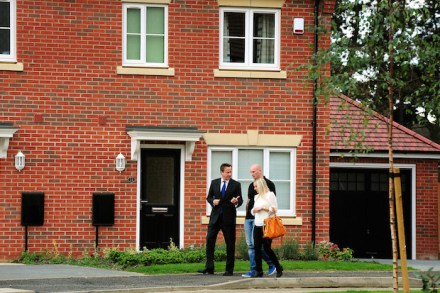
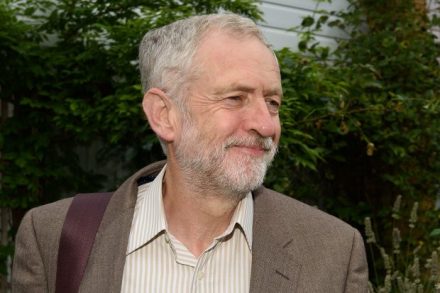
PMQs: Corbyn’s defensive performance gets him through unscathed

From our UK edition

After the 72 hours that he has had, I suspect that Jeremy Corbyn is quite relieved to have got through his exchanges with David Cameron unscathed. The evening news tonight will be far better for Corbyn than it was yesterday. Corbyn, who was making his debut at the dispatch box, began by announcing that he wanted to change the style of PMQs and that he had got members of the public to email in questions. He proceeded to ask Cameron half a dozen of them. Cameron, who could hardly attack the question in these circumstances, answered respectfully and with only the odd jab at Corbyn which will have been a relief to many on the Labour benches.

The Corbyn effect? David Cameron pushes his green credentials

From our UK edition

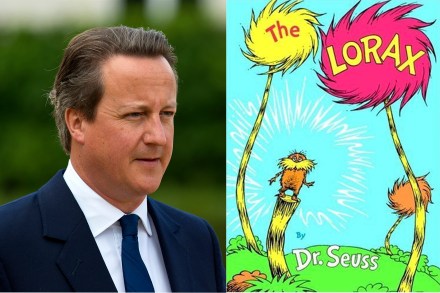
Many on the right have raised concerns that a Jeremy Corbyn led opposition could force the government to lurch more to the left in order to pick up votes from disillusioned Labour supporters. But with Corbyn already making waves by hiring a socialist shadow chancellor as well as a vegan shadow Defra secretary, will David Cameron take inspiration from their appointments? Judging by an article written by Cameron that was published today, they could be onto something when it comes to the environment at least. The Prime Minister has listed his favourite children's book in a piece for the activity group Super Camps.

Like Cameron, Corbyn also believes in the merits of ‘token women’

From our UK edition

In the early hours of Monday, it dawned on Jeremy Corbyn that no women in his team would be shadowing the four Great Offices of State. ‘We are taking a fair amount of shit out there about women,' his advisor Simon Fletcher was heard saying. ‘We need to do a Mandelson. Let’s make Angela shadow first minister of state. Like Mandelson was. She can cover PMQs.’ Of course, if you’re reading this, and you’re a deep-set Corbynista, I doubt you believe a word of it: it’s the testimony of Darren McCaffrey, Sky reporter, spawn of the evil Murdoch empire. Therein lies the central challenge of our polarised body politic.

Labour staff flee party headquarters

From our UK edition

Ahead of the general election, David Cameron used a fire metaphor to describe what he offered the nation in comparison to the chaos — he claimed — Ed Miliband would unleash on the country: 'I feel like the firefighter, hosing down the burning building, and there's Ed Miliband - the arsonist - saying "why aren't you doing it quicker?"' Well, Miliband may be gone but the threat of fire certainly hasn't. With Corbyn just three days into his leadership, rumours abound that many staff members may face the axe under the new regime. However, it was another disaster which caused Labour bods to flee their office this afternoon. Staff were evacuated from the Labour headquarters in Brewers Green in Westminster over the threat of a fire in a neighbouring building.

Was Reyaad Khan killed because of a threat to Britain or to Iraq?

From our UK edition

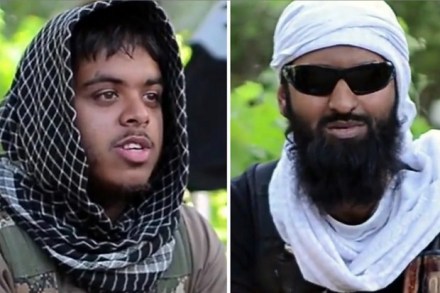
Was the drone strike that killed Reyaad Khan authorised because he posed a threat to Britain, or because he posed a threat to Iraq? Last week, David Cameron told the House of Commons that the strike took place because ‘there was a terrorist directing murder on our streets and no other means to stop him’. His statement to MPs, and the briefing that lobby journalists received, was about the threat that Khan posed to British citizens. Cameron said: ‘With these issues of national security and with current prosecutions ongoing, the House will appreciate that there are limits on the details I can provide.

Vivienne Westwood pays an unwelcome visit to David Cameron’s house

From our UK edition

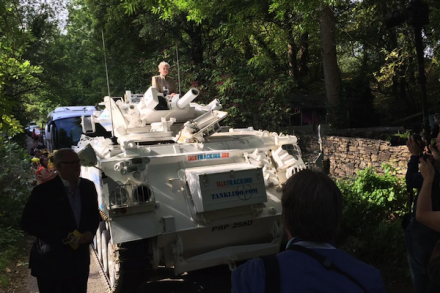
While politicians are currently debating the Assisted Dying Bill in Parliament, Dame Vivienne Westwood has decided there is a more pressing matter that ought to be on the news agenda. The eco-minded fashion designer is on her way to David Cameron's house in a massive tank. Alas, it's not a friendly visit. Westwood has hired out the fuel-guzzling machine in order to protest about fracking outside Cameron's Chadlington home, in his constituency village: Dame Vivienne Westwood's anti fracking tank rides to David Cameron's house in #Witney. #HeartNews pic.twitter.com/oRRn50ibBg — Thames Valley News (@HeartThamesNews) September 11, 2015 It's not the first time Westwood has taken part in a bizarre stunt in her quest to stop the government from fracking.

David Cameron: Corbyn poses a threat to Britain’s financial security

From our UK edition

Jeremy Corbyn hasn’t even been elected Labour leader but the campaign to undermine him begins today. David Cameron will give a speech on the economy, in which he will warn that Corbyn will threaten Britain's security — a strategy I wrote about earlier this week. According to today’s Times, the Prime Minister will make his first significant attack on a Corbyn-led Labour by focusing on the threat to Britain’s financial security: ‘I have watched with some bewilderment the Labour leadership election of the past few months. 'Whoever wins . . . this is now a party that has completely vacated the intellectual playing field and no longer represents working people.

Long life | 10 September 2015

From our UK edition

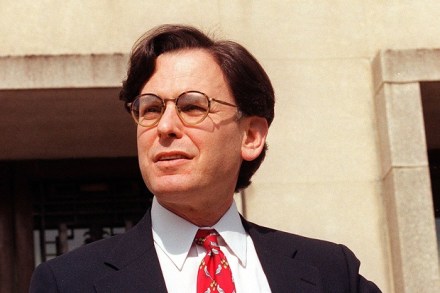
I remember Sidney Blumenthal from my time in Washington in the late 1980s when I was there as the first American editor of the Independent. He was a smartly dressed, agreeable political journalist, handsome in a donnish kind of way, who had a gracious, dignified manner that seemed to put him a cut above most of his fellow hacks. He was also a liberal of strong political conviction, whose purpose was to help rebuild American liberalism so that it could take on and beat the New Right after its long ascendancy under Ronald Reagan and restore the Democrats to power. It was at around this time, in 1987, that Blumenthal first met Bill Clinton whom he came to regard — rightly, as it turned out — as the Democrats’ best hope for achieving this aim.

The Spectator’s notes | 10 September 2015

From our UK edition

Presumably Britain has some sort of policy on immigration, asylum and refugees, but instead of struggling to understand it, you can save time by following its media presentation, since that is what seems to concern the government most. Essentially, the line is that Labour lets them all in and the Tories don’t and won’t (‘No ifs, no buts’). When, as at the last election, it turns out that net immigration has been rising under David Cameron, he apologises shyly and sounds tough again. He was sounding very tough until last week, when the photograph of the dead boy on the Turkish beach suddenly turned him all soft.

The fog of law

From our UK edition

Not even Jeremy Corbyn lamented the death of Reyaad Khan, who was killed by an RAF drone in Syria after joining the Islamic State. He was a straight-A student from Cardiff who had the freedom to do anything with his life, but chose to turn his back on Britain and join a band of Islamofascists. He had been working hand-in-glove with Junaid Hussain, a talented computer hacker from Birmingham who fled to Syria; the two of them had been making detailed plans for attacks on Britain. But the RAF’s involvement in the strike marks a new chapter in British warfare. The motive for the action was simple: Khan was planning to inflict great harm on British people, and in the absence of alternatives, the RAF struck when they had the chance.

Does David Cameron really need to worry about Jeremy Corbyn’s stance on military intervention?

From our UK edition

Jeremy Corbyn becoming Labour leader will make it much more difficult for David Cameron to bring a vote to the House of Commons authorising British involvement in air strikes against the so-called Islamic State in Syria. That’s the received wisdom, anyway, but is it true? Tom Newton Dunn reported in the Sun this week that ‘dozens’ of Labour MPs were prepared to defy their party whip if it forbade support for action in Syria, which would mean the government would be able to cobble together a majority of Conservative MPs and Labourites, even if a group of Tories defied their whip. Yesterday the Prime Minister told the Commons that the work to remove both Assad and Isil would ‘on occasion, require hard military action’.

Podcast: Angela Merkel’s mistake on refugees — and is Tom Watson Labour’s saviour?

From our UK edition

Angela Merkel’s offer to welcome any Syrian refugees who reach Germany will have far reaching, potential devastating consequences. On this week’s View from 22 podcast, James Forsyth debates this week’s Spectator cover feature on Merkel's grandstanding with Holly Baxter from the Independent. Has David Cameron done the right thing by not offering asylum to more refugees? Are all European countries pulling equal weight in dealing with the crisis? And what will the European Union as a whole do next to help the refugees? Dan Hodges and former Labour adviser John McTernan also discuss whether Tom Watson could be the man who holds the Labour party together.

WATCH: Nicola Sturgeon sings God Save the Queen

From our UK edition

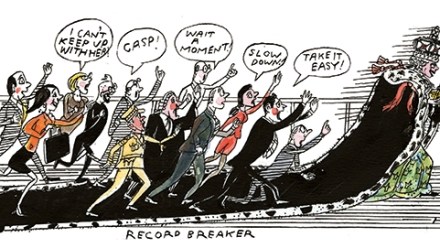
As the Queen celebrates becoming Britain's longest-serving monarch today, David Cameron led tributes for Her Majesty this morning in the Commons ahead of PMQs. While the Prime Minister praised her 'unerring grace, dignity and decency', Sir Gerald Howarth tried a different tack; showing his appreciation for her with an anecdote about his wife not wishing to attend a local donkey derby: 'When I consult Lady Howarth and ask whether we should go to the donkey derby, and she says, “But we went there last year,” I say, “And Her Majesty does all sorts of things every single year.” Her Majesty has done a fantastic service to this nation.

In the age of democracy, a monarchy keeps the powerful humble

From our UK edition

My six-year-old, when told that there was a princess of England with the same name as her, was astonished to learn that such things existed. ‘In real life, not in princess-land?’ She assumed princesses only lived in some made-up world along with dragons and trolls and daddy’s savings account. One of the arguments made against the monarchy is that it is inherently ridiculous and belongs in a children’s story. But as we mark 64 years under the Elizabethan junta, it is worth noting that it’s the very absurdity of monarchy that makes it egalitarian and anti-authoritarian, in that it keeps powerful people in their place.

Cameron’s refugee announcement overshadowed by drone strike in Syria

From our UK edition

David Cameron’s statement that Britain will take 20,000 Syrian refugees over the course of this parliament was overshadowed by his announcement that an RAF drone had killed two British ISIL fighters in Syria in August. Cameron said that that Reyaad Khan and Ruhul Amin had been killed in a lawful act of ‘self-defence’ as they were planning and encouraging terrorist attacks in Britain. He stressed that this was a targeted action and that he would come back to the House of Commons to seek permission for more generalised action in Syria; the Commons voted against military action there in 2013. Now, it is hard to think of many more serious matters than the killing of a British citizens by the British state.

David Cameron: British ISIL fighter killed by drone strike in ‘self-defence’

From our UK edition

David Cameron has just informed the House of Commons that an RAF drone killed several ISIL fighters in Syria in a targeted strike in Syria. Two of those killed were British citizens who Cameron said were planning terrorist strikes against this country. He called this a lawful act of 'self defence' and stressed that it was targeted and that he would return to the Commons to seek permission for more generalised bombing of ISIL in Syria. It will be interesting to see whether Jeremy Corbyn chooses to intervene in the Commons debate that is following this revelation. More to follow...

Cameron’s impossible dilemma

From our UK edition

If you spot the Prime Minister squirming and wriggling on the Syrian refugee issue, there’s a very simple explanation. The Prime Minister is in a very tight spot, caught between a rock and a hard place. And it is clear that he hasn’t yet decided the best way to extricate himself. After winning an outright Tory victory at the general election in May and the likely prospect of another win in 2020, he only has one major hurdle left during his term in office: winning the EU referendum. Whether he calls, as many expect, a vote as early as this spring, or waits until the end of his own self-imposed deadline of December 2017, Cameron will be campaigning to stay in. But as every day of the Syrian crisis passes, his chances of victory are getting slimmer.

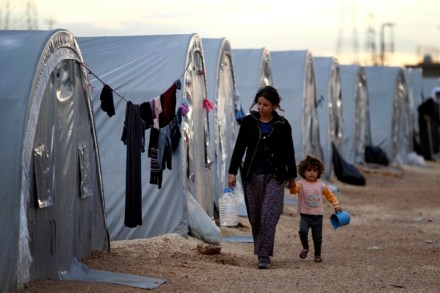
The plight of Syria’s refugees deserves more than your good intentions and virtue signalling

From our UK edition

I suppose it should not be a surprise that the virtue signalling over the appalling plight of Syrian refugees displaced by that country's monstrous civil war has now reached fresh heights of absurdity. Nor that some of the press coverage of this dreadful crisis is edging towards a post-Diana level of mawkishness. One front page this morning shouts at David Cameron, demanding the Prime Minister SHOW YOUR HUMANITY. I mean, really. Then, on ITV's Murnaghan programme this morning, Nicola Sturgeon and Yvette Cooper were asked if they would house Syrian refugees in their own homes. Obviously they had to say yes and we may now expect the same question to be asked of every politician in Britain.