David cameron

Does it pay to be mendacious?

From our UK edition

Lying is a politician's occupational hazard. The Independent on Sunday has published a Com Res poll confirming that truism. The majority of voters do not believe that David Cameron and Gordon Brown are being honest about how they will tackle the deficit. We voters resent being taken for fools. If Brown and Cameron are being disingenuous about the economy, the honest Sage of Twickenham benefits - the Liberals are storming the marginals, a hung parliament is odds-on according to some pollsters. Is Vince Cable honest about reducing the deficit? Emphatically not. One minute he’s against a VAT rise, but refuses to rule it out the next. He’s in favour of unilateral charges on banks, but not if they fund a tax break for some married couples.

An ICM marginals poll points to a hung parliament

From our UK edition

The News of the World has its expensive and much-awaited ICM poll of the marginals tomorrow. There is some good news for Cameron, and some not-so-good news. First: 66 percent of voters in the marginals agree with the message "it's time for change". Bad news: a surprisingly large number think that Nick Clegg represents that change. A Lib Dem surge means that Tory swing is just 6 percent in the marginals, versus 5 percent nationally. Where is the Lord Ashcroft magic? In James's political column this week, he says the Tories had been so confident about the marginals that they reckon they need a 5-point lead nationally to win, rather than the 8-point lead previously assumed. The News of the World/ICM poll challenges that narrative.

The Times is wrong about the Tories’ marriage tax break

From our UK edition

Since The Times moved its leaders on to page two, they've also taken on a new vitality. For years, they were the voice of solid good sense. It was pretty difficult to disagree with them. Now, they are more polemical, more risk-taking - and more wrong. But I'm not complaining: I far prefer reading a fiesty opinion with which I disagree, than boring opinion that I nod quietly along with. And I could not disagree more with the leader today denouncing Cameron's marriage tax break. Let's kick off: "This is surely no time to be giving money away so that people can just carry on doing what they are already doing, namely being married. In a long philosophical journey in Opposition, the Tories appear to have alighted on moral authoritarianism advanced by economic interventionism.

The case for voting Conservative

From our UK edition

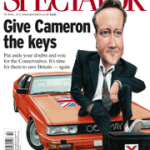
Why vote for Cameron? The reasons for voting against Gordon Brown are so numerous that the positive pro-Tory reasons for voting are often lost. This week's Spectator gives you all the ammo you need to win around wavering friends, colleagues and family. We have restricted ourselves to the ten most compelling points. I summarise them below: 1. School reform. In itself, it's enough reason to vote Tory. Gove has specifically promise that within four years of a Tory government everyone will have an independent school offering to educate their kid for free. This should have been a 1981 Tory proposal, but Keith Joseph lost a battle with the civil service (after he recruited a young Cambridge graduate named Oliver Letwin to help him fight it). 2.

Are the Tories ready for joined-up government?

From our UK edition

The Civil Service is readying itself for a new government. The BBC has already reported a discussion of efficiency savings among senior officials. In another part of Whitehall, work is a foot on how to set up a National Security Council should the Tories win. I have in the last few weeks been interviewing ex-ministers and senior officials as research for a RUSI paper, due out soon after the election, on how to improve the government's security set-up. Traipsing around various departments, a number of interesting conclusions have come to light: - Conservative ideas for an NSC are not the same as the government's NSID committee, however much ministers say it is, but there is yet no clarity on the Tory detail of what one official called "the second layer" of reforms.

Darling in cloud cuckoo land

From our UK edition

Labour can’t lay a finger on the Tories over national insurance. And desperation has morphed into hysteria. Alistair Darling has just told Sky News that David Cameron contradicted George Osborne and that the Tory plan is “unravelling”. "He is going to have to find deeper cuts, some experts are saying tens of thousands of jobs will go," he said. "He's had to go on to say that he's going to have to cut which will mean job losses." Now, Cameron said: "Even after our plans for public sector pay and pensions, benefits, ID cards - yes, it's still not enough. I accept that.” But that does not contradict George Osborne, who is clear that pay freezes and low level efficiencies will make only a small impression on Brown and Darling’s mess.

Cameron is Mr Reasonable on Today

From our UK edition

Another day, another party leader on the Today Programme.  This time it was David Cameron, and his interrogator was Evan Davis.  My quick capsule review would be that the Tory leader did quite well, sounding measured and reasonable for most of the twenty minutes - which is certainly better than Brown managed yesterday.  But for more, read on... Unsurprisingly, Davis led on this morning's FT interview with Peter Gershon, the Tories' efficiency advisor, who has fleshed out some of the party's spending plans.  This was the most aggressive segment of the interview, with Davis asking how many job losses would be incurred by a "£2 billion saving on public sector pay rolls.

Why Labour Needs To Be Much Fleeter of Foot

From our UK edition

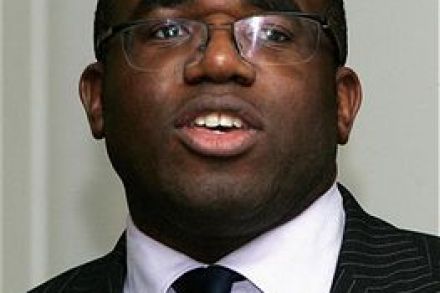
It is difficult to fault Cameron's idea of a national volunteer force. While the Labour Party was forced to spend today defending the National Insurance hike, the Tories were able to seize the intiative with a genuinely far-sighted proposal. All the more galling for the government that this idea has been rattling around in Labour circles for at least a year. Cameron has stolen Labour's clothes on this just as he did on co-operatives. David Lammy will be seething. His ideas for compulsory civic service were promoted in the pages of Prospect a year ago. He has been lobbying within the Labour Party for the policy for considerably longer.

Win one for the Gipper

From our UK edition

A Cameron government has the potential to change Britain - but not much else beside.  A Tory loss, however, could change much more. The Cameron Tories are a bellwether for Conservative movements in a number of countries, including the US. If they succeed, they will prove a powerful model for many moderate Republicans who believe their party is in an earlier post-Major phase - angry, divided and negative. If David Cameron fails to defeat Gordon Brown, few Republicans will look across to their British cousins for inspiration. The party will eschew any modernising project for a while longer and stick to their equivalent of IDS. In this scenario, the Republicans will pick up some congressional seats and governorships.

Hope springs eternal

From our UK edition

The Tory press conference this morning, launching their plan for National Citizen Service, shows how they hope to run a two track campaign. On the one hand, they want to be hammering Labour over their plans to increase National Insurance — Cameron called it a ‘a recovery killer, an economy killer, a job killer’ and said that Labour wanted people to pay ‘taxes for government waste’. On the other, they want to be presenting hopeful, optimistic ideas like a National Citizen Service. This fusion campaigning enables the Tories both to be attacking Labour and presenting themselves as the party that is offering a positive alternative. National Citizen Service is very Cameron. He’s been toying with the idea since 2005.

What the Party Leaders Are Saying

From our UK edition

I really enjoyed Anne McElvoy's Standard column today. She is absolutely right to identify the false notes of day one of the election campaign. Gordon Brown really was talking nonsense about his ordinary middle-class background and David Cameron should certainly drop the glottal stop. She is right to say that neither has any clarity of vision yet. For what it's worth I agree with Kevin Maguire agreeing me that Labour looked more confident on day one and that the Tories seemed nervous. On day two, Cameron was beginning to get into his stride and Brown's interview with NIck Robinson was awful. The wall-to-wall media coverage is almost all completely absorbing, generally well-executed and sometimes even informative. But i've already had several sneaking "so what" moments.

How the Tories are decontaminating their associations with Big Business

From our UK edition

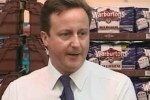
Over the past couple of years, Big Business (as in, "being in hock with...") has been deployed almost as an insult against the Tories.  But they've now used their campaign on national insurance to turn their business associations into an advantage.  Exhibit A: the above picture (via PoliticsHome) of Cameron's visit to the Warbutons HQ in Bolton, where the company owner has come out in support of Tory proposals.  It sends the message that Big Business doesn't just mean the financial services, and a lot of people, in a lot of regions, rely heavily upon it for their livelihoods.  And too right, too.  Expect plenty more like this from the Tories over the next few weeks.

Straight out of the Brown textbook

From our UK edition

What was probably Brown’s last PMQs performance as Prime Minister was classic Brown. He answered questions that hadn’t been asked, dodged ones that had, rattled off list after list of tractor production figures and mentioned Lord Ashcroft at every opportunity. But, as he has in recent months, he had some one liners to get off including the jab that Cameron ‘was the future once’, an echo of Cameron’s put down of Blair.   But that line couldn’t disguise the fact that Cameron got the better of Brown. Cameron’s speed on his feet just makes him better in this setting. His response to the heckle that the business leader he was quoting was a Tory will look great on the news tonight: ‘Not a Tory but one of his [the PM’s] advisors.

PMQs live blog | 7 April 2010

From our UK edition

Stay tuned for live coverage of PMQs. 1200: We're about to start.  Brown is flanked by Harriet Harman and Jim Murphy.  Douglas Alexander, Alistair Darling and Alan Johnson are also on the front bench.  The heavy hitters are out in force... 1201: And here we go, for what could be Brown's last ever PMQs as Prime Minister.  He starts, as usual, with condolences for fallen soldiers. 1202: The first question is as plantlike as they come: will Brown take £6 billion "out of the economy"?  Brown spins the usual dividing line about investing in frontline services, adding that the Tories would risk a "double dip" recession.  Hm. 1204: Massive cheer from the Tory benches as Cameron stands up.

Goodbye world, see you in a few weeks (for a proper EU dust-up)

From our UK edition

With plenty of domestic issues to debate, the election campaign promises to see little intrusion from the outside world - barring Russia invading a small neighbouring country, a terrorist attack or another financial meltdown. Nor will Britain say much to the world in the next couple of weeks; ministers will be be represented at international meetings, for example in NATO, by senior officials, and Britain's diplomats have been told to keep quiet. As soon as the election is over, however, there will be plenty of action. The Cabinet Office is busy planning a quick update of the National Security Strategy, and then will come a slightly longer Security and Defence Review.

Inauthenticity, meet skewer

From our UK edition

We're not even one day into the election campaign proper, and already the internet is fulfilling its role as the Exposer-in-Chief of spin, deceits and slip-ups aplenty.  I direct you towards Guido's post on Brown's – ahem – impromptu support at St Pancras station earlier.  Or Left Foot Forward's account of the omissions from Cameron's list of The Great Ignored.  Or Sam Coates's tweets about the #stagemanagedelection.  And there's plenty more where they came from. In a campaign where inauthenticity is going to get skewered at every turn, politicians clearly need to go about things differently.  But there are all too many signs that they're stuck in the old, familiar grooves of elections past.

The Tunnel Ridge Fault election

From our UK edition

At times the chasm between Britain’s political parties is as great as the San Andreas Fault. Sometimes the difference is more like a small rift, a matter of tone not policy. In this year’s election, the difference between the parties is somewhere in between, like the lesser-known Tunnel Ridge Fault in Eastern California. In part, the appearance of only minor differences may explain why the polls are showing such different things; some predict that Labour will hang on to power, others that the Tories will be able to win.

Behind enemy lines

From our UK edition

Well, well Gordon Brown has started his election campaign in a constituency that is notionally a Tory seat. Rochester and Strood is being fought for the first time at this election but the invaluable UK Polling Report tells us that the Tories would have just won this seat in 2005. I suspect that Brown has headed to Kent on the first day of the campaign in an attempt to show that Labour haven’t written off the south east despite coming fifth there in the European elections and that Labour is still a national party. David Cameron is off to Birmingham and Yorkshire and the shadow Cabinbet are fanning out across the country in an attempt to hit every TV region in Great Britain, evidence that for all the talk of this being the first internet election TV remains the dominant medium.

Cameron launches the ‘modern Conservative alternative’

From our UK edition

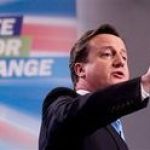
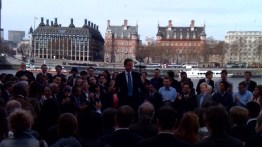
Reaganesque was the word that sprang to mind watching Cameron’s launch event. Standing on the terrace of County Hall with Parliament behind him, providing the snappers with some great images, Cameron spoke about the ‘modern Conservative alternative’ to five more years of Gordon Brown. The implicit message was youth and vigour. This was one of those occasions where the visuals matter more than what was actually said. The no-notes speech contained a string of attacks on Labour’s waste and the prospect of five more years of Brown. But Cameron was careful to sandwich this with some optimism. At the start he said that a vote for the Tories was a vote for hope, optimism, change and a fresh start.