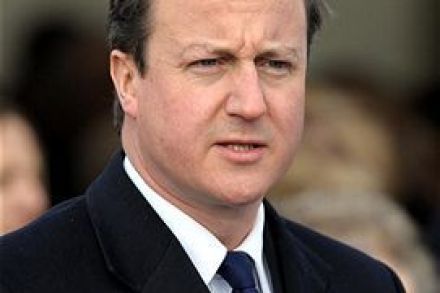
David cameron

Letwin gets to the point

From our UK edition

Oliver Letwin is often mocked for putting things in over-complicated language, for talking about ‘a shift in the theory of the State from a provision-based paradigm to a framework-based paradigm’. But in his interview with the Wall Street Journal Europe, Letwin sums up the Cameron vision for public services with admirable clarity: 'Hospitals compete for patients, schools compete for pupils, welfare providers compete for results in getting people out of welfare and into work. So we get to the point where it [the public sector] is efficient because it is answering to the people it is serving and not to bureaucracy.

Guess who’s back

From our UK edition

Yep, you guessed right: Tony Blair was doing his bit for the Labour cause this morning, with a speech in his old constituency.  In truth, there was little in it of any note – or that we haven't heard countless times from his successor.  Thus the Tories were derided as either the "old Tory party," or as confused about their direction of travel.  Gordon Brown and Alistair Darling were hailed as the men who brought us through the worst of the economic storm.  And even the soundbites ("meeting not just future challenges, but seizing future opportunities") sounded as if they had come from straight from the Brownite copybook.

Tory poll lead widens further

From our UK edition

I'll spare you the nitty-gritty, but suffice to say that three separate polls tonight record growing leads for the Tories – of 7, 7 and 10 points, respectively.  One of the 7-point leads is from the YouGov Daily Tracker, which has been hovering around the 4 point mark for the past few weeks.  You could argue that we're still operating more or less within the margin of error.  That's true.  But throw in the polls from the weekend, and you'd be hard-pressed not to conclude that the tide is turning, at least momentarily, in Cameron & Co.'s favour.  Either way, Tory folk around Westminster certainly seem more relaxed than they have been for months.

Brown and Cameron’s Commons clash serves as the warm-up for tonight’s debate

From our UK edition

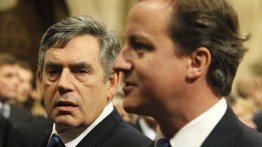
Gordon Brown and David Cameron have just been facing each other in the Commons chamber. Brown was notionally reporting back on the European summit meeting, but in relaity Brown and Cameron were setting the stage for the Chancellor’s debate tonight. Cameron claimed that there was a new dividing line in British politics, the Tories for ‘efficency and aspiration’ and Labour for ‘waste and taxes.’ Brown claimed that the Tories were indulging in panic measures and that their plans announced today would ‘withdraw the support that is necessary for the economy to have a sustained recovery.’ Brown might have some Keynesian economists on his side when he says this.

Osborne must ask: why trust the party which ran up the credit card bill in the first place?

From our UK edition

Public sector net borrowing, public sector net debt, total managed expenditure, departmental expenditure limits ... zzzzz.  One of the main reasons why Labour has been able to fashion an economic narrative, against all odds, is because they can rely on some pretty esoteric language.  Thus debt becomes interchangeable with deficit, and cuts can be hidden under layers and layers of different spending metrics.  Perhaps more than anything, this almost-casual deception is Brown's greatest skill. Which is why it's encouraging that the Tories have tried to demystify some of the fiscal debate, putting it into language that everyone can follow.  They've set out their "more for less" argument by referring to the practices of supermarkets.

Explaining the NotW endorsement

From our UK edition

The News of the World's endorsement of the Conservatives today is worth reading. It has taken some time and much soul-searching for the paper to make this decision. Papers, even under the same proprietor, have different readerships with different outlooks on life. The Sun came out for the Tories on the last day of the Labour conference last September, but its stablemate has taken far longer. It has been firm in its denunciation of Brown's failings but – like many voters – it has looked long and hard at just how a Tory government would correct them. The reason for its endorsement now is laid out in the leading article. It started with the reasons for why it backed New Labour in 1997 – what would it change?

Not the main event

From our UK edition

Cameron was scarcely trying at PMQs today. Show up, look a bit cross, slip in a joke or two, then sit down and wait for the Budget. That was his plan. When the PM offered his congratulations on BabyCam, the opposition leader quoted a text he’d received – ‘How do you find time for these things?’ Making this wisecrack seemed more important to him than attacking the PM. His tactics were odd, out of touch, retrospective. He asked about Brown’s attempts to conceal the evidence that, as chancellor, he flogged the nation’s gold too cheaply and blew vast sums in potential profits. Brown’s bungling over the bullion billions should be a promising issue.

PMQs live blog | 24 March 2010

From our UK edition

Stay tuned for live coverage at 1200.  A Budget live blog will follow at 1230. 1201: And we're off.  Brown starts with condolences for the fallen.  The first question from Mike Penning is a punchy one: when did the PM realise he "mislead" the Chilcot Inquiry?  Before or after?  Brown responds by pointing out that defence spending has risen in real terms over the last 12 years, if not every year. 1203: A planted question gives Brown to opportunity to list Labour's "fairness measures".  He says they would never have been put forward by George Osborne. 1204: Cameron starts by saying that he'd "like to clear up a few issues".  Laughter from the Labour benches, for some reason.

Sarkozy, le comeback kid?

From our UK edition

David Cameron may be talking about a new relationship with France, but let’s hope the Conservatives do better than Nicolas Sarkozy’s UMP, which suffered a heavy defeat in local and regional elections, with a Socialist-led opposition alliance taking an estimated 52 percent of the vote. This is bad. At least three of President Sarkozy’s enemies have now made a comeback: the French left, the far-right Front National and Dominique de Villepin, who appears to have been buoyed by UMP’s defeat and a new poll that showed the French preferred de Villepin to Sarkozy as UMP leader. It will be interesting to see how Sarkozy copes. Until now, he has not had any significant set-backs, but a defeat of this kind halfway into a five-year mandate cannot be dismissed.

Cameron denounces Labour’s “lies”

From our UK edition

David Cameron’s press conference this morning was ticking along rather uneventfully until James Landale asked Cameron a question that set the Tory leader off on one about, what he called, "Labour’s complete and utter lies." Cameron had started off by talking about how pleased he was that we going to be a father again, letting slip that he and Samantha had been trying for another baby for a while, and with some remarks on the lobbying scandal and the Budget. There had been questions on Ashcroft and cuts but nothing had really got going. Then, James asked Cameron about a Lib Dem plan to scrap the winter fuel allowance for pensioners under 65. At this point, Cameron’s whole demeanour changed.

John Butterfill won’t get a peerage…

From our UK edition

...confirms David Cameron, at his monthly press conference.  If you didn't catch last night's Dispatches, Butterfill is the Tory MP who said, among other things, that it is “quite likely that I will go to the Lords,” and that this is “another string to my bow as far as you’re concerned”.  More on him from Paul Waugh here.

The Budget is a bigger opportunity for the Tories than for Labour

From our UK edition

Last night's Dispatches programme was a concentrated double blow for Labour.  Not only did the limelight burn more unflatteringly on their party, but it has also undermined their careful Budget operation.  For the next few days, at least, it's possible that broken politics may trump the broken economy in the public mind.  And Alistair Darling is going to have a difficult, if not impossible, task in bridging that chasm of "distrust and disbelief" with his prescriptions tomorrow.

Both Labour and the Tories need to get stuck into Vince

From our UK edition

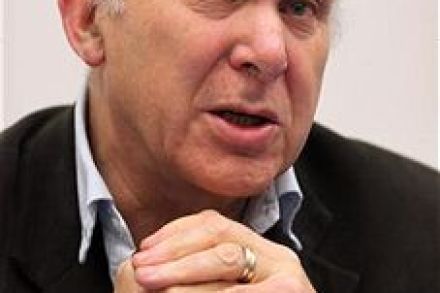
The public remains infatuated with Vince Cable. A Politics Home poll reveals that 31 percent want Cable to be chancellor. It’s a crushing endorsement: Don’t Know is his nearest rival on 24 percent, followed by Ken Clarke on 16 percent. Cable’s reputation rests on his sagacious airs and an apparent contempt for party politics. His eminence is baffling. Fleet-footed fox-trotter he may be; economic guru he is not. Andrew Neil's interview shattered Cable’s invincibility. The Sage of Twickenham admitted to changing his mind over the HBOS Lloyds merger and his constantly shifting position on cuts was exposed. Add to that the ill-thought out Mansions Tax and Cable begins to look leaden. The Tories and Labour should emphasise Cable’s intellectual shortcomings.

Memo to the Tories: stop talking about being authentic, and just do it

From our UK edition

Paul Goodman wrote a thought-provoking article for ConHome last week, in which he suggested that "authenticity vs artificiality" will be one of the key battles of the forthcoming election.  Not only do voters crave authenticity after years of spin, deception and malice on the part of politicians, wrote Goodman.  But, also, this election is specifically wired to expose inauthentic behaviour.  Blogs, YouTube, mobile phone cameras, poster spoofs – all will work to undermine the cold and the stage-managed methods of elections past. Which is why the Tories are getting all excited about David Cameron's more or less spotaneous performance in Lewisham last week.

The Tory donor who’ll take a sword to the ‘morons’

From our UK edition

Buried deep in the Sunday Times is the Tories’ answer to the problem that is Lord Ashcroft. James Tyler is a fund manager who has donated £250,000 to the Tory party since 2007. He is that rare creature: a multi-millionaire who is both resident and domiciled in merry old England. Tyler’s chief attraction for the Tories is his virulent opposition to what he terms ‘the morons’ – City Boys taking excessive risk and Gordon Brown’s culpability in the financial collapse. It was his subject in a speech to the Adam Smith Institute last year and he remains consumed by it. The Sunday Times reports: 'His chief bête noire is the rampant creation of money and the inflation target of 2% set by the government.

Dirty money and dirtier politics

From our UK edition

Busted.  Yep, that's the word which first sprung to mind when I read the Sunday Times's expose of MPs and their dirty lobbying work.  Hoon, Hewitt, Byers – they're all revealed as providing influence and access for cash, and a lot of cash at that.  But it's Byers who comes out of it the worst.  You can read his story here, but suffice to say that it involves boasts about successfully lobbying ministers to change policy, and about parading Tony Blair in front of his clients.  He even describes himself as "a bit like a sort of cab for hire".  I imagine he'll pick up fewer fares now. Our democracy could hardly bear another major political scandal, but here we have one: as grubby, underhand and dispiriting as last year's expenses revelations.

No place for porkies in digital politics

From our UK edition

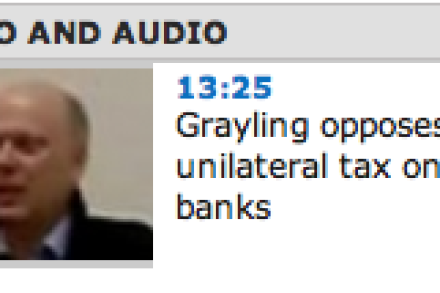
We have just witnessed a fascinating glimpse of the use of the internet in elections. This morning, Cameron proposed a unilateral bank tax - moving, I suspect, ahead of what he believes Darling will announce in next week's budget. Next, at 1.19pm, Will Straw digs up a selectively-edited version of Chris Grayling speaking in his local constituency (put online by the Labour candidate, Craig Montgomery). Straw's headline: "Calamity Grayling opposes Cameron’s unilateral bank tax." Now, this headline - a lie - might have worked on a Labour Party press release. But it's far harder to lie on a blog. Grayling is quoted saying "there is absolutely no point on earth is any one country doing this unilaterally, because otherwise all the banking transactions will simply move to another one".

Tony Judt’s Manifesto for the Left

From our UK edition

Anyone who cares about political debate should read the essay by the historian Tony Judt in today's Guardian. It is an astonishing piece of work which argues for a renewal of social democracy in response to the failure of the New Labour experiment (which Judt considers as evidence of the redundancy of the philosophy of Thatcherism so willingly embraced by Blair and Brown). You may quibble with the detail -- Judt remains over-sentimental about the public sector -- but it is a challenge to received wisdom in all strands of dominant contemporary political discourse.  He captures what many of the liberal left feel here: "It's difficult to feel optimistic about the upcoming election.

Why Cameron must never say “deficit”.

From our UK edition

Listening to BBC news, it's striking how they are still using Labour's politically-charged vocabulary. When the universities are kicking off about their budgets being cut, the BBC newsreaders are told to talk about "investment" in higher education, rather than spending. Why, though? An "investment" would be to put £1 billion of taxpayers’ money into an Emerging Markets fund, and hope it grows. Giving it to universities - many of which serve neither students nor society - is not an investment. But using the word "investment" is Labour code for "good spending". There is one particularly frequent example if this: the BBC regularly confuse the words "deficit" and "debt" - a bugbear of mine, and something James Forsyth deals with in his column in this week's magazine.

These strikes are a gift to the Tories

From our UK edition

It is rare that a political party is handed an issue that enables it to rally its base, appeal to swing voters and put the other side on the back foot. But that is how much of a gift to the Tories these strikes are. There has been a bit of an enthusiasm deficit amongst Tory activists and traditional Tories more generally ever since David Cameron recalibrated the party's European policy following the ratification of the Lisbon Treaty. But the strikes issue, and Cameron's strong position on it, is, I'm told by those out in the country, rallying these voters to the cause.