David cameron

PMQs live blog | 13 October 2010

From our UK edition

VERDICT: Well, who would have thought it? In his first PMQs performance, Ed Miliband not only put in a solid showing – but he got the better of David Cameron. I certainly don't agree with the Labour leader's central argument: that it is unfair to restrict child benefit. But he put his point across in measured, reasonable tones – and Cameron seemed flustered by comparison, as he wagged on about the size of the deficit. Make no mistake, the argument and the public's sympathies will unwind themselves over the course of the entire Parliament. They will not be resolved in one session of PMQs. But in presentational terms, MiliE will have the more flattering clips on the news later – which is more than he could have expected going into today.
Miliband versus Dave – round one

From our UK edition

Well, here it is. Ed Miliband will meet David Cameron for the first time at PMQs today. For all his determination and tactical sense, Miliband has his work cut out. Neither gave vintage speeches at the recent party conferences, but, in terms of presentation, Cameron’s easy wit trumps Miliband’s adenoidal drone. This will be Westminster's final act of posturing before next Wednesday’s spending review, a vanity soon to be forgotten. However, Labour has to fertilise its barren economic policy, and quickly. PMQs is the best opportunity to start.  Labour's strategy is clear: the government has made no plans for growth; in fact, their cuts are inimical to growth and squeeze hard-pressed middle earners.

Ed Miliband calls for humility – now let’s see some

From our UK edition

So Ed Miliband told the Parliamentary Labour Party that he and they need to show humility. He is right, but this is easy to say and much, much harder to do. We shall see whether he has managed it at the despatch box tomorrow when the tackles David Cameron at his first PMQs. The feeling power gives politicians seeps into their bones and they get used to the trappings of deference. Ed Miliband has been close to significant power for most of his adult life, as have many of the people around him.  They need to realise that for a while - about 18 months probably - no one will be seriously interested in what Ed Miliband's vast new team of shadow ministers has to say. The lobbyists have long gone and soon the hacks, once so sycophantic, will start postponing lunches.

The AV rebels change tack

From our UK edition

A little snippet from today's Times (£) that is worth noting down: "Tory rebels will this week lift their threat to the date of next year's proposed referendum on voting changes – because they believe May 5 offers the best chance of stopping the alternative vote (AV) system. That date coincides with the council elections in Scotland, Wales and most of England, and was thought likely to boost the 'yes' vote for replacing first-past-the-post general elections. Nick Clegg insists that the Lib Dems will not budge on the date. But a tactical rethink will see many AV sceptics wave it through when the Bill comes to the floor of the Commons this week.

David Cameron: Linda Norgrove may have been killed by US rescue team

From our UK edition

David Cameron arrived at his press conference forty-five minutes late, and was visibly shaken when he took to the microphone. A few sentences in, it was clear why. "Linda [Norgrove, the British aid worker who recently died in Afghanistan] may not have died at the hands of her captors as originally believed," Cameron said, "[she] could have died as a result of a grenade detonated by the task force during the assault." The PM explained that he had been told this by General Petraeus this morning, and that Ms Norgrove's parents have since been informed. Cameron emphasised that he had backed the rescue operation, and believed that it was the right thing to do. "The best chance of saving Linda's life was to go ahead," he said.

The consequences of the child benefit row

From our UK edition

"You only get cut through when there’s a row," one Tory observed to me on Friday as we discussed the anger that had followed George Osborne’s announcement on child benefit. So in one way, the Tories are not unhappy with the fact that this story is still rumbling on. It is imprinting on the public mind that the Tories have hit the well-off. This is in advance of a spending review that is bound to hit hardest those people and regions that are most dependent on the state. Following the media coverage of the child benefit row, it will be much harder for Labour to make the charge that the cuts are socially divisive stick. It really does appear that "we are all in this together."   But there are two things that do worry the Tories about the row.

Abbott caps Miliband’s defensive reshuffle

From our UK edition

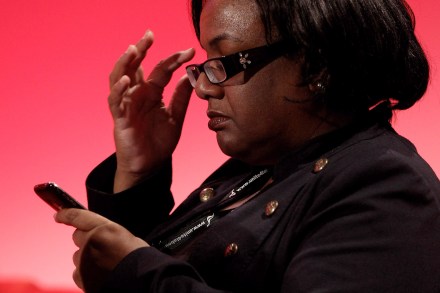
Those months of campaigning have finally paid off for Dianne Abbott. She has been made a Shadow Health Minister – which resembles a proper job. She was against the Blair-Milburn reforms in the NHS, regarding them as too pro-market – so let’s see if she keeps this position in opposition, thereby throwing more soil on the grave of New Labour. One can imagine the fear running down Andrew Lansley’s spine at this new team: John Healey and Abbott. It’s just baffling. In the bars at conference last week, I met many Tories who are increasingly worried at the pace and preparedness of Lansley’s proposed NHS reforms. But instead of marking him with some forensic, vicious attack dog (or his wife), Miliband chooses someone, well, rather less than forensic.

Who speaks for Scotland?

From our UK edition

Ten years ago, when I was doing my tour of duty as a reporter in the Scottish Parliament, I had a talk with an SNP figure, who shall remain nameless, about their grand plan. Scotland was to be a nation, and that means its politicians perform in certain ways. They wanted to look like statesman, with a state. Their opportunity lay in crisis. “So when there is a disaster overseas, we will have Scottish aid leaving a Scottish airport,” he said. “When a Scot dies overseas, we have the Scottish First Minister sending condolences.” He didn’t say that, when a Libyian murderer wants to be released, the SNP can use this to thumb their nose at Wicked America and posture on the world stage.

A cul-de-sac of Gordon Brown’s making

From our UK edition

Earlier in the week, Liam Fox gaily described the Prime Minister as his ‘closest ally’ – a statement which aroused a little cynicism. But it seems that Fox was not exaggerating. According to the FT, Cameron now backs the navy’s grand blue-water strategy. Cameron’s about turn is striking: the last time the National Security Council convened he supported David Richards (he still does to an extent, pledging that army troop numbers will not be cut). The strategic arguments have not changed, which suggests that the politics has. Fox’s letter was one thing, the Clyde shipyards another.

Cameron sells the Big Society to the public sector

From our UK edition

David Cameron clearly wants us to waltz into the weekend with the Big Society on our minds – so he's written an article on the idea for the Sun. It rattles through all the usual words and phrases, such as "responsibility" and "people power", but it strikes me how he applies them just as much to the public sector as to the general public. This is something that he did in his conference speech, describing the "Big Society spirit" of a group of nurses: "It's the spirit that I saw in a group of NHS maternity nurses in my own constituency, increasingly frustrated by the way they were managed and handled, who wanted to set up a co-op to use their own expertise, their ideas, their contacts to provide a better serice for the mums in their area.

The battle for the low-paid working class

From our UK edition

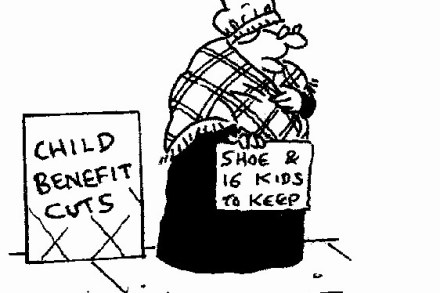
  Should families on welfare limit the number of babies they have? Jeremy Hunt suggested so last night - kicking off a debate fuelled by our disclosure in today’s Spectator about just how many out-of-work claimants have 6, 7 and 8+ children. The moral argument is pretty clear. Before a worker wants to expand his family, he usually thinks about whether he can afford it. It’s far from uncommon to hear people say that they’d like, for example, three kids - but this brings with it a certain financial requirement (size of house, car, etc) which is prohibitive (and far bigger than can be offset by child benefit). Yet the reverse financial incentives exist for parents on benefits. The more children they have, the more the state gives you.

Cameron’s tangled web

From our UK edition

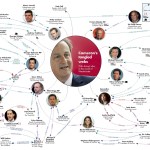
How do you get from David Cameron to Simon Cowell in two, easy steps? Answer: Andy Coulson. The former News of the World editor is, of course, Cameron's director of communications – but he also happens to be on friendly terms with the X-Factor impresario. We set out this, and all the other tangled relationships around the Prime Minister, in a spider graph for this week's magazine. From Nick Clegg to the designer Anya Hindmarch, from Steve Hilton to Baroness Ashton: it's not a map of the government, but rather of the people both in and around No.10 who form what we call the New Establishment. To see them in their entirety, all CoffeeHousers need do is click on the image above, or download a pdf .

Waiting for the shadow cabinet

From our UK edition

You can say what you like about Labour's penchant for internal elections, but at least it makes for good, political entertainment. Tonight, the results of the shadow cabinet elections will be released, and we'll discover which of the 49 nominees made it into the final 19. Then it will fall to Ed Miliband to force some very square pegs into the round holes on his party's front bench. Good luck with that, Mr Miliband. According to most observers, Yvette Copper is favourite to come top – a forecast supported by a readers' poll published on Left Foot Forward today. In the same poll, Ed Balls finished second. It rather encapsulates the toughest choice facing Ed Miliband: who to pick as shadow chancellor?

Reaction: David Cameron’s speech

From our UK edition

Here is a selection of the blogosphere’s reaction to Cameron’s speech. Fraser Nelson notes that Cameron has resuscitated the Big Society. James Forsyth urges Cameron to concentrate on people power. Peter Hoskin ponders a peculiar speech from the Prime Minister. David Blackburn wonders what to make of Cameron’s disavowal of laissez-faire. Alex Massie asks if Britain is up to Cameron's challenge. Michael White notes that Cameron’s joviality will keep the welfare dogs at bay. Andrew Porter delivers his verdict on Dave’s ‘slick’ performance. Tim Montgomerie describes it as ‘forgettable’. Toby Helm thought it ‘a profound disappointment’.

What to make of Cameron’s rejection of laissez faire?

From our UK edition

Pressure brings out the best in David Cameron and right now he’s coasting. He gave, as Pete and Fraser have said, a subdued speech. The content was there but his delivery was calm, except on two occasions when he spoke rather than read the autocue. He attempted to sell the Big Society (third time and no luckier). Then he said, with conviction, ‘I don’t believe in laissez faire.’ Those six words are pure Tory Reform Group, pure Iain Macleod, pure One Nation. He evoked that traditional form of Torysim with a firm description of how his government seeks to empower people as responsible groups not just free individuals.

Cameron resuscitates the Big Society

From our UK edition

This was the perhaps the lowest-octane speech David Cameron has ever given to the Tory conference. He didn't need to give the speech of his life, for once - so he didn't. He dutifully ran through all the various points of government policies, but there were too many of what Art Laffer calls MEGO figures (my eyes glaze over). It's odd, because Cameron can speak so well when he needs to. Compared to the speeches we heard yesterday - from Gove and IDS - it was oddly uninspiring. He spoke about his government's "beating, radical heart" with no real enthusiasm - as if he received the speech only recently, and didn’t rehearse too much. It was too long, was repetitious in places.

Cameron’s peculiar speech

From our UK edition

Ok, so that was a peculiar kind of speech from David Cameron – neither wholly successful, nor wholly unsuccessful. In terms of its general tone, it was much as we expected: a dose of bitter realism about the public finances, lacquered over with heavy optimism about what the country can be. But its content was more surprising, brave even. For this was the moment when the Big Society returned with a vengeance. In truth, we haven't heard much in recent months about the idea that framed the Tories' election campaign. Coalition seemed to have displaced it from the Cameroonian lexicon, if not their thinking. But it made an early appearance in one of the most unconventional sections of Cameron's speech.

David Cameron speech live blog

From our UK edition

1537, PH: And Cameron ends on that note, calling on the public to get involved in fixing society: "So come on: let's pull together. Let's come together. Let's work, together, in the national interest." Standing ovation. More reaction on Coffee House shortly. 1537, PH: This is good, liberal-conservative stuff from Cameron. He says that the government recognises that it is there to push power to the people. "I know the British people: they are not passengers, they are drivers." 1535, PH: Strong line: "Mine is not just a vision of a more powerful country, it is of more powerful people." 1536, PH: The Big Society returns, with a lenghty section on volunteering and social action. Cameron calls this a "call to arms".