David cameron

Will Clegg’s caution turn Cameron’s big bang reforms for public services into a damp squib?

From our UK edition

David Cameron’s piece on opening up public services today is, as Ben Brogan notes, one of the most important moments of Cameron’s premiership so far. First, it is, as I discussed last week (subscribers here), part of a concerted attempt to get the Big Society back to its original meaning, that public services do not need to be provided by the state. As Cameron writes, “our plans to devolve power from Whitehall, and to modernise public services, are more significant aspects of our Big Society agenda than the work we're doing to boost social action.” Next, the ideas in this piece are the central thread that runs through the public service reforms the coalition is pushing through.
Why a major reshuffle is unlikely

From our UK edition

The clamour for a reshuffle is getting louder. Caroline Spelman is said to be a leading candidate for ejection, following her awful performance over the forestry sell-off. Many also want Ken Clarke's scalp. Party chairman Baroness Warsi has already been the target of gossip, while dissatisfaction with Chief Whip Patrick McLoughlin is palpable. Then there is the desire by Nick Clegg to bring back David Laws, if he is cleared of financial malfeasance.   However, most of the talk of a reshuffle is fuelled by self-serving backbench MPs who lost out of jobs in the coalition negotiations. Those from the 2005 intake feel the 2010 intake breathing down their necks, while older MPs hiss about the "cult of youth".

How far will Cameron go to break the state monopolies?

From our UK edition

Call it the Big Society, decentralisation, people power, whatever – but David Cameron's vision for society just became a good deal more concrete. In an article for the Telegraph this morning, the Prime Minister makes a quite momentous proposal: that there ought to be a new presumption towards diversity in public services, whereby the private, voluntary and charitable sectors are as privileged as the state is now. Or as he puts it: "We will create a new presumption – backed up by new rights for public service users and a new system of independent adjudication – that public services should be open to a range of providers competing to offer a better service.

Cameron’s back is against the wall – now he must fight

From our UK edition

Given that David Cameron will have a tougher fight than perhaps any postwar Prime Minister other than Thatcher, it’s a bit unfortunate that his team doesn’t like political combat. Losing to Rachel Johnson over forests last week exposed major weaknesses, and sent a message to the government’s enemies: that these guys have pretty poor political combat skills. Now word is out, the cuts protests in Liverpool today will be the first in a series of challenges. Cameron, too, is stung by the avoidable mistakes of the last few weeks – and is reshaping No.10 to account for them. Some changes are great, some less so, others downright worrying. Here's my overview: 1. The Big Society. Cameron has started from first principles.

Clarke rebukes May for her comments on sex offenders’ register ruling as Tory split over human rights grows

From our UK edition

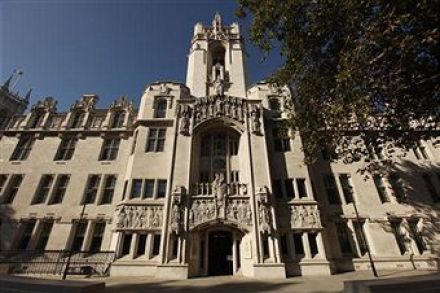
The Conservative side of the coalition is being increasingly split by the issue of the European Convention on Human Rights. After the Supreme Court in London declared that human rights legislation required that sex offenders had to be given a chance to take their names off the register, the Home Secretary and the Prime Minister were appalled. In a statement to the Commons, May made some trenchant criticisms of the court ruling. This, I understand, prompted a furious letter from Clarke, the Justice Secretary, to May reminding her that she was constitutionally obliged to accept the independence of the judiciary. The letter was copied to Downing Street as the Prime Minister himself had used very similar language to May.

British jobs for whom?

From our UK edition

Immigration isn’t a topic much discussed nowadays, because it’s one where the Tories and Lib Dems don’t agree. That’s a shame. Because there’s an urgent problem to be fixed in the British labour market: that every time the economy grows, it sucks in immigrant workers. If this dysfunction continues, it will finish Cameron. The News of the World (where yours truly is a columnist (£)) has today looked at the latest figures for this. I reprint them for CoffeeHousers below. They show that during that disastrous fourth quarter in 2010, where the economy shrank by 0.5 percent, the number of employed British-born people fell by 110,000. As grim as you’d expect. But the number of foreign-born workers actually rose – by 7,000.

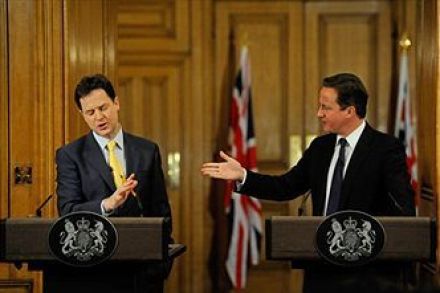
Cameron and Clegg, head to head

From our UK edition

Now here’s a shock: something to trump the relentless tedium of the Cricket World Cup. The AV referendum. Labour MP Jim Murphy held his constituency surgery in a large supermarket today and it was well attended, but no one asked about the referendum. Murphy ruefully tweeted: ‘the public are so out of touch with today’s politicians.’ But it is odd, or at least it should be, that the nation’s second ever plebiscite has inspired only indifference; then again, electoral reform is not a subject to quicken the pulse. Even the campaigners are resigned to expect scant enthusiasm for their cause. The campaign is days old and already its emphasis has shifted from principle to personality.

It’s a knock out: judicial activism versus the sovereignty of parliament

From our UK edition

The prisoner voting debate is coming to a head, and Dave has turned once too often. The Times has received (£) what it describes as a government legal memo, urging the government to defy the demands of the European Court of Human Rights. After last week’s parliamentary debate, the government’s lawyers calculate that the ECHR can only put ‘political pressure rather than judicial pressure’ on British institutions. This is a seminal moment: political will has not been met by administrative won’t. But would non-compliance succeed?

The government has been weak over forests

From our UK edition

A very dangerous precedent has been established today over the forest fiasco. Caroline Spelman earlier gave the most extraordinary interview on Radio 4's PM. "We got it wrong," she said in the Commons. "How so?" asked Eddie Mair. She wouldn’t say. As he kept asking her, it became increasing clear that she didn’t think they got it wrong. They conducted the U-Turn because they were losing the media war.   Really? Is that all it takes to defeat Cameron's government? A decent two-week campaign with a couple of celebs? The forest policy was a good one: why do we need state-run timber farms? Not that this argument was ever aired. They government just sat mute, and was beaten up by Rachel Johnson and her brilliantly mischievous campaign.

In the AV referendum, either Clegg or Cameron has to lose

From our UK edition

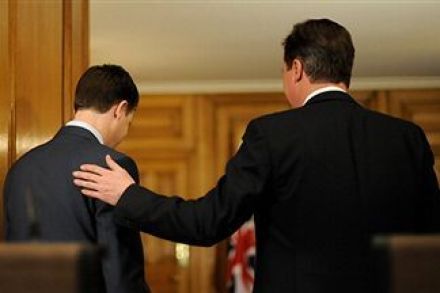
Tomorrow both Clegg and Cameron will give speeches on AV, Clegg for and Cameron against. They’ll be very civil about their disagreement. But the truth is that one of them has to lose in this vote and the loser will have a very unhappy party on his hands. As Steve Richards points out in The Independent today, there’s been a lot more talk of the consequences for Clegg of AV going down than of what happens to Cameron if it passes. But Cameron would have almost as many problems if it passes as Clegg would if it failed. Fairly or not, a large number of Tory MPs will blame Cameron if Britain ends up with AV.

IDS vows to tackle Britain’s welfare addiction

From our UK edition

IDS and David Cameron have been evangelising. An insistent newspaper article and pugnacious speeches herald the latest welfare reform drive. There has been one significant u-turn: the threat to decimate housing benefit for those who have been unemployed for more than a year has been dropped. There is debate about the origins of this sudden decision, but Nick Clegg has been apportioned some credit. He is understood to have expressed private concerns about ‘hammering the poor’ and also argued that private sector landlords in areas of high unemployment would be reluctant to rent to claimants, which would impede reform. IDS agrees with Nick, confiding to the Today programme that the proposal would be hamper the wider aim of breaking the benefits trap.

Cameron fells the forestry consultation

From our UK edition

Despite his easy charm, David Cameron is unsentimental. His dismemberment of Caroline Spelman’s sagging forestry policy at yesterday’s PMQs was as ruthless as it was abrupt. The Prime Minister cannot be an enemy of Judy Dench and other doughty dames, so the hapless environment minister had to be shafted. Cameron’s strategic withdrawal did not end there. Several newspapers report that the 12-week consultation will be curtailed by the end of the week, on the simple grounds that the public does not like it. Spelman is expected to pronounce the project dead in the Commons at lunchtime today, and the chamber will ring with the noise of Labour’s braying benches.

The Tories’ secret weapon

From our UK edition

Too much time at the barbers. That’s the opposition’s problem. Ed Miliband showed up at PMQS today after a long morning lounging in the chair having his hair coiffed and burnished. His darkly gleaming scalp now looks like the kind of thing toffs scrape their boots on after a morning’s shooting. And that’s precisely what the Prime Minister proceeded to do with him today. With no time for a strategy meeting beforehand Ed had just grabbed a list questions from the last PMQs-but-three.   He began by having a go at Cameron on youth unemployment. But we know how Cameron deals with that one. Been a problem for decades, old boy. Miliband then challenged him on the economy. And we know Cameron’s answer to that one too.

Cameron breaks from the norm at PMQs

From our UK edition

PMQs today contained a rare moment: the Prime Minister admitting that he wasn’t happy with government policy. Ed Miliband, who split his questions up this week, asked Cameron if he was happy with his position on forestry and Cameron replied, ‘the short answer to that is no.’ The answer rather drew the sting from the rest of Miliband’s questions on the topic. But it was a rather embarrassing admission for the PM to have to make.    Cameron made quite a lot of news at the despatch box this week. He accused Manchester City Council of making “politically driven” cuts, said that more regulations needed to be scrapped and announced that a commission on the British bill of rights is imminent.

Why we need a rate rise

From our UK edition

Now that today’s inflation figures are up, to a predictable and predicted 4.0 percent on CPI and 5.2 percent on RPI, we can expect the usual response. Nothing from the government (even though the declining standard of living will eclipse cuts as the no.1 problem of 2011); plenty of shocked news stories; and, then, the round of commentators saying that Mervyn King should “hold his nerve,” and not increase the absurdly low base rates of 0.5 percent. Inflation is temporary, he says, and should be okay again this time next year (that’s what he said about the start of 2011). The Spectator does not have much company in finding fault with King and calling for a rate rise. So here’s my case: 1.

My Adventures in the Big Society

From our UK edition

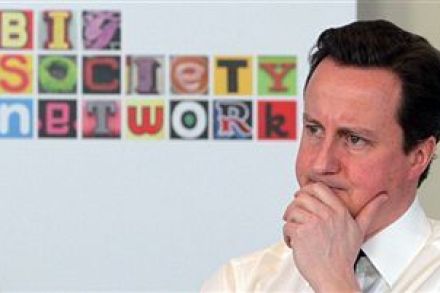
I was invited to Somerset House on the Strand yesterday as part of the Big Society Network to watch David Cameron take questions for the best part of an hour on his pet subject. My organisation, New Deal of the Mind, has been helping deliver two welfare-to-work contracts since last year and, along with most people in what I have learned to call “the third sector” I am prepared to give this idea the benefit of the doubt. There doesn’t seem to be anything particularly ideological about the Big Society, although Ed Miliband showed in his Independent on Sunday article at the weekend just how convenient a whipping boy this has become for Labour You can’t blame Ed Miliband for his cynicism.

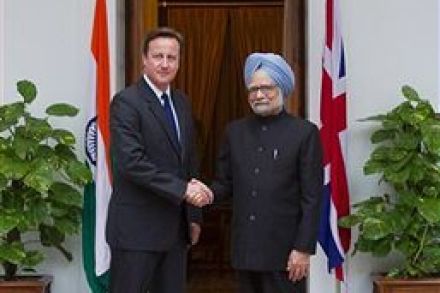
Aid to India to be replaced with pro-growth help

From our UK edition

How to manage Britain's aid to India? The fast-rising country has a space programme, costing nearly the same as Britain gives in annual aid. To many people, that is reason enough to cut all aid. Yet, at the same time, India is one of the world's poorest countries. 456 million people live on less than $1.25 per day. Annual income per person is only $1,180, compared to $3,650 in China and $41,370 in the UK. That means there are 20 percent more poor people in India than in sub-Saharan Africa. But India receives only $1.50 in aid per person, compared to $28 for Sub-Saharan Africa. A good example of India's plight is Bihar province, which has population the size of Germany’s.

Is Cameron’s counter-offensive headed in the wrong direction?

From our UK edition

As James has noted, Downing Street has turned its energies to the big society. Op-eds are being written, airtime used and speeches made. This morning saw the centrepiece: a former Labour donor, Sir Ronald Cohen, has joined the campaign and Cameron devoted a speech to what he described as his "political mission". Cameron was fluent and passionate, determined in shirt-sleeve order. He was not exactly clear, but I don’t think that’s a problem. There is no concrete definition of what the big society is. As I argued yesterday, Cameron has changed tactics and is now using it as a descriptive term of the sort of voluntary and philanthropic instincts his government will support. Cameron needs a barrage of examples of these practices in action, something that he lacks currently.

The big-society counter-offensive

From our UK edition

Last week Steve Hilton set up a war room in Downing Street. In daily meetings, Hilton plotted the ‘big society’ fight-back that started today with Cameron’s op-ed in The Observer. Hilton, who is predominant in Downing Street at the moment, knows that Cameron will never u-turn on the big society. It is what the Prime Minister thinks defines him as a politician. Cameron is desperate to be seen as more than a deficit hawk and the big society is what he wants to be his legacy. The big society is sailing into quite a headwind.

Cameron downgrades the Big Society

From our UK edition

It’s written in print: the Big Society has become the “big society”. David Cameron has responded to criticism of his flagship agenda by downgrading it from a proper noun to a compound adjective. He makes no attempt to define "big society"; rather, Cameron suggests that the term is descriptive of the impulses he hopes to encourage. He writes in today's Observer: ‘Take a trip with me to Balsall Heath in Birmingham and I'll show you a place once depressingly known as a sink estate but now a genuinely desirable place to live. Why the transformation? Because even in a tough neighbourhood, the seeds of a stronger society were there and residents boldly decided they'd had enough and drove out the crime.