David cameron

It’s all in the language

From our UK edition

Sue Cameron’s FT Notebook is always laced with delicious vignettes. This morning, she reveals that the new cabinet manual has been withdrawn temporarily because Sir Gus O’Donnell’s Latin grammar is like Pooh's spelling: it wobbles. What are things coming to when even Sir Humphrey puts the definite article before a Latin phrase? Cameron also reviews yesterday’s shin-dig at the Institute for Government. She reports: ‘Tom Kelly (Tony Blair’s former official spokesman) noted that the coalition was “beginning to learn the hard way that you have to get a grip from the centre”.’ It’s well known that Number 10 is reorganising. The days of the soft-touch have gone.
UN or not UN?

From our UK edition

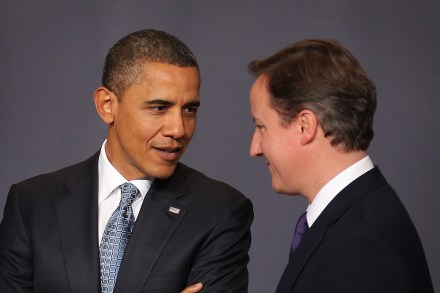
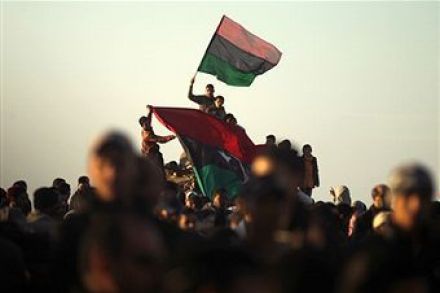
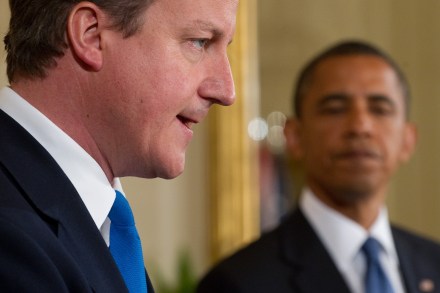
The garbled horror stories just keep on rolling out of Libya. According to the latest reports, Gaddafi's troops have attacked the rebels in Zawiyah with redoubled violence and force. Aircraft, tanks, bombs, mortars – all have been used against the city and its people, with what one assumes are bloody results. As one resident puts it to Reuters, "Zawiyah as you knew it no longer exists." It is unclear whether the rebels have now lost control there, but that is a strong possibility. Unsurprising, then, that the West is positioning itself to act. David Cameron, we are told, has been speaking with Barack Obama about the full spread of options before them.

Cameron’s threadbare praetorian guard

From our UK edition

One of the worst kept secrets of David Cameron’s leadership is that some in the inner circle don’t think much of the members of the shadow Cabinet who are now in Cabinet. What is far more dangerous is when the leader himself lets slip his low opinion of some of his colleagues, as Ben Brogan reports he has been doing lately. This is the kind of behaviour that is bound to cause resentment as this criticism always get back to the objects of it.   At the moment, Cameron can get away with this. He is still seen as the Tories’ primary electoral asset and there is no obvious, or even viable, alternative to him. But when Cameron gets into trouble, this will matter.

Libya has not been Cameron’s finest hour, but it’s not been a disaster

From our UK edition

The government has been damaged by its response to the Libyan crisis and the SAS incident in particular. William Hague has been branded a 'serial bungler', and the FCO’s response was condemned as slow and ill-prepared. The consensus is that heads should roll at King Charles Street. Many commentators have also argued that the Prime Minister was too quick to call for a no-fly zone over Libya. Nobody, not even government loyalists, could argue that the last few weeks have been David Cameron’s finest.   However, one can be too critical. Let’s start with the SAS mission. Something obviously went wrong, but it is hard to believe that ministers could have done anything differently. Their job is to set direction, not to micromanage operations.

The enemies of enterprise

From our UK edition

David Cameron’s attack on the “enemies of enterprise”, his version of the “forces of conservatism” shows that he and those around him are still following the Blairite script, at least in terms of rhetoric. But the coalition still needs to decide what it means to be a “friend of enterprise”. There are many in the libertarian ranks of the Conservative Party who believe the state has no business interfering in such matters. The architects of the Big Society remain confused about whether it is possible to encourage a bottom-up approach with a top-down message, or, to put it another way, decentralisation by government diktat.

A princely problem

From our UK edition

Tonight’s Six o’clock news had a long package on Prince Andrew that ended with Laura Kuenssberg reporting from Downing Street on the government’s attitude to the prince. The fact that the government is now so much part of this story is due to an unforced error on its part.   It was the briefing yesterday about how if more came out then Andrew would have to resign as trade envoy that pushed the government right into the middle of this sorry story. This set journalistic hares running and had everyone demanding to know what the government’s position was. The government, which had got involved in this story more through cock-up than anything else, quickly rowed back on Sunday's lines.

The politics of Prince Andrew

From our UK edition

Uh-oh, the Prime Minster has "full confidence" in Prince Andrew as a UK trade envoy – the sort of endorsement that often means the direct opposite. In this case, though, I suspect that the line is more a hasty attempt to defuse some of the tension that has been building on this matter over the past few days. Only this morning, a Downing Street source told the Beeb that the Prince could be ejected from the role should any more revelations surface. Another suggested that "there won't be many tears shed if he resigns." And then there's the senior Tory putting it about that "there appears to be no discernible mental activity," on Prince Andrew's part. It has been – and continues to be – a right royal rumpus, to say the least.

Who watches the watchmen? | 7 March 2011

From our UK edition

There's a fuse-meet-flame quality to PoliticsHome's smart little scoop this morning. Our parliamentarians are already somewhat hacked off with IPSA, the body tasked with overseeing their expenses. So how will they react upon reading that IPSA spent £300,000 of taxpayers' cash on furbishing their London office? The watchdog's shopping list includes 25 cabinets (£2,295 each), 14 "relaxer loungers" (£465 each) and a table at £837. It sounds awfully like some of the MPs' claims that were so controversial in the first place. IPSA are defending the spending, citing "industry standards" and such. But, whatever, it just fuels the sense that they are an unduly expensive and convoluted answer to the question at hand.

Cameron hugs his party

From our UK edition

David Cameron’s speech to the Conservative Spring Forum was one of the most Conservative speeches he has given in a long time. It was an address that was meant to reassure the party during what looks set to to be this government’s most difficult year. The Tory leader opened with a list of policy pledges delivered and they were all distinctively Conservative policies: making work pay, the EU referendum lock, teaching British history in schools, freezing council tax, capping immigration and doubling the operational allowance. There was further crowd pleasing material in a substantial section of the speech which attacked AV.

Obama backs Cameron on no-fly zone

From our UK edition

Everyone knows that a media narrative is a difficult thing to change. So No.10 must be annoyed that so many newspapers, from the Telegraph to the Independent, are suggesting that David Cameron’s response to the Libya crisis has been “embarrassing,” and rejected by the US. But the Prime Minister would do well to stay the course and ignore the media for a number of reasons. First, just because US Defence Secretary Robert Gates is sceptical about a policy does not mean it is wrong. Somehow, the US Defence Secretary’s words are now taken as gospel in the British media and the PM is meant to repent immediately. Why? So what if the Pentagon chief has a view? While Robert Gates is rightly respected, he is not infallible.

Harriet ‘shambolic’ Harman

From our UK edition

I've spent ten minutes reading the same passage and still don't understand what it means. It comes from Harriet Harman, quoted in the Independent, criticising the government's Libya strategy: "The response to the terrible events in Libya has been a shambles. The key to their shambolic response lies in their ideology. If your perspective is that government is a bad thing and you want less of it, you're not going to be on the front foot when the power of government is exactly what is needed." Do you get it? Is the Labour MP saying that her party would have harnessed the power of the state, principally the military, and ordered the bombing of Libya?

A night that will not be quickly forgotten

From our UK edition

Last night’s by-election result in Barnsley is embarrassing for both Clegg and Cameron. For Clegg, it is obviously humiliating to come sixth. Fourth would have been bad enough but sixth is an even worse result than the Lib Dems feared. The fact the Lib Dems also lost their deposit just adds insult to injury. The result will certainly make activists heading to Sheffield next week for their spring conference jumpy. I also suspect that we’ll see some enterprising newspaper doing a poll in Clegg’s Sheffield constituency before next weekend.  On the Conservative side, coming third behind UKIP is going to lend weight to those who argue that the party has conceded too much to its coalition partners.

New World temporarily postponed

From our UK edition

We are meant to be living in a multi-polar world, one where US power is waning, and where countries reject the prying interference of the West. Except, erm, we aren't. Today's world looks exactly as it did yesterday. First, many of the 20th century issues people thought would disappear – dictators, repression and democracy – remain as prevalent now as then. The Iraq War has tempered people's appetite for humanitarian interventions without extinguishing it. The key difference seems to be that support is now minimal on the Left and still strong on the neo-con Right. Everyone is also still focused on what the US will or will not do, even in Britain.

Clegg collides with Cameron over extremism

From our UK edition

Nick Clegg’s speech in Luton today on extremism is a challenge to large parts of David Cameron’s remarks on the subject in Munich just last month. Indeed, even the venue of the speech can be seen as a rebuke to Cameron who was attacked for giving a speech on Islamic extremism on the same day that the English Defence League was marching in Luton. Cameron’s speech, which was one of the best of his premiership, argued that ‘the ideology of extremism is the problem’ and that terrorism’s ‘root lies in the existence of this extremist ideology’.

Hunt’s rising star

From our UK edition

The decision on News Corp's take-over of BSkyB has thrust Jeremy Hunt into the spotlight. The culture secretary is many Tories' bet to be the next leader of the party. Hunt is ambitious even by political standards: during the Brown bounce he canvassed opinion as to whether he should stand in the Tory leadership contest that would follow an election defeat, and has a John Major like ability to make factions in the party feel like he is one of them. Add to this, a good television manner and one can see why people think he'll go far. One of the odd things about politics is that there is no heir apparent to Cameron in the Tory party. Hague used to be considered the obvious emergency replacement. But that is no longer true.

Cameron caught in the middle

From our UK edition

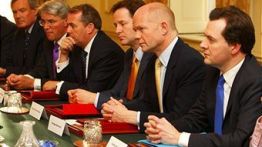
Need a bestiary to tell the hawks from the doves? Then this article (£) in the Times should serve your purpose. It's an account of Tuesday's Cabinet meeting on Libya, and the differences of opinion that transpired. Michael Gove, we are told, was "messianic" in his call for a tougher stance against Gaddafi. William Hague, for his part, was considerably more cautious. A graphic alongside the article puts George Osborne, Liam Fox and Andrew Mitchell in the Gove camp, and Nick Clegg and Danny Alexander with Hague. David Cameron, chairman of this diverse board, is said to be "caught in the middle". The government has since denied that the Cabinet is split.

Lessons from wars gone by

From our UK edition

As the situation deteriorates in Libya and the international community begins to look at various options, including military ones, policymakers would do well to remember a number of key lessons from the last 15 years of warfare. Like all history, they don't provide a guide to the future, but can be a warning nonetheless. The Bosnian experience of the mid '90s contains four key lessons. The first is that international handwringing costs lives. Many lives. (The same lesson emerges from the post-Gulf War I slaughter of the Kurds and Shia by Saddam Hussein). Wait, and the situation usually gets worse not better. The second lesson is that however great the humanitarian need may be, any military mission must not be framed as a humanitarian one.

Dave ‘n’ Ed’s Flying Circus

From our UK edition

It was Monty Python without the jokes. The focus of PMQs today veered surreally between crisis in north Africa and early swimming pool closures in Leeds. The session opened in Security Council mode with Ed Miliband politely asking the PM to brief us on the humanitarian disaster evolving in Libya’s border-zone. Cameron went into his statesman-of-the-year routine and announced that HMS York had docked in Benghazi with medical supplies.   At such moments the imperial ghosts of the Commons seem momentarily reawakened. Ed Miliband sounds like some Victorian stooge asking the Foreign Secretary to reassure the nation that an uprising in a far-flung oriental possession is being energetically suppressed. Having dealt with Libya, Ed Miliband moved to Bromley.

Promoting Cameron from a party leader to a national leader

From our UK edition

Danny Finkelstein’s paean of praise (£) to Andrew Cooper, the PM’s new director of political strategy, contains several interesting lines.  Finkelstein says that his former flat mate’s biggest challenge is, ‘Devising a strategy for changes in the NHS so that a critical political battle isn’t lost disastrously’. This is yet another indication of how nervous Osborne and co are about Lansley’s reforms and reopening the NHS as a political issue. The second is him reporting that Cooper will tell ‘Cameron to be a national leader, rather than a party politician. Especially in the Commons.

Toppling Mad Dog

From our UK edition

Should Gaddafi be pushed? That is the question diplomats and policy makers are beginning to ask. The UN has imposed travel restrictions and frozen Gaddafi’s assets. But Gaddafi is resisting the hangman’s noose; the loss of his Mayfair property empire is the merest of inconveniences. And still he fights on. There is now a growing humanitarian case for direct military intervention by Western powers. However, there are plenty of arguments against even introducing a no-fly zone. Gideon Rachman makes some of them in today’s FT: ‘A few of the problems are practical. Some military observers say that a no-fly zone would be of limited use in Libya, since Col Gaddafi seems to be mainly relying on ground forces.