David cameron

John Humphrys makes the case for voting No to AV

From our UK edition

Is AV too complex? Ask John Humphrys, who unwittingly made the case against switching system today, in conversation with David Cameron on the Today programme. It became clear that Humphrys believed that everyone's second preference vote would be counted under AV — and Cameron pounced. Here's the transcript: DC: If you go to an AV system you start counting some people's votes more than once. And you end up, in the words of Churchill... JH: No you don't. It simply isn't true that you count votes more than once. DC: Yes, you count all the votes. You start eliminating candidates, and you count people's second preferences. JH: And I have a second preference, as well as you, as well as anyone else. So you don't count some people's votes more than others.
Osama Bin Laden’s death: the world responds

From our UK edition

We have already seen Barack Obama's statement on the death of Osama Bin Laden. Below is more reaction from across the world: David Cameron: “The news that Osama Bin Laden is dead will bring great relief to people across the world. Osama Bin Laden was responsible for the worst terrorist atrocities the world has seen - for 9/11 and for so many attacks, which have cost thousands of lives, many of them British. It is a great success that he has been found and will no longer be able to pursue his campaign of global terror. This is a time to remember all those murdered by Osama Bin Laden, and all those who lost loved ones. It is also a time too to thank all those who work round the clock to keep us safe from terrorism. Their work will continue.

The Gaddafi family should be regarded as legitimate targets

From our UK edition

David Cameron became most animated on the Andrew Marr show this morning when the subject of Libya came up. It was clear that he remains passionately convinced that the course he has taken is the right thing to have done. The Prime Minister refused to comment on the Gaddafi regime’s claim that one of Gaddafi’s children had been killed in a Nato airstrike and wouldn’t be drawn on the question of whether the government considers the Gaddafi family legitimate targets. But given that, as Cameron himself noted, the Gaddafi family is running the military operation and ordering moves against civilians then they surely are legitimate targets.

How a degree of separation will strengthen the coalition

From our UK edition

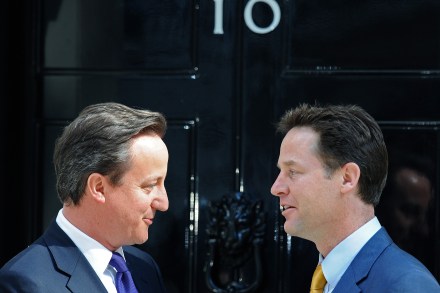
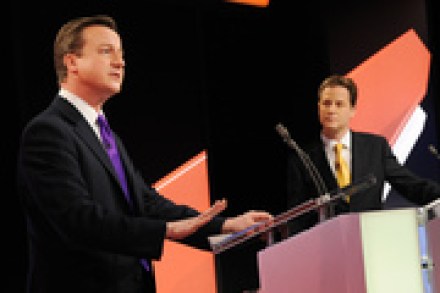
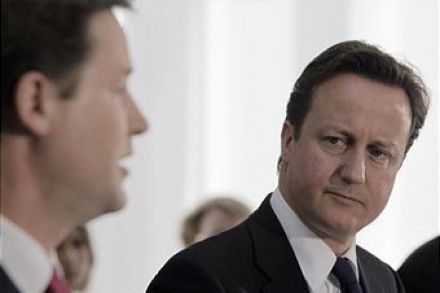
Almost a year ago, David Cameron and Nick Clegg staged their love-in at the Downing Street rose garden. As I say in the News of the World (£) today, this era is now at a close. When they come back from the 5 May elections, Clegg and Cameron have agreed that they cannot go on as before. An agreement has been struck for an amicable separation. Not divorce — the coalition will keep going. But Cameron and Clegg will put clear blue (and yellow) water between them and drop the pretence that they agree on everything. The coalition is about to enter its Phase Two.   Clegg’s analysis is that Phase One was, perhaps, too successful. His over-riding mission was to prove to a sceptical Britain that coalition governments can work and don’t lead to sclerosis.

A day when politics is not the story

From our UK edition

This, it has to be said, is not much of a day for politics. Although the world's laser-like attention will be focussed on Westminster, it will not be on the operations of our Parliament or its actors, but on Westminster Abbey and the marriage, of course, of Prince William and Kate Middleton. The cameras might pass for a moment over David Cameron, or Ed Miliband, or Nick Clegg. But even their best morning suits will not compete, you fancy, with the collected fascinators and finery on display — let alone with the wedding dress itself. We shall be marking proceedings on Coffee House with video, with archive posts and with our general observations.

The recriminations begin

From our UK edition

The Royal wedding and gossip about super injunctions is rather dominating conversation at Westminster today. But there is still some politics going on. Patrick Wintour in The Guardian has the beginnings of the recriminations that will follow a No vote in the referendum. Relations between the Lib Dems and the Yes campaign are pretty bad at the moment. Clegg’s camp is happy to tell journalists about what they see as the myriad failings of the Yes campaign. They complain that the Yes campaign has been too slow on the draw, let the No side define the debate and failed to get any message across. The Yes campaign’s response to this has been to whisper in peoples’ ears that whenever Nick Clegg appears for Yes their numbers go down.

Cameron’s new cuts narrative

From our UK edition

Aside from the "Calm down, dear" drama, there was something else worth noting from today's PMQs: David Cameron trying for a calmer debate on the deficit. He admitted that his government is not really being that much more aggressive than Gordon Brown would have been. They're cutting £8 for every £7 that Brown and Darling proposed for 2011-12, he said. It's a line that Nick Clegg road-tested in his speech to the IPPR last week, and it represents a new and welcome strategy. To date, the rhetorical differences have been stark. The Tories have said: we’re the big bold cutters, Labour are deficit deniers. Labour has replied: your cuts are too deep and too harsh, and the GDP figures prove it.

Temper, temper

From our UK edition

I have rarely heard the House as loud as it was after David Cameron’s ‘calm down, dear’ put down to Angela Eagle. The Labour benches roared at the Prime Minister and Cameron turned puce, while the Liberal Democrats looked distinctly uncomfortable. There is already a rather over-blown debate going on about whether the remark was sexist or not. But whether or not it was, it was certainly ill-judged. It was a tad too patronising and directing it at one of the more junior members of the shadow made it seem bullying. The Labour benches were heckling Cameron more than usual today, a result of him losing his rag with Ed Balls at PMQs last month. After today, they’ll turn the volume up another notch.

PMQs live blog | 27 April 2011

From our UK edition

VERDICT: To paraphrase that famous football cliché, this was a session of two halves. Cameron put in a confident performance against what should have been the trickier set of questions: on the economy. But when it came to Ed Miliband's second topic of choice, the NHS, it all went suddenly awry. The PM's arguments were unusually messy and convoluted, lost in themselves. And he only made matters worse with his Winner-esque exhortation at a Labour frontbencher, "Calm down, dear!" You can argue whether it was sexist of the PM, or not, particularly as it's not clear whom the remark was aimed at (although the smart money's on Angela Eagle). But it was, at least, a moment of frustration that played up to the worst Flashman caricatures of the PM.

Why I’m sceptical of all the early election talk 

From our UK edition

Something has undoubtedly changed in the coalition in the past fortnight. Even those at the centre, who have been most loyal to the concept of coalition, are now happy to complain about the other side and its behaviour. But I’m still sceptical of all the early election speculation which has been sparked by Jackie Ashley’s very clever Guardian column. The main reason why I don’t think it will happen is the Cameron brand. Ever since David Cameron became leader of the Conservative party, the top of the party has believed that the protection of the Cameron brand is essential to electoral success. Cameron has too much personally invested in showing that the coalition can work to let it fail. The coalition is now key to Cameron’s whole political persona.

The Tory-Lib Dem row could lead to a DPM’s department

From our UK edition

I have for a long time been sceptical of the idea that the AV referendum will damage the work of the coalition — even once the recriminations start to fly. Having seen it up close, I know how much effort both Tory and Lib Dem ministers actually put in to keep each other informed of their work and policies. Tory-led Departments often consult Lib Dems. And the PM and the DPM seem to have a better relationship than most of their predecessors had. They are certainly more ideologically aligned than Tony Blair was with John Prescott. Now Sam Coates says in The Times (£) that things are hitting the skids, with Tories deliberately blocking Lib Dems from gaining access to key documents and briefings. I don't doubt that this happens.

A question for Chris Huhne

From our UK edition

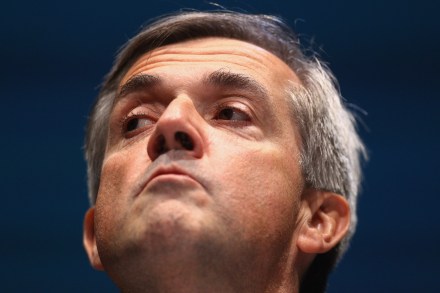
You know a political campaign has gone terribly wrong when a Cabinet Minister threatens defamation proceedings against the Prime Minister. And that is precisely what happened this weekend, when Energy Secretary Chris Huhne began snarling in the Sunday papers. Stating that the Tory claim that the AV electoral system would cost more was “demonstrably untrue,” Huhne said: “It is frankly worrying if you have colleagues, who you have respected and who you have worked well with, who are making claims which have no foundation in truth whatsoever. If they don't come clean on this I am sure the law courts will.

Will Cameron help Clegg for the coalition’s sake?

From our UK edition

Politics has never really settled down since last year's general election — but it still seems especially convulsive at the moment. Only a few weeks ago, Clegg was caught on camera joking about his and Cameron's similarities. Only a few days ago, he was standing up, vigorously, for the coalition. Yet, now, both his rhetoric — and that of his party — has been dipped in acid and wielded against the Tories. And while there is some speculation about how much of the hostility is staged, and about which ministers actually mean it, the basic fact remains: the coalition is no longer a happy band, but increasingly a collection of rivals.

A campaign in the heartlands

From our UK edition

The AV referendum: it’s enough to make you long for the life to come. As James notes, this Easter Sunday has been shaken by the Lib Dems' righteous fury over the conduct of the campaign. Many will think this anger synthetic, but its virulence is striking nonetheless. Gone, it seems, is the bonhomie of earlier days, when ministers were surprised by how amenable they found each other. Perhaps they will now put aside childish things and trust in their better judgement. The AV furore is beginning to relegate the local elections, which might concern the government because these elections are paramount to its reform of local government.

The coalition is shaken to its foundations as the Liberal Democrats rage at Cameron, Osborne and the Conservative party

From our UK edition

The Liberal Democrats are mad as hell at their coalition partners—and don’t seem to care who knows it. Their fury has been caused by what they see as the roughhouse tactics of the No campaign and the Tories’ complicity in them. Chris Huhne’s letter to George Osborne has been written to make clear just how betrayed the Liberal Democrats’ feel by the actions of their coalition partners. Huhne writes, “I explicitly warned you that the manner of the AV campaign would be as important as the result, in terms of the effect on the coalition.

Clegg bites back

From our UK edition

Judging from the front page of tomorrow’s Independent on Sunday, the coalition’s relationship troubles are escalating. The paper’s front page blares, “Clegg rages against Cameron ‘lies’”. Even accounting for the license headline writers takes, this shows just how fraught things are inside the coalition at the moment. The Liberal Democrats feel that the Tories have let the No campaign go too far in its’ attack on Clegg and so feel they are no longer bound to be respectful about their coalition partners. Vince Cable’s message in today’s Guardian sums up the sense of many Lib Dems that they’d rather be in coalition with Labour than the Tories.

Dave doesn’t agree with Nick and he’s “very relaxed” about it

From our UK edition

A row over internships has upset this unfeasibly perfect spring day. The Prime Minister has given an interview to the Telegraph in which he contradicts Nick Clegg’s view that internships should be open to more than "the Old Boys". He says: “I’ve got my neighbour coming in for an internship. In the modern world, of course you’re always going to have internships and interns — people who come and help in your office who come through all sorts of contacts, friendly, political, whatever. I do that and I’ll go on doing that. I feel very relaxed about it.” There is a split, but I suspect it’s a calculated one.

Brown reinforces his presence on the world stage

From our UK edition

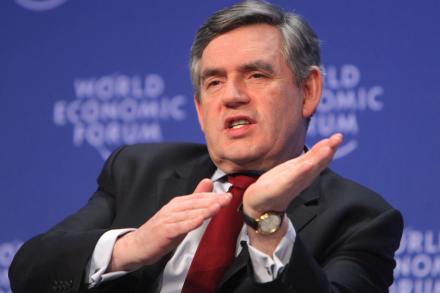
I'm sorry to do this to you, CoffeeHousers, at the start of a bank holiday weekend — but I thought you might have a morbid sort of interest in Gordon Brown's latest role. Turns out that, as expected, our former PM is to join the World Economic Forum in an advisory capacity. He won't be paid for his work, although the Forum will cover his staffing costs. One of his spokespeople has told ITV's Alex Forrest that his task is to "stop the next financial crisis." Which is to say, he'll be saving the world. Again. If nothing else, it's yet another demonstration of Brown's peculiar resilience. Our former PM may be electoral anathema in these parts, but he clearly still holds some allure for the technocrats of Davos, Geneva and Bretton Woods.