David cameron

Cable lashes out at Cameron

From our UK edition

I wrote earlier that the immigration debate can bite back — and it's already done just that. Speaking this morning, Vince Cable has labeled the Prime Minister's speech as "very unwise," and at risk of "inflaming extremism." That, lest it need saying, is the same Vince Cable who's a member of Cameron's government. In theoretical terms, what this clarifies is the parameters of the Coalition Agreement. While almost every policy that Cameron highlights in his speech is part of that document, it seems that the Lib Dems don't have to agree with the way he sells them. The point is being made, this morning, that the idea of reducing net migration to its 1980s levels is very much, and very specifically, a Tory ambition.
Nothing new, but much to ponder, in Cameron’s immigration speech

From our UK edition

There is, really, little that is new in David Cameron's speech on immigration today. Besides one or two grace notes, almost all of its policy suggestions appeared in the Coalition Agreement: you know, all the stuff about a cap on immigration and a Border Police Force. Its rhetoric is strikingly similar to Cameron's last big speech on immigration in October 2007. So if he's not saying anything particularly groundbreaking, what is he saying? With the local elections only three weeks away — and on the back of the Lib Dems' newfound assertiveness — it's hard not to see this as an outreach exercise. This is one for core Tory voters, or perhaps those considering voting Ukip or worse. Which isn't to say that Cameron's speech is a Bad Thing.

Cameron needs to tread with care

From our UK edition

David Cameron’s Oxford gaffe is refusing to die down. Whenever I’ve called Tory MPs or other members of the Conservative family in the last few days, it has been the first subject they have wanted to raise. People are genuinely perplexed — and worried — as to why Cameron said what he said. As Pete pointed out earlier, Bruce Anderson — the commentator who is David Cameron’s longest standing media supporter — warns that the Prime Minister is fuelling fears of government encouraged discrimination against the middle classes. Another long standing Cameroon loyalist said to me earlier, that he now worried that Cameron just felt too guilty about his own upbringing to be an effective PM. I think these fears are, hugely, overblown.

The Tories’ middle-class problem?

From our UK edition

Back in July 2003, Bruce Anderson wrote a piece on David Cameron for The Spectator. Its tone was summed up by its headline — "My hero" — and that tone has suffused through much of Bruce's writing about the Tory leader since. Which is why his piece for the FT today is striking by virtue of its differentness. Its headline is that, "Cameron is losing touch with core Tories." Its argument is that the Tory party is ignoring the hopes, fears and aspirations of the white middle classes. Admittedly, Bruce doesn't put all this down to Cameron. On his account, there are demographic factors at play — not least that the growth of the middle classes, who are now "more numerous and more prosperous than ever before," has also made them more insecure.

Lansley and Cameron in the firing line

From our UK edition

The coalition’s decision to ‘pause’ its NHS reforms has left an open goal for its opponents, and they’ve been busy tapping the ball into this empty net this morning. At its conference up in Liverpool, the Royal College of Nursing has, predictably but embarrassingly, declared that it has no confidence in the health secretary. Back in London, Ed Miliband has been making hay while the sun shines attacking both the bill and the pause. His refrain at his press conference this morning was ‘the answer to a bad bill is not to slow it down but to junk it.’ Miliband’s performance this morning was striking for him speaking at a level of policy detail that party leaders normally eschew.

Another fight looms for Cameron over votes for prisoners

From our UK edition

Prisoner voting is back on the agenda. The European Court of Human Rights has rejected the British government’s appeal and declared that the coalition has six months to draw up proposals to change the law.   David Cameron now has to decide whether to ignore the Strasbourg Court or go against the will of his MPs, who voted overwhelmingly to oppose giving prisoners the vote in response to the court’s initial decision. In many ways, ignoring the court is the safer option. Tory MPs aren’t inclined to back down on this issue and if Cameron tried to make them he would create a lot of ill-will and take an awful kicking from the press.

A question of access

From our UK edition

When a Prime Minister gets his facts wrong as spectacularly as David Cameron did yesterday with his comment that  ‘only one black person went to Oxford last year’ everyone wonders why. Now, the simplest explanation is that it was a straight cock-up. One of the pitfalls of these Cameron Direct events is that errors can come out. Another theory doing the rounds this morning is that Cameron is giving a speech on immigration later this week, with some tough language in it, and so was trying too hard to show that he is anti-racist. But whatever the explanation, Cameron needs to be careful about how he approaches the university access issue.

Blame the schools system, not Oxford

From our UK edition

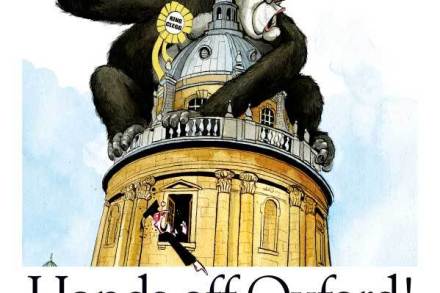
The most extraordinary row has broken out after the Prime Minister appeared to suggest that Oxford University has a racist admissions policy. He today said that, "I saw figures the other day that showed that only one black person went to Oxford last year. I think that is disgraceful." But the university has since hit back, pointing out that, "the figure quoted by the Prime Minister is incorrect and highly misleading — it only refers to UK undergraduates of black Caribbean origin for a single year of entry, when in fact that year Oxford admitted 41 UK undergraduates with black backgrounds.

Cameron takes it to the councils

From our UK edition

Ignore what your council is telling you. So says no less a personage than the Prime Minister of our country, speaking at one of his freewheelin' roadshow events this afternoon. Cameron may have been referring specifically to the red tape being wrapped around Royal Wedding street parties, but it's still a pretty pugnacious point for a PM to make. Here's the full quotation, courtesy of the superb PoliticsHome: “I hope people are able to join in and celebrate and I am very much saying today that if people want to have a street party, don't listen to people who say 'it is all bureaucracy and health and safety and you cant do it.

A headache made in Lisbon

From our UK edition

Developments aplenty on the Portuguese front — the most noteworthy being that Britain is probably in for a €4.8 billion share of the €80 billion tab. Robert Peston explains the numbers here, although it basically comes down to the lending mechanisms that will be deployed. Add up our 13.5 per cent exposure to the European Financial Stabilisation Mechanism (EFSM) with our 4.5 per cent exposure to the IMF's pot, and it comes to €4.8 billion. Or, rather, £4.2 billion. The politics of the situation are precarious for the coalition. Yet I doubt they'll be unduly troubled by Ed Balls's suggestion that "it would be better if this was sorted out by euro area countries themselves given that this is a euro area issue".

More demands on George Osborne

From our UK edition

Is the defence budget the most chaotic in all Whitehall? George Osborne said as much last October — and he's still dealing with its hellish intricacies now. The main problem, as so often in military matters, is one of overcommitment. Thanks to various accounting ruses on Labour's part, large parts of the MoD's costs were hidden in the long grass of the future. It was buy now, pay later — with Brown doing the buying bit, and the coalition doing the paying. The number that William Hague put on it last year was £38 billion. The MoD was spending £38 billion more, over this decade, than had been budgeted. Even after the cuts, elements of that overspend were likely to remain. Which is why this story from today's Telegraph is worth reading in full.

Reinforcing the schools revolution

From our UK edition

There is extraordinary news today, suggesting that the Academies revolution is continuing apace. What was a trickle under the Labour years is turning into a flood. This time last year just 1 in 16 state secondaries had 'Academy' status: that is, operationally independent within the state sector. Now, it is 1 in 6. By Christmas, it should be 1 in 3. And by the next election, the majority of state secondary schools in Britain — about 1,600 — should have turned into Academies. Had Gove suggested such an expansion before the election, he would have been laughed at. The last time the Conservatives sought to give state schools independence was under Kenneth Baker, when just 50 availed themselves of such freedoms in three years. Now, freedom appears to be contagious.

Whither the NHS Bill?

From our UK edition

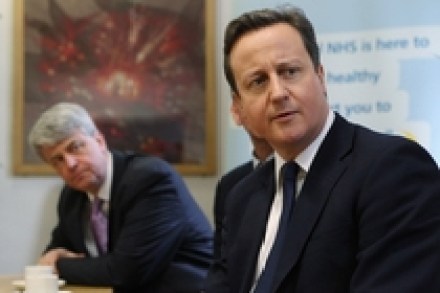
Reassurance — that's what the happy trio of David Cameron, Nick Clegg and Andrew Lansley sought to emit during their NHS event earlier. And reassurance not just about where the coalition is taking the health service (although there was plenty of that), but also about the "listening exercise" they are engaging in now. Although all three men suggested that the broad scope of the NHS reforms would remain — decentralisation, greater responsibilities for GPs, and all that — they also hinted that "substantive" changes will be made to the Bill as it stands. As for what those changes will look like, there were few specifics. Yet it did sound as though the coalition is dwelling on the recommendations made by the health select committee yesterday.

Planning for a reshuffle?

From our UK edition

David Cameron is determined to get away from the idea of an annual Cabinet cull. He has repeatedly told friends that he doesn’t want to reshuffle the Cabinet until March 2012. But The Times, the most pro-coalition paper, today uses its leader column (£) to call on Cameron to reshuffle straight after the May elections. I suspect that Cameron will only reshuffle the Cabinet, as opposed to the junior ranks, if AV passes. But there are a few Tory junior ministers who would impress as Cabinet ministers. Greg Clark and Nick Herbert, two members of the pre-election shadow Cabinet who missed out on the Cabinet because of coalition, have both performed well as junior ministers.

Get ready for the Cameron, Clegg and Lansley NHS show

From our UK edition

Get your guide to body language out for tomorrow morning Cameron, Clegg and Lansley will be doing a joint event on NHS reforms. The three men all have subtly different messages to get across and there are concerns in Tory circle that Clegg will use the occasion to present himself as the defender of the NHS against these Tory reforms. Cameron will be walking a tightrope at tomorrow’s event. He will have to show that he is listening, that this whole exercise is not a sham, but without abandoning the principles on which the reforms are based. Expect Cameron, who will only have arrived back in the country hours before the event, to emphasise his personal connections to the NHS as he tries to build support for the policy.

Rescuing Lansley’s reforms

From our UK edition

The fate of Andrew Lansley's NHS reforms is attracting apocalyptic headlines. A report in the Times (£) declares that a ‘last-ditch’ salvage is underway; the FT carries an editorial in similar tone, and the Guardian devotes its front page to David Cameron’s attempt to save face. Over at Conservative Home, Jonathan Isaby relates how the strategy will unfold. The principles of the bill will remain intact, but it will be delayed using the ‘natural pause’ in parliamentary procedure. During this time, the details of the bill be scrutinised and the government will also use this time to reiterate its view that these reforms are necessary for the NHS to manage an ageing population and rising costs.

The coalition is in a mess of its own making over the NHS

From our UK edition

The NHS is, as Nigel Lawson once remarked, the new national religion of this country. This makes it difficult to discuss the subject in a rational matter and any attempt to reform it is likely to run into its own Pilgrimage of Grace as Andrew Lansley and the coalition are discovering. The government’s problem is that it can’t do a simple u-turn. As I say in the Mail on Sunday, Cameron can’t shelve this scheme without bringing his own judgement into question. Once Cameron and Clegg signed the introduction to the white paper setting out these reforms, they crossed the Rubicon. So instead the coalition is left trying to tinker and slow down the reforms to make them more politically palatable. But this brings with it its own risk.

Trouble with the big society

From our UK edition

A gaggle of academics have written to the Observer to condemn the Arts and Humanities Research Council (AHRC) for accepting £100m from the government. The AHRC is conducting research into the big society, and the allegation is that the settlement was conditional, an allegation which is denied.  Doubtless the 69 signatories are dons of the tweedily conservative variety, but their objections perhaps explain why Cameron’s flagship policy is so mistrusted. They write: ‘When academic research is used to promote party political ideologies its quality and value decline. It also threatens democracy and the constitution. While academic work may be partly paid for out of public funds, this ought not to be the same thing as working for the government.

The pressing need to oust Gaddafi

From our UK edition

The op-ed by David Cameron and his Qatari counterpart Hamed Bin Jassem in the run-up to the London conference received very little play in the UK media. That's a shame because it set out, anew, the reasons for the Libyan intervention, which are already at risk of being lost in the debate about ways, means and exits. 'Yesterday, reports reached us of fresh attacks on the people of Misurata. Snipers are gunning people down in the street. Food, water and electricity supplies have been cut off. Ghaddafi and his regime are continuing to carry out acts of appalling brutality and cruelty, in clear and flagrant breach of the UN Resolution. That is why we must continue to implement those Resolutions for as long as they are necessary to protect the Libyan people from danger.

Things are getting fraught inside the coalition as AV vote looms

From our UK edition

Relations between the coalition partners are fraught at present, more of which in the column tomorrow. The main cause of this tension is the AV referendum which is pitting the two sides against each other in an increasingly bitter fight. But even by recent standards, Chris Huhne’s response to the Tory chairman Sayeeda Warsi’s claim that AV would help the BNP is dramatic. As Patrick Wintour reports, Huhne has accussed Warsi and the No campaign of indulging in an ‘increasingly Goebbels-like campaign.’ This latest riposte follows Huhne’s letter at the weekend which made clear that the No campaign’s tactics were threatening the existence of the coalition. The next nine months will be the period of maximum danger for the coalition.