David cameron

How to fix the National Security Council

From our UK edition

The National Security Council was a sound idea. But it has disappointed, both inside and outside Whitehall. The Ministry of Defence has complained that it "failed to give strategic direction". Among previous supporters in the media, Con Coughlin has commented sourly that “all it has achieved so far is the replacement of Blair’s much-derided ‘sofa government’ with a new, back-of-the-envelope approach”. James Kirkup was even driven to ask “What exactly is the point of it?” Where did things go wrong?

Another blow to the Lansley plan

From our UK edition

Number 10 has now taken charge of coalition health policy to such an extent that the Department of Health press office was caught unawares by the news that the Prime Minister was to deliver a major speech on health next week. David Cameron is determined to present the coming substantial changes to the Lansley reform plan as the changes he wants, not the ones forced on him by the Lib Dems. To that end, the head of the NHS future forum, a body Cameron has set up to oversee the NHS listening exercise, Steve Field telling The Guardian that he thinks all competition should be removed from the bill is helpful to Cameron. But these sentiments will exacerbate the growing concerns in Conservatives circles that the bill is going to end up being so diluted as to be pointless.

Cable talks similarities, not differences

From our UK edition

Vince Cable, it seems, has notched his Tory-baiting down from 11 to about 8. Last weekend, in the bitter wake of the local elections, the Business Secretary labelled his coalition partners as "ruthless, calculating and thoroughly tribal". Today, in an address to the Fabians, he would only argue that the Tories will benefit most from tribalism in politics — and it was an argument delivered soberly and without obvious malice. He even praised David Cameron (along with Tony Blair) as someone who has tried to suck the poisonous partisanship from Westminster's bloodstream. Sunder Katwala has quoted the speech extensively here, so I won't dwell for too long on what was said.

Back to the start on a military covenant

From our UK edition

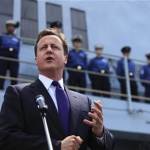
I suppose you could call it an O-turn. First, the Prime Minister declared, in a speech aboard HMS Ark Royal last year, that a new military covenant would be enshrined "into the law of our land." Then, there seemed to be a U-turn, with the government committing only to review the covenant annually, not to lend it legal force. Yet, now, a U-turn on the U-turn, with the news that it will be etched into the staute books after all. The defence minister Andrew Robathan tells today's Telegraph that, "we are putting the military covenant on a statutory basis for the first time." The formal announcement is expected in the House on Monday, pending the outcome of some "final discussions".

Eh?

From our UK edition

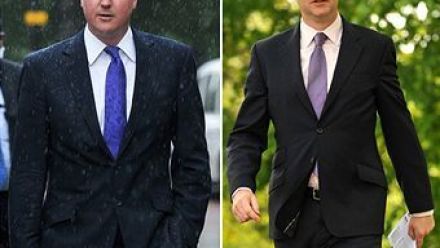
This photograph adorns the homepage of the Labour Party's website. It's rather odd to show the PM and his deputy looking quite so soigné as the starting point for a critique. The New Statesman's Dan Hodges descibes it as 'insanity'.

The challenge of demographic change

From our UK edition

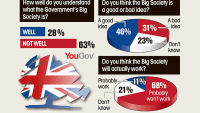
There may be a lot of debate about what the “big society” means, but there’s one thing we should all be able to agree on: we live in a big society – and it’s getting bigger. 62 million today. 64 million in five year’s time. And then on up to 70 million by 2028, according to the government.  (No, I’m not doing my bit, as my wife is about to have our third child.) What’s odd is how little debate there’s been at Westminster about all this. Why? Partly because it means you have to talk about immigration (still seen as toxic by many in SW1); partly because it is one of those issues that is just so big that it almost saps the will to live.

The Lords punish Cameron over policing

From our UK edition

In Number 10, they are already concerned that they are losing public support on crime and punishment. David Cameron is planning to give a speech on the subject that will, in the words of one senior coalition figure, ‘throw a lot of bones to his party’s right.’   But Cameron’s words will mean little if he can’t rescue the elected police commissioners policy from its defeat in the Lords last night. By introducing police commissioners who are accountable to the public, this policy will make the police concentrate on the crimes that have the greatest impact on peoples’ quality of life rather than form filling.

Garnering third party support

From our UK edition

Third party support is an important political asset. Nobody trusts politicians any longer (when did they ever?) and so it’s useful to draft in supposedly apolitical backers to support your plans. Yesterday’s PMQs was a case in point, with David Cameron and Ed Miliband competing for support from GPs. As Jim Pickard writes over on the FT blog, having 42 GPs on side is a little less impressive than having support from the Royal College of GPs, which has 42,000 members. So the PM is seen to have emerged from the exchange as the loser. Therein lies a problem for the government. Since the general election, the Tories seem to have become decidedly worse at garnering third party support for their policies. Before the poll they did excellently.

The Coffee House A-Z of the Coalition: T-Z

From our UK edition

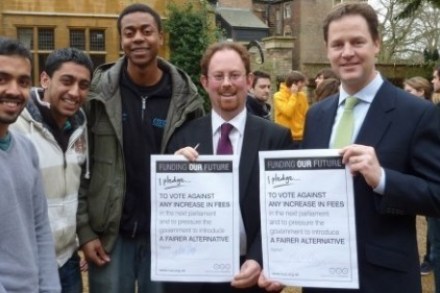
Here are letters T to Z in our A-Z guide the coalition's first year. A-F are here. G-M are here. And N-S are here. T is for Tuition fees "Broken promises, there have been too many in the last few years." So said Nick Clegg in a Liberal Democrat video during the last election campaign. It was favourite theme of his — and one that he deployed both during the TV debates and in signing a pledge to scrap tuition fees. This was to be a New Politics. Clegg was to be its champion. Shame it didn't quite work like that. The coalition agreement was damaging enough to Clegg's aura: it didn't guarantee that tuition fees wouldn't rise, only that the Lib Dems wouldn't have to vote for such a rise.

Cameron tells the ’22, the NHS pause is my idea not Clegg’s

From our UK edition

David Cameron was received in the usual desk-thumping way at the 1922 Committee. But what was striking about his appearance was his message that the NHS reform pause is his idea not Nick Clegg’s and that he won’t let the Lib Dems take credit for the coming changes. The robustness of this message took even Tory MPs by surprise. But I understand that Tory high command feels that Clegg’s decision to list the Tory policies he had blocked this morning means that they are allowed to make points like this. There were some hostile questions to Cameron but the general mood of the meeting was positive.

The Coffee House A-Z of the Coalition: N-S

From our UK edition

Here are letters N to S in our A-Z guide the coalition's first year. A-F are here. G-M are here. N is for No Nothing has frayed coalition relations quite like the AV referendum has. This was always going to be the case, but the viciousness it inspired has still been fairly shocking. Need we remind you of Chris Huhne's outburst in Cabinet last week? Or of George Osborne's stinging riposte? Even David Cameron seems to have relished taking it out on his coalition stablemates, trashing their pet policies with a vigour that would have been unthinkable only a few months ago. As Tim Montgomerie reveals in his exhaustive guide to the No campaign, Cameron's firmer stance coincided with a realisation of just what he was risking.

Lib Dem polarity

From our UK edition

For the Lib Dems this was the first day of the afterlife. Booted off the AV-train which was supposed to fast-track them to power, the minority party now looks politically homeless. Everyone in parliament makes jokes about them but the gags never raise a laugh. Pity intervenes. At today’s session Ed Miliband was haranguing Cameron for ‘dumping on’ his ministers as soon as their policies run into trouble when he broke off to indulge in a Lib Dem-kicking moment which he felt would cheer his troops. ‘And the poor deputy prime minister,’ chortled Miliband, ‘gets dumped on every day of the week!’ Sad laughter followed. No one’s heart was in it. Mocking Clegg is like throwing a wet sponge at a man with a fractured skull.

PMQs live blog | 11 May 2011

From our UK edition

VERDICT: An inconclusive sort of PMQs, where neither leader particularly triumphed, nor particularly sank. Ed Miliband was persistent, and more aggressive than usual, with his questions on the NHS — but failed, really, to properly discomfort the PM. Cameron dwelt lazily on the extra money going into the service, but it was enough to carry him through the session. Perhaps the most striking moment was when, during the backbench questions, Cameron pointed out that "[the Tories] were the only party at the last election to promise [real-terms spending increases for health]. If it wasn't for us, it wouldn't be happening." This is, I suspect, all part of the new drive to distinguish the two parties of government. But it will have jarred with some listening Lib Dems nonetheless.

Not so flash, Dave

From our UK edition

The papers report this morning that David Cameron has been urged by his aides to be more polite to his opponents at PMQs or risk playing into the Flashman stereotype of him as a cocky public school bully. Now, as with all advice about making PMQs a calmer affair (remember how Cameron pledged an end to Punch and Judy politics), this is easier said than done. The confrontational atmosphere of PMQs means that it is hard for those involved to resist a withering put down or to meet insult with insult. But if Cameron does learn to rein himself in, it will be a triumph for his new chief political strategist, Andrew Cooper.

The Coffee House A-Z of the Coalition: A-F

From our UK edition

The coalition is 1 today. Unfortunately, we can't serve jelly and ice cream over the internet — but we can write an A-Z to mark the first year of Cameron and Clegg's union. Below is the first part of that, covering the letters A to F. But, first, a little piece of political nostalgia for CoffeeHousers. A year ago today, this happened: And now for the A-Z… A is for Andrew Lansley Rap John Healey, make way for MC NxtGen. The Loughborough rapper may not be part of Her Majesty's Most Loyal Opposition, but his three-minute denunciation of the coalition's health reforms — video above — did the job better than most politicians ever could.

Libya: Bombing does not preclude preparing a Plan B

From our UK edition

The PM is looking to intensify the military campaign in Libya. Losing is not an option. Just think about it. The US gets its man; Britain gets angry, bombs a bit and then goes home. The dictator lives on in infamy: very Clintonesque. To avoid such an ignominious end, a delegation from Benghazi has been called to London in order to hatch a plan with Britain and her allies. But at the same time it may be prudent for someone in government – quietly and out of sight, of course – to look at a Plan B. Not for execution now, but ready in case the time comes. Why a Plan B? While the mission has protected Benghazi and is helping the rebels, questions are emerging about how long the UK can go on for? The operation has already cost close to half a billion pounds.

Cameron in new war with his backbenchers

From our UK edition

The House is united in loathing of IPSA, which explains why Tory MP Adam Afriyie’s amendment to the Parliamentary Standards Bill 2009 is proving so popular. Afriyie’s aim is ‘to simplify the way in which expenses and salary payments to Members of Parliament are made’ and attempt to limit IPSA’s costs.   The government, however, is wary of Arfiyie’s reform – sensing, perhaps, that the public might not stomach changes to the expenses system so soon after the recent scandal.   The bill’s second reading will take place this Friday and it is now understood that enough Labour backbenchers will support the motion to allow it to pass. It is rumoured that Cameron is insisting his backbenchers are whipped to defeat the bill.

The press becomes the story

From our UK edition

The power of the press has, almost from nowhere, become one of the defining leitmotifs of this Parliament. Only two years ago, the Telegraph exerted that power to (partially) clean out British politics, and won general acclaim in the process. But now, it seems, the media is more likely to have its actions attacked, or at least questioned and contained. Whether it is the Press Complaint Commissions's censure today for those clandestine Cable tapes, or the continuing hoo-hah over super-injunctions and their infraction, there is a question hanging unavoidably in the air: how much does the public have a right to know? This is a precarious political issue, not least because of the immediate problems it has thrust upon the coalition.

Cameron sets out the bounds of Lib Dem assertiveness

From our UK edition

Our coalition government was forged one year ago tomorrow — and we shall have more on that then. But the Sun has already marked the occasion by publishing an interview with David Cameron today. It is a wide-ranging sort of conversation, touching on everything from the Prime Minister's workload ("every day feels like a week") to the shelf life of the government ("five years"), although much of it is unsurprising. It does, however, contain one or two useful insights into how the coalition's game of give-and-take is going to operate from now on. First up, Cameron's insistence — contra Clegg — that the Lib Dems should not be portrayed as a "moderating influence" on his party.