David cameron

Labour turns up the heat on health reform

From our UK edition

The exodus from Liverpool has begun, following Ed Miliband’s speech. This means that there will be scant coverage of the events that occur hereafter. Shadow Health Secretary John Healey recognised this and gave an interview to this morning’s Guardian in order to highlight the speech he will make tomorrow. Healey is clear, as Ed Miliband was earlier this afternoon, that the government’s NHS reforms are a costly disaster and betrayal of the British people. Healey adds that they also threaten David Cameron, who has made “promises he is now breaking”. It’s good political posturing on a ‘Home’ issue for Labour.
Miliband’s empty promise

From our UK edition

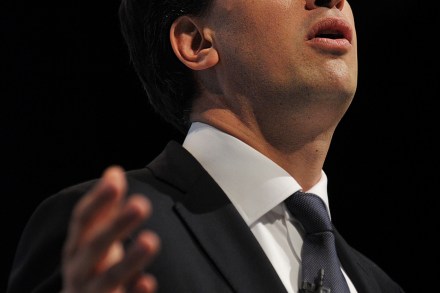
Miliband's speech was meant to reach beyond the hall. "I aspire to be your Prime Minister," he told country, "to fulfil the promise of Britain." But, after an hour long speech, it is not wholly clear what the "promise of Britain" is. Miliband offered the hand of partnership to small businesses, the ordinary working family, those who want a cheap further education, working mothers, but it was not clear what they would obtain from the Labour leader. This was a speech virtually bereft of policy direction or a coherent theme. We have a clear idea of what and whom Miliband is against, but very little idea of what he is for. For instance, he declared himself a believer in people but was reluctant to talk about devolving power from the state.

Labour spokesmen divided on whether they’ll campaign for the Union with Cameron

From our UK edition

Douglas Alexander has just told Andrew Neil that he will campaign for Scotland to stay in the union with ‘anybody else who wants to join me’. This opens up a difference with Alexander’s normally close political ally, Jim Murphy. Murphy, Scottish Secretary in the last Labour government and currently shadow defence secretary, recently declared that he wouldn’t share a platform with David Cameron during any referendum campaign. When asked about this earlier in the day, Alexander said that he was more interested in making the argument about the value of the union rather than arranging the chairs. But Alexander does seem to hold a different position than Murphy on the question of whether Labour figures should campaign with Cameron or not.

Miliband: cuts are okay now

From our UK edition

I’ve just caught up with Ed Miliband on Marr this morning (transcript here) and his aim seemed to be burying Ed Balls’ complaint about cuts being too fast and too deep. In its place, he called for more growth. Here’s my take on his interview: 1) He doesn’t complain about cuts.  “The basic message is this: we've got to cut the deficit, but the best and most important way of doing that is to grow our economy… A year ago there was a contested argument whether the government strategy should work. It's not working.” You don’t hear him talk about Ed Balls’ “too hard, too fast” cuts, just a reference to ‘the government’s strategy’.

Osborne’s dire warning

From our UK edition

This morning’s headlines are apocalyptic: “Global economy on the brink”, “Six weeks to save the Euro”, “Collective action needed now”. The unifying theme is the lack of leadership in the Eurozone: someone must grasp the nettle, say external politicians and commentators. Meanwhile, Charles Moore points out, with typical understatement, that Europe is leaderless by nature: no one is in charge and that is its tragedy. Moore doesn't mention the European President, who could, conceivably, offer direction and insist on fiscal discipline; but Herbert Van Rompuy is yet to meet that challenge. You wonder if someone of Tony Blair’s international standing might have succeeded where Van Rompuy has so far failed.

Read my lips: no new tax cuts

From our UK edition

There are still rumours in Westminster that David Cameron will cut taxes to stimulate the economy, but the speech he gave to the Canadian parliament on Thursday rather scotches this idea. Here’s what jumped out at me 1) No Obama-style deficit-financed tax cuts, please, we’re British. "The economic situation is much more dangerous and the solution for most countries can not be simply to borrow more. Because if the government doesn’t have the room to borrow more in order to cut taxes or increase spending, people and markets start worrying about whether a government can actually pay back its debt. And when this happens confidence ebbs away and interest rates will rise, hitting people with mortgages, and hitting companies that want to borrow to invest.

From the archives: On liberal wars

From our UK edition

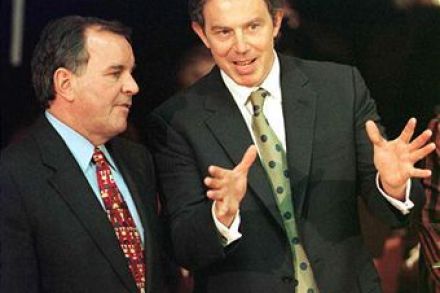
David Cameron’s speech to the United Nations yesterday was, among other things, a defence of liberal intervention. It reminded numerous observers of Tony Blair’s famous speech in Chicago in, the setting for the so-called Chicago Doctrine that guided his foreign policy thereafter. The Spectator said surprisingly little about Blair’s speech, perhaps because it wrote the following 5 days before the speech was made on 22 April 1999. End this liberal war, The Spectator, 17 April 1999 We can now see how liberals start wars, and wage them. First, they notice on television that people are being ill-treated or murdered.

Is Osborne ready for the next crisis?

From our UK edition

There is a strange pre-Lehman feeling in the air right now: the idea that something awful is going to happen, but no one knows what or when. This is laden with political ramifications. The problem for the Tories last time was not that George Osborne had been caught aboard HMS Deripaska. The greater problem was that a crash had arrived and the Shadow Chancellor had nothing to say. Brown, at least, seemed to have an agenda, and the Tory poll lead was reduced to one vulnerable point. I admire Osborne, but he can do far better in making the case for the government’s economic strategy. If there is a second crash, he’ll need all his skills to convey confidence – to sound as if he knows what he’s talking about.

Corporatism, comms and civil servants

From our UK edition

David Cameron renewed his calls for global action for growth last night and it seems that the work begins at home. The Times reports (£) that 50 of Britain’s largest companies will be given direct access to ministers and officials. Corporate bodies will be designated an “account director”, who, despite what that title might suggest, is a cabinet minister rather than a junior advertising exec. The scheme is not yet finalised, but it seems that the labour will be divided thus: ‘Vince Cable, the Business Secretary, will act as what officials are calling “an account director” to Britain’s oil and gas giants Shell, BP and BG.

Cameron’s foreign frustrations

From our UK edition

David Cameron’s much trailed speech to the UN is tinged with frustration. He will say, “You can sign every human rights declaration in the world but if you stand by and watch people being slaughtered in their own country, when you could act then what are those signatures really worth? The UN has to show that we can be – not just united in condemnation, but – united in action acting in a way that lives up to the UNs founding principles and meets the needs of people everywhere." That seems to be a fairly thinly veiled reference to the global community’s indifference to oppression in Syria.

The coming row over Europe

From our UK edition

One of the most striking things about Lib Dem conference has been how up for a scrap over Europe the party’s ministers are. Every single Lib Dem Cabinet minister has, over the past few days, ruled out any attempt to repatriate powers from Brussels. Given that the Conservative party wouldn’t forgive David Cameron not attempting to use any new treaty negotiation to try and regain control of various issues (see David’s blog from earlier), this puts the Prime Minister in quite a dilemma. Personally, I expect Cameron will go for the repatriation of powers. The AV referendum showed that when he has to choose between really angering his party or the Liberal Democrats, he crosses his coalition partners.

Europe looms its head to threaten the coalition and the Tories

From our UK edition

The Telegraph’s splash on Europe indicates that the issue, which proved so toxic to the last Conservative government, has risen again. Writing a stern op-ed for the paper, serial rebel and anti-Cameroon Mark Pritchard calls for a referendum. This will have irritated Downing Street no end, which is understood to have hoped that the whip-sanctioned Eurosceptic grouping that has formed around George Eustice might have contained the party’s factious elements. But some disgruntled MPs on the right privately say that last week’s well attended meeting of Eustice's group turned into something of a disappointment. The insistence that an exit from the EU was off-limits for the moment was apparently met by a singular lack of enthusiasm in some quarters.

Compassionate conservatism the key to gay marriage pledge

From our UK edition

When David Cameron spoke to the Carlton Club political dinner on Thursday night, he stressed that the Conservatives must not subcontract out compassion to their coalition partners. The Prime Minister’s desire to hold this ground can be seen at the speed with which Downing Street has briefed out that it was Cameron’s personal commitment that was key to the coalition’s decision to consult on how to introduce gay marriage. The message is clear, this isn’t just a bauble for the Lib Dems for the opening day of their conference. Personally, I think that the move on gay marriage is a welcome one.

The Israel Palestine question

From our UK edition

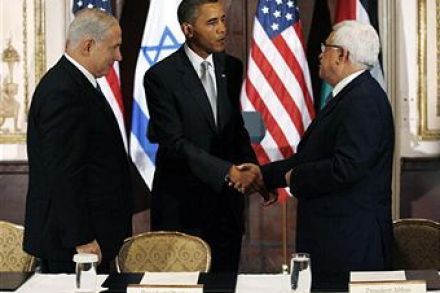
After a hiatus, the Middle East Peace Process is about to return to the international stage. The Palestinians are pushing at the UN for recognition. Nobody knows yet what they will actually ask for: full statehood or just upgrading their UN status to "non-member". But, whatever the language of the resolution, the issue will be contentious. By some estimates, 126 states are poised to back the Palestinian request, including France, India, Brazil, Spain. The US will not support a Palestinian move, nor is Germany likely to. Britain remains undecided, hoping to help the Palestinians draft a resolution that other Europeans can sign up to. It’s not clear what Britain and European governments should do.

Cameron’s Libyan gamble

From our UK edition

It is conventional wisdom that David Cameron won't get much of an electoral bounce from the Libya intervention, despite emerging as a bold and competent interventionist. People, the argument goes, are tired of warfare. A senior figure in Tony Blair’s No 10 told me yesterday that he did not think the PM would earn a lot of kudos, because with all the problems at home there is less tolerance for overseas adventurism. But this narrative overlooks a number of key points. First, the success of the operation has dealt with the charge that the government is less competent than it pretended to be. This was a serious charge, as the Prime Minister (and by extension the Conservative party) cannot withstand being called incompetent.

Sarko and Dave go to Tripoli

From our UK edition

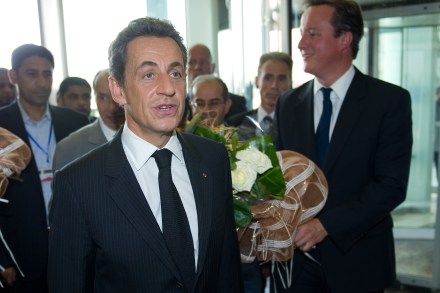
"This is your revolution," said David Cameron to the mass of rapturous Libyans who welcomed both him and Nicolas Sarkozy in Tripoli this morning. Obviously this is a PR coup for the two leaders, who both face difficulties at home. But, although these were scenes of jubilation, both leaders were keen to say that the situation in Libya is still delicate. Gaddafi is still at large and there are reports that his supporters have drifted into the desert, where they are conducting a guerrilla campaign against rebel targets. This is of great concern to the National Transitional Council and its allies, who want to reopen Libya's remote oil industry to ensure that the country’s economic recovery can begin. Sarkozy and Cameron pledged their assistance to the NTC.

Downing Street’s boundary review problem

From our UK edition

I understand that Number 10 will lean on Cabinet ministers not to object to what the boundary review does to their seats. This is an intriguing development because at least three Tory Secretaries of State are deeply unhappy with the proposed changes to their constituencies. It’ll be fascinating to see whether Downing Street can persuade them to hold their peace on the matter. Their disquiet reflects broader grumbling throughout the Tory parliamentary party. All sorts of conspiracy theories are doing the rounds. Number 10 needs to move quickly to offer some reassurance to nervous MPs. If the boundary review’s plan is to be made agreeable to the Tory parliamentary party, Cameron is going to have to persuade an awful lot of MPs to retire.

Cameron mustn’t fall further into Putin’s trap

From our UK edition

"Russian democracy has been buried under the ruins of New York's twin towers", famous KGB rebel Alexander Litvinenko wrote in 2002. The West, he warned, was making a grave mistake of going along with Putin's dictatorship in exchange for his cooperation in the global war on terror. He would never be an honest partner, and would try to make the Western leaders complicit in his own crimes - from political assassinations to the genocide of Chechens. As a KGB officer, Putin would see every friendly summit-meeting as a potential opportunity to recruit another agent of influence. David Cameron, whose summit-meeting with Putin coincided with the sombre jubilee of 9/11, would be well-advised to remember these warnings.

A brutal no score draw at PMQs

From our UK edition

Cameron and Miliband went six rounds on the economy at PMQs. Miliband tried to portray Cameron as just another Tory who thinks that "unemployment is a price worth paying". Cameron, for his part, wanted to paint the Labour leader as someone whose policies would send Britain tumbling into a sovereign debt crisis. At the end, it felt like a bit of a no-score draw. Interestingly, Cameron stressed that "every week and every month, we’ll be adding to that growth programme". We’ll have to see whether he’s talking about more small-bore measures, or something bigger on infrastructure investment. Labour had a new tactic today, trying to fact-check all of Cameron’s answers from last week.

Managing the boundary changes

From our UK edition

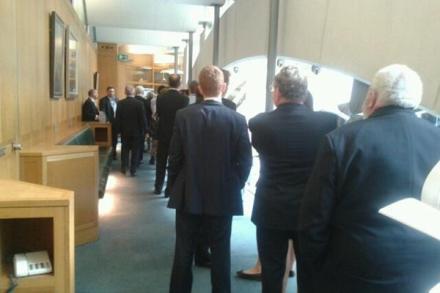
MPs are queuing down the corridor on the first floor of Portcullis House as they try to get hold of a copy of the proposed boundary changes which have just been released under embargo. Boundary changes can make a huge difference to an MP, converting a marginal into a safe seat and vice-versa. Boundary reviews are a whip’s nightmare as they will set MPs of the same party against each other. The danger for the two coalition partners is that MPs’ take to rebelling on emotive issues for their parties in an attempt to win any selection head to head. This is why Cameron went out of his way to promise all Tory MPs that no one would be left without a seat at the Tory parliamentary dinner last Wednesday night.