David cameron

Miliband attacks Cameron on jobs

From our UK edition

Ed Miliband chose to ask all six questions on the economy today, making only the quickest of references to the Liam Fox story that the Westminster village is currently obsessing over. Armed with ammunition from the latest unemployment numbers, Miliband did a solid job of pushing Cameron onto the back foot. But there was one moment which will worry Miliband's supporters: the spontaneous way the government benches fell about when Miliband claimed that Scottish and Southern Energy's decision to start selling its electricity on the wholesale market was the result of his conference speech. Three Labour backbenchers did ask questions about Liam Fox. Cameron said he would look at publishing a list of Adam Werritty's professional and social contact with ministers and advisers.

Cameron tackles internet porn with more government

From our UK edition

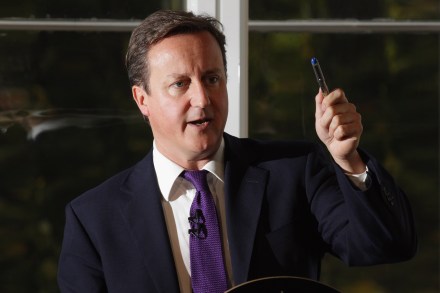
David Cameron is taking his woman trouble seriously. He will unveil plans to curb internet pornography at a meeting with the Mothers’ Union later today. The government will force internet users to opt in to view pornographic websites when they initially chose their internet providers. The government will also clamp down on sexualized advertising and a new website, Parentport, will be established to allow parents to report inappropriate images, articles of clothing, TV programmes etc. This is a fairly blatant pitch for the wandering female vote, which is exercising Cameroon minds at present. It’s a clear attempt to say: We’re going to help you to protect your children.

The Fox hunt distracts from louring clouds

From our UK edition

The furore surrounding the defence secretary is distracting attention from some stories that are threatening the coalition’s tranquillity. Benedict Brogan reports that the Health Bill is being amended out of existence by a cabal of Lib Dem peers, a campaigned that was mooted during the party conference season. The rebellion is apparently aggravating Number 10, which understood that Nick Clegg had secured his party's support for the diluted programme which emerged after the recent "listening exercise". Labour's numerical superiority in the House of Lords means that ministers will have to be at their most mellifluous to bring the errant Lib Dems back to the fold, because Tory backbenchers are clear that they will not stomach further revisions.

How Number 10 will judge Fox

From our UK edition

Downing Street is busy stressing that the David Cameron doesn't want to lose Liam Fox from the Cabinet. There is lots of talk of how the Prime Minister doesn't want to pull the rug out from under anyone. I understand that to Number 10's mind the crucial questions are whether Adam Werritty has made any money out of defence since May 2010 and if so, did Fox know about it? If the answer to both of these questions is yes, then the Defence Secretary is probably done for. But if it is no then Fox will have suffered some embarrassment but nothing more.

In defence of Liam Fox

From our UK edition

The feeding frenzy over Liam Fox tells us a great deal more about what is wrong with the Conservative Party than it does about Dr. Fox. The Defence Secretary has been an ass. He admits that he allowed “distinctions to be blurred” between his “professional responsibilities and [his] personal loyalties to a friend”. But if someone has known you and counselled you and worked for you over the years it is all but impossible to maintain such distinctions when you are in power. You just have to cut them off, brutally. Fox’s biggest weakness, and one which was well known before this, is that he is too kind. You might say he is too human. It made him a good doctor. But in the higher echelons of politics or business it is a fault.

Fox on a knife edge

From our UK edition

Another deluge of awkward news stories for Liam Fox this morning, with almost every paper providing new details for our consideration. The Observer has video footage and emails which suggest that Adam Werritty was indeed a close participant in the Defence Secretary's meetings with foreign dignitaries and businessmen. The Sunday Telegraph quotes Fox as saying that "I have absolutely no fear of complete transparency in these matters," but adds a warning from Whitehall sources that he "could be gone within days". And, perhaps most concerning of all, a senior MoD type tells the Independent on Sunday that "[Werritty] appears to have been involved in arms contracts all over the place". The story is now taking on a dangerous, two-tone complexion for Fox.

The problem with using soldiers to advance women’s rights

From our UK edition

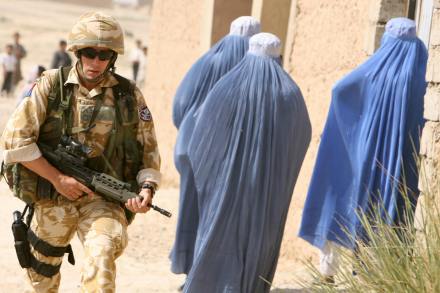
Mariella Frostrup, fresh from interviewing Nick Clegg in Cheltenham, writes about women's rights in Afghanistan in The Times (£). Her pithily-titled piece — "Women's rights in, before troops out" — makes the case that British forces cannot withdraw from, and the government should give no development assistance to, a country where the plight of women is so terrible and declining. It is hard not to sympathise with Frostrup's point. During my own time in Kabul I witnessed plenty of examples of female subjugation, and was glad the West was present to help address some of these problems. Western policymakers were, at the time, eager to portray the entire mission as a morally good, progress-guaranteeing task.

Commercial quandary

From our UK edition

Britain's diplomacy needs to help British business. The Prime Minister made this clear soon after the coalition was formed and William Hague has followed up, reorganising the Foreign Office and putting commercial diplomacy at the top of the agenda. To some, this risked making diplomats into salesmen and there was even dark talk of "mercantilism". Both criticisms were far off the mark – there is nothing mercantilist in trying to help British businesses. A year in, however, the policy is facing a number of other, more fundamental challenges.

The Winter Fuel Allowance is indefensible

From our UK edition

Freed from the shackles of elected office, Steve Norris remains an electrifying speaker. He is also refreshingly honest. So, when I met the 66-year-old former mayoral candidate at a Tory conference fringe on the future of London, he was only too happy to admit how spent his Winter Fuel Allowance: "I'm amazed by the Chancellor's annual gift. I spend it on Claret," he said. In fact, he said that when paid to the wealthy, the allowance is "a complete waste of money" and "a bribe to older voters". I mention this only because the Allowance was referred to again in a different context this week: during David Cameron's own address.

The Cabinet cat-flap continues

From our UK edition

The Ken Clarke and Theresa May cat-flap has sparked up again this morning, with the Justice Secretary accusing the Home Secretary of using "laughable child-like examples" to attack the Human Right Act. In some ways, it's hard to take a political row about a cat particularly seriously. But this back and forth between May and Clarke is actually exposing something very important: the Liberal Democrats are not the only brake on Tory radicalism. At the moment, lots of Tory ministers – up to and including the Prime Minister – like to imply that they'd be doing far more on Europe, immigration and the Human Rights Act if it wasn't for the Lib Dems.

Another voice: Five lessons from Conservative party conference

From our UK edition

Here's the latest in our Another Voice series of posts, which give prominence to viewpoints outside the normal Coffee House fold. This time it's the IPPR's Associate Director, Will Straw, with his five-point take on the fringe events of Tory conference, and the lessons that might be learned from them: 1. The Tories know that winning a working majority in 2015 is no easy task. The most popular fringe event according to Fringelist.com was ConservativeHome’s event on ‘How the Conservatives can win the next election.' Reflecting his remarks from the panel, YouGov’s Stephan Shakespeare wrote yesterday that, “today's electoral maths makes an overall a majority a mountain to climb”.

What did Fleet Street make of Cameron’s speech?

From our UK edition

Not a lot is the short answer. Many commentators argue that the speech failed to match the gravity of this moment in time; that it was safe; that it was not prime ministerial. Steve Richards believes that Cameron was timid, choosing to reassure rather than challenge. He writes: ‘Yesterday in his address David Cameron did Ed Miliband an unlikely favour. He made Miliband's seem deeper and substantial. The Labour leader's address last week was poorly structured and delivered, yet compared with Cameron's it had an argument and was at least an attempt to address the scale of tumultuous change sweeping across Britain.

Cameron does enough

From our UK edition

There were three big themes to David Cameron’s speech. The first was that decline is not inevitable, an attempt to tackle the mood of pessimism that is gripping the nation. The second was an attempt to reassert the Conservatives’ compassionate credentials, hence the emphasis on how the Liberal Democrats would have cut the NHS and the section explaining why conservatives should support gay marriage. The third was leadership, Cameron’s biggest advantage over the other party leaders. The attack on the idea of Britain’s decline being inevitable was powerful in places. But because Cameron has a non-ideological approach to growth it is hard for him to make a stirring argument about how the economy can be revived.

Why conservatives should welcome gay marriage

From our UK edition

David Cameron just told the Tory conference that he supported gay marriage "because I am a Conservative". In last week's issue of the Spectator, Douglas Murray said that the best arguments in favour of gay marriage are conservative ones. For the benefit of CoffeeHousers, here is Douglas's piece. In America a new generation of Republicans is challenging the traditional consensus of their party on gay marriage. They — as well as some of the GOP old guard like Dick Cheney — are coming out in favour. In Britain the subject is also back on the agenda with the coalition government, at the insistence of the Prime Minister apparently, planning a ‘public consultation’ on the matter.

Explaining Cameron’s debt u-turn

From our UK edition

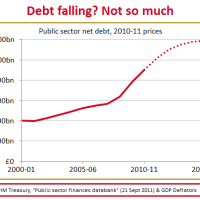
“Millionaire David Cameron wants you to pay off your credit card – are you going to obey the Prime Minister?” asked one local BBC radio station phone-in this morning. This is not what No. 10 had in mind when releasing selective quotes from his speech last night. “The only way out of a debt crisis is to deal with your debts. That means households - all of us - paying off the credit card and store card bills.” This line in his speech is now being rapidly rewritten – and for good reason. Because the Prime Minister was in danger of making a major mistake.   The premise of the now-never-to-be-delivered quote is incorrect. The British public actually are paying down their debts, while the British government is vastly increasing its borrowing.

An order or a description?

From our UK edition

The hours before David Cameron’s speech have been filled by a row about the pre-briefed line that: "The only way out of a debt crisis is to deal with your debts. That means households - all of us - paying off the credit card and store card bills." This was taken by several papers as the Prime Minister instructing people to pay off their credit cards bill now, something that would have reduced the prospects for growth even further. So, the line has now been changed to show that Cameron is just describing what’s going on. It is all mildly embarrassing. But this little flurry can’t disguise the fact that this conference has largely gone to plan for the leadership. It has been as uneventful as they wanted it to be.

Cameron wants to offer the “right” leadership

From our UK edition

As flat as flat champagne — that’s the verdict on this year’s Tory conference, which is ironic given that the two year ban on champagne was lifted this year. Bruce Anderson argues that the dour atmosphere is intentional. These are serious times for sombre politics, not the frivolity occasioned by a conference at a seaside resort. David Cameron’s first objective, Bruce says, is to reassure the country and present himself as a leader for a crisis. Cameron’s conference speech has been widely trailed by most news outlets this morning. Tim Montgomerie has a comprehensive overview of the speech. Cameron’s first challenge is to emote: these are "anxious times” for ordinary people, he will say.