David cameron

Labour’s new attack strategy: Cameron’s a right-winger

From our UK edition

The Observer has a cracking scoop: a brief document detailing a new Labour plan to attack Cameron. The memo has been written by Shaun Woodward, the former Tory MP and Labour cabinet minister who now heads Labour’s anti-Tory unit. He will report to the shadow cabinet in the next few weeks. He says: ‘At the last election we faced a Conservative party (and a Conservative leader in David Cameron) whose strategic goal was to decontaminate their brand, intending to present themselves as reformed, modern, centrist and pragmatic. Cameron was effective in promoting a perception [that] his party had changed.

Clegg paints the world yellow

From our UK edition

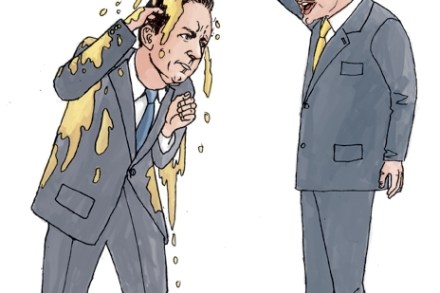
Nick Clegg laughed-off the dousing of blue paint he received in Glasgow yesterday, like one of Noel Edmonds’ unwitting victims. Today, Clegg has turned into the grinning douser: drenching his coalition partners in yellow paint by saying that the European Convention on Human Rights will not be watered down. Writing in the Guardian, Clegg says that the Conservatives are right to seek operational reform of the European Court of Human Rights, but the common ground ends there. He says that “the Human Rights Act and the European convention on human rights have been instrumental” in preventing injustices from council snooping to the misuse of DNA records and that the incorporation of human rights into domestic law was a “hugely positive step”.

Cameron’s immigration problem

From our UK edition

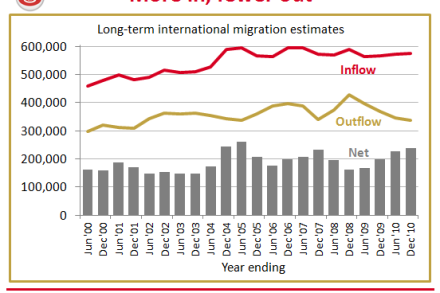
Poor David Cameron. He pledged to reduce annual net migration from the current 240,000 to the "tens of thousands" and what happens? Net migration in 2010 was up by 21 per cent from 2009. In a way, he deserves the flak he'll get because this was a daft target that could only have been set by someone poorly-advised about the nature of immigration. And the target allows success to be presented as failure. The inflow to Britain has stayed steady (see graph below), but the number emigrating from Britain has fallen. This is a compliment to Cameron: the most sincere vote people can make is with their feet. And in our globalised world, countries have to compete for people. Britain is as attractive as ever it was to immigrants, and more natives are staying put.

New immigration figures

From our UK edition

The Conservative wing of this government is on a quest to reduce net migration to, in the words of David Cameron, the “tens of thousands from the hundreds of thousands”. Liberal Democrat ministers may have dragged their feet on the issue, but there are serious doubts about whether Cameron's policies will have any real effect. As Fraser revealed last week, the coalition is struggling to secure a substantial reduction in immigration, with foreign born workers continuing to fill many jobs in Britain. This poses a threat to IDS’ welfare reform plans, as well as an electoral quandary for the Tories.  New migration figures for the period from 2009 to the present have been published today.

Cameron winning over the Libya doubters

From our UK edition

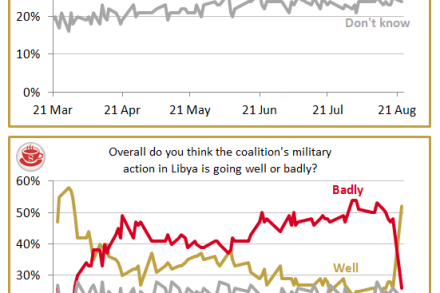
"They'll like us when we win," the West Wing's Toby Ziegler said of the Arab world. David Cameron might have said the same when public opinion was turning against the intervention in Libya. And, judging by today's YouGov poll, he'd have been right. Public support for military intervention has mirrored the public’s view of how well the action is going. In the first two weeks, when optimism prevailed, the public were largely in favour. However, as that optimism wore off and people increasingly doubted that the rebels could succeed, more and more began to oppose our involvement. Before the weekend, just 26 per cent thought the intervention was going well, and only 31 per cent were in favour of it.

Cameron needs to take this opportunity

From our UK edition

Libya has elbowed the riots off the front page. But, in the medium-term, how Cameron responds to them remains one of the big tests of his premiership. In the Evening Standard today, Tim Montgomerie vents the frustrations of those Tories who fear that Cameron is missing his chance. Tim’s complaint is that Cameron has actually done — as opposed to said — very little and that the chance to use this moment to push through a whole bunch of big, necessary changes is being missed. With every day that passes, action on — say — the Human Rights Act becomes less likely as the Liberal Democrats become more dug in.

Winning the peace

From our UK edition

The sight of rebel troops kicking a statue of Gaddafi round the colonel’s compound is another sign that the rebels are taking control of the capital. But the whereabouts of Gaddafi remain unknown. I understand that the British government is doing what it can to help the rebels locate him. But, until Gaddafi and his sons are detained there’ll be uncertainty about the situation. There’ll be much discussion of where Gaddafi should be tried if he is captured. Personally, I think it is entirely understandable if the Libyans want to try their old oppressor themselves. But the crucial thing is that the Transitional National Council prevents a wave of revenge killings.

Cameron: No transition is ever smooth

From our UK edition

David Cameron’s statement on Libya just now was cautious in tone and content. The Prime Minister stressed that "no transition is ever smooth or easy." Cameron said that he wanted to see Libya become a "free, democratic and inclusive" country. He emphasised that the NATO mission there would continue for as long as necessary. In an attempt to reassure the country that the liberation of Tripoli will not be followed by the chaos that followed the fall of Baghdad, Cameron repeatedly mentioned the post-conflict reconstruction planning that has been going on. He also said that he had stressed to the National Transitional Council that there must be no reprisals. Noticeably, Cameron decided to reiterate his "necessary, legal and right" formulation in this statement.

A victory for the Libyan rebellion, and for NATO

From our UK edition

The regime of Colonel Gaddafi appears to be over. In a matter of hours, we hope, the Libyan dictator will be located and captured, assuming he does not flee Libya. Finally, after 42 of evil rule, the Libyans can build a free nation. The tumultuous events of recent days are, first of all, a victory for the brave Libyan rebels who took arms against Gaddafi. They defied the odds, underwent setbacks but carried on. But, secondly, today's events are a vindication for David Cameron and Nicolas Sarkozy. Keen to learn the lessons of Bosnia, Kosovo and Rwanda, they saved Benghazi from a massacre and helped to build up the Transitional National Council. In the process, they suffered the opprobrium of realists, armchair generals and so-called "experts".

Through the gates of Tripoli

From our UK edition

After a summer of discontent, David Cameron must be counting his blessings this morning. He has broken his holiday because Colonel Gaddafi is about to fall. Rebel forces swept into Tripoli's Green Square overnight and members of the regime were captured as Gaddafi’s militia vanished into the night. Gaddafi’s son Saif al-Islam, who was being groomed as his successor, fell into rebel hands; the International Criminal Court is in touch with his captors. Another Gaddafi family is also understood to have been detained. Of the Colonel himself, though, there is no sign. Rebel forces are moving to encircle Tripoli, cutting off his line of retreat. Rebel spokesmen told the Today programme that they want to take Gaddafi alive in order to try him.

Libya: mission accomplished?

From our UK edition

If David Cameron breaks his holidays yet again, you'll know it's because he expects Gaddafi to be a goner pretty soon. It's been a busy old night in Tripoli, with Twitter reports suggesting that Gaddafi is already dead. Mind you, William Hague et al have learned to treat Twitter reports with a mountain of salt. Let there be no doubt: Cameron pushed for the Libyan intervention, averting what looked certain to be a massacre in Benghazi. The Prime Minister took a principled stand. In so doing, he reminded the world that the West can still intervene when it so chooses and will not stand by to watch slaughter. This was a decisive moment. Averting a Benghazi massacre was in itself a victory.

This autumn, Europe could become the most important issue in British politics again

From our UK edition

Europe will be one of the political issues of the autumn. The government expects another round of sovereign debt crises in the autumn and these will add urgency to the Merkel Sarkozy plan for ever closer fiscal union between the eurozone members. Nearly every Tory MP and minister I have spoken to is instinctively sceptical of the Franco-German strategy. But Cameron, Osborne and Hague believe that because the Eurozone members won’t accept the break-up of the currency union, Britain has to back further fiscal integration in the hope that it will make the euro work. (Cynically, one might add that their position also makes life easier within the coalition given the Lib Dem’s Europhile leanings.

Human rights wrangle

From our UK edition

A set-to has broken out this morning over the Human Rights Act. David Cameron has declared that he is going to fight the Human Rights Act and its interpretation. Cameron writes: ‘The British people have fought and died for people’s rights to freedom and dignity but they did not fight so that people did not have to take full responsibility for their actions. So though it won’t be easy, though it will mean taking on parts of the establishment, I am determined we get a grip on the misrepresentation of human rights. We are looking at creating our own British Bill of Rights.

Blair on the riots

From our UK edition

Tony Blair has dropped in to write an article on the social context to the recent riots. It’s insightful, especially as a testament of his failings in government. At the close of his premiership, he says, he’d realised that the acute social problems in Britain’s inner cities were “specific” and could not be solved with “conventional policy”. So much for ‘education, education, education’, Blair’s favoured solution was a mixture of early intervention on a family by family basis to militate against the “profoundly dysfunctional” upbringings these young people endure and a draconian response to antisocial behaviour. Alas, he was forced from office for before implementing the plan.

Pickles rebuffs calls for new taxes

From our UK edition

Anyone looking for a good blast of common sense on a Saturday morning should read Eric Pickles’ interview in the Telegraph. In it, he responds to much of the kite-flying by the Liberal Democrat left in recent weeks. In an exchange that will have many of his Cabinet colleagues nodding along in agreement, Pickles criticises judicial activism and the chilling effect it is having on ministers: “You are constantly looking over your shoulder for judicial review … the electorate is being frustrated,” he says. “I could kind of expect to be reviewed on procedural matters, but to be reviewed on policy?” But, should judges not have some oversight of policy? “No,” he replies. “I’m a bit old-fashioned really.

Cameron: Governments should provide enough prison places to satisfy the courts

From our UK edition

The row over sentencing rioters has morphed into a row about prison numbers and safety. Cathy Newman has been issuing a steady stream of tweets all afternoon, revealing that the Ministry of Justice is concerned about overcrowding and safety in prisons and young offenders’ institutions: an internal memo discloses that 2 convicted rioters have been assaulted and hospitalised. This is not altogether surprising: prisons are not exactly renowned for offering new inmates a genteel welcome. Still, it provides ammunition for those who oppose the courts’ stern response to the riots. There is now a record 86,654 incarcerated people in Britain; compared to 85,253 people the week before.

The Mrs Bercow show

From our UK edition

What, I suspect, would infuriate Sally Bercow most is if there was a complete media blackout over her appearance on ‘Celebrity’ Big Brother. As she made clear on entering the house, her whole aim is to annoy what she calls the ‘establishment.’ But at the risk of playing Bercow’s game, it’s worth debunking one argument that her defenders make. They say that she’s a person in her own right and so should be allowed to do what she wants, that her appearance should be defended on feminist grounds. But on the show, she’s not presenting herself as that. Instead, she’s there as the Speaker’s wife — that is her claim to fame.

WEB EXCLUSIVE: Full-length interview with IDS

From our UK edition

I have interviewed Iain Duncan Smith for tomorrow’s Spectator. In print, space is always tight and we kept it to 1,500 words. One of the beauties of online is that you can go into detail in political debate that you never could with print: facts, graphs (my guilty pleasure) and quotes. Here is a 2,300-word version of the IDS interview, with subheadings so CoffeeHousers can skip the parts that don’t interest them. I’ve known him for years, and remember how hard it was to get out of his room four years ago when he started on the subject of gang culture and the merits early intervention. Now, he’s in the DWP, able to enact all he spoke about. He believes the riots will transform Cameron’s premiership in the same way that 9-11 did Blair’s.

Recalcitrant police forces

From our UK edition

Applications to be the next commissioner of the Metropolitan Police closed at noon today. But thanks to the Home Office and the police, the best candidate for the job — Bill Bratton — hasn’t been allowed to even apply. The energy which was put into barring him shows just how determined the police and the Home Office are to prevent any outside talent from being brought into the police. Number 10, though, maintains that it still wants to appoint outsiders to positions of authority in the police, even though it is now trying to claim that the commissioner of the Met was the wrong place to start this process. It was, apparently, too big a job to give to someone from outside the magic circle of chief constables.