David cameron

Grieve tucks into May

From our UK edition

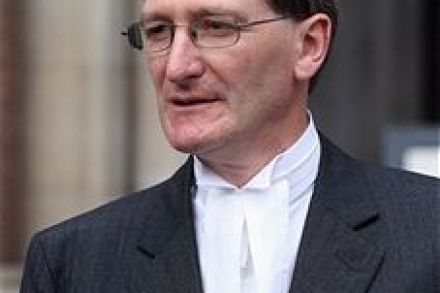
A fringe debate on the Human Rights Act hosted by the Tory Reform Group might not have been a crowd puller. But yesterday’s feline foul-up and the presence of Attorney General Dominic Grieve, a firm advocate of human rights, ensured the event was a sell-out. If Grieve had been advised against deepening internal animosity on the 'cat flap' furore, he ignored the direction. The TRG’s Egremont blog quotes Grieve as saying: "We need to have a rational debate. We must be more productive than just going for the ‘meow’ factor." Then he added: “The judicial interpretation and case workload of the European Court ought to be a concern for the UK and other European countries.
Gove: the Tories are the party of state schooling

From our UK edition

Apologies for my recent, extended absence, CoffeeHousers — Vietnam and my immune system just didn't get on. But I'm back now, and firmly embedded in Manchester, where Michael Gove has just given his address to the Tory conference. Although, I must say, "address" doesn't really cover it. This was more a political variety show, short on new policy (because Gove's existing policy is going quite well enough, thank you very much), and big on spectacle and optimism. It started off with a video conversation between Gove and David Cameron, who was in a local school that is on the verge of becoming an academy. There was nothing surprising in what they said, although it was a revealing exchange nonetheless.

Good Boris

From our UK edition

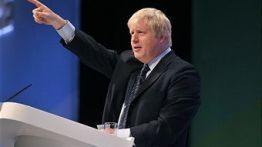
Boris Johnson must be one of the very few politicians in the world to make the audience laugh before they even start their speech. Just by walking on stage, he has the effect of a good comedian: the punters start to smile, in anticipation of some good one-liners. In today’s case, Boris got a standing ovation before he opened his mouth. Here is the man judged by Ladbrokes as the most likely next Conservative leader, but he had not come to stir. The Prime Minister – who lavished praise on the Mayor last night – was in the hall. It was all Big Society (BoJo division): affordable housing and a reprise of his January speech about restoring London’s identity as a union of villages.   But, he sounded several clear notes of defiance.

The human rights smokescreen

From our UK edition

Today’s papers resound with the news that Theresa May is resisting Liberal Democrat opposition to close the loophole over the “right to family life”, Article 8 of the European Convention on Human Rights. This change, it is argued, will ensure that foreign criminals are deported so that the courts protect, as David Cameron put it, “the United Kingdom”.  The announcement is a carefully choreographed step to differentiate the Tories from the Liberal Democrats.

What Fleet Street made of Osborne’s speech

From our UK edition

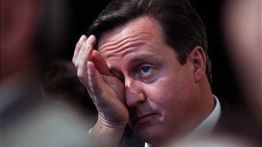
The abiding image of this conference may be the sight of Steve Hilton apparently shepherding the turbulent Andrew Tyrie into a booth, from which Tyrie emerged singing George Osborne's praises. "A huge step forward…you can some consistencies," he said, which was an endorsement of sorts. What did everyone else make of it? As you can see, David Cameron looked morose at times, but the mood in the hall oscillated between sobriety and quiet optimism, matching Osborne's blend of austerity and promise for the future. Fleet Street is similarly conflicted: no paper gives him an unqualified endorsement, but no paper entirely rubbishes him either. The Times concludes (£), as Tyrie did on Saturday, that Osborne is strong on austerity and weaker on growth.

Hague does his leader’s bidding

From our UK edition

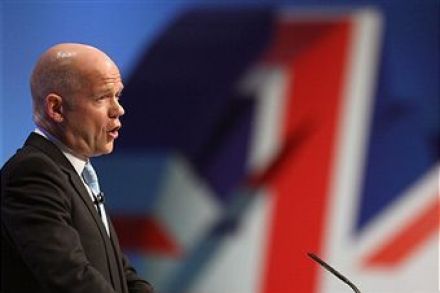
William Hague’s speech to conference today wasn’t the barn-burner of years past. It did include some jabs at Balls and Miliband. Hague joked that “their shadow Chancellor was Gordon Brown’s right hand man. And their leader was right hand man to the right hand man.”  But the overall tone was serious. Politically, two things struck me as significant about the speech. First, Hague showed how determined the Tories are to play the Cameron card. The speech ended with a long tribute to the Prime Minister which called him “the leader for a better future”. The Tories are convinced that of the three party leaders, Cameron is the only one who strikes the country as a plausible PM.

Cameron’s tricky interview

From our UK edition

In a surprisingly testy interview on the Andrew Marr show, David Cameron defended the government’s approach to Europe, the economy and planning. But before the interview really got going, Cameron had to reiterate his Sunday Times’ apology (£) to women for the patronising comments he has made in the Commons chamber. This is hardly an ideal start to conference for a party leader who is struggling to maintain female support. On the Eurozone, Cameron was blunt that its problems were a threat to “the British economy and the world economy”. He also risked a clash with Nicolas Sarkozy by demanding that “action needs to be taken in the coming weeks to strengthen Europe’s banks”.

Hague: No deficit funded tax cuts

From our UK edition

William Hague’s just been on Dermot Murnaghan’s Sky show. They shot the breeze for a bit, gabbing about foreign affairs and the recent targeted assassinations on Taliban and al Qaeda leaders, then the conversation moved on to tax cuts as an economic stimulus. Hague laughed off the suggestion, saying that the US is in its current crisis because for years it has concentrated on offering tax cuts rather than controlling its deficits. Britain will not make that mistake, he said. ‘No deficit funded tax cuts’ was a line first pursued by David Cameron ten days ago in a speech to the Canadian parliament (although, as Fraser has noted, it has its roots in the 2005 leadership contest and Oliver Letwin’s opposition to “unfunded tax cuts”).

Gabbing about growth

From our UK edition

Growth is the word on Tory lips at present. David Cameron responded to Andrew Tyrie’s criticism when he arrived in Manchester yesterday evening, saying that the government has “an incredibly active growth strategy”. And there has been some ‘action on growth’ in the last 24 hours. The right-to-buy is being resuscitated. And the coalition has announced that it will release thousands of acres of publicly owned land to build 100,000 houses and support 200,000 jobs by 2015. The plan will be paid for by selling houses later down the line; the government hopes that the taxpayer will make a profit under this scheme. This reform might stoke the already over-heated fire between the government and the National Trust over planning reforms.

Osborne and tax cuts

From our UK edition

“Top Conservative despairs of Cameron growth plan,” says The Times’ front page today. While The Daily Telegraph’s reads: “No tax cuts before the next election, says Osborne”. The two stories are related. British economic growth is evaporating, and more than a few Tory MPs are worried that the Chancellor doesn’t have a coherent growth strategy and that he doesn’t seem to care. Osborne’s cheery interview with Robert Winnett and Ben Brogan will do nothing to allay such fears. He repeats his position on tax cuts: that, while desirable, they are likedessert once the nation has eaten its main course of cuts and tax rises. He appears to rule out using tax cuts as a tool to stimulate growth.

Tyrie’s blast spices up pre-conference

From our UK edition

Treasury Committee Chairman, Andrew Tyrie, has shaken the nascent Tory conference with a coruscating statement about the government’s growth plan and general legislative programme. He writes, in a detailed policy document for the Centre for Policy Studies that is political in its emphasis as much as it is economic: ‘There is much to do, and it is not just a question of gaps in policy. A coherent and credible plan for the long-term economic growth rate of the UK economy is needed.

Lansley’s trials

From our UK edition

Andrew Lansley will arrive in Manchester having been chased up the M6 by a flurry of negative stories about his NHS reforms. The Guardian has gone to town on the news that the Lords Health Committee has expressed concern about Lansley’s plan. Their reservations stem from Shirley Williams’ concerns about the diminished role of the secretary of state; she worries that this will dilute accountability over the health service, which she views as unacceptable given the vast sums of money the secretary of state controls. The Lords will debate these matters later this month and amendments are expected to be tabled. Elsewhere, the British Medical Association has also fired another salvo at Lansley, calling for the Bill to be scrapped.

Cameron and Osborne respond to Miliband

From our UK edition

Senior Tories are saying that there won’t be many attacks on Ed Miliband from the party’s big hitters at conference. They are concerned that aggressive assaults on him could win him public sympathy. But both Cameron and Osborne respond to one of the central arguments of Miliband’s speech in their pre-conference turns. Cameron writes in the Mail that ‘the role for government is not to single out good and bad industries, it’s to make it easy as possible for all industries, all businesses, to grow, invest and take people on.

From the archives: Plan B for Boris

From our UK edition

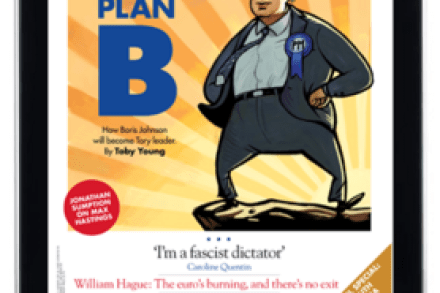
The great pastime of Tory MPs is leadership speculation. Who’s up? Who’s down? Who’s in? Who’s out? Who succeeds Cameron? Simple, says Toby Young in our cover piece this week, it has to be Boris. Toby’s confidence in Boris is such that he once bet Nigella Lawson £15,000 that blond bombshell would lead the party one day. Subscribers can read about that story here, and non-subscribers can subscribe to the Spectator for just a £1 an issue. In the meantime, here’s a cover piece from the archives on this same theme: Boris is hot on Dave’s heels.

Osborne mulling child benefit u-turn

From our UK edition

Eric Pickles makes no bones that his bin policy is aimed at Middle Britain, and the Tories may soon announce more measures to butter up that vital electoral constituency. The Times reports (£) that Cameron and Osborne are seriously considering a u-turn on their controversial cut to child benefits over families in which parent earns more than £42,475, which is due to be introduced in January 2013. George Osborne apparently never does anything unless it yields a political dividend and this is an intriguing development, if it materialises. It reiterates that the Tories know they have a woman problem; identified by Melanie McDonagh in a magazine cover piece earlier this summer.

Cameron’s perfect Europe row

From our UK edition

The European Commission has just given David Cameron the perfect chance to stand up to Brussels. Its attempt to make Britain pay benefits in full to any citizen of an EU country who pitches up here is, frankly, barking and if successful would totally undermine public support for the free movement of people, as Fraser said last night. But, politically, this row provides Cameron with a real opportunity. By taking the commission on over it, he can reassure his party that he’s still a Eurosceptic while avoiding the more fundamental issues of the euro and Britain’s whole relationship with the EU.

An EU ruling that Cameron must fight

From our UK edition

A showdown with the EU may come sooner than we expect. The European Commission has today threatened to sue David Cameron’s government unless it starts letting EU citizens come here to claim benefits. Until now, any EU citizen could live here, but if they couldn’t find work, they were not entitled to claim benefits. This was widely accepted. Today, the EU has issued a statement saying: ‘Under UK law, certain social security benefits - namely Child Benefit, Child Tax Credit, State Pension Credit, Income-based Allowance for Jobseekers, Income-based Employment and Support Allowance - are only granted to persons with a "right to reside" in the UK. Other EU nationals have to fulfil additional conditions in order to pass a so-called 'right to reside' test.

Miliband meets the public, and a lot of Labour members

From our UK edition

Ed Miliband has just finished an hour and twenty minute long question and answer session. The audience was meant to be a mix of the general public and Labour members, but there seemed to be far more Labour members than anybody else. It would be easy to take the Michael out of the whole event. The questioner who walked out as the Labour leader was trying to answer his question, Miliband’s tendency to stare into the bleachers with his hand above his eyes and the technical glitches. One could also, rightly, say that the vast majority of questions were classic lefty fare. But there was the glimmer of something important here. There were flashes of the humour that comes across in private but not in public. In short, Miliband seemed far more himself than he did yesterday.

Reclaiming the Big Society

From our UK edition

Yvette Cooper says no to elected police commissioners. The Shadow Home Secretary gave her speech to the Labour conference this morning and, in addition to launching an independent review into policing (which has been welcomed by senior police officers), she defined her opposition to the government's flagship police reform.  Britain can ill afford the £100 million pounds cost of elected commissioners and the reform threatens to politicise the police by concentrating power in a single person without sufficient checks and balances. From the applause in the hall, you'd have thought that the whole party was behind her. But not every delegate agrees.

Miliband’s three mistakes

From our UK edition

Three things puzzled me about Ed Miliband’s conference speech yesterday. First, I didn’t understand why Miliband did not attack Cameron for having talked about the need for ‘moral capitalism’ and then have not delivered it. It would have been far harder for Miliband’s speech to be caricatured as left wing if he had pointed out that Cameron had promised ‘to place the market within a moral framework - even if that means standing up to companies who make life harder for parents and families’ - and then not delivered on that pledge. The second thing was the absence of any policy at all.