David cameron

A dozen questions for after the Brussels summit

From our UK edition

Cameron will be depicted in tomorrow's press as either a Tory Boudicca or an Essex Bulldog (© Tristram Hunt), depending on your point of view. I suspect the truth is somewhere in between. Cameron did not go in swinging a handbag, although it will suit No10 to make out that he did. But Labour's caricature of him storming off and wasting the veto certainly doesn't ring true to me. An EU27 deal was never likely, and EU17 deal always was. Cameron, on their account, just seems to be being blamed for what was going to happen all along. In any case, we are still trying to assemble the pieces of last night's drama, work out the demands and counter-demands, and see what sort of picture they produce. I'm still not sure.
Cameron’s ‘No’ leaves Clegg in a tight spot

From our UK edition

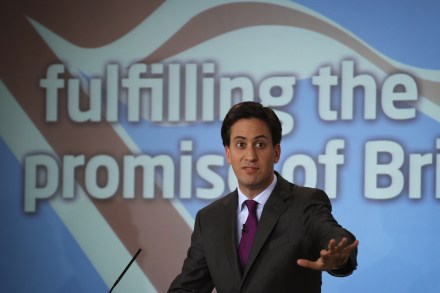
It's days like this when we should remember that Britain is, officially, the most eurosceptic nation in the EU. Europe may not rank high on the average Brit's list of policy priorities, but many will nonetheless cheer at the idea of us stepping aside from Merkel and Sarkozy's bulldozing plan. Whether the PM swashbuckled or blundered into saying ‘No’, that ‘No’ is unlikely to harm the public's perception of him — and will probably boost it. That's what makes all this particularly difficult for Ed Miliband. Unlike some in his party, the Labour leader is not inclined to out-sceptic Cameron, so that leaves basically one alternative: to claim that the PM has irresponsibly alienated Britain from Brussels, and that our influence will wane as a result.

What could Cameron have done differently?

From our UK edition

It is hard not to see the results of last night’s European meeting as the first step towards a fundamentally different — and much looser — relationship between Britain and the EU. The UK, which for centuries has fought to keep any one power from dominating the continent, and for decades has sought to prevent a two-speed Europe from emerging, is now going to have to accept both. It also seems that it will have to protect itself from some form of fiscally-shaped missile against the City.   The irony is that the PM did not apparently push for any UK-only protection of the City, but a broader protocol such as the one championed here — which Nicolas Sarkozy and Angela Merkel then rejected.

The Merkozy Plan fails to convince

From our UK edition

A day or so ago, the markets were rising in anticipation of what might be achieved at this Brussels summit. But this morning they're mostly either unmoved, or — as in the case of borrowing costs in Italy and Spain — shifting in unpropitious directions. No-one, it seems, has been won over by yet another night of political bargaineering in Brussels. And understandably so. None of the measures mooted this morning are particularly concrete; all have a sogginess about them. More cash will be transferred to the European Financial Stability Facility, but it's still some distance short of the €1 trillion that was, ahem, ‘announced’ at the end of October.

A defining moment

From our UK edition

David Cameron’s use of the veto in the early hours of this morning changes the British political landscape. The first thing to stress is that if the euro collapses it will not be because of the British veto. The deal agreed between the 17 eurozone countries and six of those nations who still want to join it does not address the single currency’s fundamental problems.   What is, perhaps, most intriguing about what happened in the early hours of this morning is that Sarkozy and Merkel chose to put Cameron in this position. In truth, Cameron was not asking for that much. But Sarkozy and Merkel were not prepared to take even small steps to accommodate his concerns. They had clearly decided that they were happy to do a deal at the level of 17-plus rather than 27.

Cameron says ‘No’

From our UK edition

It looks like Britain could be heading for renegotiation with the EU sooner rather than later. The UK, Hungary, Czechs and Swedes last night stayed out of a 27-member EU Treaty. ‘I don’t want to put it in front of my parliament,’ said Cameron. But in an historic move, the deal is going ahead anyway, with 23 members: the Eurozone, plus the six states who want to join. ‘We will achieve the new fiscal union,’ said Angela Merkel. Nicholas Sarkozy is upbeat saying it has been an ‘historic summit’ which will change the EU ‘radically’.  If so, then Owen Paterson is right in his interview with James Forsyth in the new Spectator: Britain will have to reassess its relationship with this ‘radically’ different EU.

Forget the Brussels Summit — here’s how Cameron could challenge EU power at home

From our UK edition

Much has already been written this week about the negotiating hand that David Cameron should be playing in Brussels over the next couple of days.   I am fervently of the view that there is indeed a whole raft of policy areas over which he should be seeking to reclaim powers from Brussels, and they are detailed in a new paper by Dr Lee Rotherham, Terms of Endearment, which was published earlier this week by the TaxPayers’ Alliance.   But forget the European Council for a moment. For it is worth highlighting the things that the British Government could do immediately and unilaterally, here at home, to challenge EU power — and without recourse to Brussels whatsoever. And Lee’s paper gives the following six examples:   1.

Extended version: Our interview with Owen Paterson

From our UK edition

As promised by Fraser earlier, here is an extended version of James's interview with Owen Paterson that we posted yesterday: It is becoming increasingly clear what the Conservative party expects of its Prime Minister. If he is going to agree to 17 eurozone countries pushing ahead with the Franco-German plan for fiscal union, he needs to secure a new deal for Britain in exchange. Just what this new deal should look like is a matter of intense debate in Conservative circles. If France and Germany turn the eurozone into a ‘fiscal union’, what does that mean for Britain’s standing in the European Union? At the weekend, Iain Duncan Smith suggested that the nature of the EU would change so much that a referendum would be necessary. No.

Cameron’s Europlan comes together

From our UK edition

The Tory party may not like it, but David Cameron is now finally following a sensible EU policy. As today's summit in Brussels starts, the Prime Minister appears to have decided what really matters to the UK, and realised that he needs to play nice with the Germans and French. At the top of the PM's priority list — a priority voiced by Michael Howard on the Today Programme earlier — is avoiding the collapse of the euro. The consequences of a collapse on Britain's economy are incalculable, but everyone knows they would be profound. Second comes the protection of the City. A Euroland tax on financial transactions would damage the City and thus Britain (as well as the EU) — avoiding it is key.

Paterson pasted across the front pages

From our UK edition

James Forsyth's interview with Owen Paterson is on virtually every front page this morning, and deservedly. Boris, bless him, can make calculated explosions at times when it suits him. But Paterson is not one for pyrotechnics or mischief. His thoughtful interview with James shows how believes that the eurozone is about to become ‘another country’ — he used the phrase several times — and one that can dictate regulations on the rest of Europe due to Qualified Majority Voting. James is posting a longer version of this interview later today, and I'd urge CoffeeHousers to read it. His Euroscepticism is rooted in his business background and the urgency he feels for economic reform.

Europe is the story again

From our UK edition

Today was one of those days when we saw just how divisive the European issue can be to the Conservative party. The sight of Malcolm Rifkind and Nadine Dorries treating each other with barely disguised contempt on Newsnight was a sign of just how poisonous relations in the parliamentary party could become. Intriguingly, the Daily Mail reports in its first edition that ‘Even some of Mr Cameron’s closest Cabinet allies are understood to be shifting to a much more Eurosceptic position, with a five-strong group of ministers planning to visit the Prime Minister as early as today to urge him to toughen his stance.

Ed the arch-bungler lets Cameron off the ropes

From our UK edition

Ed Miliband had an open goal today. And he whacked it straight over the bar. Cameron was in trouble from the start. Having placated the rebel wing of his party with vague talk about ‘repatriating powers’ he is now expected to deliver. But he can’t make specific demands without weakening his hand at the negotiations so he has to talk in generalities. The Labour leader spotted this weakness and tried to exploit it with one of his lethally brief questions. ‘What powers would the Prime Minister repatriate?’ Cameron gave several answers without addressing the issue. His aim in the negotiations, he said, was to resolve the eurozone crisis, ‘and that means countries coming together and doing more things together.

Owen Paterson: A referendum on the EU is inevitable

From our UK edition

It is becoming increasingly clear what the Conservative party expects of its Prime Minister. If he is going to agree to 17 eurozone countries pushing ahead with the Franco-German plan for fiscal union, he needs to secure a new deal for Britain in exchange.   Just what this new deal should look like is a matter of intense debate in Conservative circles. If France and Germany turn the eurozone into a ‘fiscal union’, what does that mean for Britain’s standing in the European Union? At the weekend, Iain Duncan Smith suggested that the nature of the EU would change so much that a referendum would be necessary. No. 10 quickly ruled that out. Cameron confided to Cabinet colleagues on Monday that he feared another referendum would bring down the coalition.

Cameron attacked from all sides on Europe

From our UK edition

David Cameron’s usual insouciance gave way to something approaching shouty panic as Europe dominated exchanges at PMQs. 8 Conservative MPs, all of them hostile to varying degrees, asked questions about Cameron’s intentions at the Brussels summit on Friday. This may not have surprised him, but the word around the Commons tearooms is that Cameroons are blaming Speaker Bercow for calling so many antagonistic MPs to their feet. It looked like a co-ordinated attack; and it's no surprise that an opportunistic Boris has since taken to the airwaves renewing his call for a referendum. Cameron’s article in this morning’s Times may have been intended to quell disaffection by looking decisive, but it seems to have had the opposite effect.

Cameron’s plan

From our UK edition

Much ado about a Cabinet split over Europe this morning. The Financial Times has interviewed Ken Clarke, whose europhile instincts are well known — something he shares with the senior Lib Dems. Clarke tells his eurosceptic colleagues not to expect powers to be repatriated from the EU at Friday’s summit. Meanwhile, David Cameron has written a piece in today’s Times (£), reiterating that he will veto any treaty that damages British interests. He also says that his ‘requests will be practical and focussed’. And therein, apparently, lays the split. The word ‘requests’ might open the possibility of repatriation.

Cameron ramps up his rhetoric

From our UK edition

The Conservative backbench disquiet on Europe has been building over the last few days, forcing David Cameron to quell the disaffection. He said earlier this evening: ‘When I go to Brussels I will be there to defend and promote British Interests, and the most important British interest right now is to sort out the problem in the Eurozone that is having the chilling effect on our economy that I have spoken about. That obviously means Eurozone countries doing more together and if they choose to use the European Treaty to do that than obviously there will be British safeguards and British interests and I will be there to protect that.

Back to square one | 6 December 2011

From our UK edition

Benedict Brogan has some bad news from the engine room of public service reform. ‘I'm told Downing Street is starting all over again on public service reform. Will Cavendish, one of the key people guiding policy in No10, has been put in charge and told to assemble a new team of officials that will put together what effectively is a response to the white paper. The last 18 months, according to those close to the debate, were a waste of time. We'll have to see whether the principles Mr Cameron set out 10 months ago still apply.’ Those principles are that the ‘state will have to justify why should it ever operate a monopoly’ on public services, as Cameron once put it.

Mutiny in the air

From our UK edition

David Cameron’s European problems seem to be mounting. The usual suspects — Carswell, Redwood, Jenkin et al — have been only too happy to take the airwaves and talk of this ‘great opportunity’ to repatriate powers. Those sentiments are growing across the backbenches. The Guardian quotes an ally of Iain Duncan Smith saying that he and his friends ‘do not accept the prime minister's argument that the changes will only affect the eurozone. Of course the changes will have an impact on Britain.’ The mounting disquiet appears to have been created, to an extent, by the PM hedging his bets and lowering expectations.