David cameron

Would you bet against Alex Salmond?

From our UK edition

Alex Salmond has a soft spot for horse racing, and I've just seen some odds that could make the First Minister a very rich man: William Hill is offering 9/1 on Scotland being independent by the end of the decade. The SNP is traditionally bold in its predictions: ‘Free by '93’ being one of the more memorable. Salmond himself predicted that the Union of 1707 would not live to see its 300th birthday. But if he holds a referendum by 2015 then Hill's say a 'no' result is the 2/5 favourite. And 'yes' is 7/4. Money would be refunded if Salmond bottled out of holding a referendum within the next four years. So how seriously should we take the bookies? David Cameron may take the fight to Salmond, framing the argument in a different way: do you want to stay in the union?
Miliband’s New Year message: The same, but different

From our UK edition

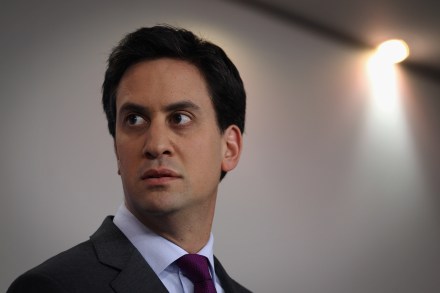
Well, folks, the 2012 model of Ed Miliband looks and sounds rather like the unfancied 2011 model. Just compare the New Year message that he released today with the one that he issued a year ago; the similarities are plenty. His main argument this year is that the Tories are the party of gloom — resigned to years of stagnancy, unemployment, pestilence, etc — whereas Labour are the party of a bright new future, there to show that ‘optimism can defeat despair’. Or, as he put it at the end of last year, ‘Even in these tough times, we must keep the flame of optimism burning.’ There are some differences, though. Compared with last year, Miliband talks much less about the coalition going ‘too far, too fast’ with deficit reduction.

A minimum price for alcohol will have a high political cost

From our UK edition

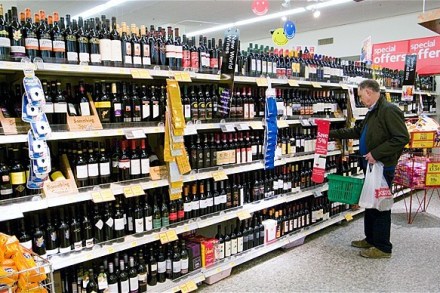
The Telegraph reports today that the Prime Minister has asked for work to be done across Whitehall on how a minimum price for alcohol could be set. As the paper's leader column makes clear, this will not be a politically easy thing to do. When I interviewed the Health Secretary Andrew Lansley for the Christmas issue of The Spectator a few weeks back, he was clear about why he didn’t like the concept of a minimum price: 'I don’t like a minimum price, we are acting against below cost selling. My problem with a minimum price, well I have two problems. One is it’s regressive, so there are perfectly normal families who just don’t happen to have much money who like to buy cheap beer or cheap wine. Should they be prevented?

Tim Loughton versus the adoption bureaucracy

From our UK edition

Parliament has decamped for midwinter, but the business of government goes on. Today's announcement, by the children's minister Tim Loughton, is contained within a Times article here. ‘An expert panel,’ it reveals, will be tasked with designing a new system for assessing prospective adoptive parents by March next year. That new system, making it easier for suitable folk to adopt, should then be in place by the end of 2012. In many respects, adoption is perfect Cameroonian territory; being, as it is, at the intersection of social responsibility, family, deregulation, etc, etc. But politics isn't what should concern us here. A lot of unmitigated good can be done in fixing a system that has been strangled and subverted by years of bureaucratic interference.

Who is the British foreign secretary?

From our UK edition

Officially, of course, the answer to that question is William Hague - who has put in some decent work since assuming office, particularly during the Arab Spring. But, still, I ask it because, following the European Council, Nick Clegg seems to have usurped the Foreign Secretary's role in a number of key areas. It was the Deputy Prime Minister who engaged the newly-elected Spanish leader, for example. It was also Clegg, not Hague, who was instrumental in bringing German foreign minister Guido Westerwelle to Britain on a 'we still love you' visit yesterday. And when it comes to phoning European leaders to press a UK position, it is the Deputy Prime Minister who is asked to put in the hours, not the veto-wielding Prime Minister or Britain's chief diplomat.

Clegg sets out his stall for 2012

From our UK edition

Under cover of discussing the Open Society and its enemies, Nick Clegg today set out his personal agenda for the next year of this government. Indeed, Clegg's speech to Demos earlier was perhaps the purest distillation of his politics since the big set-piece number he delivered at the Lib Dem conference in 2008. It contained many of the same themes as that earlier speech: ‘social mobility’, ‘civil liberties’, and ‘democracy’. And it added a couple more for good measure: ‘political pluralism’ and ‘internationalism’. The Deputy Prime Minister described these five political impulses as ‘the source of my liberalism’.

Rudd’s straw man argument about our EU membership

From our UK edition

As the isolation hysteria over Cameron’s EU veto starts to fade, attention is now shifting to the more existential question of what kind of relationship the UK should have with Europe. In a piece for today's Times (£), the chairman of Business for New Europe, Roland Rudd — who, incidentally, used to argue passionately in favour of the UK joining the euro — takes aim at those who want Britain to replicate a Norway-style model of European cooperation. Arguing that Norway endures so-called ‘fax machine diplomacy’ — no influence over EU laws that it must nonetheless accept — Rudd says that ‘the choice now is to do what Norway does, or remain in the EU.

The coalition’s marriage troubles

From our UK edition

A few months after the coalition was formed, I went for lunch with a close ally of Nick Clegg. After an hour or so of discussing what the coalition’s agenda would be, this Liberal Democrat said to me: ‘now, David Cameron can’t really be serious about this marriage stuff, can he?’ When I replied that I thought he was, he looked at me with total incomprehension. He then launched into a speech about how no ‘liberal’ could possibly want to see the state promote marriage. This is the thinking that lies behind Clegg’s latest attack on the idea of tax breaks for married couple; it has become an identity issue for the Liberal Democrats.

Cable: Cameron put political gain ahead of national interest

From our UK edition

While we're on the subject of LibCon divide, it's worth noting Vince Cable's remarks to Andrew Marr this morning. The headline above is merely a paraphrase, but it's pretty close to what the Business Secretary actually said: ‘It was largely political. Certainly the Prime Minister’s got a sort-of short-term boost from it, but it doesn’t actually deal with the long-term fundamental problems in Europe.’ Seems to me that there have been harsher words deployed this week, but few harsher sentiments. In the spirit of, erm, ‘getting on with my job as I always do’, Cable is going especially far in attacking his coalition partners. Vince, as always, remains One to Watch in 2012 — and mostly for the wrong reasons.

What phase of the coalition are we in now?

From our UK edition

It was not so long ago — the run-up to last May's AV referendum, to be exact — that we heard the coalition would be entering a new phase. Gone was the happy synthesis of the Tories and Lib Dems that prevailed after the election, and in its place would be a government that spoke more openly, more angrily about its differences. But even if Phase 2.0 had the appearance of being more fractious, it was actually designed to keep the parties together. The idea was that, by highlighting the essential differences between the two sides, their supporters could more easily be kept on board with the overall project. I mention this, this morning, because it looks as though that strategy is either being ramped-up or taken in a new direction. During Phase 2.

Cameron’s missing the point: Christian values require Christianity

From our UK edition

The Prime Minister does God. At least, that's the gist of his first major speech on religion. Actually, the interesting thing is that a Tory Prime Minister feels that he has to make the point that he is a Christian. Other than Michael Howard, who was Jewish, most other Tory leaders could have assumed we’d take it as read that he or she was more or less CofE, including Mrs Thatcher, who was, of course, a Methodist.  Following Richard Dawkins' remark that the Prime Minister may 'not really' be a Christian, Mr Cameron responded: 'I am a committed – but I have to say vaguely practising – Church of England Christian, who will stand up for the values and principles of my faith'.

Another sign of coalition splits over Europe

From our UK edition

Coalition tensions over Europe are again threatening to be the story this morning. Nick Clegg has told The Guardian's Patrick Wintour that Britain has 'signalled we are happy for them [the Eurozone plus group of countries] to use EU institutions' to enforce any new treaty they agree between themselves. This is a striking claim given that David Cameron has not publicly said that he would accept this. If the Deputy Prime Minister's summary of the coalition position is accurate, then Cameron will face criticism from eurosceptics that he is backsliding on his veto. But for all Clegg's criticism of Cameron handling off the summit, he remains unconvinced by the plans that the eurozone plus countries are now pursuing.

Miliband is trapped in his own foggy argument

From our UK edition

With one well-timed jab in PMQs, David Cameron turned much of this week's political debate – in domestic terms, at least – into a debate about Ed Miliband's leadership. And how is Miliband responding? Predictably, for the most part. His celebratory speech in Feltham and Heston this morning reduced down to the claim that the result 'offers a verdict on the Government's failed economic plan'. And his interview in today's FT covers much of the same territory. But the FT interview is also revealing in one particular regard: it demonstrates, once again, how Miliband is caught in a strange, undefinable strategy somewhere between attack and defence. This was, if you remember, a feature of his first speech as Labour leader – and here it crops up again.

The veto arguments rumble on

From our UK edition

The Times has a very interesting story (£) today on page 17. It claims that David Cameron had agreed to inform Nick Clegg if it appeared that Britain was going to be isolated at last week’s European Council. The significance of this is that it suggests that the Lib Dems believed they would be consulted before the government vetoed anything. This news emerges after senior Liberal Democrats have privately questioned why their leader did not insist that Cameron only use the veto once he had Clegg’s explicit agreement. The Times also reports that this negotiating protocol did not envisage a situation where Britain was left in a minority of only a couple of countries.

Who’s right on public v private employment?

From our UK edition

If you listened to PMQs yesterday, then you'll have heard two very different accounts of what's happening in the labour market right now. Had Ed Miliband been able to get anyone's attention, they'd have heard him say: 'over the last three months, for every job being created in the private sector, thirteen are being lost in the public sector.' Cameron's response: 'Since the election, in the private sector there have been 581,000 extra jobs. In the public sector, he's right, we have lost 336,000 jobs.' According to the Labour leader's figures, public sector losses are far greater than private sector growth. But according to Cameron's, the private sector is more than filling the gap. Why the difference? It comes down to the timescale you chose.

The growth script still needs writing

From our UK edition

The Times is being a bit harsh on Cameron in its leader this morning. 'On the economy', it says, 'Cameron has contracted out policy to George Osborne and then followed the usual (although not invariable) practice of postwar prime ministers of supporting his Chancellor's decisions. But he has not added to this a convincing contribution of his own.' Yes, Cameron has not done very well articulating his government's growth policy. I've also noticed that he is not much good at describing the Loch Ness Monster and for the same reason. Unconfirmed rumours of its existence whirl around now and again. Grainy photos of something supposed to be a UK growth agenda surface. But when expeditions are sent out to prove its existence, they invariably fail.

Cameron targets his resources at problem families

From our UK edition

The Prime Minister's message today is, basically, that he hasn't forgotten about the riots. In a speech this morning, he's going to announce his biggest new policy in response to them so far: a network of 'troubleshooters' who will work with 120,000 of the country's most unstable families, with the aim, of course, of stabilising them. The idea is that the troubleshooters can help coordinate various services — from police to Job Centres –— to focus on these people. According to the Sun, the families will, in turn, face 'tough penalties' if they don't cooperate. Some of you may be wary of this scheme — and it's easy to see why. I mean, yet more local authority lackeys swarming through the streets?

Cameron’s warning to his applauding backbenchers

From our UK edition

David Cameron was greeted with a full-on, desk banging reception at the 1922 Committee. The applause only stopped when the chief whip told the assembled backbenchers to sit down. The Prime Minister’s message was that the next year is going to be even tougher than the 1979-81 period. He argued that the government needed to be even bolder to show that it wasn’t just a technocratic government but one motivated by a desire to help families who do the right thing, but sadly no MP pressed him on how that fitted with the coalition decision to increase out of work benefits by more than 5 per cent. One other interesting thing was that Cameron stressed to his party that they had to reach 2015 with the coalition in good order.

Miliband’s poll nightmare returns

From our UK edition

There has, as we all know, always been a fug of doubt about Ed Miliband's leadership. Even when Labour have been winning by-elections (as they're expected to in Feltham and Heston tomorrow), even when even when they have fluttered ten points above the Tories, the question has always been there: would they be better off without him? After all, in terms of poll numbers, the party has generally exceeded the man. But today that question is wrapped in flashing, coloured lights, with a star on top. It's not just how David Cameron filleted Miliband in PMQs earlier, but more Labour's position in the latest opinion polls. As others have pointed out, every pollster now has the Tories basically level with Labour, or ahead of them.