David cameron

Miliband crumples to a new low in PMQs

From our UK edition

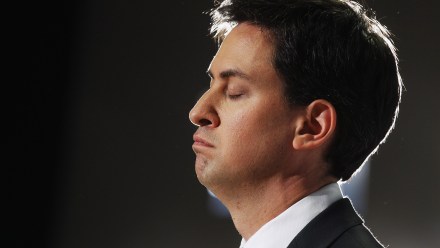
Inept, useless, incompetent, maladroit, hopeless, clumsy, crap. With thesaurus-rifling regularity Ed Miliband comes to PMQs and delivers a performance which is inept, useless, incompetent, maladroit, hopeless, clumsy and crap. The only virtue the Labour leader has is consistency. He’s consistently worse than last week. In theory he should have scored some damage today. Unemployment is soaring. Growth seems grounded. Cabinet ‘partners’ scuffle in public whenever they get the chance, and Nick Clegg changes his mind as often as he changes his socks. And Miliband’s tactics had some merit too. By disinterring the PM’s New Year Statement from January 2011 he was able to open up the Coalition’s wounds and have some seasonal fun at their expense.
Clegg in the spotlight

From our UK edition

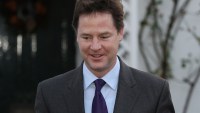
All eyes at PMQs will be on a man who isn’t speaking, Nick Clegg. His refusal to attend the Prime Minister’s statement on the European Council means that today he will be the centre of attention. Labour will attempt to embarrass him as much as possible, trying to highlight both the divisions in the coalition and the impotence of the deputy PM. For its part, the press will read an awful lot into his body language every time Cameron mentions the E or V words.   The worry for the coalition is that this split over Europe is just going to keep repeating. There are going to be many more European summits where Britain will be in the minority between now and 2015.

Lansley stakes his claim on the post-2015 budget

From our UK edition

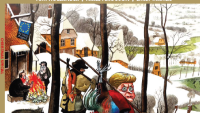
Look slightly to the left, CoffeeHousers, and what you'll see is the cover image to this week's Christmas double issue of The Spectator — a brilliant send-up of Bruegel's ‘The Hunters in the Snow’ by Peter Brookes. You're now able to buy your own copy, but we thought we'd pull out an intriguing little snippet from James Forsyth's interview with Andrew Lansley, by way of a taster. The Health Secretary, it seems, isn't just determined to see health spending rise in real terms in this parliament, but beyond that too: ‘I ask him whether, despite the ramifications of the autumn statement, the NHS budget will still be immune from cuts.

Who will say sorry to Rupert?

From our UK edition

Welcome to the world of journalism, Nick Davies. So the cops in Surrey told you the story was true — or so you claim. The cops at the Yard told you it was true — or so you claim. Every aching bone in your reporter’s anti-Murdoch body told you it was true. But there was a problem — as we all now know today. The Milly Dowler story that led The Guardian on that fateful day back in July was untrue: there is no evidence to show that the News of the World deleted Milly's voicemails. So what price has Nick Davies paid since he tried to slip his deliberately unintelligible apology into Page 10 of The Guardian on Saturday? None at all. Not suspended. Not sacked. What price has Alan Rusbridger, the paper’s ho-hum £500,000-a-year Editor paid?

Labour reach out to the Lib Dems (again)

From our UK edition

Others have already been there, but it's still worth noting Douglas Alexander's article for the lastest issue of the New Statesman. Much of it, it's true, is a predictable attack on David Cameron's recent activity in Brussels. But slightly more surprising is the fact that, rather than criticising the coalition in toto, Alexander saves his ire for the Tories and reaches out to the Lib Dems. Here's the relevant passage: ‘The roots of what happened on the night of Thursday 8 December lie deep in Cameron's failure to modernise the Tory party. Just because he puts party interest before the national interest, there is no reason others should do the same.

Was the PM reasonable?

From our UK edition

As the effects of last week's European Council become clear, debate about the rights and wrongs of David Cameron's diplomacy hinge on one question: were his demands ‘reasonable and modestly expressed’, as a source in No 10 put it to me? Everyone knows that there were chronic failures in the run-up to the meeting itself. I laid a few of them out in an earlier post, but, basically, they amount to a failure of prioritisation: the UK eroded the goodwill it needed by fighting tooth-and-nail on every issue beforehand, thereby blocking things that other EU states care about but which are not important, except symbolically, to the British. International — and especially European — cooperation is about give-and-take. It cannot just be take.

Where we are now

From our UK edition

Reading through the paper's this morning, it's even clearer that we didn't learn much from that marathon Europe debate yesterday. But here are my thoughts, anyway, on where it leaves us: 1) Ed Miliband lacked credibility from the outset. As Malcolm Rifkind put it, he’s had three days to work out whether he’d have signed that Treaty or not — and he still can’t make his mind up. God knows Cameron is vulnerable on this, but he won’t be hurt being attacked for indecision by a man who still cant make any decisions. 2) Clegg’s misjudgment, cont? First, Clegg backed Cameron after the veto. Now, he says he disagrees with Cameron.

Clegg ducks Cameron’s conciliatory speech

From our UK edition

The text of David Cameron's statement on the European Summit was clearly designed as balm for the coalition's wounds. He devoted a large chunk of it to defending Britain's membership of the European Union in a clear effort to reassure the Lib Dems about the future direction of European policy. But this effort was rather undermined by the absence of the deputy Prime Minister. This was, predictably,  the story of the session. In response to repeated Labour questions about where Clegg was, Cameron replied 'I'm not responsible for his whereabouts. I'm sure he is working very hard.' Nick Clegg has now given a TV interview in which he has escalated the coalition divide over Europe.

Expect today’s eurosceptic celebrations to be muted

From our UK edition

The real Tory celebration of David Cameron's veto will be on Wednesday. Then, behind closed doors, Cameron will address the 1922 Committee of Tory backbenchers. With no Lib Dems present, the Tories will be able to thump the desks and be rude about the EU without worrying about what their coalition partners might think. But in the chamber today, Tory MPs are being urged to be calm and forensic. The whips keep pointing out to ambitious MPs that a question on what Labour's position is would be most helpful. Eurosceptics, though, should be in good cheer today even if Cameron's statement is more downbeat than they would like.

The new premium on Lib Dem policies

From our UK edition

Could it be an accident of timing that the government, in the shape of Sarah Teather, is announcing an expansion of the pupil premium today? Or is it part of a careful response to David Cameron's adventures in Euroland? In any case, the Lib Dem-devised scheme to help the poorest pupils will be extended in 2012-13, so that both the amount given to each pupil and the number of pupils eligible are increased. What's not clear yet is whether this was planned all along, or whether it's because of some previously unforeseen slack in the existing £1.25 billion budget for next year. The pupil premium has, for instance, already been increased for this financial year because fewer children registered for free school meals than expected.

Cameron’s winning the popularity contest over Europe

From our UK edition

It's no surprise that David Cameron's actions in Brussels last week appear to be popular with the voting public, but it is significant nonetheless. The Times is carrying a Populus poll today (£) which suggests just how difficult Labour and the Lib Dems will find it to recapture ground over the Continent. 57 per cent of respondents say that ‘David Cameron was right to exercise Britain's veto’, against only 14 per cent who believe he was wrong to do so. And it turns out that 49 per cent of the folk who voted Lib Dem at the last election support the PM too. With one particular exception (which we shall get on to below), most of the poll's other findings will both hearten and embolden the blue half of the coalition.

The government’s Sarkozy problem (and other euro dilemmas)

From our UK edition

This week’s European Council meeting has been analysed by diplomats and commentators alike, but a number of issues have not been brought out as clearly as they need to be. The first is that Britain will now achieve political advantage, at the cost of economic setback, if the euro collapses. Although the government insists both that it is still wedded to the success of the euro and that it will not be isolated in Europe now or in the future, the simple fact is that eurofailure will ensure that efforts to organise among the 26, rather than the full 27, will finish. The economic costs would be considerable — possibly 10 percent of Britain’s GDP — but it would help Britain back into the centre of European decision-making.

The coalition’s latest anxiety attack

From our UK edition

It is starting to feel like the build-up to the AV referendum again, if not worse. No longer the casual bonhomie of the coalition's early days, but a great show of mutual distrust and loathing between the Lib Dems and Tories. There was Nick Clegg's interview on the Marr Show earlier, of course, which James has already blogged about. There are rumours that Vince Cable is set to quit. And there is also Paddy Ashdown's caustic article in the Observer, which he has followed by attacking, Major style, the Tory ‘bastards’ on Sky this morning. For their part, many of those ‘bastards’ are looking on at the Lib Dems' pain with glee, eager to make it worse. Some of this is probably choreographed.

Clegg blames the Tory Eurosceptics

From our UK edition

Nick Clegg has just given a quite astonishing interview to Andrew Marr in which he accused David Cameron of being incapable of getting a good deal for Britain because of pressures from within the Conservative parliamentary party. When Marr asked him if things would have been different if Lib Dems had been in Brussels, Clegg said they would have been because he is ‘not under the same constraints from my parliamentary party.’ Clegg described Cameron as being trapped between the ‘intransigence’ of the French and Eurosceptics in the Conservative party. Intriguingly, the deputy Prime Minister blamed the French for there being no negotiation about the British asks.

Ten myths about Cameron’s EU veto

From our UK edition

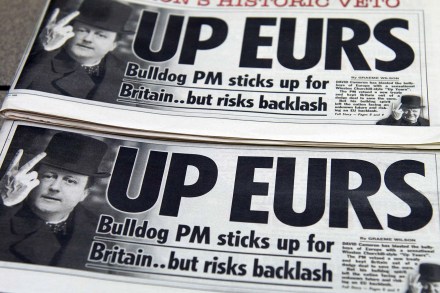
The EU veto that Cameron pulled in the early hours of Thursday morning has been widely misunderstood on all sides. Here are the 10 most common myths: 1. Because of Cameron’s veto, Britain lost a seat at the negotiating table. Not true. The UK was never itself going to take part in the Merkozy pact (and potentially be subject to EU sanctions), and therefore not in the monthly, parallel EU meetings that will begin in January, either. Even if he had approved the Treaty changes, Cameron still would not have had a seat at the table. Wider political challenges aside, the veto didn’t change anything structurally in terms of UK influence. 2. Cameron’s veto created a two-tier Europe.

The sort of influence we can live without

From our UK edition

David Cameron’s decision, in the wee hours of Friday morning, to make clear that he would veto the proposed treaty change will have many far-reaching effects. One is that other European leaders know that Cameron is prepared to follow through on a threat to veto. As Charles Moore says in The Telegraph today, the dynamic that has existed throughout this country’s participation in the European project — that “Britain huffs and puffs, but always agrees in the end” — has now changed. This morning, those close to the Tory leadership were pointing out that a Cameron threat to, for example, veto the budget next year will be taken far more seriously than it would have been previously.

Britain and isolation

From our UK edition

The word ‘isolation’ is used a lot in today's newspapers, as if Cameron walking away from the ongoing EU implosion were a self-evident disaster. Pick up the Guardian and you see Britain cast as a leper, a status conferred on her thanks to a tragic miscalculation by a Prime Minister whose sole aim was to assuage his swivel-eyed Tory MPs and get back on Bill Cash's Christmas card list. Orwell would have great fun with the language that accompanies the Euro project: trying to suck up to its tiny elite is seen as a country being outward looking. A PM more focused on the people who sent him to office is seen as a parochialist. Spend too much time in SW1 and you may come to believe this yourself.

What Cameron can do next

From our UK edition

What now? That’s the question. This morning it looks not like 17 versus 10, but like 1 versus 26, which is a cold and lonely place for Britain to be. But it is also the right place to be. David Cameron asked for a little and got less. He had to act as he did and will reap the benefit electorally and among his MPs. Labour’s position is not just politically weak, but also unrealistic: it has been clear for weeks it was not possible to run a ‘periphery strategy’ as the 10 states outside the Euro have different incentives to Britain and different long-term aims. And the idea that the last Labour government had better links to the continent is laughable.