David cameron

Dave in Davos

From our UK edition

https://www.youtube.com/watch?v=iWDdpmS89LQ Reading Cameron's speech to the suits in Davos, one thing stands out: he's in no mood to stop ‘lecturing’ the eurozone, as Nicolas Sarkozy would put it. The whole thing is saturated with firm advice for our European brethren, from generalities such as ‘Tinkering here and there and hoping we’ll drift to a solution simply won’t cut it any more,’ to specific policies that the Continent should introduce so that it can ‘recover its dynamism’. He even found space to attack the ‘madness’ of a Tobin tax, as well as to hawk the coalition's deficit-reduction plan. It's the sort of advice that could, of course, put Cameron further at odds with his fellow European leaders.
Miliband delivers for once, but Cameron’s left unharmed

From our UK edition

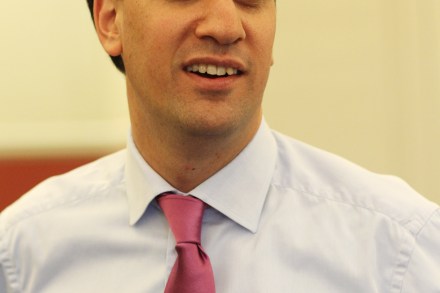
Incredible events in the chamber today. An absolute sensation at PMQS. For the first time since last summer, Ed Miliband got through the session without triggering talk of a leadership crisis. There was gloomy news aplenty to dwell on. Debts soaring; growth flat-lining; dole queues snaking back through blighted high streets and bankrupt business parks. The Labour leader chose to wallop Cameron with a well-prepared attack on the NHS. Quoting the prime minister’s vow, ‘to take our nurses and doctors with us’, he asked why the government had stopped listening. The prime minister’s reply was frivolous and desperate. He giggled and smirked like a teenager at the despatch box and tried to make light of his loathed policy.

Both leaders left smiling after PMQs

From our UK edition

Today was one of those PMQs when you sensed that both sides were fairly happy with how it had gone. Ed Miliband turned in one of his stronger performances, cleverly splitting his questions and so allowing himself to have a go at both the economy and the coalition’s troubled NHS reforms. Cameron, for his part, got through what was always going to be a difficult session for him after this morning’s negative growth numbers.   Strikingly, there were four planted Tory questions on the benefits cap. The Tories know that Labour’s vote against it compounds one of their biggest vulnerabilities, the sense they are the party for people on benefits and not those in work.

A Chris Huhne prediction that didn’t come true

From our UK edition

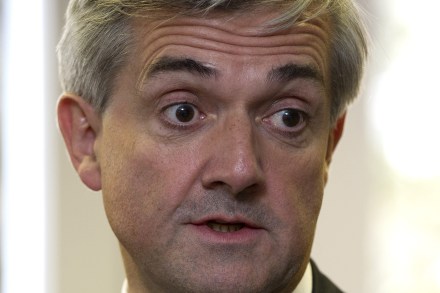
Chris Huhne attacked David Cameron for the EU veto in Cabinet back in December. At the time, one Cabinet minister told me that part of Huhne’s critique was that Cameron had scuppered the chances of a Liberal Democrat MEP, Sharon Bowles, being reelected as chair of the European Parliament’s Economic and Monetary Affairs Committee, which deals with financial services.   But Bowles has been reelected. In a Lib Dem press release welcoming this, Nick Clegg declares that: ‘As party leader, I am proud that we have a leading Liberal Democrat in such a prominent and powerful position on the international scene. As UK Deputy Prime Minister, I am delighted and relieved to know that the EU financial services brief is in such expert hands.

Cameron’s capitalism

From our UK edition

Ever since Ed Miliband’s ‘predatory capitalism’ speech at the Labour Party conference, the future of capitalism has been a subject that has much occupied our MPs. Clegg made his speech on Monday, and Cameron delivered his yesterday. I have had plenty to say about the coalition government’s inadequate economic policy, and its inability to stoke growth. But Cameron’s speech was impressive, and it’s worth going into in some detail. I look at it in my Telegraph column today. Much rot is spoken about capitalism. It is not an ideology, there is no rule book you can tweak: it is simply the name given to the system where people trade with each other the world over.

How Cameron sees the economy

From our UK edition

Today’s speech by David Cameron is one of those ones that give you a real insight into how he sees the world. Cameron said that he wanted to see an ‘insurgent economy, where we support the new, the innovative and the bold’. He talked about the need to ‘encourage the adventurous spirits who challenge the status quo and declared that he admires ‘more than almost anything the bravery of those who turn their back on the security of a regular wage to follow their dreams and start a company’. This reveals something important both about Cameron personally and how he sees the economy. The people that Cameron respects are not the CEOs of established companies but the entrepreneurs who are creating dynamic, new companies.

Miliband’s proximity problem

From our UK edition

Ed Miliband is on unusually assertive form this morning. His observation in the FT that ‘my speech to Labour’s annual conference was not — I think it is fair to say — universally well-received’ is not, I think, intended self-deprecatingly, but rather self-congratulatory, as though he were the only politician calling for a ‘responsible capitalism’ at the time. And he's repeated that suggestion elsewhere: in a short statement for Which?, and in a Labour briefing document — entitled Who is he trying to kid? — that has been filtered around the crowd at David Cameron's speech. Ed is trying to crash Dave's party, and bring it crashing down. Like I say, he's being unusually assertive.

Lansley’s health problems return

From our UK edition

Another day, another exercise in obstructionism from the unions. Only this time it's not Ed Miliband that they're complaining about. It's Andrew Lansley and the government's health reforms. The Royal College of Nursing and the Royal College of Midwives have said that the entire Health Bill should be dropped. They have shifted, as they put it rather dramatically, to ‘outright opposition’. Which must be annoying for Lansley, given how he took time to ‘pause, listen and engage’ last summer, and adjusted his Bill accordingly. That whole process was meant to anaethetise this sort of disagreement, but the tensions clearly persist and could indeed get worse from here.

Cameron’s fight over the Falklands

From our UK edition

Thirty years on from the Falklands War, and the hostility between Britain and Argentina persists. And it was that hostility that delivered the most striking moment of PMQs earlier. Not only did David Cameron, at the insistence of Andrew Rosindell, describe the Argentinian attitude towards the Islands as ‘far more like colonialism’ than that of the British, but he also confirmed that the National Security Council yesterday discussed the simmering situation in the south Atlantic. As he put it himself, he wants to send out a ‘strong message’ to Argentina, after the recent sabre-rattling actions of their President, Cristina Kirchner — which Daniel has blogged about here.

Cameron endures his monthly unemployment grilling

From our UK edition

Downing Street is painfully aware that one PMQs in four is going to be about unemployment. Today, with the monthly figures having come out this morning, Miliband led on the subject. The Cameron-Miliband exchanges were not particularly enlightening. Miliband said ‘it really is back to the 1980s’ and Cameron mocked Miliband for being ‘so incompetent, he can’t even do a U-turn properly’. In the backbench questions, Cameron wasn’t put under much pressure. The news of the session came when he said in response to a question from Andrew Rosindell that the National Security Council had devoted a whole session to the Falklands yesterday.

What Boris Island tells us about Cameron

From our UK edition

He already has his bikes and his buses, but might Boris get his island too? Today's Telegraph reports that David Cameron is going to announce a consultation into building a new airport in the Thames estuary, as was first proposed by the London Mayor. The PM will wait until that consultation is over before making a final decision, but he's said to be 'provisionally supportive' of the plan at the moment. Nick Clegg, by the sounds of it, is more provisionally negative. Even the very prospect of Boris Island is a triumph for the Mayor, and not least because Cameron and George Osborne were previously opposed to it. It also says much about the more general shift in attitude of those Tories in government.

The new politics of leaning on business

From our UK edition

Ed Miliband the consumer champion, the saviour of the squeezed classes. That, more or less, is how the Labour leader has always sought to sell himself — but this morning the sales pitch goes into overdrive. He has an interview with the Daily Telegraph in which he attacks 'Rip-off Britain'. Not the TV show, mind, but those companies that hammer their customers with extra costs and hidden charges. Excessive savings fees, car-parking charges, airline levies, bank charges, consumer helpline costs and energy bills; all these should come to an end, says Miliband. And he has a few measures for achieving that. What strikes me, when reading the interview, is how this fits into a trend of politicians leaning on businesses to make them curb certain excesses.

A Cameron-friendly backbench group

From our UK edition

The 301 Group is the nearest that David Cameron has to a loyalist backbench support group; it is named after the number of seats the Tories will need at the next election to win a majority. The Times today reports the group's concerns that the Tories are in danger of forgetting the importance of a broad agenda that goes beyond the party’s staple issues. I suspect that several people in Downing Street will nod along at these concerns. The group has certainly been encouraged by Number 10, which has difficult relations with the 1922 Committee. Its early speakers have included the chief whip Patrick McLoughlin and the vice-chairman of the party Michael Fallon.

The hypocrisy of Cameron’s Saudi trip

From our UK edition

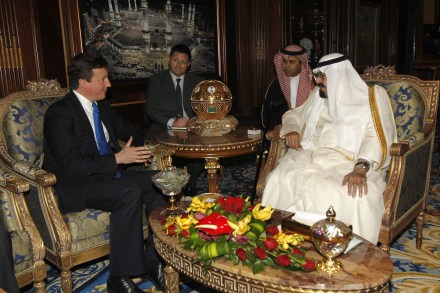
A year ago, Tunisian strongman Zine El Abidine Ben Ali fled Tunisia for Saudi Arabia, thus ushering in the Salafi Spring. No doubt now bored out of his mind, this once stubbornly secular leader is said to have caught religion of the deranged Wahhabi variety propagated by his oil-rich hosts.   In turn, the Saudis are preparing to welcome Rachid Ghannouchi – the notoriously humble leader of the even more notoriously moderate Ennahda that now controls Tunisia’s parliament – on a state visit. This week Ghannouchi has been heaping praise on the Persian Gulf monarchies, doing us all the favour of revealing where his true sympathies lie when it comes to issues like religious moderation and its love affair with democracy.

Hague’s misplaced optimism

From our UK edition

William Hague has an article in the Times today arguing against what he refers to as the ‘pessimism’ of those who have expressed concerns about the direction of the ‘Arab Spring’. As somebody who cannot see the virtue of either optimism or pessimism as policy, and preferring facts to moods, I think the Foreign Secretary’s central points should be answered. Particularly as he chose so injudicious a day to publish his piece. Mr Hague’s argument against pessimism is that ‘such pessimism misses the extraordinary opportunities that popular demand for freedom and dignity bring’. Certainly the government of which Mr Hague is a part is not missing any opportunities.

IDS must stay the course on welfare reform

From our UK edition

Welfare wars are erupting again, with Iain Duncan Smith’s bill amended in the Lords and more showdowns ahead. Number 10 has been completely robust, threatening to use rarely-invoked powers to overrule the Lords. In my Telegraph column today, I say why it’s so important that David Cameron does not go wobbly – as his predecessors did.   Tony Blair understood the need for radical welfare reform, especially when his idol Bill Clinton introduced it in America. Listening to his speeches in the mid-90s is heartbreaking: he had precisely the right idea, but lacked the determination to implement it.

Cameron hints at child benefit taper

From our UK edition

David Cameron’s comments to The House magazine on child benefit are causing quite a stir this morning. The Telegraph splashes on the PM’s line that ‘Some people say that’s the unfairness of it, that you lose the child benefit if you have a higher rate taxpayer in the family,’ he said. ‘Two people below the level keep the benefit. So, there’s a threshold, a cliff-edge issue.’ ‘We always said we would look at the way it’s implemented and that remains the case, but I don’t want to impinge on the Chancellor’s Budget.’ I suspect that what Cameron means by this is that they are looking at a taper.