David cameron

‘Mrs Bone was singing in the shower’: PM’s EU speech delights Tory MPs

From our UK edition

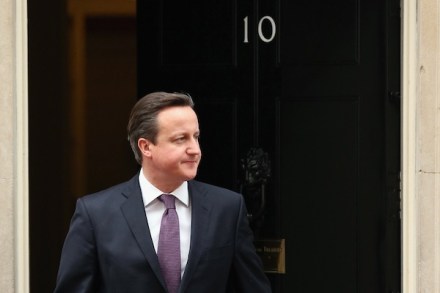
David Cameron should savour today as the moment he finally satisfied Mrs Bone. I've been calling round Tory MPs, and Peter Bone, often a thorn in the flesh of the Prime Minister with his probing questions that his wife wants clearing up, is happy with the speech. He says: 'I could hear Mrs Bone singing in the shower room and it included the words "for he's a jolly good fellow".' Bone explains why his household is filled with such joy this morning: 'I am in a very good mood. A year ago, if I had said to you the Prime Minister is going to renegotiate the terms of the EU towards a Common Market and then put it to the British people in an In/Out referendum, you would have said I was barking mad.
David Cameron puts Nick Clegg on the spot

From our UK edition

Downing Street always hoped that once David Cameron had given his Europe speech, the pressure would shift on to the other party leaders. They believed that once Cameron had committed himself to a referendum, Ed Miliband and Nick Clegg would be required to say whether or not they’ll match this pledge. But Cameron has put particular pressure on the Deputy Prime Minister by making clear that renegotiation and a referendum will happen if he is Prime Minister after the next election. In other words, this is not up for debate in any 2015 coalition negotiation. Every interviewer can now ask Nick Clegg if he and the Liberal Democrats could be part of a government that was committed to renegotiating Britain’s terms of EU membership and then putting the result to a referendum.

Cameron’s red meat EU speech: five key points

From our UK edition

Cameron has finished delivering his 'red meat' speech on the European Union and answering questions from journalists. You can read the full text here, but here are five key points to take away: 1. The Prime Minister is a pro-European sceptical about the current EU settlement It actually took Cameron a long time to reach his vision of a new Europe because he was so busy praising its history. We had a whistle-stop tour through the EU's creation, dotted with praise for its peacekeeping mission first. He was clearly keen to emphasis his pro-European credentials as much as he was to criticise, saying: 'I am not a British isolationist' and 'I speak as a British Prime Minister with a positive vision for the future of the European Union'.

David Cameron’s EU speech: full text

From our UK edition

This morning I want to talk about the future of Europe. But first, let us remember the past. Seventy years ago, Europe was being torn apart by its second catastrophic conflict in a generation. A war which saw the streets of European cities strewn with rubble. The skies of London lit by flames night after night. And millions dead across the world in the battle for peace and liberty. As we remember their sacrifice, so we should also remember how the shift in Europe from war to sustained peace came about. It did not happen like a change in the weather. It happened because of determined work over generations. A commitment to friendship and a resolve never to re-visit that dark past - a commitment epitomised by the Elysee Treaty signed 50 years ago this week.

David Cameron’s EU speech: the Coffee House guide

From our UK edition

Downing Street has tonight released the following extracts from David Cameron's speech on the European Union, which he will deliver tomorrow at 8am. Here's your guide to what we know so far: 1. An unwilling EU could sleepwalk Britain out of the union 'I speak as British Prime Minister with a positive vision for the future of the European Union. A future in which Britain wants, and should want, to play a committed and active part. 'If we don’t address these challenges, the danger is that Europe will fail and the British people will drift towards the exit. 'I do not want that to happen. I want the European Union to be a success. And I want a relationship between Britain and the EU that keeps us in it. 'That is why I am here today. To acknowledge the nature of the challenges we face.

There is nothing new about Islamism in Africa

From our UK edition

The Algerian hostage crisis is over and the Prime Minister has warned that the focus of the al-Qaeda’s franchise has shifted westwards. In his statement on the situation, he was channelling Tony Blair, which at least makes a change from channelling the Foreign Office. But the initial reaction from Downing Street was deeply unimpressive. The BBC’s Nick Robinson quoted a nameless, sneering voice, apparently exasperated at the Algerian response to the crisis. It would be interesting to know whether this patronising individual had ever spent any time working outside SW1 or had any idea that the Algerian people have lived on the frontline of the struggle with violent Islamists for more than 20 years.

Talk of a leadership challenge to David Cameron is reckless self-indulgence – Spectator Blogs

From our UK edition

For reasons I do not wholly understand, Labour partisans appear reasonably pleased with Ed Miliband. Liberal Democrats may not be especially gruntled with Nicholas Clegg but they do appear to appreciate that there's little point in changing leader now. Which brings us to the Conservative party. And there we discover madness aplenty. Again. For it seems as though more than 50 Tory MPs are sufficiently dissatisfied with David Cameron's leadership that they think a change of leader something worth considering before the next election. This, for all the reasons Robert Colvile suggests and many more he doesn't, would be folly. Madness. Lunacy. Proof that the party is unfit for office. Whatever his shortcomings there are only two things that really matter here: 1.

David Cameron redoubles his commitment to interventionism

From our UK edition

David Cameron’s Commons statement on Algeria just now was the most interventionist speech he has made since the one he delivered at the Foreign Policy Centre during his 2005 leadership bid. But this speech is far more important than that one because it is what he actually believes; the 2005 speech was written by Michael Gove and was given more to tick the leadership contest’s foreign policy box than anything else. Listening to Cameron today, it is clear that the events of recent days have led him to redouble his commitment to interventionism. Indeed, in his talk of the ‘generational challenge’ and the need to ‘beat them [the terrorists] militarily’ one could hear echoes of Blair and Bush post 9/11.

The Labour MPs who could make trouble for Ed Miliband on Europe

From our UK edition

So the Prime Minister's speech is, as James hinted yesterday, going to be on Wednesday, and in London to avoid any further strikes of the Curse of Tutancameron's Europe speech. His official spokesman confirmed the date this morning. Thanks to briefed extracts and further briefings over the weekend, we now have a rough outline of what's going to be in it, which will mean it's impressive if anything the David Cameron says causes anyone in the audience to gasp with surprise. What is more exciting is what the response will be from the other benches in the Commons. Labour spokesmen on the broadcast rounds yesterday were squirming rather when asked about whether the party might offer a referendum too.

Why the Tory leadership thinks it can push gay marriage and boost its support among ethnic minority voters

From our UK edition

If the Tory party doesn’t improve its performance with ethnic minority voters, it’ll be nigh-on-impossible for it to win a general election in a generation’s time. The single biggest driver of not voting Tory is not being white and more than one in four under fives in Britain are non-white. This is the background to the Tories’ big push to increase their support among ethnic minority voters and David Cameron’s decision to devote Wednesday’s political Cabinet to the subject. Now, I’m always wary of parties talking about appealing to specific groups rather than individuals.

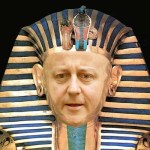
The Curse of Tutancameron’s Europe speech

From our UK edition

David Cameron's Europe speech already had a Tutankhamun-style curse on it before events forced him to postpone it, with the much longer delay from its original date of mid-autumn causing a feeding frenzy in the media, in his own party, his coalition partners, and in the opposition. By the end of last week, it was difficult to find an opposition MP or columnist who hadn't written a whimsical piece imagining they were Cameron giving the speech (or indeed twisting readers into an even greater willing suspension of disbelief by imagining they were John Major talking to Cameron about the as-yet undelivered speech as David Miliband managed to do).

David Cameron: Terrorism in North Africa requires global response

From our UK edition

In his latest statement on the Algerian hostage crisis this morning, the Prime Minister built on the interventionist language that James spotted in his Commons address on Friday. Cameron said: 'This is a global threat and it will require a global response; it will require a response that is about years, even decades, rather than months, and it requires a response that is patient, that is painstaking, that is tough but also intelligent, but above all has an absolutely iron resolve and that is what we deliver over these coming years.

Can the West solve a problem like Mali?

From our UK edition

I fear that we are all going to have to learn a lot about Mali and the Sahel—and fast. It is rapidly becoming the latest front in the war on terror. Or, to be more precise, the West’s attempt to prevent the emergence of ungoverned spaces that can be exploited by Al Qaeda and its offshoots. The New York Times today has a good primer on the challenge facing the French in Mali: “The French are fighting to preserve the integrity of a country that is divided in half, of a state that is broken. They are fighting for the survival of an interim government with no democratic legitimacy that took power in the aftermath of a coup.

Andrew Mitchell and Morgen Schmorgen

From our UK edition

Another week, another former Tory cabinet minister working a room. Last week I brought you news of Liam Fox entertaining the great and good of the Tory party. Now I hear that Andrew Mitchell has been making an extra special effort to be nice to absolutely everyone. The former chief whip was being very friendly to the commentariat at a drinks party at a recently opened hotel in Westminster. He shunned sceptical news journalists, but made determined passes at those with influential column inches. Whatever could he want them to say? George Osborne was at the same private party, pressing flesh like a coiffured madam in a brothel.

David Cameron seems more and more committed to interventionism

From our UK edition

A visibly tired David Cameron has just completed his statement to the House of Commons on the hostage situation in Algeria. What was striking about it was the starkness of the language that the Prime Minister used. He talked about Al Qaeda in the Maghreb and other North African terrorists groups posing a ‘large and existential threat’, warned that they ‘thrive in ungoverned spaces’ and that ‘parts of Mali have become a safe haven for Al Qaeda’ and declared that if it is not confronted ‘the threat there will grow and we’ll face it as well’.

David Cameron’s delayed EU speech: extracts

From our UK edition

By the time the Prime Minister cancelled his Europe speech yesterday evening, extracts had already been briefed to journalists. A new date has yet to be announced, but here are the extracts that have been released: Britain should play an active part in Europe: 'I want to speak to you today with urgency and frankness about the European Union and how it must change – both to deliver prosperity and to retain the support of its peoples. 'I come here as British Prime Minister with a positive vision for the future of the European Union. A future in which Britain wants, and should want, to play a committed and active part.' Now is the time for change: 'Why raise fundamental questions about the future of Europe when Europe is already in the midst of a deep crisis?

David Cameron to give Commons statement on Algeria

From our UK edition

David Cameron had no choice but to postpone today's speech: while it would have been a relief to get the darned thing over and done with, a navel-gazing address on Conservative Europe policy would have done him no favours in the long-term when the Algerian hostage crisis is still going on. The Prime Minister will be briefed at 9am with another COBRA meeting and will then give a Commons statement at 11am. He was horrified yesterday to discover that Algeria had launched its rescue mission without consulting the UK, when he had already asked to be informed. The Mail quotes one official saying 'We asked them not to go in with all guns blazing and they just did it anyway. They insisted this was their sovereign territory and it was their operation.

Breaking: Cameron postpones Europe speech

From our UK edition

David Cameron has postponed his speech on the European Union because of the hostage situation in Algeria where a standoff has been taking place in a gas plant in the Sahara Desert. There are conflicting reports, but it seems about 300 Algerian and 40 international hostages were taken and several have been killed in a rescue attempt. The PM has suggested that worse news will follow saying:- 'We should be prepared for the possibility of further bad news in this very dangerous fluid situation.' No10 said earlier that Cameron had not been informed about the Algerian rescue attempt before it began and has told his Algerian counterpart that he wishes he had been "contacted in advance". The Japanese government has asked the Algerians to desist.

More helpful advice for David Cameron on Europe

From our UK edition

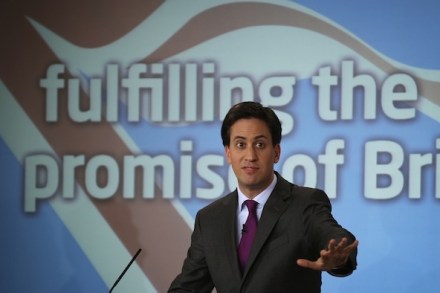
By this stage in the run-up to his Europe speech, the Prime Minister must be tempted to sit in a darkened room with his fingers in his ears shouting loudly if anyone else tries to give him more advice on Britain's relationship with the EU. Today brings another wave of advice: some from friendly faces, most from foes. When Ed Miliband got to the point in his Today programme interview, after debating when it was that the Prime Minister might call a referendum, he outlined his central problem with the whole debate: 'Imagine an investor, thinking now, should I be investing in Britain, or Germany, or Denmark, or a whole range of other countries? I think if we put up a sign around Britain, saying 'we might be out of Europe within five years'.

The View from 22: Obama, the Pacific president

From our UK edition

On this week's View from 22 podcast, the Spectator's assistant editor Freddy Gray discusses his cover feature on Barack Obama, who he argues is becoming the pacific-centric president. Although America has given us the impression they are angry with a potential EU withdrawal, Freddy concludes that Uncle Sam is just not that into us. When did this new attitude start emerging? And would it be any different under a Mitt Romney administration? James Forsyth also provides an update on David Cameron's rapidly-approaching EU speech and asks whether the whole thing is a year too late. Will all the Tory party troubles be forgotten and will the speech be it be alright on the night?